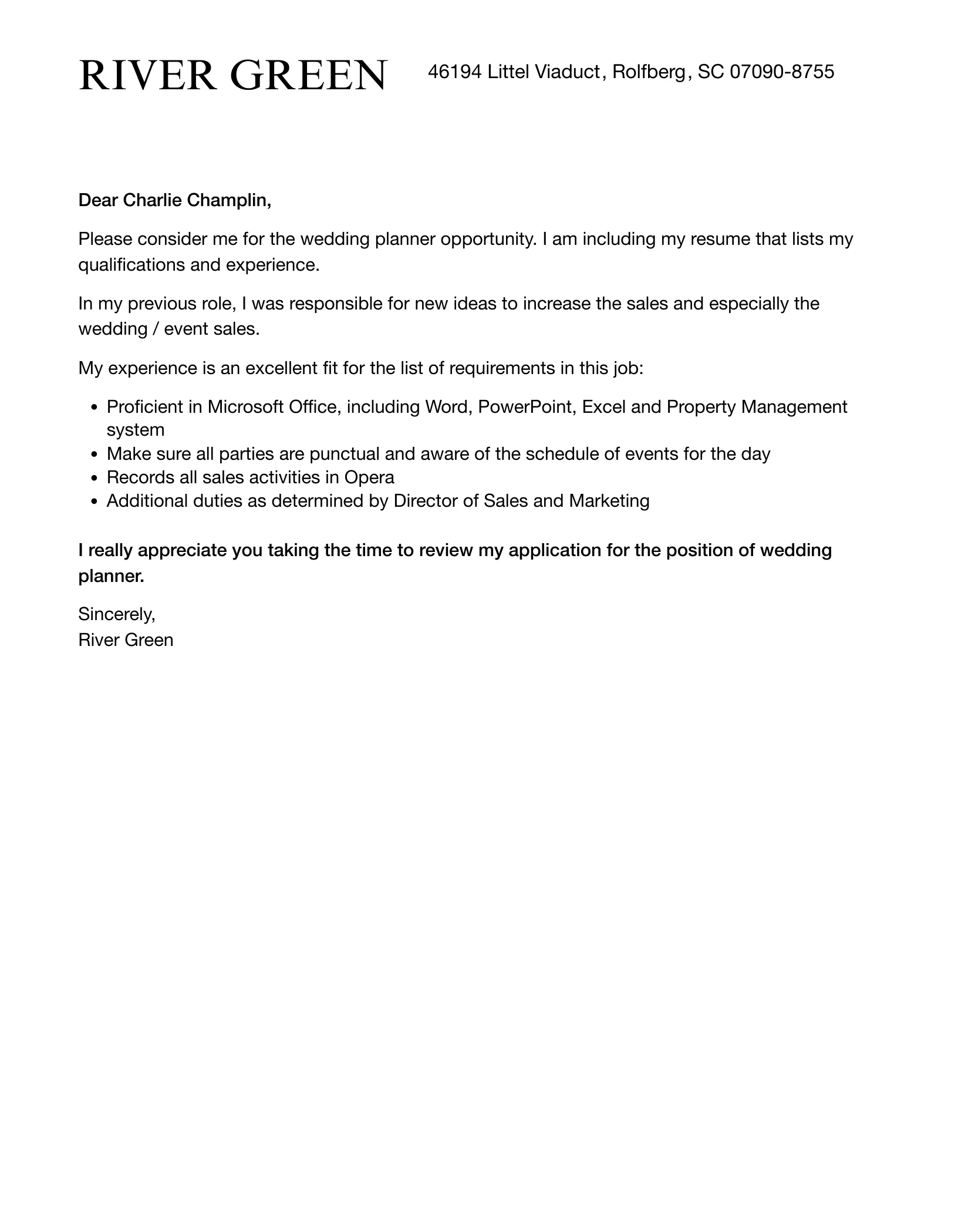
Understanding the Wedding Planner Cover Letter
A cover letter for a wedding planner position is a crucial document that accompanies your resume when applying for a job. It serves as your first introduction to a potential employer, providing an opportunity to showcase your personality, skills, and passion for the wedding planning industry. It allows you to expand on the information presented in your resume, demonstrating how your experience and qualifications align with the specific requirements of the role and the values of the company. A well-crafted cover letter can significantly increase your chances of getting an interview and ultimately landing your dream job.
What is a Cover Letter for Wedding Planners?
The purpose of a cover letter in the wedding planning field is to introduce yourself and make a compelling case for why you are the perfect candidate. It goes beyond a simple listing of your qualifications, offering a platform to articulate your enthusiasm for weddings, your understanding of the industry, and your ability to create memorable events. It allows you to demonstrate your communication skills, attention to detail, and your ability to connect with potential clients and colleagues. It also provides an opportunity to address any gaps in your experience or explain why you are making a career change into wedding planning.
Why is a Cover Letter Important?

A cover letter is vital for wedding planners because it is your chance to stand out from other applicants. In a competitive field like wedding planning, where creativity and interpersonal skills are highly valued, a cover letter allows you to showcase your unique personality and style. It shows the employer that you have taken the time to personalize your application and that you are genuinely interested in the specific opportunity. It helps you to build a connection with the hiring manager and leave a lasting impression, which is essential for securing an interview and starting your career in the industry.
Key Components of a Wedding Planner Cover Letter
A well-structured cover letter is key to making a positive impression. It should follow a clear format, with each section serving a specific purpose. The key components work together to create a compelling narrative that showcases your skills, experience, and passion. From the initial greeting to the final call to action, each element should be carefully crafted to highlight your strengths and make a lasting impact on the hiring manager.
Contact Information & Date
Start your cover letter with your contact information, including your name, address, phone number, and email address. Include the date you are sending the letter. This information ensures that the employer can easily reach you if they want to schedule an interview or offer you the position. Ensure this information is accurate and up-to-date.
The Salutation

Address the hiring manager by name if possible. If you cannot find a specific name, use a professional greeting such as “Dear Hiring Manager.” Avoid generic salutations such as “To Whom It May Concern” as they come across as impersonal. Addressing the recipient by name shows that you have done your research and are genuinely interested in the position. Addressing a specific person makes the letter more personal and engaging.
Crafting a Compelling Opening
The opening paragraph should grab the reader’s attention and explain why you are writing. Briefly state the position you are applying for and how you found the job posting. Mention something specific that attracted you to the company or the role. This could be the company’s reputation, its values, or a particular event you admire. Demonstrate your understanding of the company and your genuine interest in joining the team.
Highlighting Your Skills & Experience
This section is where you demonstrate how your skills and experience align with the requirements of the job. Focus on the skills and experience that are most relevant to the wedding planner position. Provide specific examples of your accomplishments and how you have used your skills to achieve positive results. Use action verbs to describe your responsibilities and achievements, such as “managed,” “coordinated,” “organized,” and “negotiated.” Tailor your examples to fit the specific requirements mentioned in the job description.
Showcasing Relevant Experience

Detail any experience you have in wedding planning, event management, or customer service. If you have planned weddings, provide specific details about the events. Include the size of the weddings, the number of guests, the budget, and the specific tasks you handled. If you do not have direct wedding planning experience, highlight transferable skills from other roles, such as project management, vendor negotiation, or problem-solving. Emphasize how your skills and experiences will contribute to the success of the company.
Quantifying Your Achievements
Use numbers and data to demonstrate your accomplishments. Quantify your achievements whenever possible. For example, state the number of events you have planned, the budgets you have managed, or the percentage increase in customer satisfaction you achieved. Providing specific numbers makes your achievements more impactful and demonstrates your ability to deliver results. Quantifying achievements helps the employer to see your impact in a clear and measurable way.
Demonstrating Passion for Weddings
Express your passion for weddings and your understanding of the wedding industry. Show that you are excited about the opportunity to create memorable experiences for couples. Mention what you love about weddings, such as the creativity, the attention to detail, or the joy of seeing a couple’s dream come true. Illustrate your commitment to providing exceptional service and your ability to work in a fast-paced environment. Let your enthusiasm shine through and show that you are truly dedicated to the art of wedding planning.
Expressing Your Understanding of the Role

Show that you understand the responsibilities of a wedding planner. Mention key tasks such as vendor management, budget planning, timeline creation, and client communication. Highlight your ability to handle all aspects of wedding planning. This will demonstrate your thorough understanding of the role and your readiness to take on the responsibilities. Show that you have a clear understanding of what is expected of you, and that you are prepared to excel in this role.
Writing a Strong Closing
In your closing paragraph, reiterate your interest in the position and thank the hiring manager for their time and consideration. Reiterate why you are a great fit for the role and the company. Express your enthusiasm for the opportunity and your eagerness to discuss your qualifications in further detail. This paragraph should be positive and confident, leaving the employer with a lasting impression of your professionalism and enthusiasm.
Call to Action
End your cover letter with a clear call to action. State that you are available for an interview and provide your contact information again. Make it easy for the employer to reach you. For example, you can write, “I am available for an interview at your earliest convenience and can be reached at [phone number] or [email address].” This encourages the employer to take the next step and contact you to discuss your application.
Professional Closing & Signature

Use a professional closing such as “Sincerely,” “Best regards,” or “Thank you.” Following your closing, leave space for your signature, if you are printing the letter. If submitting the cover letter electronically, you can simply type your name. Your signature provides a final touch of professionalism, showing that you have taken the time to create a polished and complete application.
Formatting & Design Tips
Formatting and design elements enhance readability and make a positive impression. The visual presentation of your cover letter is just as important as the content. A well-formatted letter is easy to read and demonstrates your attention to detail. Following these formatting guidelines ensures that your cover letter looks professional and is easy to read.
Font & Readability
Choose a professional and easy-to-read font such as Times New Roman, Arial, or Calibri. Use a font size between 10 and 12 points for the body of the letter. Ensure that the font is consistent throughout the document. Use a font that is easy on the eyes and does not distract from the content. Clear and legible fonts are crucial for readability. This ensures that your message is clear and easy to understand.
Length & Structure

Keep your cover letter concise and to the point, ideally no longer than one page. Use a clear and organized structure with distinct paragraphs. Use headings and bullet points to break up the text and make it easier to read. An organized structure is essential to make your cover letter easy to read and ensure that the reader can quickly find the information they are looking for. Use a professional structure to highlight the key aspects of your qualifications and skills.
Proofreading & Editing
Proofread your cover letter carefully for any typos, grammatical errors, or spelling mistakes. Errors can reflect negatively on your professionalism and attention to detail. Have someone else read your cover letter to catch any errors you may have missed. Ensure that the language is clear, concise, and free of any errors. Careful proofreading is essential for a polished and professional cover letter.
Common Mistakes to Avoid
Avoid common mistakes that can undermine your application. Common errors can easily damage your chances of getting the job. By knowing what to avoid, you can create a cover letter that highlights your strengths and makes a positive impression on the hiring manager.
Generic Statements
Avoid using generic statements that could apply to any job or company. Tailor your cover letter to the specific position and the company you are applying for. Instead of making broad claims, provide specific examples of your skills and experience. Show the employer why you are a perfect fit for their team. Personalize your application to make a strong and memorable impression.
Typos & Grammatical Errors
Carelessly written cover letters with typos and grammatical errors signal a lack of attention to detail. Proofread your cover letter thoroughly before submitting it. Ask someone else to review it as well. Typos and errors can make you appear unprofessional and undermine your credibility. Careful proofreading is crucial for making a good impression and showcasing your commitment to excellence.
Overly Formal Tone
While it is important to be professional, avoid being overly formal. A cover letter should reflect your personality and enthusiasm. Find a balance between professional and personable. Show your personality through your writing while maintaining a professional tone. This will make you more relatable and memorable to the hiring manager.
Tips for Different Situations
Adapt your cover letter to match specific situations, whether you’re starting your career, have extensive experience, or want to change your career path. Consider these tips to create a cover letter that highlights your strengths and aligns with the requirements of each opportunity. Tailoring your approach to the specific context of your application can significantly improve your chances of success.
Cover Letter for an Entry-Level Position
If you’re applying for an entry-level position, emphasize your transferable skills and passion for wedding planning. Highlight any relevant experience, such as volunteer work, internships, or event planning roles. Demonstrate your willingness to learn and your enthusiasm for the wedding industry. Show that you possess the core skills and attributes needed to succeed in the role, even without extensive experience. Focus on your potential and enthusiasm for the position.
Cover Letter for an Experienced Planner
For experienced wedding planners, highlight your accomplishments, client testimonials, and successful events. Quantify your achievements whenever possible, providing specific examples of the events you have planned. Demonstrate your ability to manage budgets, handle vendor negotiations, and deliver exceptional results. Showcase your experience and track record of success. Show the employer what you have achieved and how you can contribute to their team’s success.
Cover Letter for a Freelance Position
If you are seeking a freelance position, highlight your flexibility, your ability to work independently, and your experience with managing multiple projects. Provide examples of your previous freelance work and showcase your client testimonials. Demonstrate your ability to deliver high-quality results. Highlight your ability to manage your own time and maintain a high level of professionalism. Show that you are a reliable and skilled freelance planner who can meet their needs.