Why Cover Letters Still Matter in Tech
In the fast-paced world of technology, where resumes often take center stage, the cover letter might seem like a relic of the past. However, a well-crafted technology cover letter remains a vital tool for any job seeker. It’s your opportunity to go beyond the bullet points of your resume and demonstrate your personality, passion, and understanding of the specific role and company. It provides context, connecting your skills and experience to the job requirements and showcasing why you’re the perfect fit. While your resume presents the ‘what’ of your background, your cover letter explains the ‘why’ – why you’re interested, why you’re qualified, and why you’re the best candidate. In a competitive field like technology, a compelling cover letter can be the difference between getting an interview and being overlooked.
Many hiring managers in tech still value cover letters because they offer a glimpse into your communication skills, attention to detail, and genuine interest in the position. A cover letter allows you to highlight your unique value proposition, demonstrate your understanding of the company’s mission and values, and show how your skills align with their specific needs. By personalizing your cover letter for each application, you demonstrate your commitment to the role and your willingness to go the extra mile. In the digital age, where algorithms often screen applications, a well-written cover letter can help your application stand out and get noticed by a human recruiter or hiring manager. This is particularly true for roles that require strong communication skills, such as project management, technical writing, or client-facing positions.
The Anatomy of a Killer Tech Cover Letter
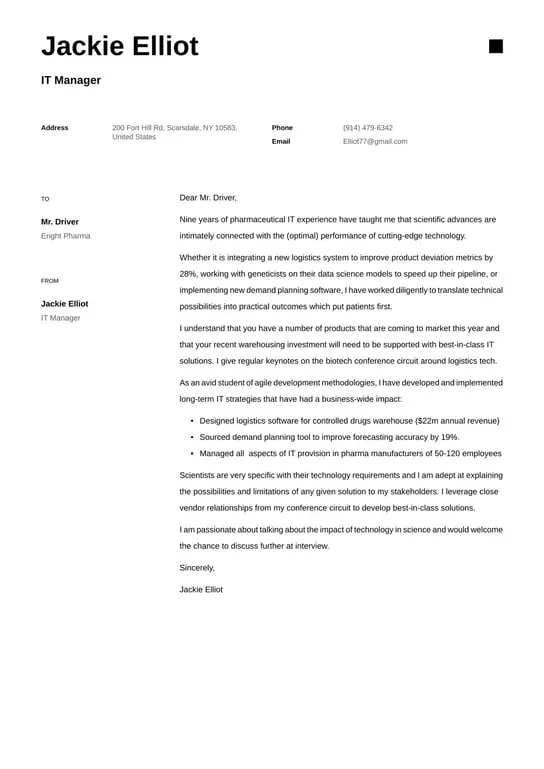
A successful tech cover letter is more than just a summary of your resume; it’s a targeted marketing document designed to sell your skills and experience to a specific employer. To create a compelling cover letter, you need to understand its basic structure and the purpose of each section. Begin with a professional header, including your contact information, the date, and the hiring manager’s name and title, if possible. The opening paragraph should immediately grab the reader’s attention by stating the position you’re applying for and briefly explaining why you’re interested in the role and the company. The body of the letter should showcase your relevant skills and experience, providing specific examples of your accomplishments and quantifying your achievements whenever possible. Finally, conclude with a strong closing paragraph that reiterates your interest, expresses your enthusiasm, and includes a call to action, such as requesting an interview.
Your tech cover letter should be concise, focused, and easy to read. Avoid jargon and technical terms that the hiring manager might not understand. Use clear, concise language and active voice. Maintain a professional tone throughout the letter, and tailor it to the specific requirements of the job description. Remember, the goal of your cover letter is not only to showcase your technical abilities but also to demonstrate your personality, your passion for technology, and your understanding of the company’s needs. By following these guidelines, you can create a cover letter that makes a lasting impression and increases your chances of landing your dream job.
Your Header & Contact Information

The header of your cover letter serves as the foundation for a professional presentation, ensuring your contact information is readily available and easy to access. This section typically includes your full name, professional contact number, email address, and a link to your professional online presence, such as a LinkedIn profile or a personal website. Ensure that the contact information is accurate and up-to-date, as this is the primary way a recruiter or hiring manager will reach you. The inclusion of your LinkedIn profile provides an immediate link to your professional background and accomplishments, allowing the reader to quickly assess your experience and expertise. If you have a personal website or portfolio that showcases your work, including this link can also be a great way to highlight your skills and projects.
Following your contact information, include the date and the recipient’s details, such as the hiring manager’s name, title, and the company’s address. If you know the name of the hiring manager, use it; otherwise, you can use a general salutation like ‘Dear Hiring Manager.’ Ensure that the information is accurate and that the format is consistent with the rest of the document. The header should be well-organized, visually appealing, and free of errors. A well-crafted header sets a professional tone for your cover letter and makes a positive first impression on the reader. Pay attention to the layout and formatting of your header, ensuring that it is easy to read and visually balanced with the rest of the letter.
Crafting a Compelling Opening
The opening paragraph of your cover letter is crucial as it’s the first opportunity to grab the reader’s attention and make a strong impression. Instead of a generic opening, personalize your introduction by stating the specific position you’re applying for and how you found the job posting. If you were referred by someone, mention their name; this immediately establishes a connection. Briefly explain why you’re interested in the role and the company. What specifically attracted you to the opportunity? Demonstrating genuine enthusiasm and a clear understanding of the company’s mission, values, or recent projects can make your application stand out from the competition. For example, you might start by mentioning a specific project or technology that aligns with your skills and the company’s work.
Avoid clichés and overly formal language. Instead, use a confident, professional tone that reflects your personality. Keep the opening concise, typically no more than three to four sentences. Clearly state your purpose in writing and set the stage for the rest of your letter. Your opening should serve as a concise introduction to your candidacy, creating intrigue and encouraging the hiring manager to continue reading. This is the chance to show your passion for technology and make it clear why you’re excited about the specific opportunity. Think of it as a ‘hook’ that makes the reader want to learn more about you and your qualifications. For example, referencing a recent company achievement or a relevant industry trend can demonstrate your awareness and interest.
Showcasing Your Tech Skills and Experience
The body of your tech cover letter is where you highlight your relevant skills and experience, connecting them to the specific requirements outlined in the job description. Review the job posting carefully and identify the key skills and qualifications the employer is seeking. Then, provide specific examples of how you have demonstrated those skills in previous roles or projects. Instead of simply listing your skills, explain how you used them to achieve results. Use action verbs to describe your accomplishments, such as ‘developed,’ ‘implemented,’ ‘managed,’ or ‘optimized.’ Quantify your achievements whenever possible by providing data, statistics, or metrics to demonstrate the impact of your work. For instance, instead of saying ‘Improved website performance,’ you could say ‘Improved website loading speed by 30%, resulting in a 20% increase in user engagement.’
Tailor your examples to the specific job description, showcasing your understanding of the company’s needs and the role’s responsibilities. Highlight the technologies and tools you’ve used, and explain how you used them to solve problems or achieve goals. Focus on the impact of your contributions, emphasizing the value you brought to previous employers or projects. Remember, your cover letter is not just a summary of your resume; it’s an opportunity to tell a story about your professional journey and demonstrate your capabilities. Provide context for your achievements, explaining the challenges you faced and the strategies you employed to overcome them. A well-crafted cover letter paints a clear picture of your skills, experience, and potential, making you a more attractive candidate.
Quantifying Your Achievements

Quantifying your achievements in a technology cover letter is a crucial step toward demonstrating your value to potential employers. Rather than making vague statements about your skills, provide concrete examples of your accomplishments, supported by measurable results. For example, instead of stating that you ‘improved software performance,’ specify the exact percentage or amount of improvement, such as ‘reduced software latency by 25%.’ Quantifiable data allows the hiring manager to easily understand the impact of your contributions and assess your ability to deliver results. Use numbers, percentages, and specific figures to showcase your achievements and make your cover letter more compelling and impactful.
When quantifying your achievements, be as specific as possible. Include details such as the time frame in which you achieved the results, the tools and technologies you used, and the context of the project. For instance, if you ‘increased website traffic,’ state the exact percentage increase, the period it occurred, and the strategies you implemented. This adds credibility and demonstrates that you have a data-driven approach. If you led a team, highlight your contributions to team success, for example, ‘managed a team of five developers, delivering the project 15% under budget and 2 weeks ahead of schedule.’ This not only underscores your technical skills but also illustrates your leadership and project management abilities. Remember to keep your achievements concise and relevant to the job requirements.
Tailoring Your Cover Letter for Each Job
Customizing your cover letter for each job application is essential for demonstrating your genuine interest in the position and the company. A generic cover letter sent to multiple employers is easily recognizable and can diminish your chances of getting an interview. Tailoring your cover letter involves carefully reviewing the job description, understanding the company’s mission and values, and highlighting the skills and experiences that align with the specific requirements. Research the company to understand its current projects, technologies, and industry position. Then, use this information to demonstrate that you understand the company’s needs and challenges. The more personalized your cover letter, the more likely you are to make a lasting impression.
To tailor your cover letter effectively, start by customizing your opening paragraph, expressing your interest in the specific role and company, and explaining why you believe you’re a good fit. In the body of the letter, focus on the skills and experiences that are most relevant to the job requirements. Use the same keywords and phrases from the job description to demonstrate your understanding of the role. Provide specific examples of your accomplishments that align with the company’s needs and the job’s responsibilities. Adjust your closing paragraph to reiterate your enthusiasm and emphasize your unique value proposition. By personalizing your cover letter, you demonstrate that you’ve taken the time to understand the company and its needs, increasing your chances of securing an interview.
Highlighting Relevant Projects and Technologies
Highlighting relevant projects and technologies in your tech cover letter is a direct way to demonstrate your skills and experiences. Choose projects that directly align with the job requirements and showcase the technologies and tools you are proficient in. Describe the project, your role, and the specific technologies you used, then focus on the outcomes and the impact of your work. If you worked on a project that utilized specific programming languages, software, or platforms, mention them and explain how you used them to solve problems or achieve goals. Be sure to demonstrate how your technical knowledge aligns with the requirements stated in the job description. If you have a portfolio or website, include a link to showcase your projects.
When describing your projects, prioritize the technologies that are most relevant to the job. If the job description mentions a specific programming language or software, make sure you highlight your experience with it. Provide specific examples of how you applied those technologies, explaining the challenges you faced and how you overcame them. Don’t just list the technologies; explain how you used them to achieve results. If a project resulted in increased efficiency, cost savings, or improved performance, quantify these achievements. Focus on the impact of your work, showcasing your ability to apply your technical knowledge to deliver tangible results. For example, instead of just saying ‘Used Python,’ say ‘Developed a Python script that automated data analysis, resulting in a 40% reduction in processing time’.
Addressing the Specific Needs of the Company

Addressing the specific needs of the company in your technology cover letter demonstrates that you have researched the organization and understand its goals, challenges, and culture. To do this, review the company’s website, social media profiles, and any news or press releases to understand its current projects, technologies, and industry position. Identify how your skills and experiences can contribute to the company’s success and address any specific needs or challenges mentioned in the job description or company materials. The goal is to convince the hiring manager that you understand their business and can offer solutions to their unique problems.
Tailor your cover letter by referencing the company’s values, mission, or recent achievements. Explain how your skills and experiences align with their goals and how you can contribute to their ongoing projects. If the company is working on a specific project or utilizing a particular technology, mention your experience with it and explain how you can leverage that knowledge to help them succeed. Showcase your understanding of their industry, market, and competitors. Address any challenges the company might be facing, and demonstrate how your skills and experiences can provide solutions. By highlighting your understanding of the company’s specific needs, you position yourself as a valuable asset who can make an immediate impact. The more specific you are, the more you demonstrate your genuine interest and suitability for the role.
Writing a Strong Closing
The closing paragraph of your technology cover letter is your final opportunity to make a lasting impression and encourage the hiring manager to take action. Begin by reiterating your interest in the position and the company. Briefly summarize your key qualifications and why you believe you’re a good fit for the role. Express your enthusiasm for the opportunity and your eagerness to contribute to the company’s success. End with a clear call to action, such as requesting an interview or offering to provide additional information. Make it easy for the hiring manager to take the next step by including your contact information and thanking them for their time and consideration.
Avoid clichés and overly formal language in your closing. Instead, use a confident and professional tone that reflects your personality and your passion for technology. Keep the closing concise, typically no more than three to four sentences. Express your gratitude for the opportunity to be considered for the role. Be proactive and express your willingness to follow up with the hiring manager. The goal is to leave a positive and memorable impression, motivating the hiring manager to take the next step. End on a strong, positive note, signaling your eagerness to contribute to the team. For instance, consider writing something such as, ‘I am excited about the prospect of joining your team and contributing to [Company’s Goal]. I look forward to discussing my qualifications further in an interview.’
Proofreading and Editing Your Cover Letter
Proofreading and editing your technology cover letter are essential steps for ensuring that your application presents you in the best possible light. A cover letter riddled with errors can undermine your credibility and professionalism, even if you have the necessary skills and experience. Start by checking for grammatical errors, spelling mistakes, and punctuation issues. Review the letter for clarity and conciseness, ensuring that your message is easy to understand and that you’re using clear and concise language. Read the letter aloud to identify any awkward phrasing or sentences that might need to be reworded. Consider using online grammar and spell-checking tools, but don’t rely on them entirely.
Ask a friend, family member, or career advisor to proofread your cover letter. Another pair of eyes can often catch errors that you might have missed. Focus on the layout and formatting, ensuring that the letter is visually appealing and easy to read. Make sure that your contact information is accurate and up-to-date. Review the letter for consistency, ensuring that your tone and style are consistent throughout. Check that the letter aligns with the job description and highlights your relevant skills and experiences. Before submitting your application, make one final review to confirm that you have addressed all the requirements and that your cover letter presents you as a confident, qualified candidate. A well-proofread and edited cover letter reflects your attention to detail and your professionalism, increasing your chances of getting an interview.