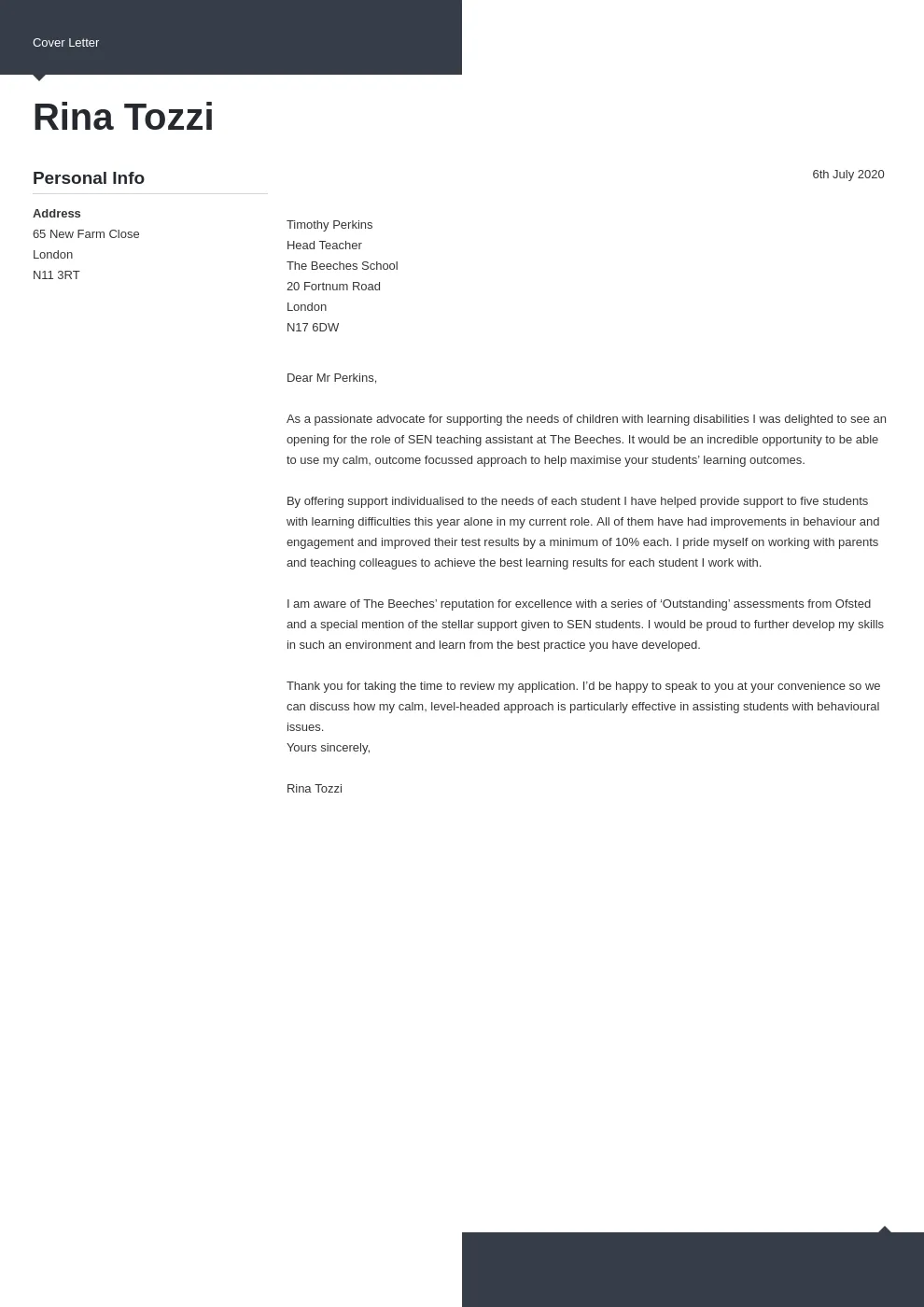
Crafting the Perfect Teacher Assistant Cover Letter
A well-crafted teacher assistant cover letter is your first step toward landing your dream job. It’s your chance to make a great first impression and showcase why you’re the perfect candidate. This guide provides actionable tips to help you create a compelling cover letter that grabs the attention of hiring managers and sets you apart from the competition. From highlighting your skills and experience to avoiding common pitfalls, we’ll cover everything you need to know to make your application shine.
Understanding the Purpose of a Cover Letter
The primary purpose of a cover letter is to introduce yourself and explain why you’re a good fit for the specific teacher assistant position. Think of it as a personal advertisement, providing context to your resume. It allows you to elaborate on your key skills, demonstrate your enthusiasm for the role, and showcase your personality. A strong cover letter moves beyond simply repeating your resume; it tells a story about your passion for education and your ability to support student learning.
Highlighting Your Skills and Experience

Your cover letter is the perfect place to highlight the skills and experiences that make you an ideal teacher assistant. Focus on the qualifications that directly relate to the job description. This demonstrates to the employer that you understand their needs and have what it takes to succeed in the role. Quantify your achievements whenever possible; this provides concrete evidence of your abilities and accomplishments. By emphasizing relevant skills and experience, you prove your suitability for the position and increase your chances of getting an interview.
Essential Skills for a Teacher Assistant
Successful teacher assistants possess a diverse range of skills that contribute to a positive learning environment. Consider skills such as communication, both written and verbal, as you will be interacting with students, teachers, and parents. Organization is critical to managing classroom materials and assisting with administrative tasks. Patience and empathy are important when working with students of all abilities and backgrounds. Adaptability allows you to adjust to different teaching styles and classroom situations. Finally, the ability to work as part of a team with other teachers and staff members is crucial.
Relevant Experience to Showcase
When highlighting your experience, focus on how your past roles have prepared you for this position. Did you volunteer in a classroom setting? Did you work with children in a camp or tutoring program? Even non-traditional experiences can be relevant. For example, experience in customer service can translate to strong communication and problem-solving skills. Childcare experience can demonstrate your ability to work with children and manage their needs. Tailor your examples to match the specific requirements of the job description, showing that you have the necessary experience to thrive as a teacher assistant.
Formatting Your Teacher Assistant Cover Letter

The layout of your cover letter is as important as its content. A well-formatted letter is easy to read and demonstrates professionalism. Proper formatting also helps employers quickly find the most important information. Use a clean and readable font, such as Times New Roman or Arial, with a font size between 10 and 12 points. Ensure your letter is well-organized with clear headings and concise paragraphs. Keep the tone professional and respectful, and proofread carefully for any typos or grammatical errors. Formatting a cover letter requires attention to detail and provides another opportunity to showcase your professionalism.
Contact Information and Salutation
Start your cover letter with your contact information, including your name, address, phone number, and email address. This information should be easily accessible at the top of the letter. Below your contact information, include the date and the hiring manager’s name and title, if known. If you cannot find the hiring manager’s name, use a general salutation like “Dear Hiring Manager.” Avoid generic greetings such as “To Whom It May Concern.” When you address the specific person, it shows you put in the effort to customize your cover letter.
Body Paragraph Structure
The body of your cover letter is where you’ll expand on your skills and experience. A well-structured cover letter includes an introduction, several middle paragraphs, and a closing. The introduction should grab the reader’s attention and state the purpose of your letter. The middle paragraphs should showcase your qualifications and provide specific examples. Finally, the closing should summarize your key qualifications and include a clear call to action, such as requesting an interview. This structure helps create a cohesive and persuasive narrative.
Opening Paragraph Grabbing Attention

The opening paragraph is your first opportunity to make a positive impression. Start with a strong hook that captures the reader’s interest. State the position you are applying for and where you saw the job posting. Briefly mention your relevant experience or a key skill that aligns with the role. Your opening should make the reader want to continue reading to learn more about you. Avoid generic opening sentences; instead, aim for something that immediately conveys your enthusiasm and suitability for the position.
Middle Paragraphs Showcasing Qualifications
The middle paragraphs are where you delve into your qualifications. Use these paragraphs to elaborate on your skills and experiences, providing specific examples that demonstrate your abilities. Align your examples with the requirements outlined in the job description. If the job requires experience with a particular software or skill, be sure to mention it. Quantify your accomplishments whenever possible; for example, mention the number of students you’ve assisted or projects you’ve managed. Use these middle paragraphs to tell a story about why you are the right fit for the job.
Closing Paragraph Call to Action
The closing paragraph should summarize your key qualifications and reiterate your enthusiasm for the position. Thank the hiring manager for their time and consideration. Include a clear call to action, such as requesting an interview or expressing your interest in discussing your qualifications further. Provide your contact information again to make it easy for the hiring manager to reach you. End with a professional closing, such as “Sincerely” or “Best regards”, followed by your name.
Common Mistakes to Avoid

Avoiding common mistakes can significantly increase your chances of landing an interview. Hiring managers often quickly dismiss applications that contain obvious errors. Pay close attention to every detail, and always proofread carefully before submitting your cover letter. Avoiding these common mistakes will help you create a more professional and compelling application.
Generic Language and Lack of Personalization
Generic language and a lack of personalization can make your cover letter appear uninspired. Avoid using phrases that could apply to any job or company. Instead, tailor your letter to the specific position and school. Research the school’s mission, values, and programs, and mention them in your cover letter. Show the hiring manager that you have a genuine interest in the specific opportunity and have taken the time to learn about the school and its needs. Use specific examples to show you’ve got the appropriate skills for the job.
Typos and Grammatical Errors
Typos and grammatical errors can damage your credibility. Carefully proofread your cover letter for any mistakes. Read it aloud to catch errors you might miss when reading silently. Use spell-check and grammar-check tools, but don’t rely on them completely. Have someone else review your letter for you, as a fresh pair of eyes can often spot errors you’ve overlooked. Thorough proofreading demonstrates your attention to detail and professionalism.
Focusing Solely on Responsibilities

Simply listing your past responsibilities isn’t enough to make your cover letter stand out. Employers want to know what you accomplished in those roles. Instead of just stating your duties, provide examples of your achievements and the impact you made. Quantify your results whenever possible; this provides concrete evidence of your skills. Explain how your past experiences have prepared you for this specific position and what you can bring to the school. Highlighting accomplishments shows that you are not only capable, but can also get results.
Tailoring Your Letter for Impact
Tailoring your cover letter to each specific job is essential for making a strong impression. Generic cover letters often end up in the trash. Take the time to understand the requirements of the position and the values of the school. Customizing your letter demonstrates your genuine interest and increases your chances of being selected for an interview. This personalized approach shows employers that you are serious about the opportunity and that you’ve done your homework.
Researching the School and Position
Research the school thoroughly. Visit the school’s website, read their mission statement, and learn about their programs and values. Understanding the school’s culture will help you tailor your letter to their specific needs. Also, carefully review the job description and identify the key skills and experiences they are looking for. Use this information to highlight the most relevant aspects of your background. The more you know about the school and the position, the better you can tailor your letter to make a lasting impression.
Customizing Your Content

Once you understand the school and the position, customize your content to align with their needs. Use keywords and phrases from the job description to demonstrate that you meet their requirements. Provide specific examples from your past experiences that show how you’ve used your skills to achieve positive outcomes. If the school emphasizes a particular educational philosophy, incorporate it into your letter. By customizing your content, you prove that you’re not just sending a generic application, but that you are genuinely interested in the role and the school.
Providing Specific Examples
Instead of making vague statements about your skills and abilities, provide specific examples that demonstrate your qualifications. For example, instead of saying, “I am a good communicator,” describe a situation where you successfully communicated with students, parents, or teachers. Use the STAR method (Situation, Task, Action, Result) to structure your examples. This allows you to provide context, explain your role, describe your actions, and highlight the positive results. By providing concrete examples, you make your cover letter more compelling and memorable.
Finalizing and Submitting Your Cover Letter
Once you’ve written your cover letter, it’s time to finalize it and prepare it for submission. This stage is crucial, as it ensures that your application is polished, professional, and ready to impress. Pay close attention to details, and double-check everything before sending it. A well-prepared application increases your chances of getting the interview and ultimately, the job. Following these steps will help you create a cover letter that is free of errors and ready to make a great impression.
Proofreading and Editing

Proofreading and editing are essential steps in finalizing your cover letter. Carefully review your letter for any typos, grammatical errors, or inconsistencies. Read it aloud to catch any awkward phrasing or errors that you might miss when reading silently. Use spell-check and grammar-check tools, but don’t rely on them entirely. Have someone else review your letter, as a fresh pair of eyes can often spot errors that you’ve overlooked. Multiple rounds of proofreading will help you ensure your letter is polished and error-free.
Choosing the Right File Format
When submitting your cover letter, choose the correct file format. The most common format is PDF (Portable Document Format), as it preserves the formatting of your letter regardless of the recipient’s operating system or software. Always save your cover letter as a PDF unless the job posting specifies a different format. Make sure your file name is professional and includes your name and the position you’re applying for. For example, “[Your Name] - Teacher Assistant Cover Letter.” A properly formatted file demonstrates attention to detail and professionalism.
Submitting Your Application
Before submitting your cover letter and resume, carefully review the job posting for any specific instructions. Some employers may prefer applications submitted through an online portal, while others may request email submissions. Always follow the instructions exactly to avoid any misunderstandings. Double-check that you’re sending your application to the correct email address or uploading it to the right portal. After submitting your application, consider sending a brief follow-up email or note of appreciation to the hiring manager a week or two later. A properly submitted application shows you followed instructions and demonstrates your commitment to the opportunity.