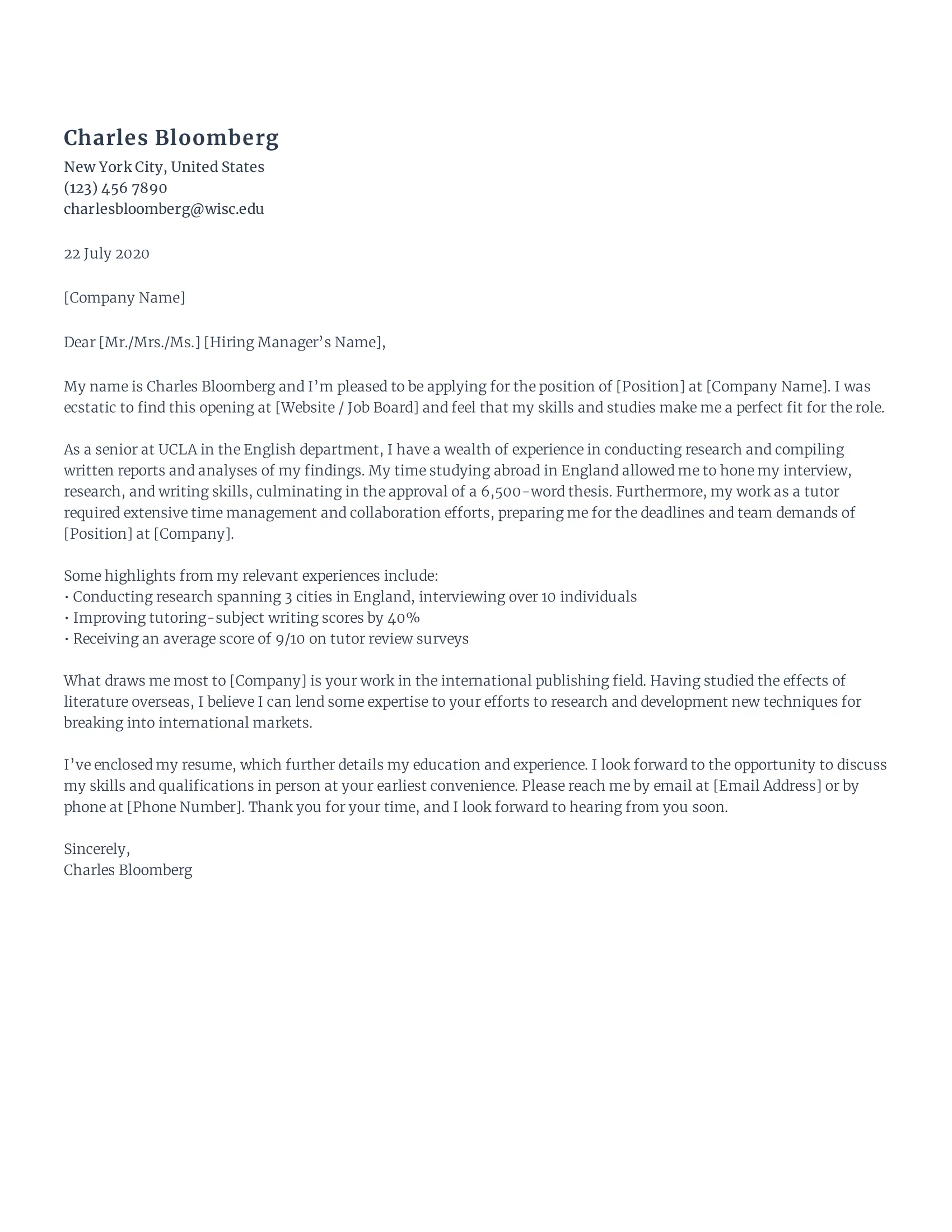
What is a Student Cover Letter
A student cover letter is a document that accompanies your resume when applying for jobs, internships, or other opportunities. It serves as a personalized introduction, allowing you to showcase your skills, experiences, and enthusiasm for the specific position. Unlike a resume, which is a factual overview of your qualifications, a cover letter provides a space to elaborate on your achievements and explain why you are a good fit for the role. It is your opportunity to make a strong first impression and persuade the hiring manager to read your resume and consider you for an interview. A well-crafted cover letter is crucial for students as it demonstrates professionalism, communication skills, and a genuine interest in the opportunity. It helps you stand out from other applicants and increases your chances of getting noticed by potential employers.
Why is a Student Cover Letter Important
A student cover letter is important because it provides context to your resume. As a student, you may have limited professional experience, so the cover letter allows you to highlight relevant skills gained through academics, extracurricular activities, and volunteer work. It gives you a platform to articulate your career goals and explain how the opportunity aligns with your aspirations. Moreover, a cover letter allows you to demonstrate your communication skills, including your ability to write clearly, concisely, and persuasively. It showcases your personality and enthusiasm, making you more than just a list of qualifications on a resume. When done well, a cover letter can be a crucial asset in helping students land jobs or internships. It personalizes your application, shows genuine interest, and adds value to your resume, ultimately making a stronger case for why you are a suitable candidate.
Essential Elements of a Student Cover Letter

Crafting an effective student cover letter involves several key elements that work together to present you as a strong candidate. Begin by including your contact information at the top, followed by a professional greeting that addresses the hiring manager by name, if possible. The opening paragraph should capture attention by stating your purpose for writing and expressing your enthusiasm for the opportunity. The body of the letter should highlight your skills, experiences, and academic achievements, emphasizing how they align with the job requirements. Show your enthusiasm by mentioning something specific about the company or role that interests you. Conclude with a call to action, expressing your eagerness for an interview and thanking the reader for their time and consideration. Proofread carefully for any errors and ensure your cover letter complements your resume.
Contact Information
At the top of your student cover letter, include your full name, address, phone number, and email address. Make sure your contact information is easy to read and current. Using a professional-sounding email address is a must. This information allows the hiring manager to quickly reach you if they are interested in proceeding to the next stage. Ensure that the formatting is consistent with your resume for a polished and professional look.
Professional Greeting
Address the hiring manager by name, if possible. This demonstrates that you have taken the time to research the company and personalize your application. If the name is not available, use a professional greeting such as “Dear Hiring Manager.” Avoid generic greetings like “To Whom It May Concern,” as this can make your application feel impersonal. A specific greeting shows attention to detail and respect for the hiring process, making your application stand out positively.
Opening Paragraph

The opening paragraph of your student cover letter is your first chance to grab the reader’s attention. Clearly state the position you are applying for and how you learned about the opportunity. Express your enthusiasm for the role and the company. Briefly mention why you are a suitable candidate and what unique skills or experiences you bring to the table. This sets the tone for the rest of your letter and encourages the hiring manager to continue reading. A well-crafted opening paragraph is essential for capturing interest and making a positive first impression.
Highlighting Skills and Experience
Use this section to discuss the skills and experiences that are relevant to the job you are applying for. Even if you have limited professional experience, emphasize the skills gained from academic projects, extracurricular activities, volunteer work, or part-time jobs. Provide specific examples that demonstrate how you have applied these skills in the past. Use action verbs to describe your achievements and quantify your results whenever possible. Focus on the skills mentioned in the job description to show that you have carefully considered the requirements of the position. Tailor your letter to each application to ensure you address the specific needs of the role.
Showcasing Academic Achievements
Include your relevant academic achievements, such as your major, GPA (if it is impressive), and any honors or awards you have received. Discuss any projects or coursework that are related to the job. Highlight any research experience or publications that demonstrate your expertise in the field. Academic achievements can showcase your ability to learn, apply knowledge, and succeed in a structured environment. By mentioning relevant academic accomplishments, you can highlight your commitment to excellence and provide context for your skills and knowledge.
Demonstrating Enthusiasm and Fit

Express your genuine enthusiasm for the opportunity and the company. Show that you have researched the company and understand its mission, values, and culture. Explain why you are particularly interested in this role and how it aligns with your career goals. Mention any specific projects, initiatives, or aspects of the company that resonate with you. Demonstrating enthusiasm makes a positive impression, indicating that you are motivated and eager to contribute. This helps the hiring manager see that you are not just looking for a job but are genuinely interested in the company and the role.
Call to Action and Closing
Conclude your student cover letter by including a call to action. Express your eagerness to have an interview and discuss your qualifications further. Thank the hiring manager for their time and consideration. Reiterate your contact information. Use a professional closing such as “Sincerely” or “Best regards” followed by your full name. A strong closing leaves a positive and lasting impression. It provides a clear next step, allowing the hiring manager to know how you want to proceed.
Formatting and Design Tips
The format of your student cover letter is important, as it impacts readability. Proper formatting and design ensure your letter looks professional and is easy to read. Make sure your letter is well-organized, clean, and visually appealing to make the best impression. Clean formatting shows attention to detail and professionalism, helping you to stand out. Use these tips to make your student cover letter a success.
Choosing the Right Font

Choose a clear and professional font such as Times New Roman, Arial, Calibri, or Helvetica. Use a font size between 10 and 12 points for the body of your letter, making it easy to read. Ensure consistency in font style and size throughout the document. Avoid using overly decorative fonts or fonts that are difficult to read, as they can distract from the content of your letter. The right font choice contributes to a professional and polished look, conveying the professionalism expected by the reader.
Formatting with Proper Margins and Spacing
Use standard one-inch margins on all sides of your student cover letter. Use single-spacing for the body of your letter and double-spacing between paragraphs. Ensure that your text is left-aligned for easy readability. Avoid using excessive whitespace or crowding your text, as this can make your letter look unprofessional. Proper spacing and margins ensure your letter appears balanced and easy to read, making a positive impression on the hiring manager.
Proofreading and Editing
Proofread your student cover letter carefully for any grammatical errors, spelling mistakes, and typos. Errors can damage your credibility and make you appear unprofessional. Use a grammar checker and consider having someone else review your letter for a fresh perspective. Ensure your language is clear, concise, and free of jargon or slang. A polished and error-free letter shows attention to detail and commitment to quality. This demonstrates to the hiring manager that you are able to produce professional, clear, and mistake-free written communications.
Example Student Cover Letter

While it’s best to tailor each letter to a specific job, looking at examples can help you get started. Search online for cover letter examples for students to get an idea of format and content. Make sure you are not copying the template, but using it as a guide. You can learn from the phrasing, and adapt it to your personal experiences and the job description requirements. Creating an example can save you time, but remember to adapt it to the job and company. This ensures that the cover letter is the best fit for the role.
Cover Letter Template for Students
Using a cover letter template can be a great way to start. Templates provide a structure and format, helping you organize the essential components of your letter. Online resources often offer free templates tailored for students. Using a template helps you keep your letter organized and ensures all the vital information is included. Remember to personalize the template with your information. This is important for making your cover letter unique to you and the job.
Common Mistakes to Avoid
Avoid common mistakes in your student cover letter. Do not use generic language and tailor it to each job application. Do not make spelling or grammar errors as these errors can make you look unprofessional. Avoid listing your entire resume in your cover letter, it should highlight key accomplishments. Do not be too casual in your writing; use professional language. Ensure you avoid negative statements or complaints. By avoiding these common mistakes, you can write a more effective cover letter.
Submitting Your Student Cover Letter

Always follow the instructions provided in the job posting for submitting your student cover letter and resume. Typically, you will submit both documents as attachments in a single email. Name your files clearly, using your name and the job title. For example, “Jane Doe - Cover Letter - Marketing Intern.” Make sure to send your documents in PDF format unless otherwise specified to preserve the formatting. By following these steps, you ensure that your application is presented professionally, which increases your chances of being noticed and considered for an interview.
Reviewing and Adapting Your Cover Letter
Review your student cover letter after you have written it. Make sure it accurately reflects your skills, experiences, and career goals. Adapt your cover letter to each job application by customizing it for each role and company. This shows employers you took the time to understand their needs. Regularly review and update your cover letter to reflect any new experiences or skills you have acquired. Adapting your cover letter helps to maintain its relevance, increase your effectiveness, and improve your chances of securing an interview. By following these guidelines, you can create a strong and effective cover letter that helps you stand out from other job applicants.