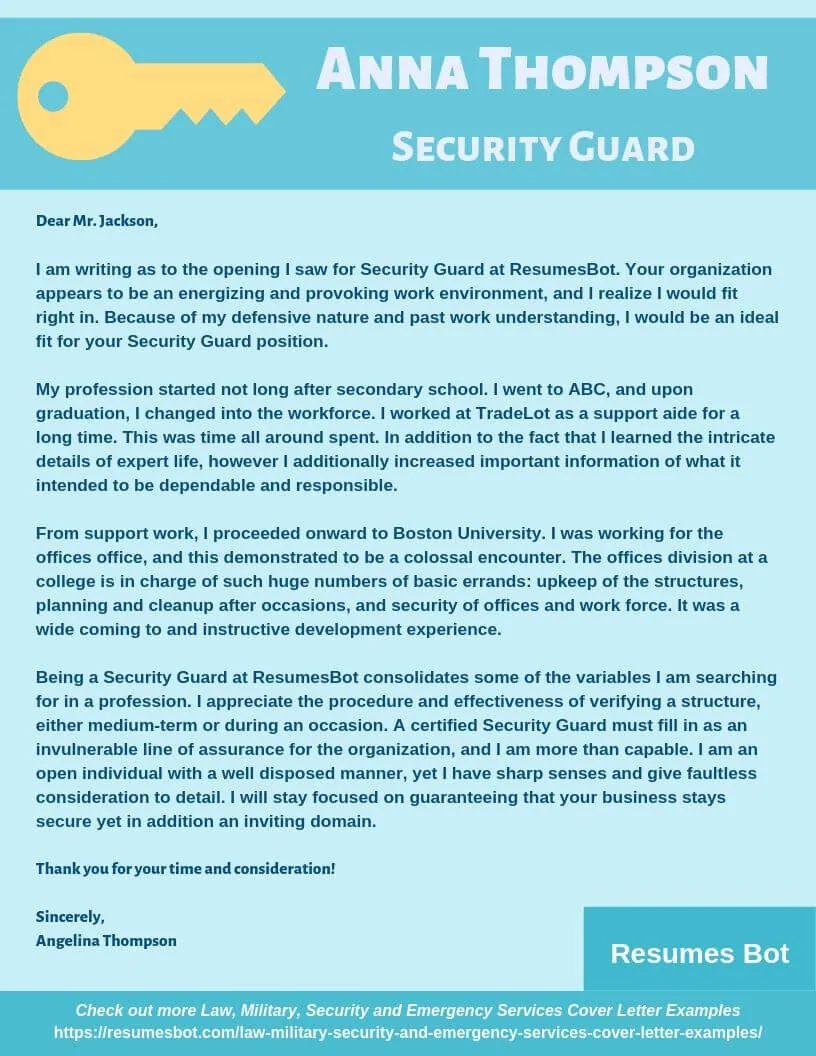
Crafting Your Security Guard Cover Letter
A well-written security guard cover letter is your first impression on a potential employer, and it can significantly increase your chances of landing an interview. This guide provides a comprehensive overview of how to craft a compelling cover letter that highlights your skills, experience, and suitability for the security guard position. From understanding the purpose of a cover letter to providing examples and formatting guidelines, this guide covers everything you need to know to make your application stand out. Remember, the goal is to demonstrate your professionalism, attention to detail, and commitment to security. Taking the time to create a customized cover letter showcases your genuine interest in the specific role and company, setting you apart from other applicants.
Understanding the Purpose of a Cover Letter
The primary purpose of a cover letter is to introduce yourself to the hiring manager and express your interest in the security guard position. It allows you to elaborate on your qualifications and explain why you are the best fit for the role. Unlike a resume, which provides a factual summary of your experience, a cover letter gives you the opportunity to tell your story, highlight your relevant skills, and demonstrate your personality. A well-crafted cover letter showcases your communication skills, attention to detail, and understanding of the job requirements. It’s also a chance to personalize your application and connect with the employer on a more personal level, expressing your enthusiasm for the opportunity and company values.
Highlighting Key Skills and Qualifications

Security guard positions require a specific set of skills and qualifications. Your cover letter should prominently feature these. Emphasize your ability to observe, monitor, and report incidents effectively. Highlight any experience you have with access control, surveillance systems, and emergency response procedures. Include any certifications you possess, such as those in first aid, CPR, or self-defense. Tailor your skills to match the job description, ensuring that you emphasize the qualifications that are most relevant to the specific role and company. This may include communication skills, problem-solving abilities, and the capacity to remain calm under pressure. Demonstrate that you understand the importance of maintaining a safe and secure environment.
Reviewing the Job Description
Before you start writing your cover letter, thoroughly review the job description. Identify the key requirements and skills the employer is seeking. This will help you tailor your cover letter to address the specific needs of the position. Look for keywords and phrases that are used in the job posting and incorporate them into your cover letter. By demonstrating that you understand the requirements of the role and possess the necessary qualifications, you can significantly increase your chances of being considered for an interview. Showing that you have carefully read and understood the job posting highlights your attention to detail and proactive approach, qualities highly valued in security professionals. Make sure to address each key requirement or skill mentioned in the description, using your own experiences as evidence.
Tailoring Your Cover Letter
Avoid using a generic cover letter. Instead, personalize your letter for each job you apply for. Tailor the content to the specific requirements of the position and the company. Research the company and mention something that demonstrates your interest in their organization. Personalize your cover letter by mentioning the company’s mission, values, or recent accomplishments, if applicable. This demonstrates that you have taken the time to learn about the company and are genuinely interested in working there. This approach shows initiative and suggests that you are not just looking for any job, but are specifically interested in this opportunity. By tailoring your letter, you show you’re invested and a good fit for their culture, increasing your chances of securing an interview.
Structuring Your Security Guard Cover Letter

A well-structured cover letter is essential for making a positive impression. It should follow a clear and logical format that is easy to read and understand. Ensure that each section of your cover letter serves a specific purpose and contributes to your overall message. The standard structure typically includes header information, a greeting, an opening paragraph, body paragraphs, a closing paragraph, and a call to action. Each part of the cover letter should flow smoothly into the next, creating a cohesive narrative that highlights your key skills and experiences. Use clear language, concise sentences, and professional formatting to effectively communicate your qualifications and enthusiasm to the hiring manager.
Header Information
Your cover letter should begin with a professional header that includes your contact information. Include your full name, address, phone number, and email address. You can also include a link to your LinkedIn profile, if you have one. Ensure that your contact information is accurate and up-to-date. The header serves as the first point of contact and should be easily accessible. Using a clear, professional format for your header ensures that the hiring manager can quickly reach you. Double-check all contact details to prevent any errors. The header sets a professional tone and makes it easy for the employer to follow up with you.
Greeting
The greeting sets the tone for your cover letter. If possible, address the hiring manager by name. Research the company and the job posting to find the name of the hiring manager or the person in charge of recruiting. If you are unable to find a specific name, use a general greeting such as “Dear Hiring Manager” or “Dear [Company Name] Hiring Team.” Avoid generic greetings like “To Whom It May Concern,” as they can make your letter seem impersonal. A personalized greeting shows you’ve invested time and effort. Make sure to spell the name correctly, as it shows your attention to detail.
Opening Paragraph

Your opening paragraph should immediately grab the reader’s attention and express your interest in the security guard position. State the specific position you are applying for and how you found the job posting. Briefly mention why you are interested in the role and what you hope to achieve in the position. This is your opportunity to make a strong first impression and to set the tone for the rest of your letter. Keep it concise and focus on expressing your enthusiasm and commitment to the role. This is the first opportunity to showcase your communication skills and highlight the specific job.
Body Paragraphs
The body paragraphs are where you elaborate on your qualifications and explain why you are the best fit for the security guard position. Use these paragraphs to highlight your relevant skills, experience, and achievements. Provide specific examples to illustrate your capabilities, such as experience with security protocols, surveillance systems, or emergency response. Tailor these paragraphs to the job description, ensuring that you address the key requirements and skills mentioned in the posting. Focus on quantifiable achievements, such as the number of incidents you’ve handled or the improvements you’ve made in security protocols. Use clear, concise language and organize your thoughts logically to create a compelling narrative.
Highlighting Relevant Experience
When highlighting your relevant experience, focus on the skills and responsibilities that align with the job description. Describe your previous security guard positions or any related experience, such as law enforcement or military service. Use action verbs to describe your accomplishments and responsibilities, such as “monitored,” “patrolled,” “investigated,” and “responded.” Provide specific examples of how you handled difficult situations, maintained security protocols, or improved safety measures. Quantify your achievements whenever possible, such as the number of incidents you successfully resolved or the efficiency improvements you made. This will show the impact of your previous role.
Quantifying Achievements

Quantifying your achievements is a powerful way to demonstrate the value you bring to the table. Instead of simply stating that you have experience, provide specific numbers and metrics to showcase your accomplishments. For example, you might mention the number of security breaches you prevented, the percentage reduction in incidents you achieved, or the number of people you assisted during an emergency. Use data to illustrate the impact of your work and the results you have achieved in previous roles. This helps the hiring manager understand the value you will bring to their organization. Provide context for those numbers by explaining the situation and the actions you took to achieve those results.
Showcasing Soft Skills
In addition to your technical skills, highlight your soft skills. Security guard positions require a range of interpersonal and personal attributes, such as strong communication skills, attention to detail, problem-solving abilities, and the ability to remain calm under pressure. Provide examples of how you have demonstrated these skills in previous roles. This might include handling difficult situations, working effectively as part of a team, or communicating clearly with colleagues and the public. Showcasing your soft skills demonstrates your ability to excel in a diverse and challenging environment. Demonstrating these attributes makes you more than just a qualified candidate; it proves you can thrive in the role.
Closing Paragraph
Your closing paragraph should reiterate your interest in the security guard position and summarize why you are the best candidate. Thank the hiring manager for their time and consideration. Reiterate your key skills and qualifications, and emphasize your enthusiasm for the opportunity. Keep it concise and professional, and leave a lasting positive impression. Avoid simply repeating information already mentioned in your letter; instead, provide a final, compelling statement that reinforces your suitability for the role. Express your confidence in your ability to contribute to their team.
Call to Action

End your cover letter with a clear call to action. Indicate that you are eager to learn more about the position and are available for an interview. Provide your contact information again to make it easy for the hiring manager to reach you. You can include a statement like, “I am eager to discuss my qualifications further and am available for an interview at your earliest convenience.” This shows that you are proactive and committed to the next step of the hiring process. Make sure you are available and prepared to follow through on your call to action. The call to action should be confident and enthusiastic.
Proofreading and Editing
Proofreading and editing your cover letter is crucial for making a positive impression. Carefully review your letter for any grammatical errors, spelling mistakes, and typos. Use a grammar checker to help you catch any errors you might have missed. Read your letter aloud to check for awkward phrasing or unclear sentences. Ask a friend or family member to proofread your letter for a fresh perspective. A polished and error-free cover letter demonstrates your attention to detail and professionalism. Proofreading prevents the hiring manager from focusing on small errors rather than your qualifications.
Common Mistakes to Avoid
Avoid common mistakes that can undermine your cover letter. Do not use generic or impersonal language. Avoid typos, grammatical errors, and spelling mistakes. Do not include irrelevant information or exaggerate your qualifications. Refrain from negative statements about previous employers or colleagues. Do not simply repeat information from your resume. Tailor your cover letter to each specific job and company. By avoiding these common pitfalls, you can ensure that your cover letter reflects your professionalism and increases your chances of getting an interview.
Formatting and Presentation
Pay attention to the formatting and presentation of your cover letter. Use a professional font, such as Times New Roman, Arial, or Calibri. Keep your letter to one page in length. Use clear and concise language and avoid using jargon. Use bullet points to highlight key skills and qualifications. Use a consistent format throughout your letter, including margins, spacing, and alignment. The goal is to make your cover letter easy to read and visually appealing. Ensure that your cover letter is well-organized and visually appealing. Your cover letter should reflect your professionalism and attention to detail, setting a positive tone for your application.
Security Guard Cover Letter Examples
Reviewing examples of security guard cover letters can provide valuable insights into the best practices and effective writing techniques. These examples can serve as a guide for structuring your own cover letter and highlighting your qualifications. By studying examples, you can gain a better understanding of how to tailor your letter to different types of security guard positions. Look for examples that match your experience level, such as entry-level or experienced positions. Adapt the examples to reflect your own skills, experience, and the specific requirements of the job.
Example 1 Entry-Level
This example provides a template for individuals with limited experience, focusing on relevant skills, certifications, and a strong desire to learn and excel in the field. Highlight any security-related training or coursework. Mention any transferable skills from previous roles, such as customer service or teamwork. Show enthusiasm for the opportunity and a willingness to learn. You can start by expressing your interest in a specific role and show your interest to work on the company.
Example 2 Experienced
This example is tailored for experienced security guards, emphasizing accomplishments and relevant experience. Showcase your experience with different security technologies, and highlight any leadership roles you have held. Quantify your achievements whenever possible, such as the number of incidents you have successfully resolved. Provide examples of how you have improved security protocols or enhanced safety measures. Focus on demonstrating expertise and a proven track record.
Example 3 Specific Industry
This example offers a template for security guards applying for positions within specific industries, such as healthcare, retail, or event security. Tailor your cover letter to address the unique requirements of the industry. Highlight any relevant experience or skills, such as knowledge of industry-specific regulations or procedures. Demonstrate your understanding of the industry’s challenges and your ability to provide effective security solutions. Focus on specialized knowledge and industry-specific qualifications.
Finalizing Your Cover Letter
Before submitting your cover letter, take the time to review it carefully. Ensure that your contact information is accurate and up-to-date. Make sure your cover letter is free of any grammatical errors, spelling mistakes, or typos. Customize your cover letter for each job application. Proofread your letter again to ensure that your qualifications and experiences align with the job description. Take the time to review and revise your cover letter. Submit a polished, professional cover letter that will make a strong impression and increase your chances of landing an interview.