
Why You Need a Security Cover Letter
A security cover letter is more than just a formality; it’s your first chance to impress a potential employer. In the competitive field of security, where vigilance and attention to detail are paramount, a well-crafted cover letter can set you apart. It allows you to showcase your personality, highlight relevant skills, and demonstrate your genuine interest in the position. While a resume provides a snapshot of your experience, a cover letter provides the context and narrative that can make your application stand out. In this guide, we’ll delve into the essential components of a compelling security cover letter, offering samples and tips to help you secure your desired role.
Understanding the Purpose of a Security Cover Letter
The primary purpose of a security cover letter is to introduce yourself and express your interest in a specific security position. It’s your opportunity to expand upon the information in your resume, providing a narrative that connects your skills and experience to the job requirements. This letter should demonstrate your understanding of the company’s needs and how you can contribute to their security operations. Moreover, it is a way to show your communication skills, attention to detail, and professionalism, all crucial attributes for a career in security. It is a chance to make a positive first impression and persuade the hiring manager to invite you for an interview.
Key Components of a Security Cover Letter

A well-structured security cover letter follows a standard format, ensuring clarity and professionalism. It typically includes a header with your contact information, the date, the recipient’s information, a professional salutation, the body of the letter, and a closing. Each section plays a vital role in conveying your qualifications and enthusiasm. The body of the letter should consist of an opening paragraph that grabs the reader’s attention, middle paragraphs that highlight your relevant experience and skills, and a closing paragraph that reiterates your interest and encourages the employer to contact you for an interview. Each component contributes to creating a persuasive and effective application.
Your Contact Information (Header)
The header of your security cover letter should include your full name, address, phone number, and email address. Ensure that your email address sounds professional. This information allows the hiring manager to easily reach you. Presenting this information clearly and concisely at the top of your letter sets a professional tone from the start and ensures that the employer can quickly contact you. Accuracy is crucial here, as any errors could lead to missed opportunities.
Date and Recipient’s Information
Below your contact information, include the date of the letter and the recipient’s information. This usually consists of the hiring manager’s name, their title, the company name, and the company’s address. If you don’t know the hiring manager’s name, research it on the company website or LinkedIn. Addressing the letter to a specific person demonstrates that you’ve done your homework and that you’re genuinely interested in the position. If you can’t find a name, using a title like ‘Hiring Manager’ is acceptable.
Professional Salutation

Start your cover letter with a professional salutation, such as ‘Dear Mr./Ms. [Last Name]’ if you know the hiring manager’s name. If you are unsure of the name, you can use ‘Dear Hiring Manager’. Avoid using outdated greetings like ‘To Whom It May Concern.’ A personalized salutation shows that you’ve taken the time to learn about the company and the specific role, which can make a positive impression.
The Body of Your Security Cover Letter
The body of your security cover letter is the core of your application. It’s where you showcase your skills, experience, and enthusiasm for the position. This section should be well-organized, concise, and tailored to the specific job requirements. Your writing style should be professional, and your language should be clear and direct. Use the body to demonstrate your understanding of the role and how you can contribute to the company’s security goals. Be specific and provide concrete examples of your achievements and skills.
Opening Paragraph Highlight Your Skills
The opening paragraph should immediately capture the reader’s attention. State the position you’re applying for and briefly mention how you learned about the opportunity. Then, quickly highlight your key skills and qualifications that align with the job description. This should be a brief introduction that grabs the hiring manager’s attention and encourages them to read the rest of your letter. For example, you might state that you are a certified security professional with experience in surveillance and access control and are excited to apply for the security guard position advertised on Indeed.
Middle Paragraphs Show Your Experience

In the middle paragraphs, provide more detail about your relevant experience. Explain your responsibilities and accomplishments in previous security roles. Focus on experiences that align with the requirements of the job you are applying for. Use action verbs to describe your duties and quantify your achievements whenever possible. This is the opportunity to highlight your expertise in areas such as risk assessment, emergency response, and conflict resolution. Provide specific examples to demonstrate your skills in action. For example, you could mention how you improved security protocols at a previous job.
Quantify Your Achievements
Whenever possible, quantify your achievements to demonstrate your impact. Instead of saying you ‘managed security,’ say that you ‘reduced incidents by 20% by implementing new surveillance procedures.’ Providing numbers and data makes your accomplishments more concrete and impressive. This shows potential employers the tangible results you can deliver. Quantifiable results make your cover letter more persuasive and provide clear evidence of your capabilities. Include metrics like the number of patrols, the size of the area you secured, or the number of security breaches you prevented.
Closing Paragraph Express Your Interest
In your closing paragraph, restate your interest in the position and reiterate your enthusiasm for the company. Thank the hiring manager for their time and consideration, and include a call to action, such as stating that you look forward to the opportunity to discuss your qualifications further in an interview. Be sure to include your contact information again and mention your availability for an interview. This leaves a lasting positive impression and encourages the employer to take the next step in the hiring process. Make sure you spell-check and proofread.
Examples of Effective Security Cover Letters
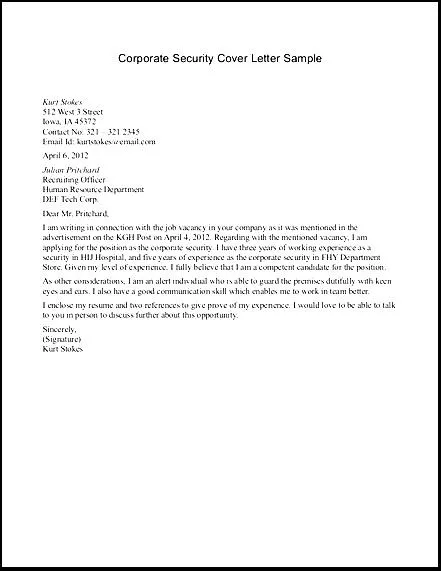
To illustrate how to structure your cover letter, let’s examine some sample security cover letters tailored to different roles. These examples will provide insights into how to highlight your skills and experience effectively, based on the specific requirements of each position. These samples should serve as a guide, helping you to tailor your own cover letter to the unique demands of the job you’re applying for. Remember to adapt the samples to your own qualifications and experience. Ensure your cover letter stands out and reflects your professional expertise. Always tailor it to fit each specific role.
Security Guard Cover Letter Sample
For a security guard position, emphasize your ability to maintain a safe environment, monitor premises, and respond to incidents. Highlight your experience in patrolling, access control, and surveillance. Mention any relevant certifications, such as those from the International Foundation for Protection Officers (IFPO), or other required security guard training. Showcase your skills in communication, conflict resolution, and observation. For example, you might mention your experience in a previous security role and how you effectively handled security breaches or maintained order.
Security Supervisor Cover Letter Sample
If you’re applying for a security supervisor position, you should emphasize your leadership and management skills. Highlight your experience in training and supervising security personnel. Show your experience with scheduling, creating security protocols, and conducting investigations. Demonstrate your ability to lead a team and ensure the effective implementation of security measures. Include your experience in risk management, emergency response, and coordinating with law enforcement. Quantify your achievements, such as how you improved team performance or reduced incident rates.
Loss Prevention Officer Cover Letter Sample

For a loss prevention officer position, focus on your ability to identify and prevent theft, fraud, and other losses. Highlight your experience in surveillance, inventory control, and loss prevention strategies. Showcase your skills in investigations, interviewing, and apprehending suspects. Mention your experience in analyzing data to identify vulnerabilities and implement loss prevention measures. Include your experience in working with law enforcement agencies. Mention any certifications, such as a Certified Protection Professional (CPP) certification.
Security Officer Cover Letter Sample
For a security officer role, highlight your ability to provide a safe and secure environment, monitor access, and respond to emergencies. Focus on your relevant certifications, training, and experience in security patrols. Highlight your skills in communication, observation, and conflict resolution. Show your experience with surveillance equipment, such as CCTV, and security systems. Mention any experience in conducting patrols or responding to security breaches. Focus on your ability to remain calm under pressure and to provide excellent customer service.
Private Investigator Cover Letter Sample
If applying for a private investigator role, highlight your skills in investigation, surveillance, and report writing. Focus on your experience with conducting background checks, interviewing witnesses, and gathering evidence. Show your experience in using investigative tools and techniques. Showcase your knowledge of relevant laws and regulations. Mention any experience in handling sensitive information and maintaining confidentiality. If you have a license, be sure to include it. You can also mention relevant experience in the law enforcement or military service.
Tips for Tailoring Your Cover Letter

To make your security cover letter stand out, it’s essential to tailor it to the specific job and company. Generic cover letters are easily identified and often discarded. Instead, take the time to research the company, highlight the skills and experiences most relevant to the role, and meticulously proofread your letter. These steps will dramatically increase your chances of getting an interview.
Research the Company
Before you start writing, research the company. Visit their website, read their mission statement, and learn about their security needs. Understanding the company’s values and requirements will help you tailor your cover letter to align with their specific needs. Mentioning the company’s name and demonstrating your knowledge of their business shows that you’ve done your homework and are genuinely interested in working there. Research the company’s security protocols, and mention how your skills can help meet the company’s specific needs.
Highlight Relevant Skills and Experience
Carefully review the job description and identify the key skills and experience the employer is seeking. Then, highlight your own skills and experience that directly align with those requirements. Use keywords from the job description throughout your cover letter. This demonstrates that you are a good fit for the position and that you possess the qualifications the company needs. Focus on the most relevant aspects of your background and demonstrate how your skills have benefited previous employers.
Proofread Your Cover Letter

Proofreading is critical. Errors in grammar and spelling can undermine your credibility and professionalism. Ensure that your cover letter is free of typos and grammatical errors. Read your letter aloud to catch any awkward phrasing or sentences that don’t flow. Have a friend or family member review your letter. A second pair of eyes can often spot errors you might miss. Ensure that your formatting is consistent and professional throughout the document. Proofreading your cover letter is a crucial step in ensuring you make a positive impression.
Formatting Your Security Cover Letter
The appearance of your security cover letter is as important as its content. Proper formatting enhances readability and professionalism. Ensure you select a clear, legible font, maintain consistent margins and spacing, and choose a professional file format. These formatting choices make your cover letter easy to read and convey a sense of professionalism, which is crucial in the security field. The best-written content can be undermined by poor presentation, so pay attention to the details. Correct formatting shows your attention to detail.
Font and Font Size
Choose a professional and easy-to-read font, such as Times New Roman, Arial, or Calibri. Use a font size between 10 and 12 points for the body of your letter. Avoid using decorative or overly stylized fonts, as they can be difficult to read. Ensure that your font choice is consistent throughout the document. Using a clear and readable font makes your cover letter accessible to the hiring manager, and ensures that your words are easily understood.
Margins and Spacing
Set your margins to one inch on all sides of the page. Use single spacing within paragraphs and double spacing between paragraphs. This formatting ensures that the text is not too cramped, which allows the hiring manager to read your cover letter easily. Proper spacing makes your letter more visually appealing and professional. Maintaining consistent margins and spacing improves the overall look and feel of your cover letter.
File Format
Save your cover letter as a PDF file. PDFs preserve the formatting of your document, ensuring that it appears as you intended, regardless of the recipient’s computer or software. This will prevent any formatting issues that can arise when using different word processors. Make sure your PDF is clearly labeled with your name and the job title. This ensures that your cover letter is easily identifiable and professional when the hiring manager receives it.
Common Mistakes to Avoid
Several common mistakes can undermine your security cover letter and reduce your chances of getting an interview. Avoiding these pitfalls can significantly improve the effectiveness of your application. Pay close attention to the details and avoid generic language, typos, and a lack of specific examples. It’s essential to present your skills and experience effectively and to demonstrate your genuine interest in the position.
Generic Cover Letters
Avoid using generic cover letters that are not tailored to the specific job and company. Generic letters lack the personalization and detail needed to demonstrate your interest and suitability for the role. Always customize your cover letter to reflect the requirements of the job and to highlight your relevant skills and experience. Tailoring your cover letter shows that you’ve put in the effort and have taken the time to consider the specific needs of the company. This is more likely to impress a potential employer.
Typos and Grammatical Errors
Typos and grammatical errors can damage your credibility and professionalism. Always proofread your cover letter carefully and use spell-check. Have a friend or family member review your letter before submitting it. Attention to detail is crucial in the security field, and errors can be a red flag for potential employers. A polished and error-free cover letter shows that you take pride in your work and pay attention to detail.
Lack of Specific Examples
Avoid making general statements about your skills without providing specific examples. Back up your claims with concrete examples of your accomplishments and how you’ve used your skills in past roles. Quantify your achievements whenever possible. Specific examples demonstrate your abilities more effectively and make your cover letter more persuasive. Providing examples shows the hiring manager how you’ve applied your skills in real-world situations and what results you’ve achieved.
Conclusion Importance of a Strong Security Cover Letter
In conclusion, a strong security cover letter is a critical tool in your job search. It’s your chance to make a great first impression, showcase your skills, and demonstrate your interest in the position. By following the guidelines outlined in this guide, tailoring your letter to each specific job, and avoiding common mistakes, you can significantly increase your chances of getting an interview. Remember to highlight your relevant experience, quantify your achievements, and proofread your letter carefully. A well-crafted cover letter is your key to unlocking opportunities in the competitive field of security. Use the samples provided and customize the content to your profile. Good luck with your job application!