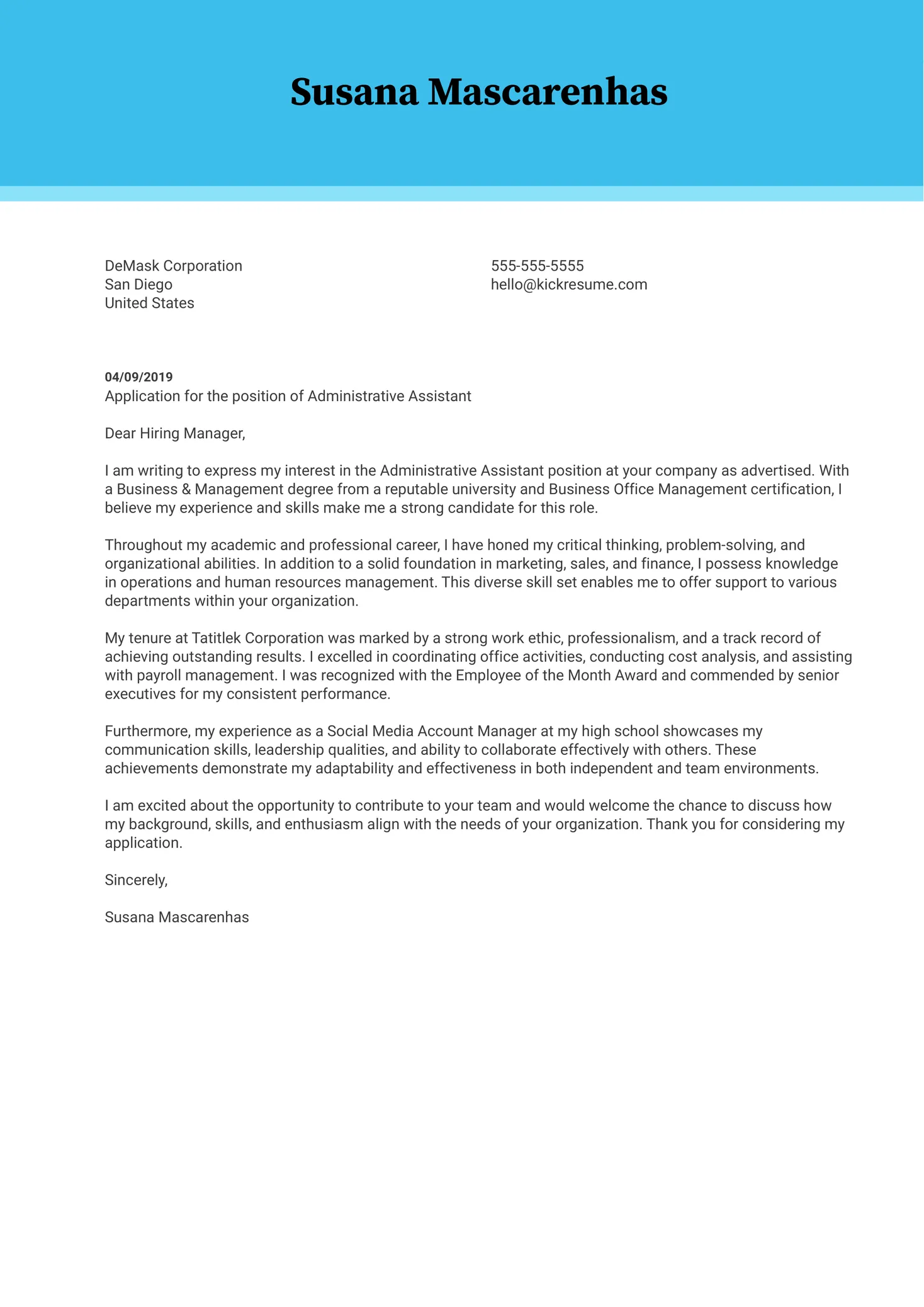
Understanding the Importance of a Cover Letter
In the competitive landscape of job applications, especially for administrative assistant positions, a cover letter serves as your initial introduction and opportunity to make a strong first impression. It’s your chance to highlight key skills, experience, and demonstrate genuine interest in the specific position and the company’s culture. The cover letter provides a platform to communicate beyond the limitations of a resume, offering a narrative about your capabilities and suitability for the role. For administrative assistants, it showcases organizational, communication, and interpersonal abilities, essential for excelling in the position. A well-crafted cover letter, free from errors, can significantly increase your chances of securing an interview.
Why a Cover Letter Matters for Admin Assistants
For administrative assistant roles, a cover letter is crucial because it highlights specific skills. These roles demand a blend of organizational prowess, communication skills, and interpersonal abilities. The cover letter provides an avenue to elaborate on your proficiency in scheduling, managing correspondence, and handling phone calls, illustrating your expertise in critical administrative tasks. Additionally, the cover letter highlights your attention to detail, crucial for admin success, and allows you to explain gaps in your employment or career transitions, offering context to your application. A cover letter that is tailored to the job demonstrates your professionalism and commitment, immediately setting you apart from other applicants and showcasing your attention to detail, setting a positive tone for the hiring manager.
Highlighting Your Skills and Experience

Your cover letter should be a showcase of relevant skills and experiences that directly align with the job description. It’s about illustrating how you’ve excelled in past roles by providing specific examples and quantifying your achievements. Using metrics whenever possible enhances your claims. For instance, rather than simply stating, “Managed office calendars,” specify “Managed calendars for a team of 10, ensuring 100% accuracy in scheduling and meeting coordination.” This approach provides tangible proof of your value and expertise. Customize each cover letter to address the requirements, emphasizing skills and experiences most relevant to the position and the company’s specific needs. This tailoring demonstrates your commitment to the role and your understanding of the company’s objectives.
Key Skills to Showcase in Your Cover Letter
Administrative roles require a varied skill set, which should be highlighted in your cover letter. These include strong organizational skills, such as multitasking abilities and effective prioritization. Be sure to mention experience with scheduling, travel arrangements, and meeting coordination. Proficiency in office software, like Microsoft Office Suite (Word, Excel, PowerPoint, and Outlook) or Google Workspace, is crucial. Excellent communication skills, both written and verbal, are vital, including phone etiquette, email correspondence, and customer service. It’s essential to detail your attention to detail, problem-solving capabilities, and any experience with data entry or record-keeping. Emphasizing these skills will demonstrate your readiness for the position and ability to manage a wide range of administrative tasks.
Administrative Skills for Success
Administrative skills form the foundation of a successful cover letter for these roles. Highlight experience in managing databases, preparing reports, and handling confidential information. If you have experience with specific software like CRM systems or project management tools, be sure to include them. Focus on your ability to manage office supplies, maintain filing systems (physical and digital), and handle petty cash. Your understanding of office procedures and adherence to company policies should be showcased. Event planning, coordinating meetings, and supporting executive staff are all valuable skills, and should be highlighted with examples. By using strong action verbs, your skills are presented more compellingly, demonstrating your concrete capabilities.
Communication and Interpersonal Abilities

Administrative assistants are often the first point of contact, making excellent communication and interpersonal skills essential. Your cover letter should demonstrate your ability to communicate clearly and professionally in both written and verbal forms. Highlight experiences with phone etiquette, email correspondence, and customer service. Showcase your ability to handle sensitive information with discretion and build rapport with colleagues, clients, and vendors. Provide examples of conflict resolution, handling difficult situations, or offering excellent customer service. Demonstrating teamwork and collaboration skills ensures your ability to work with others to reach common goals, essential for creating a productive work environment.
Formatting Your Cover Letter for Impact
The format of your cover letter is as critical as the content itself. A well-formatted letter is reader-friendly and professional-looking, making a positive first impression. Use a professional font such as Times New Roman, Arial, or Calibri, with a consistent size of 11 or 12 points. Maintain standard margins (1 inch) and single-space the text, with double spaces between paragraphs. Keep your letter to one page, using concise language. Ensure that the letter is free of typos and grammatical errors. Proofread meticulously before submitting, or better yet, have someone else review it. A well-organized cover letter shows attention to detail and respect for the recipient’s time.
Choosing the Right Format
There are several cover letter formats, and the best one depends on your experience and the specific job. The standard business letter format includes your contact information, date, the hiring manager’s details, a salutation, body paragraphs, a closing, and your signature. The modified block format aligns all text to the left. The functional format emphasizes your skills and abilities over your work history, helpful if you have gaps or career changes. Regardless, maintaining a professional appearance is key, tailoring your format to the specific job and company. Consider the company’s culture and any formatting preferences they may have. This shows your adaptability and attention to detail.
Using Action Verbs Effectively

Action verbs make your cover letter compelling and persuasive. Begin bullet points and descriptions with strong action verbs to highlight your accomplishments and responsibilities. Instead of saying, “Responsible for managing schedules,” write, “Managed schedules efficiently for a team of 15.” Additional effective action verbs include “coordinated,” “organized,” “implemented,” “achieved,” “streamlined,” “improved,” “developed,” and “maintained.” Choose verbs that reflect your achievements and demonstrate your abilities. Using strong action verbs makes your cover letter more dynamic and quickly shows the hiring manager your skills and experience. Vary your verbs to keep the letter engaging and demonstrate the breadth of your abilities. Make every word count to make your impact.
Personalizing Your Cover Letter
A generic cover letter is often overlooked. Personalizing it to each job application is essential, demonstrating that you’ve understood the company and specific requirements. Start by addressing the hiring manager by name if possible. Mention the specific job title and where you saw the listing. Show your understanding of the company’s mission, values, and culture by researching their website, social media, and recent news. Then show how your skills align with their goals. Avoid generic templates, customizing each letter to the specific opportunity to showcase your individualized approach and commitment to the role.
Tailoring to the Specific Job
Each administrative assistant job is unique, so tailor your cover letter to the specific requirements outlined in the job description. Review the job posting, identifying key skills, qualifications, and experience the employer seeks. Highlight how your background aligns with those requirements. Provide specific examples of how you’ve demonstrated those skills in previous roles. Mention your proficiency with specific software, such as Microsoft Excel or CRM systems, if listed in the job requirements. Showcase your experience with event planning or travel arrangements if those are responsibilities of the role. Tailoring your cover letter demonstrates attention to detail and commitment, enhancing your candidacy and increasing your chances of getting an interview.
Researching the Company

Before writing your cover letter, research the company. Visit their website to understand their mission, values, products, and services. Check social media to get a sense of their culture. Look for news articles and press releases to stay updated on their activities. Research the hiring manager on LinkedIn. This research helps you tailor your cover letter, demonstrating your interest and highlighting how your skills match their goals. Referencing their specific initiatives, values, or achievements shows you’ve done your homework, making your application more appealing and effective. This shows a genuine interest in the company and makes your cover letter stand out from other candidates.
Showcasing Your Accomplishments
Go beyond listing responsibilities; showcase accomplishments. Quantify achievements whenever possible. For example, instead of saying “Managed office supplies,” say “Reduced office supply costs by 15% through strategic inventory management.” Employ the STAR method (Situation, Task, Action, Result) to provide context and details. This method helps you describe the situation, assigned task, actions taken, and results achieved. Focus on outcomes and value. Highlighting your accomplishments makes your cover letter memorable and demonstrates your ability to excel.
Quantifying Your Achievements
Quantifying achievements enhances your cover letter’s impact, providing concrete evidence of your capabilities. Use numbers, percentages, and metrics to demonstrate your impact in past roles. Instead of “Improved office efficiency,” write “Improved office efficiency by 20% by implementing a new filing system.” If you managed a budget, mention its size and any savings achieved. If you handled customer service, specify the number of inquiries handled or the improvement in satisfaction scores. If you streamlined a process, quantify the time or resources saved. Specific numbers and metrics make your accomplishments more tangible and persuasive. This is very effective in administrative roles where efficiency is crucial.
Providing Specific Examples

Specific examples make your cover letter more engaging and memorable. Instead of vague claims, provide concrete instances of skill application. For example, if claiming excellent communication, provide an example of how you resolved a conflict. If highlighting organizational skills, offer an example of a successful project. Use the STAR method (Situation, Task, Action, Result) to provide context. Describe the situation, task, actions, and results. The more detailed and specific your examples, the more convincing your cover letter becomes. This demonstrates how you perform in practice and strengthens your application considerably.
Proofreading and Editing
Proofreading and editing are crucial. Typos and grammatical errors undermine your credibility and make a negative first impression. Carefully review your letter, read it aloud, and use spell- and grammar-checkers. Have a friend or career counselor review it. A fresh perspective can find overlooked mistakes. Proofreading demonstrates attention to detail, a key administrative skill, and shows your commitment to quality.
Common Mistakes to Avoid
Avoid common cover letter mistakes. Don’t use generic templates, tailor letters to each job, and avoid restating your resume. Steer clear of typos, grammatical errors, and formatting inconsistencies. Maintain a professional tone, avoiding slang and informal language. Keep the letter concise, ideally one page. Avoid negative language or complaints. Ensure all contact information is correct. Always proofread carefully. These mistakes can detract from your message, hindering your interview chances.
Ensuring Professionalism

Professionalism is essential in your cover letter. Use a professional email address. Maintain a formal tone, avoiding slang and informal language. Address the hiring manager by name and use appropriate titles. Proofread meticulously, use a professional font, and avoid jargon. Ensure all contact information is correct. A professional cover letter demonstrates attention to detail, communication skills, and your ability to represent the company effectively. The way you prepare your cover letter will set the tone and present you as a professional candidate.
Finalizing and Submitting Your Cover Letter
Before submitting, double-check all details. Ensure the hiring manager’s name, job title, and company are accurate. Verify that your contact information is current. Save your cover letter in a professional format like PDF. Follow the submission instructions precisely. If submitting via email, write a brief, professional message and attach your cover letter and resume separately. After submitting, resist the urge to repeatedly check your email. If you haven’t heard back, follow up within the specified timeframe. Following these steps increases your chances of a positive impression and an interview.