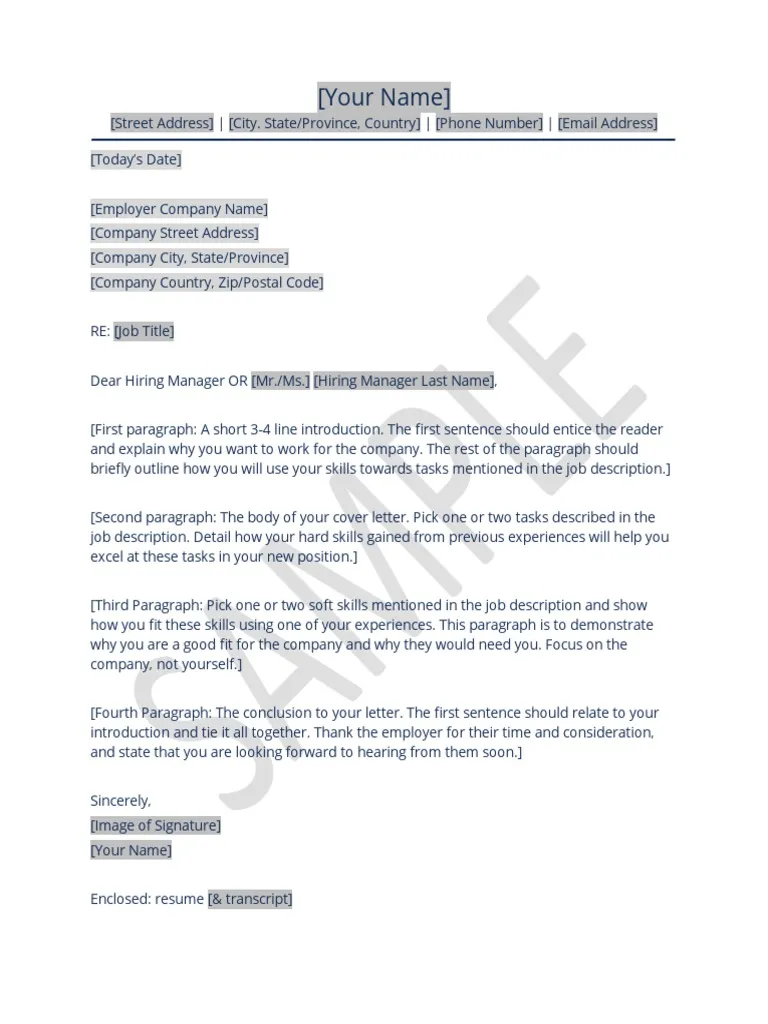
What is a Resume Cover Letter?
A resume cover letter is a crucial document accompanying your resume when applying for a job. It serves as an introduction to your qualifications and an opportunity to express your interest in the specific position. Unlike a resume, which provides a factual summary of your skills and experience, a cover letter allows you to connect with the hiring manager on a more personal level. It showcases your writing skills, demonstrates your understanding of the role, and highlights why you are the perfect fit for the company. In essence, it’s your chance to make a strong first impression and convince the employer to read your resume.
Purpose of a Cover Letter
The primary purpose of a cover letter is to complement your resume by providing context and personality. While your resume lists your skills and experience, a cover letter explains how these align with the specific job requirements and the company’s values. It allows you to elaborate on your accomplishments, explain any gaps in your employment history, and express your enthusiasm for the opportunity. Furthermore, a well-written cover letter can differentiate you from other applicants, showcasing your communication skills and attention to detail. It shows the hiring manager that you’ve taken the time to understand the role and are genuinely interested in joining their team.
Key Components of a Cover Letter

A compelling cover letter typically includes several key components that work together to create a strong impression. These elements ensure your letter is well-structured, informative, and engaging. Starting with your contact information and the date sets the stage for a professional presentation. Next, addressing the hiring manager correctly with a personalized greeting is crucial. The body paragraphs should then effectively highlight your skills, experiences, and achievements, tailoring them to the specific job. Finally, the closing paragraph must include a call to action and a professional sign-off.
Your Contact Information
At the top of your cover letter, include your full name, phone number, email address, and optionally, your LinkedIn profile URL. Make sure these details are accurate and professional. This information allows the hiring manager to quickly and easily reach you. Ensuring this section is clear and visible is essential for a smooth application process.
Date and Recipient Information
Below your contact information, include the current date, followed by the recipient’s name, title, and company address. If you know the hiring manager’s name, address the letter directly to them; otherwise, use a general title like ‘Hiring Manager’. Addressing the letter to a specific person shows that you have done your research and are serious about the position. Getting the details correct demonstrates attention to detail, a valuable trait in any employee.
Salutation

Begin your cover letter with a professional salutation. If you know the hiring manager’s name, use ‘Dear Mr./Ms./Mx. [Last Name]’. If you don’t know the name, use a general greeting like ‘Dear Hiring Manager’ or ‘Dear [Company Name] Team’. Avoid outdated or informal greetings. A well-chosen salutation sets a positive tone for the rest of the letter. It shows respect and professionalism, qualities that employers value highly.
Body Paragraph 1 Hook the Reader
The first paragraph should immediately capture the reader’s attention. State the specific position you’re applying for and how you learned about the opportunity. Briefly mention your most relevant skills or experiences. The goal is to create interest and encourage the hiring manager to continue reading. This opening paragraph is your first opportunity to make a strong impression. Make it compelling, concise, and directly related to the job you are seeking.
Highlight Your Relevant Skills
In the body of your cover letter, highlight the skills that directly align with the job description. Use the job posting as a guide to identify the key skills and qualifications the employer is seeking. Provide specific examples from your previous experiences to demonstrate how you have successfully used these skills. Quantify your achievements whenever possible, using numbers and data to illustrate your impact. For instance, mention how you increased sales by a certain percentage or improved efficiency in a particular process. Highlighting specific, relevant skills shows the hiring manager you meet their requirements.
Showcase Your Achievements

Don’t just list your responsibilities; focus on your accomplishments. Use the STAR method (Situation, Task, Action, Result) to explain your achievements clearly. Describe the situation or challenge you faced, the task you were assigned, the actions you took, and the positive results you achieved. This approach provides concrete examples of your capabilities and demonstrates the value you can bring to the company. Detailing your achievements in this manner is much more impactful than simply stating your job duties.
Body Paragraph 2 Demonstrate Your Fit
This is the perfect section to show how your values, skills, and experiences align with the company’s culture and the specific requirements of the role. Explain why you are interested in the company and what makes you a good fit. This is also where you can mention what specifically attracts you to the role and what you hope to achieve in it. Demonstrate your understanding of the company’s mission, values, and goals. Tailor your letter to each job, showcasing your genuine interest and alignment with the company. This level of personalization will help you stand out.
Express Your Enthusiasm
Show your genuine enthusiasm for the position and the company. Let the hiring manager know why you are excited about this opportunity and what motivates you. This is where you can express your passion for the industry, the company’s mission, or the specific role. Your enthusiasm can set you apart from other applicants. It tells the employer that you are not just looking for a job, but that you are genuinely interested in being a part of their team.
Research the Company

Before writing your cover letter, research the company thoroughly. Understand their mission, values, products or services, and recent news. Tailor your letter to reflect your understanding of the company and demonstrate how your skills and experiences align with their goals. Mentioning specific projects, initiatives, or values shows that you have taken the time to learn about the company and are genuinely interested in being part of their team. This level of research and preparation demonstrates initiative and a strong desire to join the company.
Body Paragraph 3 Call to Action
Conclude your cover letter with a clear call to action. Express your interest in an interview and state your availability. Thank the hiring manager for their time and consideration. Reinforce your enthusiasm and confidence in your ability to perform the job. This paragraph should be concise and leave a positive impression. A well-crafted call to action can significantly increase your chances of moving to the next stage of the hiring process.
Request an Interview
Explicitly request an interview in your cover letter. State that you are eager to discuss your qualifications in more detail and how you can contribute to the company’s success. Indicate your availability for an interview, making it easy for the hiring manager to contact you. Showing initiative and a willingness to engage further demonstrates your enthusiasm and commitment to the role. This step is a critical part of closing the letter effectively and progressing your application.
Closing

Your closing should be professional and polite. It reinforces your interest in the position and provides a final opportunity to leave a positive impression. The closing is the last thing the hiring manager reads, so it should be both concise and impactful, leaving the right impression.
Formal Closing
Use a formal closing such as ‘Sincerely,’ ‘Best regards,’ or ‘Respectfully,’ followed by your full name. Avoid casual closings like ‘Thanks’ or ‘Cheers’ unless you have a pre-existing relationship with the hiring manager. The closing should reflect the professional tone you maintained throughout the letter, underscoring the importance of your application. A professional closing helps to create a lasting positive image.
Sign-off
After the closing, leave space for your signature if you are submitting a physical copy of the cover letter. If you’re submitting electronically, your typed name is sufficient. Always maintain a consistent level of professionalism from start to finish. This completes the cover letter and presents you as a serious, qualified candidate.
Proofread Your Cover Letter

Before submitting your cover letter, proofread it carefully for any spelling, grammar, or punctuation errors. Errors can undermine your professionalism and create a negative impression. It’s also beneficial to have someone else review your cover letter for a fresh perspective. A second pair of eyes can often catch mistakes you might have missed. A polished, error-free cover letter demonstrates attention to detail, a critical skill for most jobs. Always double-check all details.
Formatting and Style
Formatting and style are essential for making your cover letter easy to read and visually appealing. A well-formatted cover letter is more likely to capture the reader’s attention and leave a positive impression. Formatting helps with readability and enhances the overall professionalism of the document. Keeping a clean, readable format makes it simple for the hiring manager to process your application. Choose a format that highlights your skills and qualifications.
Font Choice
Select a professional and easy-to-read font, such as Times New Roman, Arial, or Calibri, with a font size between 10 and 12 points. Avoid overly decorative fonts that can be difficult to read. A clean font ensures readability and conveys professionalism. Consistent formatting adds to the overall presentation of your application. Choose a font that is universally readable and suitable for business correspondence.
Length
Keep your cover letter concise, ideally one page. Hiring managers are busy, and they appreciate directness. Use clear and concise language to convey your message effectively. Focus on the most relevant information and avoid unnecessary details. Brevity demonstrates respect for the hiring manager’s time. Make every word count, and ensure your cover letter has a clear purpose, highlighting your key achievements and relevant skills.
General Tips for Writing a Cover Letter
Several general tips can help you write a compelling cover letter that gets noticed. These tips cover a range of considerations, from personalization to word choice and format. By following these suggestions, you can dramatically improve the impact of your applications. These practices will set you up for success in your job search.
Tailor Your Cover Letter to Each Job
Always tailor your cover letter to the specific job you’re applying for. Review the job description carefully and customize your letter to match the required skills, experiences, and company values. Generic cover letters are easily identifiable and often discarded. Demonstrating that you’ve taken the time to understand the role and the company significantly increases your chances of success. Tailoring your application is crucial for showing your serious interest.
Use Action Verbs
Use action verbs to describe your skills and achievements. Action verbs make your descriptions more dynamic and engaging. Instead of saying ‘Responsible for project management,’ say ‘Managed projects,’ ‘Led teams,’ or ‘Implemented strategies.’ Action verbs demonstrate initiative and create a stronger impression. By using action verbs, you highlight your accomplishments effectively, making your cover letter more compelling.
Avoid Clichés
Avoid using clichés like ‘hard worker,’ ’team player,’ or ‘detail-oriented.’ These phrases are overused and often lack substance. Instead, provide specific examples that demonstrate your abilities and use strong action verbs. Use unique and descriptive language. Replace tired expressions with fresh, relevant details. Showing, rather than telling, makes your cover letter more credible and memorable, and shows you are not just saying the expected phrases.
Cover Letter Examples
Review cover letter examples for inspiration and guidance. Search online for various examples, focusing on positions similar to the ones you are targeting. Note how the successful examples are structured, how they highlight the relevant skills, and how they express enthusiasm. Use these examples as a template to craft your own unique cover letter. Tailor it to your specific circumstances. The examples can help you understand how to present information effectively and leave a strong impression. Learning from existing samples can greatly streamline the writing process.