Why a Recruiter Cover Letter Matters
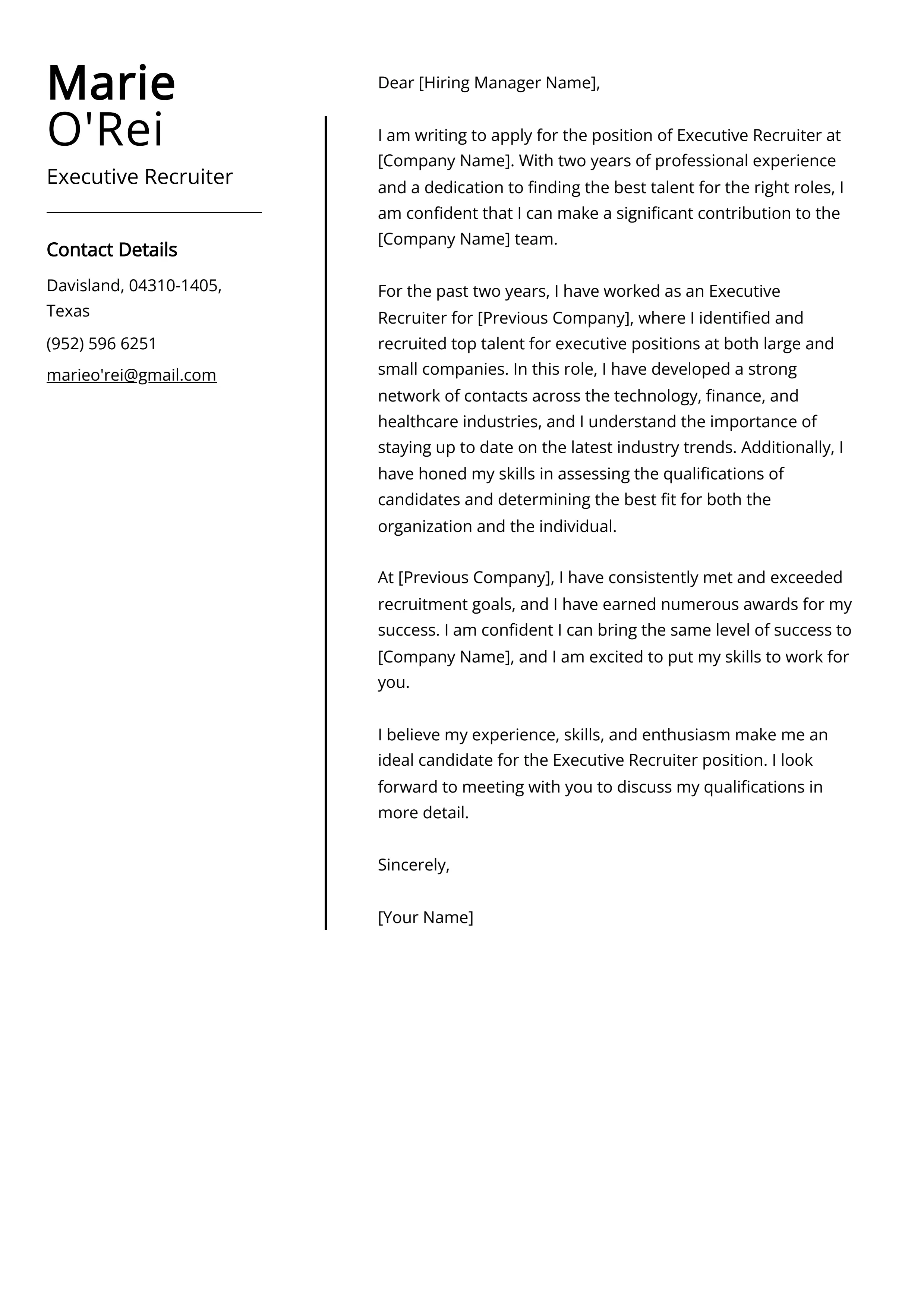
In the competitive world of recruitment, a well-crafted cover letter is your first impression. It’s your opportunity to showcase not only your skills and experience but also your personality and passion for the role. A strong cover letter for a recruiter job goes beyond a simple recitation of your resume; it provides a compelling narrative that explains why you are the perfect fit for the position and the company. It’s a chance to differentiate yourself from other applicants and make a memorable impact on the hiring manager. By thoughtfully constructing your cover letter, you increase your chances of getting noticed and securing an interview.
Highlighting Your Relevant Skills
A recruiter’s cover letter should focus on the skills that are most relevant to the job description. Recruiters need a diverse skill set, from interpersonal communication to technical knowledge. Review the job posting carefully and identify the key skills the employer is seeking. Then, tailor your cover letter to highlight how your experience and abilities align with those requirements. This targeted approach shows the hiring manager that you understand the role and are well-prepared to succeed in it. Using keywords from the job description naturally within your cover letter also helps demonstrate your understanding of the position and the industry.
Understanding Recruiter Responsibilities
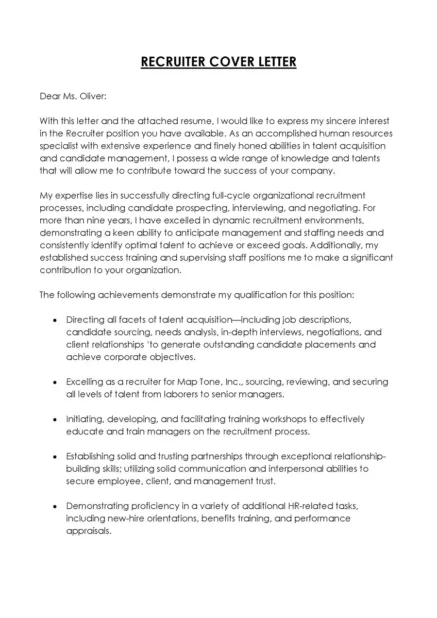
Before drafting your cover letter, it’s important to understand the core responsibilities of a recruiter. This understanding will guide you in highlighting the most relevant skills and experiences. Recruiters are responsible for sourcing, screening, and interviewing candidates. They also manage the entire hiring process, from job posting to offer negotiation. Moreover, they often build and maintain relationships with hiring managers and candidates alike. Showing that you grasp these responsibilities will help you tailor your letter to emphasize relevant abilities.
Key Skills to Showcase
Certain skills are essential for success as a recruiter. Your cover letter should highlight these skills, providing examples of how you’ve used them in previous roles. Recruiters need strong communication, interpersonal, and organizational skills. They must be able to build rapport, manage multiple tasks, and work efficiently under pressure. Technical skills, such as experience with applicant tracking systems (ATS) and social media platforms, are also critical. Be sure to include examples that show how you have successfully applied these skills to achieve positive outcomes.
Communication Prowess
Effective communication is the cornerstone of a recruiter’s role. This includes the ability to listen attentively, articulate clearly, and write persuasively. Your cover letter should exemplify these skills through its clarity, structure, and tone. Provide examples of instances where you effectively communicated with candidates, hiring managers, or other stakeholders. Mention how you have used communication to resolve conflicts, negotiate offers, or build relationships. Strong communication skills ensure that you can build trust and rapport, leading to positive outcomes for both the candidate and the company.
Candidate Relationship Management

Recruiters are responsible for building and maintaining relationships with candidates. Your cover letter should highlight your experience in this area. Showcase your ability to manage candidate interactions effectively. Emphasize your empathy and understanding of candidate needs, including their career goals and aspirations. Examples of how you have built strong relationships with candidates and provided them with positive experiences are highly valuable. Providing a positive candidate experience reflects favorably on the company and increases the likelihood of attracting top talent.
Technical Proficiency
Recruiters must be proficient in using various software and tools. Your cover letter should address your experience with applicant tracking systems (ATS), social media platforms, and other recruitment technologies. Indicate any certifications or training you have received that demonstrate your technical skills. Providing specific examples of how you have used these tools to streamline processes, improve efficiency, and achieve positive results will be beneficial. Being technically savvy will enhance your credibility and show your ability to adapt to the modern recruitment landscape.
Tailoring Your Cover Letter for the Job
Avoid using a generic cover letter. Instead, customize each cover letter to match the specific requirements of the job you’re applying for. This shows the hiring manager that you have invested time and effort into understanding their needs. Begin by carefully reviewing the job description and identifying the key qualifications. Then, tailor your cover letter to showcase how your skills and experience directly align with those requirements. A personalized cover letter will make you stand out from other applicants who have sent out generic applications.
Researching the Company

Before you start writing your cover letter, research the company you are applying to. Understanding the company’s mission, values, and culture will help you tailor your letter to reflect their needs and interests. Visit the company website, read news articles, and review their social media profiles. This research provides you with valuable insights that you can use to demonstrate your interest in the company and your understanding of their industry. Using information about the company within your cover letter will show that you’re invested in their success.
Matching Skills to Requirements
The most effective cover letters directly connect your skills and experience to the job requirements. After researching the company and the job description, create a skills matrix or a similar document to make this process easier. Identify which of your skills align with each of the requirements listed in the job posting. Then, within your cover letter, provide specific examples of how you have demonstrated those skills in the past. Focus on quantifiable achievements and provide results that demonstrate your ability to achieve success in the role. This will provide the hiring manager with evidence to support your claims and build confidence.
Structuring Your Cover Letter for Impact
A well-structured cover letter will make a strong impression. Organize your cover letter to make it easy to read and understand. The basic format includes an introduction, body paragraphs, and a conclusion. Within the body, use headings and bullet points to break up large blocks of text and highlight key information. Maintain a clear and concise writing style, using active voice to demonstrate confidence and clarity. Proper formatting makes your cover letter both appealing and professional, which makes the content easier to understand and more effective.
Opening with a Strong Hook

The opening paragraph is your opportunity to capture the hiring manager’s attention. Instead of starting with a generic greeting, use a strong hook to grab their interest. You might begin with a statement about your passion for recruitment or a brief summary of a relevant achievement. Tailor your hook to the specific job and company to show that you have done your research. The goal is to make the hiring manager want to read the rest of your cover letter. A well-crafted hook gets you off to a great start and entices the reader.
Demonstrating Your Value Proposition
In the body of your cover letter, clearly articulate your value proposition. Explain what you bring to the table and how you can contribute to the company’s success. Focus on the benefits of hiring you, such as your ability to source top talent, streamline the hiring process, or reduce time-to-hire. Support your claims with specific examples and quantifiable achievements. Your goal is to convince the hiring manager that you are a valuable asset, someone who will positively contribute to their company goals. Emphasize how your unique skills and experience address the hiring manager’s needs.
Quantifying Your Achievements
Numbers and metrics are essential for demonstrating your achievements. Whenever possible, quantify your accomplishments to make them more impactful. Include statistics about your success in previous roles. Examples could be the number of candidates sourced, the percentage of hires, the reduction in time-to-hire, or the cost savings achieved. Numbers provide concrete evidence of your abilities and validate your claims. This makes it easier for the hiring manager to assess your impact and potential.
Closing with a Call to Action

Your cover letter should end with a clear call to action. Tell the hiring manager what you want them to do next, such as scheduling an interview. Express your enthusiasm for the position and the opportunity to contribute to the company. Make sure to thank the hiring manager for their time and consideration. A strong call to action encourages the hiring manager to take the next step and move your application forward. Providing a clear and direct call to action increases the likelihood of receiving a positive response.
Showcasing Your Achievements and Metrics
The most effective cover letters demonstrate your achievements with tangible metrics. Instead of simply stating what you did, provide evidence of your impact. This includes specific numbers, percentages, and data that showcase your contributions to your previous employers. By quantifying your accomplishments, you make your claims more credible and compelling. Using metrics will help you stand out from other applicants and demonstrate your value proposition effectively. Presenting your achievements in a clear, concise, and measurable way is key to your success.
Examples of Quantifiable Achievements
Consider the following examples of quantifiable achievements to include in your recruiter cover letter. You might mention how you reduced time-to-hire by a specific percentage or sourced and hired a certain number of candidates within a given timeframe. Include the number of candidates you screened, interviewed, or placed in positions. Did you save your company money by improving the sourcing methods or negotiating lower salaries? Showcasing these achievements will demonstrate your effectiveness as a recruiter. Be as specific as possible to demonstrate your measurable success.
Metrics to Include

Include relevant metrics such as your time-to-hire, cost-per-hire, and candidate satisfaction scores. Highlighting how you improved these key performance indicators (KPIs) can strongly impact your application. Also, consider mentioning the diversity of candidates you have hired. If you have implemented new sourcing strategies, mention any increase in candidate quality or conversion rates. These metrics provide the hiring manager with tangible proof of your ability to deliver results. Tailor your chosen metrics to the specific job requirements and the needs of the company.
Avoiding Common Cover Letter Mistakes
Avoiding common mistakes is vital for a successful cover letter. These errors can undermine your application and reduce your chances of getting noticed. Review your cover letter carefully to identify and correct any potential pitfalls. Paying attention to detail, proofreading, and tailoring your letter to the specific job will help you avoid the most frequent mistakes. By steering clear of common errors, you will greatly improve the impact of your cover letter and increase your chances of an interview.
Generic Language and Lack of Personalization
One of the most common cover letter mistakes is using generic language and failing to personalize your letter. Avoid using phrases that could apply to any job. Instead, tailor your letter to the specific requirements of the role and the company’s culture. Use specific examples from your experience to demonstrate how your skills and experience align with the job description. Research the company and show that you understand their needs and goals. Taking the time to personalize your cover letter will showcase your genuine interest and make you stand out.
Focusing on What You Want, Not What They Need
Another common error is focusing too much on your own needs instead of what the company requires. Your cover letter should explain how you can benefit the company, not what you are hoping to gain from the job. Showcase your skills and accomplishments in a way that demonstrates your ability to solve the company’s problems and contribute to their success. Keep the focus on how you can meet the needs of the hiring manager. Tailor your cover letter to address their goals, and make it clear that you are ready to help them achieve their objectives.
Proofreading and Editing
Typos and grammatical errors can damage your credibility. Always proofread your cover letter carefully before submitting it. Check for any spelling, grammar, or punctuation errors. It’s helpful to ask a friend or colleague to review your letter as well. A fresh pair of eyes can often spot mistakes that you might miss. Proofreading is a critical step in ensuring that your cover letter is professional, polished, and error-free. These mistakes can reflect poorly on your attention to detail and your overall professionalism.
Finalizing Your Recruiter Cover Letter
Once you have written and edited your cover letter, take a few final steps to ensure it is ready for submission. This includes formatting your letter for readability, reviewing your content, and making sure the overall presentation is polished. Creating a strong final product will help you impress the hiring manager. Spending this time on the finishing touches can make a significant difference in whether your cover letter helps you get the job.
Formatting for Readability
Make sure your cover letter is easy to read. Use clear fonts, such as Times New Roman or Arial, and a standard font size (11 or 12 points). Use single spacing within paragraphs and double spacing between paragraphs. Divide your letter into logical sections with clear headings and subheadings. Keep your paragraphs relatively short, and use bullet points to highlight key information. Formatting your cover letter for readability will improve the overall impact and makes it more appealing to the hiring manager. Good formatting reflects well on your attention to detail.
Review and Revision
Before submitting your cover letter, review it one last time. Make sure that all the information is accurate and up-to-date. Check for any inconsistencies or typos. Review the overall structure and flow of your letter, and make sure that it tells a clear and compelling story. Revise any areas that could be improved and ensure that your final product represents you in the best possible light. Taking this extra step shows your care and attention to detail and increases your chance of making a great first impression.