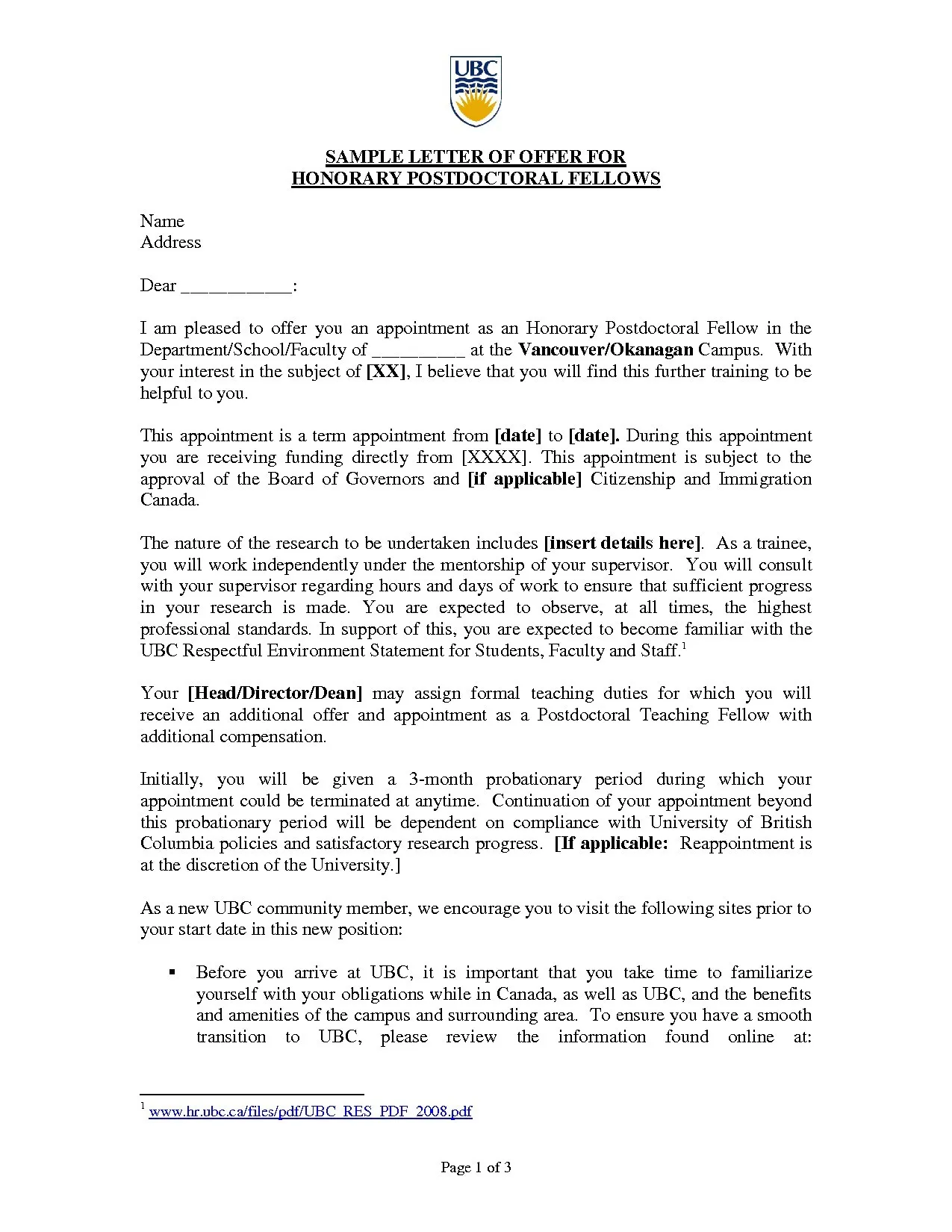
Understanding the Postdoc Cover Letter: The Key to Success
A postdoc cover letter is your first, and often only, opportunity to make a strong impression on a potential employer. It serves as a crucial introduction, showcasing your qualifications, research experience, and suitability for the specific position. Unlike a resume, which provides a summary of your background, the cover letter allows you to tell your story, highlighting your motivations, and connecting your skills to the needs of the lab or institution. It is your chance to demonstrate your enthusiasm and make a compelling case for why you are the ideal candidate for the postdoc position. The goal is to get the reader excited about your application and invite you to interview. Therefore, a well-crafted cover letter is not just a formality it is a strategic tool that can significantly increase your chances of landing your dream job.
Why a Strong Cover Letter Matters
In a competitive job market, especially for postdoctoral positions, a strong cover letter can set you apart from other applicants. It provides context to your resume, allowing you to explain gaps in your experience, address any potential weaknesses, and highlight achievements that are directly relevant to the specific position. Hiring committees often use cover letters to gauge your communication skills, your understanding of the research area, and your fit within the lab environment. A well-written cover letter demonstrates your attention to detail, your ability to articulate your research goals, and your genuine interest in the opportunity. This is your chance to show your personality and passion. A weak cover letter, on the other hand, can lead to immediate rejection, regardless of your qualifications. It’s your moment to shine, make it count.
Essential Components of a Postdoc Cover Letter

A successful postdoc cover letter comprises several essential components that work together to create a compelling narrative. These components provide the structure and substance required to effectively communicate your qualifications and suitability for the position. The core elements of a strong cover letter include a professional heading with contact information, a personalized salutation, a concise but impactful introduction that states your interest, a section that highlights your research experience and skills, a section that emphasizes your alignment with the specific position and the lab’s goals, a closing that reiterates your interest, and a call to action. Each of these elements must be carefully crafted and presented to ensure a cohesive and persuasive application. Skipping or poorly crafting any of these can lead to a less impactful cover letter and a missed opportunity.
Contact Information and Salutation
Begin your cover letter with your full name, address, phone number, and professional email address. This information should be clearly presented at the top of the document. Following your contact details, include the date and the recipient’s information, which should include the name, title, department, and address of the hiring professor or the person in charge of the lab. Always address the letter to a specific individual, if possible. Avoid generic salutations like “To Whom It May Concern.” Instead, use “Dear Dr. [Last Name],” or a similar professional greeting. Personalizing your salutation shows that you have taken the time to research the position and the lab, demonstrating your genuine interest and attention to detail. This small step can make a significant difference in the overall impression you create.
Highlighting Your Research Experience
The core of your cover letter should focus on your research experience. Detail your past research projects, emphasizing your role, the methodologies you employed, and the key findings. Quantify your accomplishments whenever possible, such as the number of publications, presentations, or grants you have secured. Tailor this section to match the requirements of the postdoc position. If the position requires experience in a specific technique or area, make sure to highlight your relevant expertise. Avoid simply restating your resume. Instead, provide a narrative that demonstrates your research trajectory, your analytical skills, and your ability to think critically. Explain what you learned from each experience, and how these experiences have prepared you for this new opportunity. Briefly describe your dissertation work and any significant achievements.
Showcasing Your Skills and Accomplishments

Besides research experience, highlight the skills and accomplishments that make you a strong candidate. Mention relevant technical skills, such as specific laboratory techniques, software proficiency, and data analysis methods. Showcase your soft skills, such as leadership, teamwork, and communication. Provide examples of your accomplishments, such as publications in high-impact journals, presentations at conferences, or successful grant applications. Quantify your achievements whenever possible; for example, “secured a grant for $X” or “published in three peer-reviewed journals.” Clearly state how your skills and achievements align with the needs of the lab and the requirements of the postdoc position. Use action verbs to describe your accomplishments and skills, such as “developed,” “analyzed,” “led,” or “managed.” This section is about showing, not just telling. Demonstrate the value you bring to the table.
Tailoring Your Letter to the Specific Position
A generic cover letter is a red flag. Tailor your cover letter to each specific position you apply for. Research the lab, the research interests of the principal investigator (PI), and the specific requirements of the job description. Show that you understand the lab’s goals and that your research aligns with their objectives. Reference specific projects or publications from the lab that resonate with your research interests. Explain why you are particularly interested in working with this PI and in this specific lab. Demonstrate how your skills and experience can contribute to their ongoing projects and research program. This level of personalization demonstrates your genuine interest and your understanding of the opportunity, making a strong case for why you are a good fit. Use keywords from the job description to show your knowledge and understanding of the project.
Demonstrating Your Interest in the Lab/Institution
Your cover letter should clearly articulate your interest in the specific lab and institution. Demonstrate that you have done your homework. Research the PI’s work, the lab’s recent publications, and the overall research environment of the institution. Mention specific research projects or techniques that align with your interests and expertise. Explain why you are drawn to this particular lab and how it aligns with your long-term career goals. Show that you have a clear understanding of the lab’s research focus and that you are genuinely excited about the opportunity to contribute. Demonstrating this genuine interest is essential for making a positive impression and setting yourself apart from other applicants. Also, mention the location, and why you are interested to live there.
Mentioning Specific Projects and Goals

In your cover letter, explicitly mention any specific projects or goals you have in mind for the postdoc position. Based on your research on the lab and the PI, outline what you hope to achieve during your time there. Explain how your skills and experience can contribute to their ongoing research or help them in achieving their objectives. Showcase your proactiveness and forward-thinking by mentioning the projects you’d like to be a part of. Show initiative and highlight any innovative ideas or approaches you could bring to the lab. Align these goals with your long-term career aspirations, demonstrating your vision and ambition. Highlighting specific projects shows you’re not just looking for a job, but are also invested in the lab’s success.
Addressing Potential Weaknesses
A cover letter is also an opportunity to address any potential weaknesses in your application proactively. This could be a gap in your employment history, a lack of experience in a specific area, or a lower grade in a particular course. Frame these weaknesses positively. Explain the context of the weakness and how you have overcome or learned from it. Focus on what you have done to compensate for any perceived shortcomings, such as taking additional courses, gaining relevant experience through volunteering, or developing alternative skills. Turn any negative into a positive by showing that you are resilient, adaptable, and eager to learn. This demonstrates self-awareness and maturity. Being honest and forthright will help build trust.
Formatting and Proofreading Your Cover Letter
The appearance of your cover letter is as important as its content. Use a professional font, such as Times New Roman, Arial, or Calibri, with a font size of 11 or 12 points. Maintain consistent formatting throughout the document, including line spacing, margins, and paragraph alignment. The cover letter should be concise and easy to read. Use clear and concise language, avoiding jargon or overly complex sentences. Keep the letter to one page in length, unless otherwise specified in the application guidelines. The layout should be clean, with adequate spacing between paragraphs and sections. Proper formatting makes your letter look polished and professional, which demonstrates attention to detail, showing your work ethic, making a positive impression on potential employers.
Creating a Professional Look and Feel

Creating a professional look and feel is about more than just formatting. It involves choosing a professional tone and language style that reflects your qualifications and the position you are applying for. Be respectful, polite, and enthusiastic in your tone. Avoid using slang, informal language, or overly casual phrasing. Ensure your language is clear, concise, and easy to understand. Maintain a positive and confident tone throughout the letter, highlighting your strengths and accomplishments. Use professional email address and avoid any unprofessional or casual email signatures. Ensure that the file name of the cover letter is professional and easy to identify, such as “[Your Name] - Cover Letter - Postdoc Application.” A professional appearance makes a great first impression and helps convince potential employers that you take the application process seriously.
Proofreading for Grammar and Spelling Errors
Proofreading is a critical step in the cover letter writing process, it ensures that your letter is free of grammatical errors, typos, and spelling mistakes. Errors can detract from your credibility and professionalism, and may lead to immediate rejection. Carefully review your cover letter for any errors in grammar, punctuation, and spelling. Use spell-check and grammar-check tools, but don’t rely on them exclusively. They may miss subtle errors. Read the letter aloud to catch any awkward phrasing or inconsistencies. Consider having a friend, mentor, or career advisor review your cover letter for feedback. They can provide a fresh perspective and help identify any errors you might have missed. Proofreading is the final opportunity to refine your cover letter, ensuring that it is polished, professional, and error-free.
Closing and Follow-up
The closing section of your cover letter provides an opportunity to reiterate your interest in the position and express your gratitude. Thank the reader for their time and consideration, and express your enthusiasm for the opportunity. Use a professional closing, such as “Sincerely,” “Best regards,” or “Thank you.” Include your full name and contact information at the end of the letter. In a separate paragraph, state your availability for an interview and how the reader can reach you. This demonstrates your initiative and eagerness to move forward in the application process. A strong closing can leave a positive lasting impression, increasing your chances of being selected for an interview.
Expressing Gratitude and Offering Contact Information

Always express your gratitude for the reader’s time and consideration in your closing paragraph. A simple “Thank you for your time and consideration” or a similar phrase is appropriate. Reiterate your interest in the position and your enthusiasm for the opportunity to contribute to the lab’s research. Include your full name, phone number, and email address, to make it easy for the reader to contact you. You might also include a link to your professional website or LinkedIn profile, if applicable. Ensure all your contact information is accurate and up-to-date. Providing clear, accessible contact information will ensure the hiring committee can easily reach you to schedule an interview or request additional information. This shows respect for their time and makes it easy to move forward.
Following Up on Your Application
Following up on your application shows your persistence and genuine interest in the position. If you have not heard back from the employer within a reasonable timeframe, usually two to three weeks after the application deadline, consider sending a polite follow-up email. In the email, briefly reiterate your interest in the position and inquire about the status of your application. Keep the email concise and professional. Avoid being overly persistent or demanding. Thank the hiring manager for their time and consideration. A well-timed follow-up demonstrates your enthusiasm and shows you are proactive. However, be respectful of their time and avoid excessive follow-up, which could be perceived as intrusive. The follow-up email can reinforce your enthusiasm and commitment.