Crafting Your Paralegal Cover Letter
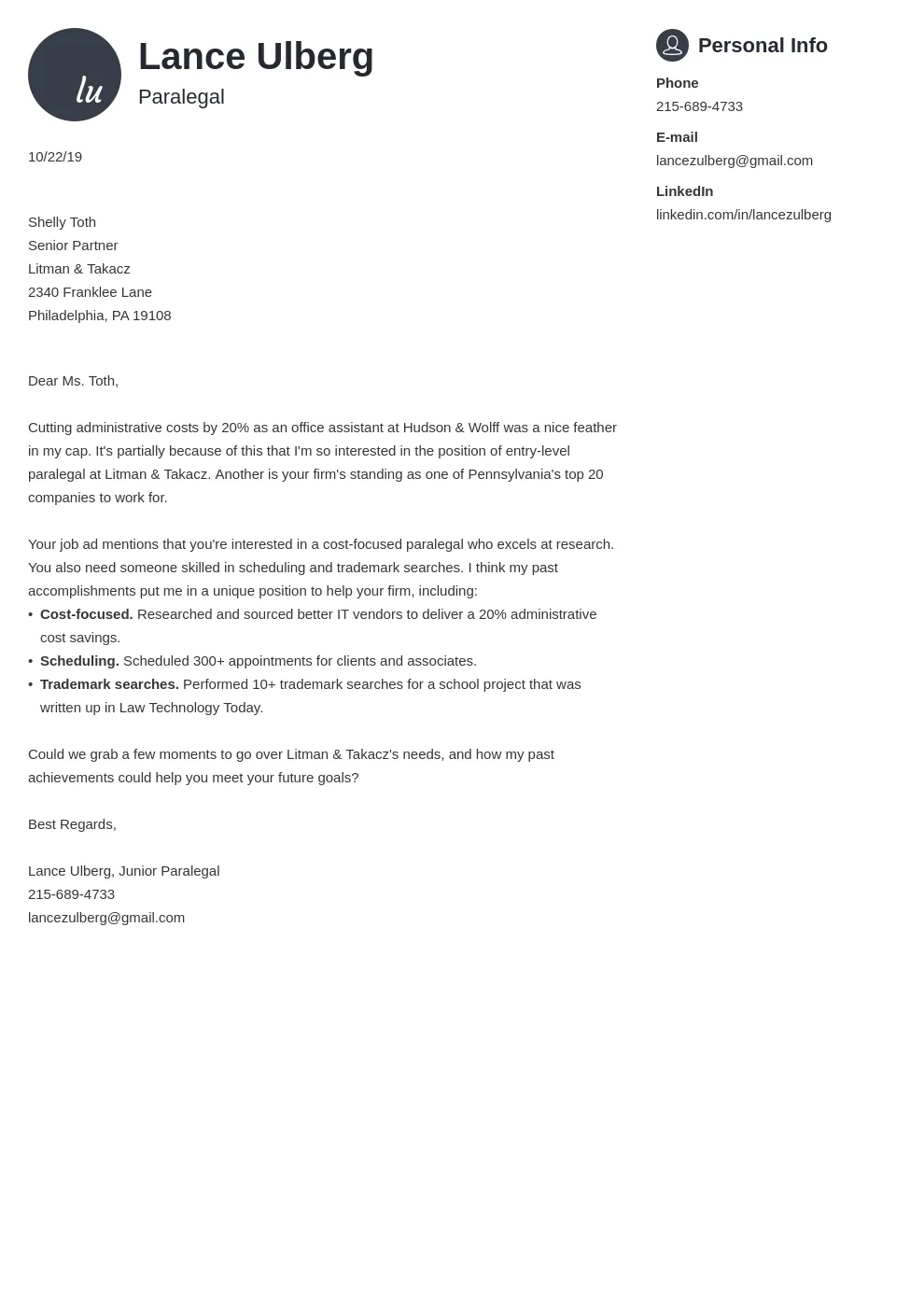
A paralegal cover letter is your first chance to make a strong impression on potential employers. It’s more than just a formality; it’s a strategic tool to showcase your skills, experience, and personality. A well-crafted cover letter can significantly increase your chances of landing an interview and ultimately, securing your dream paralegal position. When composing your paralegal cover letter, remember that it serves to introduce yourself to the hiring manager, highlight your key qualifications, and express your enthusiasm for the specific role. It should complement your resume by providing a narrative that connects your past experiences to the requirements of the job. Start with a professional salutation, address the hiring manager by name whenever possible to personalize the letter. Make it a priority to tailor your cover letter to each job application.
Highlighting Your Paralegal Experience
Your paralegal experience is the cornerstone of your cover letter. Provide a concise overview of your professional background, focusing on the relevant skills and experiences that align with the job description. Include details about your previous employers, the duration of your employment, and the specific legal areas in which you have worked. Emphasize your accomplishments and contributions, using strong action verbs to describe your responsibilities and achievements. If you have experience in multiple areas of law, highlight the areas that match the job requirements. Remember to showcase your knowledge of legal terminology, case management, and any specialized software or tools you’ve used. Be specific and provide examples whenever possible to illustrate your capabilities and accomplishments. Use your experience to paint a clear picture of your skills.
Quantifying Achievements in Your Cover Letter

To make your paralegal cover letter stand out, quantify your achievements whenever possible. Instead of simply stating that you managed case files, specify how many files you handled, and any improvements you brought to case management processes. For example, you can mention that you reduced case processing time by a certain percentage or that you improved client satisfaction scores. Quantifying your achievements helps hiring managers understand the impact of your work. Use numbers and data to demonstrate the tangible results you’ve achieved in previous roles. This may include the number of documents drafted, cases successfully resolved, or the amount of money saved through your efforts. By quantifying your achievements, you offer concrete evidence of your abilities and make a compelling case for why you are the best candidate.
Tailoring Your Cover Letter to the Job
Customizing your cover letter for each job application is crucial for success. Review the job description carefully and identify the key requirements, skills, and experiences the employer is seeking. Then, align your cover letter to match these requirements. Highlight the specific skills and experiences that are most relevant to the position, and use keywords from the job description to ensure your application gets noticed. Avoid using a generic cover letter. Instead, take the time to research the law firm or legal department, and tailor your letter to reflect your understanding of their work and values. Demonstrate your genuine interest in the specific role by mentioning something unique that attracted you to the opportunity or the organization. By personalizing your cover letter, you will demonstrate to the hiring manager that you are serious about the opportunity.
Showcasing Your Paralegal Skills
Your cover letter should effectively showcase your key paralegal skills. Focus on the skills that are most relevant to the job, such as legal research, document drafting, and case management. Use specific examples from your experience to illustrate how you have applied these skills in the past. Include details about the specific software and tools you’re proficient in, such as Westlaw, LexisNexis, or case management software. Make sure to highlight your communication, organizational, and time-management skills, as these are essential for success in a paralegal role. Tailor your skills to the specific area of law required by the job. Be as detailed as possible, providing instances of how you applied your skills. The goal is to make the reader know what you can do.
Legal Research Skills

Demonstrate your legal research skills by mentioning your proficiency in legal databases and your ability to conduct thorough and efficient research. Highlight your experience in gathering relevant case law, statutes, and regulations. If you have experience using Westlaw, LexisNexis, or other legal research tools, be sure to include them in your cover letter. Provide specific examples of research projects you’ve undertaken and the outcomes. Emphasize your ability to analyze legal information and apply it to specific cases. Your ability to conduct thorough research will demonstrate to the hiring manager your ability to assist with the legal process.
Drafting Legal Documents
Your proficiency in drafting legal documents is a critical skill for paralegals. Showcase your experience in preparing various documents, such as pleadings, motions, briefs, and contracts. Mention your knowledge of legal writing styles and your ability to ensure accuracy and clarity in your work. Provide examples of specific documents you’ve drafted and the positive outcomes. Highlight your experience in using document-management software and your ability to meet deadlines while maintaining high standards. Demonstrate your attention to detail and your ability to produce professional, error-free documents. Mentioning your drafting skills is critical to demonstrate your ability to assist the attorney.
Managing Case Files
Highlight your organizational and case management skills. Provide examples of your experience in managing case files, including organizing documents, maintaining case calendars, and tracking deadlines. Emphasize your ability to work efficiently and accurately in a fast-paced environment. If you have experience using case management software, make sure to mention it. Detail your methods for ensuring all documents are correctly filed, easily accessible, and compliant with legal regulations. Highlight your experience in assisting with the preparation of cases for trial, including organizing exhibits and assisting with witness preparation. Provide examples of your case management proficiency, showing the hiring manager your ability to ensure a smooth operation.
Formatting Your Cover Letter

The format of your cover letter is equally important as its content. A well-formatted cover letter is easy to read and makes a positive impression on the hiring manager. Use a professional font, such as Times New Roman, Arial, or Calibri, and maintain a consistent font size throughout the document. Use clear and concise language, and avoid jargon. Break up large blocks of text with short paragraphs and bullet points to improve readability. Ensure your cover letter has a professional layout, with appropriate margins and spacing. Proofread your cover letter carefully to ensure that there are no spelling or grammatical errors. A professional format shows the hiring manager that you know how to communicate professionally.
Choosing the Right Font and Layout
Choosing the right font and layout is essential for creating a visually appealing and professional cover letter. Select a clean, easy-to-read font, such as Times New Roman, Arial, or Calibri, in a size between 10 and 12 points. Maintain consistent formatting throughout the document, including font, font size, and spacing. Use appropriate margins (typically one inch on all sides) and single- or 1.15-line spacing to ensure readability. Organize your content logically with clear headings, subheadings, and bullet points. Ensure that your layout is clean and uncluttered, with sufficient white space to avoid making the letter appear too dense or overwhelming. Your font choice is just as important as what you write.
Proofreading and Editing Your Cover Letter
Proofreading and editing your cover letter is a critical step in ensuring that it is error-free and conveys a professional image. Before submitting your letter, carefully proofread it for any spelling, grammatical, or punctuation errors. Pay close attention to sentence structure and clarity, and ensure your writing is concise and easy to understand. Ask a friend, family member, or career advisor to review your cover letter and provide feedback. Consider using a grammar checker tool, but always review its suggestions carefully. Ensure that your contact information is correct and that your letter is free from any formatting inconsistencies. A well-proofread and edited cover letter demonstrates your attention to detail and professionalism.
Closing Your Cover Letter Effectively

The closing of your cover letter is your final opportunity to make a positive impression and encourage the hiring manager to take action. Express your interest in the position and the law firm or legal department, and reiterate your enthusiasm for the opportunity. Include a call to action, such as stating that you are eager to discuss your qualifications further and are available for an interview. Thank the hiring manager for their time and consideration. Use a professional closing, such as “Sincerely” or “Best regards,” followed by your typed name. By closing your cover letter effectively, you leave the hiring manager with a positive impression and increase your chances of getting hired.
Expressing Your Enthusiasm and Interest
Expressing your enthusiasm and genuine interest in the paralegal position is essential. State your interest in the specific role and the organization. Mention what attracted you to the opportunity, whether it’s the firm’s reputation, its area of practice, or its values. Highlight your eagerness to contribute your skills and experience to the team. Demonstrate your knowledge of the firm or department, showing you have done your research. Your enthusiasm should be clear and sincere. It will demonstrate to the hiring manager that you have a strong desire to work for the company, making them more likely to consider your application.
Providing Contact Information
Always provide your contact information in your cover letter, including your phone number and email address. Make sure your email address is professional and appropriate. Ensure that your voicemail is set up with a professional greeting. Double-check the accuracy of your contact information to avoid any communication issues. This information should be easy to find, typically included at the top of your cover letter. By providing accurate and accessible contact information, you make it easier for the hiring manager to reach you for an interview. This is an important aspect to ensure you get the job, as the hiring manager needs a way to contact you.