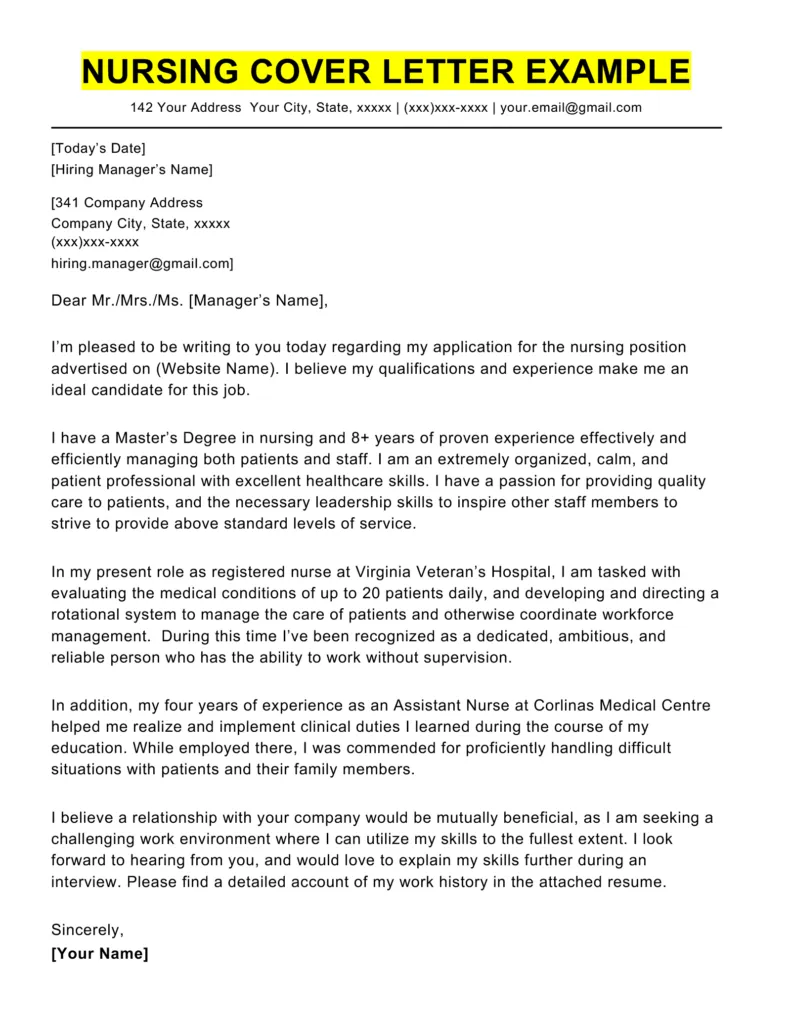
Why is a Nursing Cover Letter Important
A nursing cover letter is more than just a formality; it’s your first opportunity to make a strong impression on a potential employer. It serves as a crucial introduction, providing context and personality beyond what’s available on your resume. In a competitive field like nursing, a well-crafted cover letter can be the deciding factor in whether you get an interview. This document allows you to highlight your unique skills, experience, and passion for the profession, setting you apart from other applicants. It demonstrates your communication skills, attention to detail, and genuine interest in the specific role and healthcare facility.
The cover letter is also where you can address any gaps in your resume, explain career changes, or emphasize your enthusiasm for the position. It gives you the chance to elaborate on your qualifications and connect them directly to the needs of the employer. A well-written cover letter showcases your understanding of the job requirements and your ability to articulate why you are the ideal candidate. It’s your chance to shine, making a memorable first impression that encourages the hiring manager to delve deeper into your qualifications and invite you for an interview. The cover letter acts as a personal statement, making you more than just a list of credentials.
Highlighting Key Skills and Experience
When crafting your nursing cover letter, focus on the skills and experiences most relevant to the specific job. Start by carefully reviewing the job description, noting the key requirements and preferred qualifications. Then, highlight the skills that align with these needs. For example, if the job requires experience with electronic health records, emphasize your proficiency in that area. Tailor your letter to the requirements of the position, demonstrating your understanding of the role. This targeted approach shows that you’ve put in the effort to learn about the position and the needs of the employer.
Use specific examples to illustrate your skills. Instead of just stating that you have excellent communication skills, provide an example of a time you successfully communicated with a patient or a team member. If you have experience with critical care, describe the setting and the responsibilities you handled. These detailed examples show your skills in action and give the hiring manager a clear understanding of your capabilities. Remember to quantify your achievements whenever possible. For instance, mention how you improved patient outcomes, reduced errors, or streamlined processes. These concrete examples add credibility and make your application more compelling. Always consider your past experience and how it could be used to contribute value to the position you’re seeking.
Your Education and Certifications

Your cover letter is the ideal place to emphasize your nursing education and certifications. Begin by clearly stating your degree and the institution from which you graduated. If you have advanced degrees or specialized certifications, such as a certification in critical care nursing (CCRN) or wound care, make sure to highlight them prominently. These credentials demonstrate your expertise and commitment to the nursing profession. Always list your RN or LPN license number and the state in which you are licensed. Ensure that your certifications are current and relevant to the job you are applying for. If you are a recent graduate, you can discuss relevant clinical rotations, capstone projects, or any honors and awards you received during your studies. These details help to create a complete picture of your qualifications.
For experienced nurses, focus on certifications that are directly related to the job. If the position requires experience with a specific patient population or in a particular area of nursing, emphasize the relevant certifications. Also, consider any continuing education courses or professional development activities you have completed. These demonstrate your commitment to ongoing learning and your desire to stay current with best practices in the nursing field. It’s important that you give an accurate representation of the certifications you hold. Listing the appropriate qualifications increases the likelihood of consideration.
Formatting Your Nursing Cover Letter
Proper formatting is essential for a nursing cover letter. Your cover letter should follow a professional business letter format. Use a standard font such as Times New Roman or Arial, with a font size between 11 and 12 points. Ensure your letter is easy to read and well-organized, with clear headings and concise paragraphs. Begin with your contact information, followed by the date and the employer’s contact information. Address the letter to the hiring manager by name, if possible. This shows that you’ve taken the time to research the company and the specific role you are applying for.
Keep the letter to one page, as hiring managers often have limited time to review applications. Structure your letter with a clear introduction, body paragraphs, and a strong conclusion. The introduction should state the position you are applying for and where you found the job posting. The body paragraphs should highlight your skills and experience, focusing on the key requirements of the job. The conclusion should reiterate your interest in the position and express your eagerness for an interview. Always proofread your cover letter carefully for any typos or grammatical errors. A polished, well-formatted cover letter demonstrates your attention to detail and professionalism, increasing your chances of success.
Writing a Compelling Opening
The opening paragraph of your cover letter is crucial; it’s your first chance to grab the hiring manager’s attention. Begin by stating the position you are applying for and where you saw the job posting. Then, quickly introduce yourself and your qualifications. Consider starting with a brief statement that highlights your enthusiasm for the position or the organization. This will immediately show your level of interest. Avoid generic opening lines. Instead, aim to make your introduction unique and memorable. For example, you could mention a specific accomplishment or skill that directly relates to the job requirements. This will immediately capture the attention of the reader.
If you have a personal connection to the organization or a specific interest in the field of nursing, mentioning it in your opening can be a great way to establish rapport. For instance, if you’ve admired the healthcare facility for its commitment to patient care, state that. The opening paragraph should set the tone for the rest of your letter. Your aim is to present a succinct summary of your qualifications while also conveying your enthusiasm. It’s an invitation for the hiring manager to continue reading. Your opening must be both engaging and informative.
Showcasing Your Skills

In the body of your cover letter, provide specific examples that demonstrate your skills. Instead of merely listing your skills, show how you have applied them in previous roles. For instance, if the job requires strong communication skills, describe a situation where you successfully communicated with a patient or a team member to achieve a positive outcome. If you have experience with electronic health records, provide details about how you utilized them to improve patient care. The use of such examples makes your skills more concrete and credible. Your ability to clearly articulate how you have used your skills will convince the hiring manager that you are the ideal candidate.
Quantifying Your Accomplishments
Quantify your achievements whenever possible. Instead of just stating that you improved patient outcomes, specify by how much. Use numbers and data to illustrate your impact. For example, mention that you reduced patient fall rates by a certain percentage or improved patient satisfaction scores. Quantifiable achievements create a more persuasive case. If you have streamlined a process or implemented a new protocol, mention the results in terms of efficiency gains or cost savings. Quantifying your contributions demonstrates your ability to make a tangible difference in the workplace and adds credibility to your claims. Numbers speak louder than words.
Tailoring Your Letter to the Job
Always tailor your cover letter to the specific job and healthcare facility. Avoid using a generic cover letter template for every application. Instead, research the organization and understand its values, mission, and the specific requirements of the role. Use the job description to identify the key skills and qualifications they are looking for. Then, highlight the experience and skills that align with those needs. This will show the hiring manager that you have taken the time to understand the position. This targeted approach will increase the relevance and impact of your application. You can show them that you’re the right candidate.
Creating a Strong Closing

Your closing paragraph should reiterate your interest in the position and organization. Thank the hiring manager for their time and consideration. Express your eagerness for an interview and provide your contact information, including your phone number and email address. Use a professional closing such as “Sincerely” or “Best regards.” Do not use overly casual or informal language. Consider adding a call to action, such as, “I am available for an interview at your earliest convenience.” This will express your enthusiasm and initiative. Ensure your closing is clear, concise, and leaves a positive lasting impression. Your goal is to make it easy for them to reach you.
Proofreading and Editing Your Letter
Before submitting your nursing cover letter, carefully proofread and edit it. Errors can create a negative impression. Read your cover letter aloud to catch any awkward phrasing or grammatical errors. Check for any typos, spelling mistakes, and inconsistencies. It is also wise to have a friend or a mentor review your letter. Get a fresh perspective on the content and formatting. They may catch errors you have missed. Ensure your cover letter is free of jargon or overly technical terms that a non-medical professional might not understand. Check for consistency in font, formatting, and style. Proofreading will help you ensure that your cover letter is clear, polished, and professional. A clean cover letter demonstrates your attention to detail.
Common Mistakes to Avoid
There are several common mistakes to avoid when writing your nursing cover letter. Avoid using generic, mass-produced cover letters. Tailor each letter to the specific job. Do not use a lengthy or rambling writing style. Keep your letter concise, focused, and to the point. Refrain from including any irrelevant information that does not relate to the job requirements. Avoid exaggerating your skills or experience. Always be honest and accurate in your claims. Do not be overly casual or informal in your tone. Maintain a professional and respectful tone. And avoid including negative comments about your previous employers or colleagues. Focus on your positive qualities and experience.
Ensure that you do not make spelling, grammar, or punctuation errors. Proofread your letter carefully. Also, make sure that your cover letter and resume match in terms of formatting and content. Make sure you have not missed any required information. Review the job description carefully to ensure your qualifications align with the required duties. Finally, avoid simply restating your resume. Instead, use your cover letter to elaborate on your qualifications and demonstrate your unique value. By avoiding these common mistakes, you’ll significantly increase your chances of making a positive impression and landing an interview.