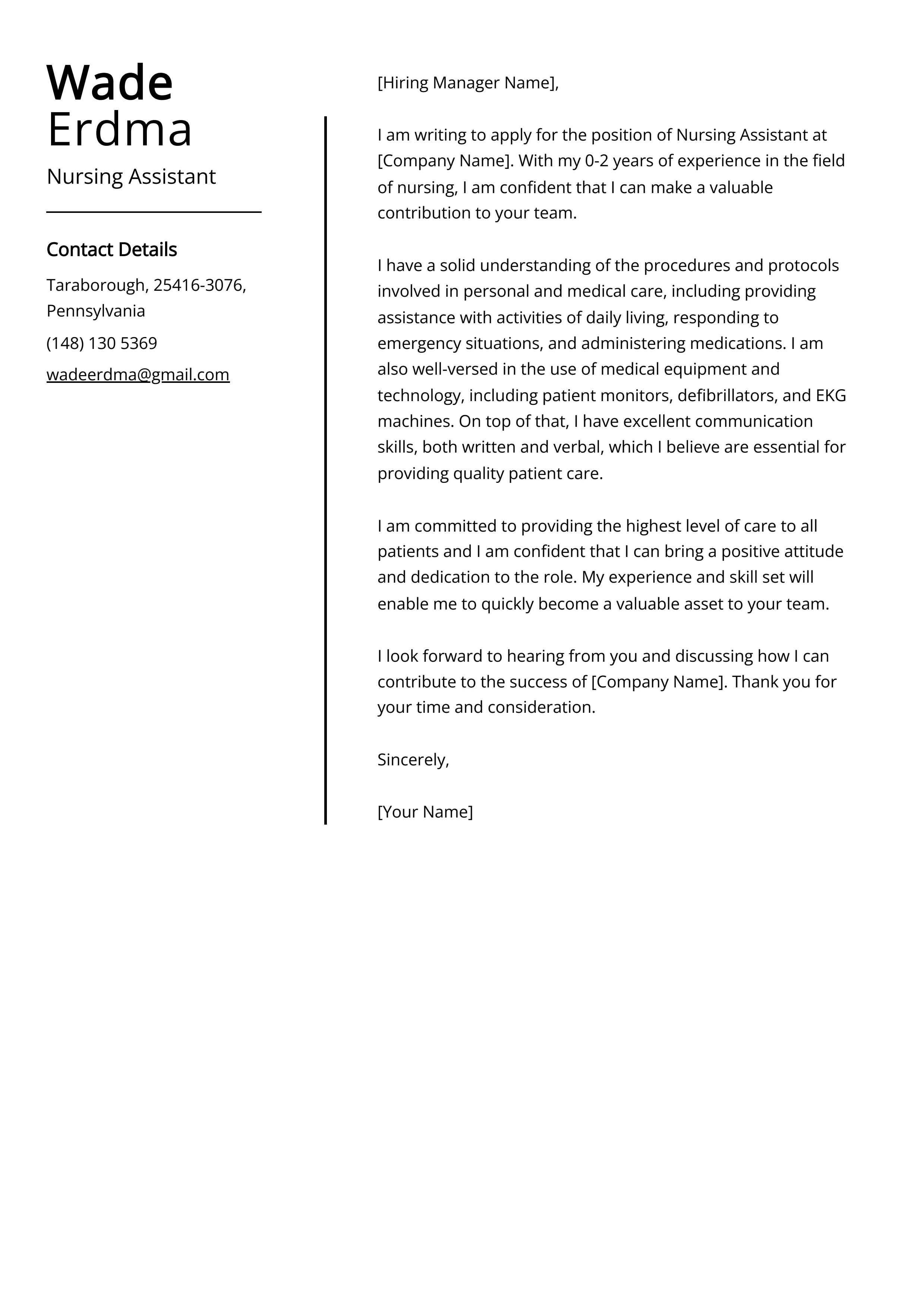
What Is a Nursing Assistant Cover Letter
A nursing assistant cover letter is a crucial document accompanying your resume when applying for nursing assistant positions. It serves as your first introduction to a potential employer, providing an opportunity to showcase your skills, experience, and personality in a way that a resume alone cannot. The cover letter allows you to elaborate on specific qualifications and demonstrate your enthusiasm for the role and the healthcare facility. Writing a compelling cover letter is essential for making a strong first impression and increasing your chances of securing an interview.
Importance of a Nursing Assistant Cover Letter
The importance of a nursing assistant cover letter extends beyond a simple formality. It gives you a platform to personalize your application, highlighting how your unique skills and experiences align with the specific requirements of the job and the values of the healthcare organization. It demonstrates your communication skills, attention to detail, and professionalism. A well-written cover letter showcases your interest in the position, your understanding of the nursing assistant role, and your commitment to providing quality patient care. In a competitive job market, a standout cover letter can be the deciding factor in whether you move forward in the hiring process.
Key Components of a Nursing Assistant Cover Letter

A well-structured nursing assistant cover letter follows a standard format, including key components that work together to present a comprehensive overview of your qualifications and suitability for the role. These components ensure clarity and make it easy for the hiring manager to quickly grasp the value you bring. Each section plays a specific role in conveying your message effectively. Knowing these components is key to crafting a cover letter that makes an impact.
Contact Information
Your Contact Information
At the top of your cover letter, include your full name, phone number, email address, and optionally, your LinkedIn profile URL. Make sure that your contact information is accurate and up-to-date. This ensures that the hiring manager can easily reach you if they are interested in scheduling an interview. Presenting this information clearly sets a professional tone and streamlines the process of communication.
Employer Contact Information
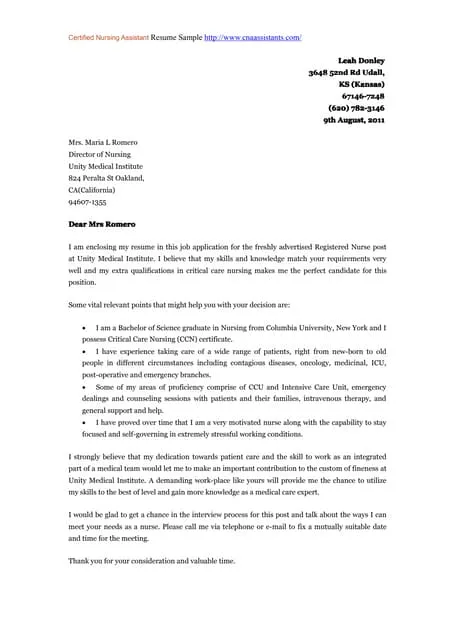
Directly beneath your contact information, include the employer’s name, the hiring manager’s name (if known), the name of the healthcare facility, and the facility’s address. Addressing the cover letter to a specific person is highly recommended. It personalizes the application and shows that you’ve taken the time to research the facility and the hiring process. Finding the hiring manager’s name often involves a quick search on the company website or LinkedIn.
Professional Greeting
Start your cover letter with a professional greeting. If you know the hiring manager’s name, use ‘Dear Mr./Ms. [Last Name]’. Otherwise, use a general greeting such as ‘Dear Hiring Manager’ or ‘Dear [Department Name] Hiring Team’. Avoid using generic greetings like ‘To Whom It May Concern,’ as these can make your application seem impersonal. A strong greeting immediately establishes a professional tone and engages the reader.
Body Paragraphs
The body paragraphs are the heart of your cover letter, where you showcase your skills, experience, and enthusiasm. Aim to write 2-3 paragraphs that effectively highlight your qualifications and explain why you are a good fit for the nursing assistant position.
First Paragraph

The first paragraph should state the position you are applying for and where you found the job posting. Briefly mention your key qualifications and express your enthusiasm for the role and the healthcare facility. This paragraph serves as an introduction, grabbing the reader’s attention and setting the stage for the rest of the letter. Be direct and concise in expressing your purpose.
Second Paragraph
In the second paragraph, delve into your relevant skills and experience. Provide specific examples of how you have demonstrated these skills in previous roles. Focus on the skills that are most relevant to the nursing assistant position, such as patient care, assisting with daily living activities, taking vital signs, and communicating with patients and their families. Quantify your accomplishments whenever possible by including numbers or specific results. For instance, you might mention the number of patients you cared for or any process improvements you contributed to.
Third Paragraph
In the third paragraph, explain why you are interested in this particular nursing assistant position and why you want to work for the specific healthcare facility. Research the facility to demonstrate your knowledge of its mission, values, and the services it provides. Mention specific aspects of the facility that appeal to you, such as its reputation, its approach to patient care, or its commitment to staff development. This demonstrates your genuine interest and shows that you are not simply sending out a generic cover letter.
Closing Paragraph

Conclude your cover letter with a strong closing paragraph that reiterates your interest in the position and expresses your gratitude for the hiring manager’s time and consideration. Include a call to action, such as stating that you are available for an interview and how they can contact you. Reiterate your enthusiasm and your eagerness to discuss your qualifications further. A professional and confident closing reinforces your positive impression.
Formatting and Style
Formatting and style are crucial for making your cover letter easy to read and visually appealing. The layout should be clean, organized, and professional. Attention to these details demonstrates your professionalism and helps the hiring manager focus on the content of your letter.
Font and Size
Use a professional and easy-to-read font, such as Times New Roman, Arial, or Calibri. Keep the font size between 10 and 12 points. This ensures readability and avoids any strain on the reader’s eyes. Ensure the font size is consistent throughout the document to create a polished look.
Margins and Spacing

Use standard one-inch margins on all sides of the document. This provides enough white space to make the text easy to read and prevents the document from appearing cluttered. Use single-spacing within paragraphs and double-spacing between paragraphs. This spacing enhances readability and makes it easier for the hiring manager to scan the content quickly.
Proofreading and Editing
Proofread your cover letter carefully for any spelling, grammar, and punctuation errors. Errors can undermine your credibility and create a negative impression. Consider using spell-checking software and grammar-checking tools. It can also be helpful to have a friend or family member review your cover letter. A fresh pair of eyes can often catch mistakes that you might miss.
Common Mistakes to Avoid
Avoiding common mistakes is essential for presenting a professional cover letter. These errors can negatively impact your chances of getting the job. It is useful to have a checklist of things to look out for as you review the cover letter, before sending it.
Lack of Personalization

Avoid using a generic cover letter. Tailor your letter to each job application, highlighting the specific skills and experiences that align with the job description. Mention the name of the healthcare facility and the specific position. Generic cover letters demonstrate a lack of genuine interest and can be easily identified by hiring managers.
Typos and Grammatical Errors
Carelessly written cover letters are a major turn-off for potential employers. Always proofread your cover letter for spelling, grammar, and punctuation errors. Errors indicate a lack of attention to detail and can create a negative impression. Use spell-check, grammar-check, and have someone else review the letter before submitting it. It’s very common to miss errors when you read your own writing.
Generic Language
Avoid using generic phrases and clichés that don’t provide any specific information about your skills or experience. Instead, use strong action verbs and specific examples to demonstrate your qualifications. For example, instead of saying ‘I am a team player,’ describe a specific instance where you worked effectively as part of a team. Tailor the language to fit the specifics of the job description.
Using a Nursing Assistant Cover Letter Template
Using a cover letter template can be a great starting point for writing your nursing assistant cover letter. Templates provide a structured format and can save you time and effort. The key is to customize the template to reflect your unique qualifications and the specific requirements of the job.
Where to Find Templates
Many online resources offer free nursing assistant cover letter templates. You can find them on websites such as job boards, career advice sites, and resume-building services. Make sure the templates you choose are professional, well-formatted, and easy to customize. Check to ensure the template is relevant to the job market where you are applying. Consider the tone, style, and structure.
Customizing Templates
While using a template is helpful, it’s essential to customize it to fit your specific skills, experience, and the requirements of the job you are applying for. Replace the generic information with your own details. Tailor the content to reflect your qualifications. Provide specific examples of your accomplishments. Do not simply copy and paste the content from the template without making it your own. Customization is key to making your cover letter stand out.
Nursing Assistant Cover Letter Examples
Reviewing nursing assistant cover letter examples can give you valuable insights into how to structure and write your own cover letter. Different examples cater to various experience levels and situations. Use these examples as inspiration and guidance, but always tailor your cover letter to your specific circumstances.
Example 1 [Entry-Level]
An entry-level cover letter should focus on your education, any relevant volunteer experience, and your passion for patient care. Highlight transferable skills, such as communication, empathy, and attention to detail. Express your eagerness to learn and grow in the nursing assistant role. Emphasize your commitment to providing compassionate and effective care to patients. Consider adding any certifications or licenses that you may have. (Image: nursing-assistant-cover-letter-example.webp)
Example 2 [Experienced]
An experienced nursing assistant cover letter should highlight your years of experience, specific skills, and accomplishments. Provide concrete examples of how you have improved patient outcomes, managed challenging situations, or mentored other staff members. Quantify your achievements whenever possible. Demonstrate your understanding of the healthcare facility’s needs and explain how your skills and experience align with their requirements. Showcase your leadership skills and any specializations you may have. (Image: nursing-assistant-cover-letter-example.webp)
Example 3 [Specific Skills]
If you have specialized skills (e.g., experience with specific patient populations, medical equipment, or procedures), tailor your cover letter to highlight these skills. Provide examples of how you have successfully utilized these skills in past roles. Demonstrate how your specialized skills would benefit the healthcare facility. Focus on the specific requirements of the job. Show how your abilities provide value to the specific demands of the role. (Image: nursing-assistant-cover-letter-example.webp)
Final Tips for a Great Nursing Assistant Cover Letter
To write a compelling cover letter, you need to demonstrate your passion for the role and the healthcare industry. Your cover letter should effectively highlight your unique skills and experience. A well-written cover letter is one of the best tools for a job search. Review these final tips to improve your cover letter writing. (Image: nursing-assistant-cover-letter-tips.webp)
- Tailor your cover letter to each job application
- Highlight your relevant skills and experience
- Use action verbs and provide specific examples
- Proofread carefully for any errors
- Showcase your passion for patient care
- Express your genuine interest in the facility
- Keep it concise and easy to read