Crafting a Winning Nurse Practitioner Cover Letter
A well-crafted cover letter is an essential tool for any Nurse Practitioner (NP) seeking employment. It serves as your introduction to a potential employer, allowing you to showcase your skills, experience, and enthusiasm in a way that a resume alone cannot. This guide provides a comprehensive overview of how to create a compelling cover letter that will help you stand out from the competition. We will explore the key components of a successful cover letter, provide examples, and offer tips to help you tailor your letter to each specific job application. A strong cover letter demonstrates professionalism and attention to detail, both highly valued in the healthcare industry. Your goal is to secure an interview, and a polished cover letter is a critical first step.
Understanding the Nurse Practitioner Role
Before you begin writing your cover letter, it’s crucial to have a clear understanding of the Nurse Practitioner role. This understanding will help you highlight the most relevant aspects of your experience and tailor your letter to the specific requirements of the job you are applying for. Knowing what the employer is looking for enables you to present yourself as the best fit for the position. Nurse Practitioners are advanced practice registered nurses who provide comprehensive healthcare services to patients of all ages. They work in various settings, including hospitals, clinics, private practices, and community health centers. They diagnose and treat illnesses, order and interpret diagnostic tests, prescribe medications, and provide patient education and counseling.
Key Responsibilities of a Nurse Practitioner

Nurse Practitioners have a wide range of responsibilities, including performing physical examinations, taking patient histories, and developing treatment plans. They often serve as primary care providers, managing chronic conditions and promoting preventative care. They are expected to be detail-oriented, as accurate diagnosis and treatment is paramount. They work alongside physicians and other healthcare professionals. They must also be skilled in patient communication, empathy, and cultural sensitivity. They are often responsible for educating patients about their health conditions and treatment options, empowering them to make informed decisions about their healthcare. Nurse Practitioners also play a vital role in advocating for their patients and ensuring they receive the best possible care.
Essential Skills for Nurse Practitioners
Successful Nurse Practitioners possess a variety of skills, including clinical expertise, critical thinking, and communication skills. They must have a strong understanding of medical principles and be able to apply them in a practical setting. Problem-solving skills are also essential, as Nurse Practitioners often face complex medical cases that require careful analysis and decision-making. Leadership abilities are necessary, as they often supervise other healthcare professionals. They also need to be able to communicate effectively with patients, families, and other members of the healthcare team. The ability to work independently, as well as collaboratively, is key. They need to stay up-to-date on the latest medical advancements and evidence-based practices, continuously expanding their knowledge and skills.
The Importance of a Cover Letter
While a resume provides a summary of your qualifications and experience, a cover letter allows you to elaborate on specific skills, highlight achievements, and demonstrate your personality and enthusiasm for the role. It provides context to your resume and allows you to tell your story in a compelling way. A well-written cover letter can make a significant difference in whether or not you are selected for an interview. It is your first opportunity to make a positive impression on a potential employer and to distinguish yourself from other candidates.
Why a Cover Letter is Crucial

A cover letter allows you to tailor your application to the specific job and company. It demonstrates your understanding of the position and your genuine interest in the opportunity. It also provides an opportunity to address any potential gaps in your resume, such as a career change or a period of unemployment. It allows you to explain your motivations and why you are the ideal candidate for the role. It shows you are not just sending a generic application but that you have invested time and effort in understanding the employer’s needs. Additionally, a cover letter gives you the chance to showcase your writing and communication skills, which are essential in healthcare.
How a Cover Letter Enhances Your Application
A cover letter allows you to expand on your resume, providing more detail about your skills and experience. You can use the cover letter to highlight specific achievements and quantify your successes with data, such as the number of patients you’ve treated or improvements you’ve made in patient outcomes. By using keywords from the job description, you can show that you meet the requirements of the position. You can also use the cover letter to explain your career goals and how they align with the employer’s mission. A well-crafted cover letter can give you an edge over other candidates and increase your chances of getting an interview. It is your chance to create a lasting positive first impression.
Structuring Your Nurse Practitioner Cover Letter
A well-structured cover letter is easy to read and understand. It should follow a standard format, including an introduction, body paragraphs, and a conclusion. Use clear and concise language, and tailor your letter to the specific job you are applying for. Keep your letter to one page and use professional formatting, such as a standard font and margins. Proofread your letter carefully before submitting it to ensure it is free of errors.
Contact Information and Salutation

Begin your cover letter with your contact information, including your name, address, phone number, and email address. This information should be at the top of the letter. Next, address the letter to the hiring manager or the specific person named in the job posting. If a specific person isn’t named, research the company to find out who handles hiring or use a general salutation such as “Dear Hiring Manager.” Make sure you get the name and title of the hiring manager right.
Writing a Compelling Opening
Your opening paragraph should grab the reader’s attention and clearly state the position you are applying for. Briefly mention where you saw the job posting and express your enthusiasm for the opportunity. Highlight your key qualifications or a particularly relevant achievement to hook the reader and encourage them to continue reading. Avoid generic opening lines. Make your introduction specific and engaging.
Highlighting Your Qualifications and Experience
The body of your cover letter is where you elaborate on your qualifications and experience. Focus on the skills and experiences that are most relevant to the job description. Use specific examples to demonstrate your abilities, such as patient interactions, diagnoses made, or procedures performed. Tailor your language to match the job description and use keywords from the posting. Show the employer what you can do for them, not just what you’ve done in the past.
Quantifying Your Achievements

Whenever possible, quantify your achievements. Use numbers and data to demonstrate the impact you’ve made in previous roles. For instance, you can state the percentage increase in patient satisfaction scores, the number of patients you managed daily, or the efficiency of a program you implemented. Data helps to create a picture for the hiring manager, making your accomplishments more tangible. Use metrics to illustrate your capabilities. Avoid vague statements and provide clear evidence of your successes.
Demonstrating Your Skills
Clearly demonstrate your skills throughout your cover letter. Mention technical skills like electronic health record (EHR) proficiency and medical procedures you are proficient in. Showcase soft skills such as communication, empathy, and problem-solving. Give examples of how you have used these skills in past roles. Provide examples of how you have effectively managed patient cases, collaborated with other healthcare professionals, and provided compassionate care.
Expressing Your Enthusiasm and Interest
Show your genuine interest in the position and the organization. Explain why you are drawn to the company’s mission, values, or culture. Tailor your letter to reflect your knowledge of the company. Researching the employer before writing your cover letter is important. Show your eagerness to learn more about the opportunity and contribute to the team. This demonstrates to the hiring manager that you are serious about the position and have put in the effort to learn about the organization. Your passion will enhance your application.
Closing Your Cover Letter

In your closing paragraph, reiterate your interest in the position and express your gratitude for their time and consideration. Include a call to action, such as expressing your availability for an interview and providing your contact information. Reiterate your contact details and your eagerness to speak with the hiring manager. Ensure that your closing is professional and reflects your enthusiasm for the position. Thank the reader for their time and consideration.
Reviewing and Editing Your Cover Letter
Before submitting your cover letter, review and edit it carefully. Ensure that the content is accurate, well-written, and free of errors. Proofreading is crucial to create a positive impression. Take your time, and don’t rush the process. A polished cover letter demonstrates your attention to detail and professionalism.
Proofreading for Errors
Carefully proofread your cover letter for any spelling, grammatical, or punctuation errors. Errors can undermine your credibility and make a negative impression on the hiring manager. Use spell check, and have someone else review your letter. Read your letter aloud to catch any awkward phrasing or unclear sentences. Pay close attention to detail, as small errors can make a significant difference.
Ensuring a Professional Tone

Maintain a professional tone throughout your cover letter. Use formal language, avoid slang and jargon, and maintain a positive and enthusiastic attitude. Use active voice whenever possible to make your writing more direct and engaging. Avoid overly casual language. Your goal is to present yourself as a competent professional, and your tone should reflect this.
Formatting Your Cover Letter
Use a standard font, such as Times New Roman or Arial, and a font size of 11 or 12 points. Use single spacing and 1-inch margins. Keep your letter to one page. Organize your content using clear headings and bullet points where appropriate. Make your cover letter easy to read. Use a professional font that is easy to read. Format your cover letter to look clean, easy to read and presentable.
Nurse Practitioner Cover Letter Examples
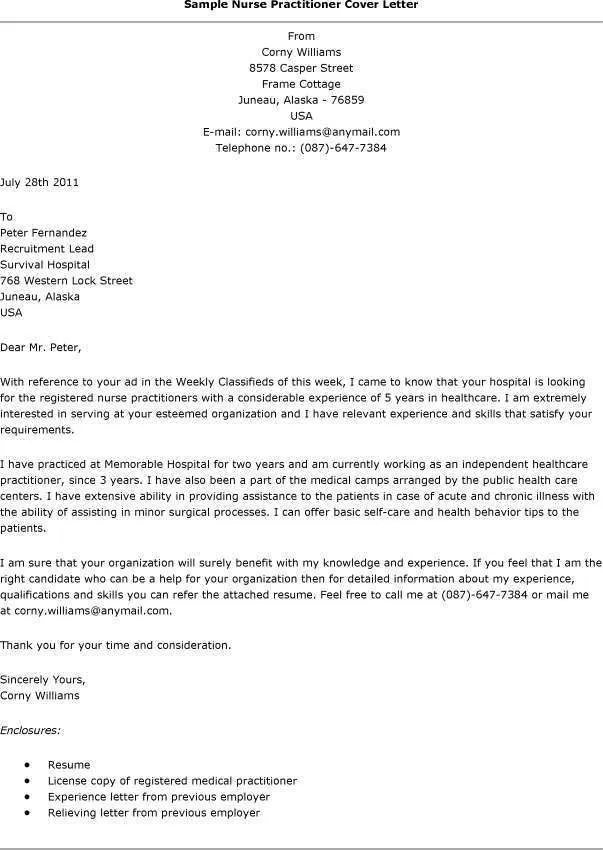
Here are a few examples of cover letters to help you visualize the format and structure, and also to inspire you to create a cover letter for yourself.
Example 1 Experienced Nurse Practitioner
This example showcases an experienced NP highlighting specific achievements and skills. Focus on previous roles and accomplishments and the value provided to the previous employer.
Example 2 New Graduate Nurse Practitioner
This example focuses on clinical experience and coursework from a new grad. It would highlight skills, experiences and clinical rotations.
Example 3 Nurse Practitioner with Specialization
This example highlights the specializations, and the unique skills associated with that specialization. Mention all certifications, and previous experience.
Tips for Success
Creating a successful cover letter takes time and effort. By following these tips and tailoring your letter to each job, you can significantly increase your chances of landing an interview.
Tailoring Your Letter
Always customize your cover letter for each job application. Read the job description carefully and use the same keywords and phrases in your cover letter. Highlight the skills and experiences that are most relevant to the position. Don’t simply submit a generic cover letter. Customize it and focus on the company’s needs.
Researching the Employer
Research the employer and the organization before writing your cover letter. Learn about their mission, values, and culture. This will help you to demonstrate your genuine interest in the company and tailor your letter to their specific needs. You will be better able to highlight how your skills and experience align with their requirements.
Following Up
If you haven’t heard back from the employer within a reasonable timeframe (usually a week or two), follow up with a brief email or phone call. Express your continued interest in the position and reiterate your qualifications. This shows that you are proactive and enthusiastic.