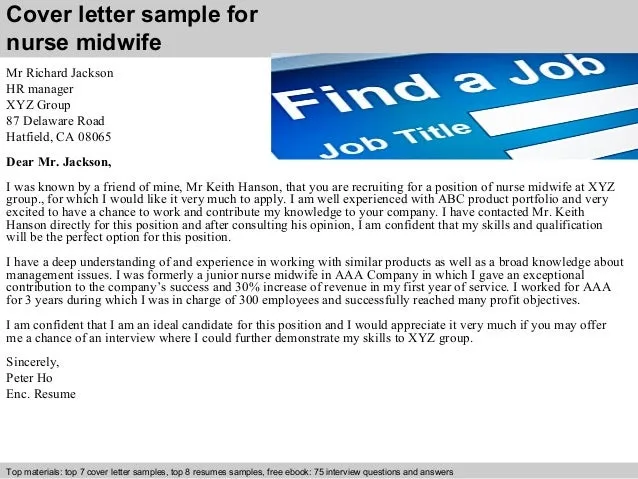
Understanding the Importance of a Midwife Cover Letter
A midwife cover letter is your first chance to make a positive impression on a potential employer. It’s more than just a formality; it’s a crucial tool in your job application arsenal. Unlike your resume, which provides a factual overview of your qualifications, a cover letter allows you to inject personality, demonstrate your understanding of the role, and articulate why you’re the perfect fit for the position. It’s your opportunity to tell a story about your career aspirations and showcase your genuine enthusiasm for midwifery. In a competitive job market, a well-crafted cover letter can be the deciding factor in securing an interview. This guide will help you craft a compelling midwife cover letter that highlights your skills, experience, and passion for providing exceptional care to mothers and newborns.
Highlighting Your Skills and Experience
Your cover letter should be a showcase of your professional abilities and past experiences. While your resume lists your qualifications, the cover letter provides the space to elaborate on them, offering specific examples and demonstrating how your skills align with the job’s requirements. Focus on the most relevant skills and experiences, making sure to mirror the language used in the job description. This ensures the hiring manager can quickly see the connection between your abilities and the role’s needs. By strategically highlighting your qualifications, you present yourself as a highly qualified candidate and increase your chances of advancing to the next stage of the hiring process.
Key Skills to Showcase

As a midwife, you possess a unique blend of clinical expertise and interpersonal skills. Your cover letter should emphasize both. Highlight your technical proficiencies, such as experience with prenatal care, labor and delivery, and postpartum care. In addition to your clinical skills, emphasize your ability to communicate effectively, build rapport with patients, and provide emotional support. Demonstrate your understanding of patient advocacy and your commitment to providing compassionate care. Include examples of your ability to make critical decisions under pressure, manage complex situations, and collaborate effectively with other healthcare professionals. Mention skills such as empathy, active listening, and problem-solving to show that you have the complete package of skills needed to be a successful midwife.
Relevant Experience to Mention
When detailing your experience, go beyond listing job titles and responsibilities. Instead, offer specific examples of your achievements and the impact you made in previous roles. Quantify your accomplishments whenever possible; for instance, mention the number of deliveries you’ve assisted with or any improvements you’ve implemented in patient care processes. Describe your involvement in successful initiatives or projects, highlighting the skills you used to achieve positive outcomes. Share anecdotes that illustrate your adaptability, problem-solving abilities, and dedication to your profession. By providing detailed examples, you give the hiring manager a clearer understanding of your capabilities and the value you bring to the role.
Tailoring Your Cover Letter
A generic cover letter is a missed opportunity. Tailoring your letter to each job application demonstrates that you’ve invested time and effort into understanding the specific needs of the role and the organization. This personalization makes a significant impact on the hiring manager, showing your genuine interest in the position. The more specific you are, the better, as this creates a stronger impression and differentiates you from applicants who send out the same form letter repeatedly. Customization is one of the best ways to improve your odds of getting an interview, because it showcases your attention to detail and your commitment to the role.
Researching the Employer

Before you start writing, research the healthcare facility or practice to which you are applying. Understand their mission, values, and the specific services they offer. This information allows you to align your skills and experiences with their needs, showing the employer that you share their goals. Look for news articles, social media profiles, and their website to gather insights. Demonstrate your knowledge of the organization by mentioning specific programs or initiatives that resonate with you. This shows the employer that you’ve done your homework and are genuinely interested in joining their team.
Customizing for Each Application
Use the job description as your guide when customizing your cover letter. Identify the key skills and experiences that the employer is seeking and make sure to emphasize them in your letter. Use the same keywords and phrases from the job posting to show that you meet their requirements. Modify your letter to reflect the specific needs of the role, highlighting the aspects of your experience that are most relevant to the position. This will make it easy for the hiring manager to understand why you are a good fit. Customization also lets you address any special requirements, such as specific certifications or areas of expertise.
Formatting and Presentation
The appearance of your cover letter is as important as its content. A well-formatted letter shows professionalism and attention to detail, which are qualities that employers value. Your cover letter is a reflection of your professional brand. A well-designed cover letter is not only pleasing to the eye, but it also makes your content more accessible, giving the hiring manager an easy path to the information they need. This makes your letter more enjoyable to read and makes you stand out from applicants with poorly formatted letters.
Professional Font and Layout

Choose a professional font such as Times New Roman, Arial, or Calibri, using a size between 10 and 12 points. These fonts are easy to read and convey a sense of professionalism. Use clear formatting with consistent spacing and margins. Ensure your letter is well-organized with clear headings and bullet points to break up large blocks of text. This makes your letter easier to scan and allows the reader to quickly identify key information. Use a simple layout that is clean and uncluttered. The overall goal is to present your content in a way that is clear, easy to read, and visually appealing.
Proofreading for Errors
Errors in your cover letter can undermine your credibility, so proofreading is absolutely essential. Errors such as typos and grammatical mistakes suggest a lack of attention to detail, something employers will notice quickly. Carefully review your letter for spelling, grammar, and punctuation errors. It is best to proofread multiple times and to read the letter aloud to catch any mistakes that you might have missed. Consider asking a friend or colleague to review your letter as a fresh pair of eyes often catches errors you might have overlooked. A polished, error-free cover letter demonstrates professionalism and your commitment to excellence, which is one of the best ways to stand out in a crowd of applicants.
Adding a Compelling Introduction and Conclusion
Your cover letter should start and end strongly. These are the most memorable parts of your letter and will leave a lasting impression on the hiring manager. The introduction should immediately grab the reader’s attention and establish the purpose of your letter. A weak opening can cause the reader to lose interest quickly. Your introduction is the first place to showcase your enthusiasm for the position and the organization. The conclusion should reiterate your interest and offer a clear call to action, guiding the employer on the next steps. Your introduction and conclusion are critical in creating an impact on the reader.
Crafting a Strong Opening

The introduction is your opportunity to make a strong first impression. Start by stating the position you’re applying for and how you learned about it. Then, immediately highlight your most relevant skills or experiences, making a statement about why you’re an ideal candidate. Consider starting with a brief statement of your passion for midwifery, relating it directly to the specific role or organization. A strong opening shows your enthusiasm, professionalism, and provides a clear overview of your value. You can also mention a specific accomplishment, skill, or personal attribute that aligns with the employer’s needs. This opening sets the stage for a successful cover letter.
Concluding with a Call to Action
The conclusion is your chance to reinforce your interest and request the next steps in the hiring process. Thank the hiring manager for their time and consideration. Then, clearly state your desire for an interview and your availability. Include your contact information, so it’s easy for the employer to reach you. A strong call to action demonstrates your initiative and eagerness to move forward in the process. Reiterate your qualifications and summarize why you are the best candidate for the role. By ending with a clear call to action, you guide the reader on how to proceed, making it easy for them to take the next step.
Showcasing Your Passion and Personality
A cover letter is a great opportunity to highlight your enthusiasm and personality. Midwifery is a profession that requires passion and dedication, and the employer will want to see this reflected in your letter. Share what inspires you about midwifery and why you are drawn to this specific role or organization. Expressing your personality can make your letter more memorable and show the hiring manager that you are more than just a list of qualifications. However, keep your writing professional, and ensure your tone and language align with the workplace’s values. By being yourself, you increase the odds that the employer will remember you and see you as a good fit for their team.