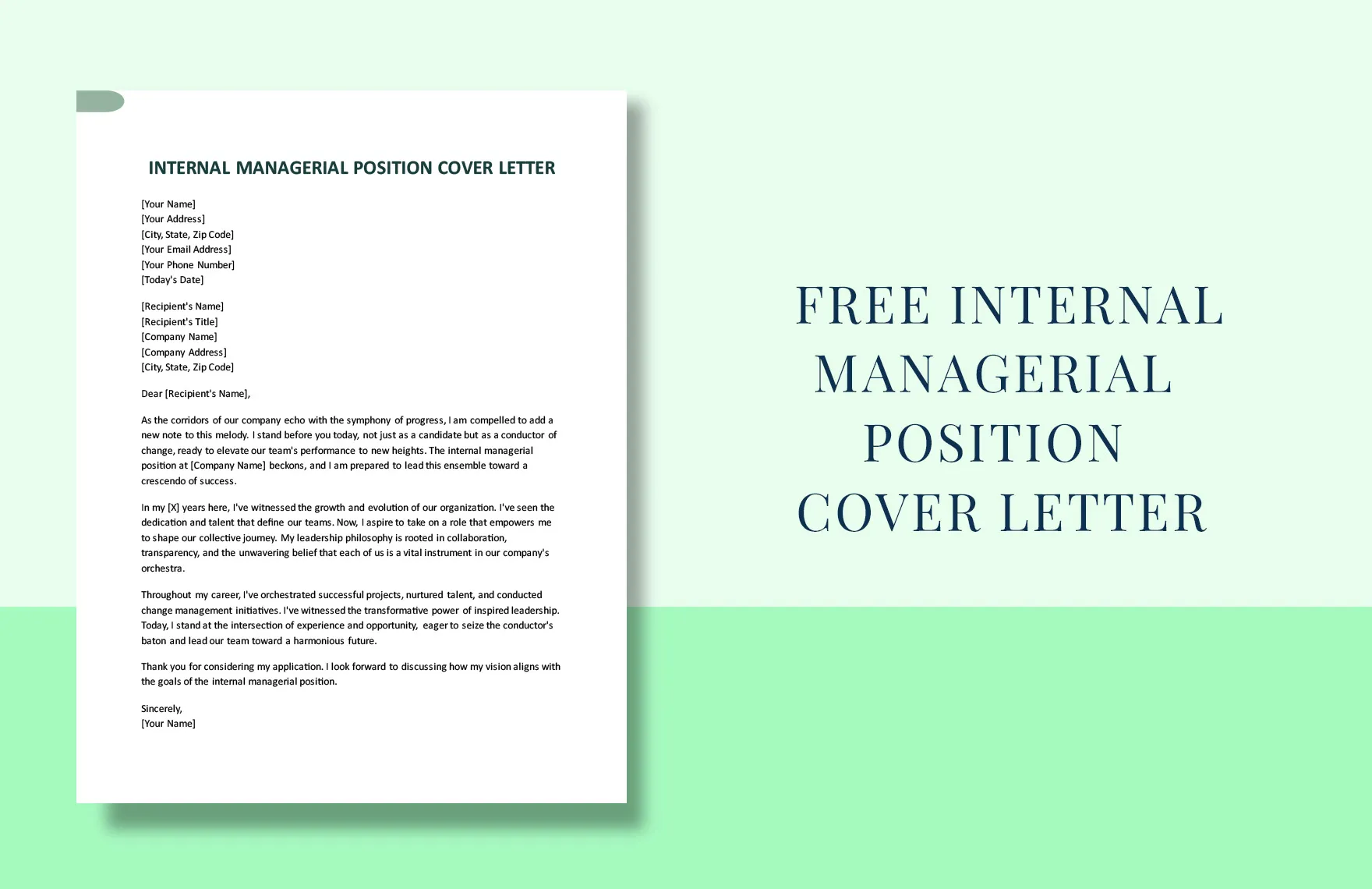
What is a Managerial Cover Letter
A managerial cover letter is a crucial document that accompanies your resume when applying for a managerial position. It serves as your introduction to the hiring manager, providing a tailored overview of your qualifications, experience, and skills, all while highlighting your suitability for the specific role. Unlike a resume, which is a factual account of your career history, a cover letter allows you to elaborate on your achievements, demonstrate your personality, and express your enthusiasm for the opportunity. It’s your chance to make a strong first impression and persuade the employer to read your resume more closely. A well-crafted managerial cover letter is not merely a formality; it’s a powerful tool in your job search arsenal. It differentiates you from other applicants and increases your chances of landing an interview.
Why You Need a Managerial Cover Letter
In the competitive landscape of managerial positions, a cover letter is essential. It provides context to your resume, allowing you to showcase how your skills and experience directly align with the company’s needs and the specific requirements of the job. Without a cover letter, you risk your application being overlooked. A cover letter demonstrates your communication skills, attention to detail, and genuine interest in the role and the company. It allows you to tell a story, connecting your past experiences with the future opportunity. Moreover, it offers a chance to address any potential concerns a hiring manager might have, such as gaps in your employment history or a career change. The absence of a cover letter can signal a lack of effort or a lack of understanding of the importance of personalizing your application. Therefore, investing time and effort in crafting a compelling cover letter is a strategic move that can significantly boost your chances of securing an interview.
Highlighting Your Skills

Your managerial cover letter should spotlight the skills that make you a strong candidate. Identify the key skills the employer seeks, often found in the job description, and provide examples of how you have demonstrated them in your previous roles. Focus on leadership, communication, problem-solving, decision-making, and strategic planning abilities. When describing your skills, use action verbs to illustrate how you’ve applied them in real-world scenarios. Rather than simply stating ‘I have strong leadership skills,’ provide evidence such as ‘Led a team of 15 employees, resulting in a 15% increase in productivity.’ By providing concrete examples, you show, rather than tell, the hiring manager what you are capable of.
Quantify Your Achievements
Quantifying your achievements is crucial in making your managerial cover letter stand out. Numbers provide concrete evidence of your impact and success in previous roles. Instead of saying ‘Improved team performance,’ state ‘Improved team performance by 20% through the implementation of a new training program.’ Use metrics such as revenue generated, cost savings achieved, projects completed on time and under budget, or customer satisfaction scores. Quantifying your achievements allows the hiring manager to easily understand the value you brought to your previous employers and what you can potentially bring to theirs. These specifics add credibility to your claims and differentiate you from candidates who use generic language.
Tailoring to the Job Description
A generic cover letter is a sure way to get your application dismissed. Tailor your letter to each specific job you apply for. Carefully read the job description and identify the key requirements and expectations. Then, in your cover letter, explicitly address how your skills and experience align with those requirements. Use the same keywords and phrases from the job description to show that you understand the needs of the role and the company. Tailoring your cover letter demonstrates that you have taken the time to understand the specific opportunity and that you are genuinely interested in the position. This personalization significantly increases your chances of getting noticed by the hiring manager.
Researching the Company

Before writing your cover letter, conduct thorough research on the company. Understand their mission, values, recent achievements, and challenges. This knowledge will allow you to demonstrate your genuine interest and tailor your letter accordingly. Mention specific projects, initiatives, or aspects of the company that resonate with you. Show that you understand the company culture and how you can contribute to its success. Researching the company demonstrates that you are proactive, engaged, and invested in the opportunity. It also provides you with valuable talking points for your interview, should you be selected.
Formatting and Structure
The formatting and structure of your managerial cover letter are just as important as its content. A well-formatted letter is easy to read and leaves a positive impression. Use a professional font, such as Times New Roman or Arial, and maintain consistent formatting throughout. Keep the letter concise, typically within one page. Break up long paragraphs with shorter ones to improve readability. Use clear headings and bullet points to organize information effectively. A well-structured letter reflects your organizational skills and attention to detail, qualities highly valued in managerial roles. Pay close attention to the visual presentation of your cover letter.
Header Essentials
Your header should include your contact information, such as your name, phone number, email address, and LinkedIn profile URL. Ensure that this information is accurate and up-to-date. Also, include the date and the hiring manager’s name and title (if known). If you are sending a physical letter, include your address. The header is the first thing the hiring manager sees, so it must be professional and easy to read. Using a professional email address is crucial; avoid using a casual or unprofessional email address. The header sets the tone for the rest of your letter and makes it easy for the hiring manager to contact you.
Salutation Strategies

The salutation sets the tone for your cover letter. If possible, address the hiring manager by name (e.g., ‘Dear Mr. Smith’). This personalization shows that you have taken the time to research the company. If you cannot find the hiring manager’s name, use a professional salutation, such as ‘Dear Hiring Manager’ or ‘Dear [Department Name] Team.’ Avoid generic salutations like ‘To Whom It May Concern,’ which can make your letter feel impersonal. Your goal is to create a sense of connection and demonstrate that you are addressing a specific individual or team. Proper salutations are the key to engaging the reader from the start.
Body Paragraphs
The body paragraphs are the heart of your managerial cover letter. Start with a strong opening paragraph that captures the reader’s attention and clearly states the position you are applying for. In the subsequent paragraphs, elaborate on your key skills, experience, and achievements. Provide specific examples to support your claims and quantify your accomplishments whenever possible. Tailor the content to the job description and demonstrate how your qualifications align with the company’s needs. End with a strong closing paragraph that reiterates your interest in the role and expresses your enthusiasm for an interview. The body paragraphs should be well-structured, easy to read, and compelling.
Closing the Letter
Your closing paragraph should reiterate your interest in the role and express your enthusiasm for an interview. Thank the hiring manager for their time and consideration. Include a call to action, such as ‘I look forward to the opportunity to discuss my qualifications further’ or ‘I am eager to learn more about this exciting opportunity.’ End the letter with a professional closing, such as ‘Sincerely’ or ‘Best regards,’ followed by your name. The closing paragraph is your final chance to leave a positive impression, so make it concise, enthusiastic, and professional.
Tone and Style

The tone and style of your managerial cover letter should reflect professionalism, confidence, and enthusiasm. Use clear, concise language and avoid jargon or overly complex sentences. Your writing should be positive and engaging, highlighting your skills and accomplishments. The tone should be professional, but also showcase your personality and genuine interest in the role and the company. Adapt the style to the company culture; some companies prefer a more formal tone, while others are more relaxed. Remember to maintain a consistent tone throughout the letter.
Professionalism in Writing
Professionalism is paramount in a managerial cover letter. Maintain a formal and respectful tone. Use proper grammar, punctuation, and spelling. Avoid slang, informal language, and emoticons. Proofread your letter carefully to eliminate any errors. Ensure that your writing is clear, concise, and easy to understand. Your cover letter is a reflection of your communication skills, so make sure it is polished and professional. A professional approach enhances credibility and demonstrates your commitment to excellence.
Avoiding Clichés
Avoid using clichés and generic phrases that make your cover letter sound unoriginal. Phrases like ‘I am a team player,’ ‘I am a hard worker,’ and ‘I am a highly motivated individual’ are overused and lack impact. Instead, use specific examples to demonstrate your qualities. For instance, instead of saying ‘I am a team player,’ describe a time when you successfully collaborated with a team to achieve a specific goal. The goal is to showcase your uniqueness and provide concrete evidence of your abilities, rather than resorting to generic statements.
Show, Don’t Tell

The most effective managerial cover letters ‘show’ rather than ’tell.’ Instead of simply stating your skills and qualities, provide specific examples and evidence to support your claims. For instance, rather than saying ‘I am a good leader,’ describe a situation where you successfully led a team, overcame a challenge, and achieved a positive outcome. Use action verbs to describe your accomplishments and quantify your results whenever possible. Showing your capabilities with concrete examples and data is more persuasive than making general statements about yourself.
Proofreading and Editing
Proofreading and editing are critical steps in crafting a successful managerial cover letter. Errors in grammar, punctuation, and spelling can undermine your credibility and make a negative impression. Before submitting your letter, carefully proofread it multiple times, preferably with a fresh pair of eyes. Check for any typos, grammatical errors, or formatting inconsistencies. Ensure that your sentences are clear, concise, and well-structured. A polished and error-free cover letter demonstrates attention to detail and professionalism, which are highly valued qualities in managerial positions.
Common Mistakes to Avoid
Avoid common mistakes that can damage your chances of getting an interview. These include: using a generic cover letter, failing to tailor your letter to the job description, not proofreading for errors, using clichés, being overly casual or unprofessional, and including irrelevant information. Do not simply repeat information from your resume; use the cover letter to elaborate on your achievements and provide context. Do not make negative statements about previous employers or colleagues. Stay focused on your skills, experience, and qualifications. The cover letter should be a positive reflection of yourself.
Seeking Feedback

Before submitting your managerial cover letter, seek feedback from trusted sources. Ask a friend, family member, career counselor, or mentor to review your letter. They can provide valuable insights on clarity, grammar, style, and overall impact. Ask them to assess whether your letter effectively highlights your skills, experience, and suitability for the role. Consider their feedback and make revisions as needed. Getting a second opinion can significantly improve the quality of your cover letter and increase your chances of success. Fresh perspectives help you refine your message and present yourself in the best possible light.