Crafting a Compelling Lecturer Cover Letter
A well-crafted cover letter is your first impression when applying for a lecturer position. It’s your chance to showcase your qualifications, experience, and enthusiasm for the role. This guide provides a comprehensive overview of how to write a cover letter that grabs the attention of hiring committees and increases your chances of getting hired. From understanding the purpose of a cover letter to avoiding common mistakes, we’ll equip you with the knowledge and tools you need to create a standout application. Remember, the goal is not just to list your achievements but to connect them to the specific needs of the position and demonstrate why you are the best candidate.
Understanding the Purpose of a Lecturer Cover Letter
The primary purpose of a lecturer cover letter is to introduce yourself and highlight how your skills and experience align with the requirements of the job. It provides context to your resume, allowing you to elaborate on your qualifications, articulate your teaching philosophy, and express your interest in the specific institution. Think of it as a personal marketing document that sells your candidacy. A strong cover letter demonstrates your understanding of the role, showcases your personality, and convinces the hiring committee that you are worth interviewing. Without a compelling cover letter, even the most impressive resume might be overlooked.
Key Components of an Effective Cover Letter

A well-structured cover letter typically includes several key components that work together to present a clear and compelling case for your candidacy. These components ensure that all essential information is conveyed effectively, making it easy for the reader to understand your qualifications and suitability for the position. By following these guidelines, you can create a cover letter that is both informative and engaging, increasing your chances of securing an interview and ultimately, the job. Each section should be carefully crafted to present you in the best possible light.
Header Information
The header should include your contact information and the date. It should be clear and easy to find. Use a professional font and formatting that matches the style of your resume. Consistency is key in this section as it sets the tone for the rest of the document. This ensures that the hiring committee can easily reach you and provides a polished look to your application.
Applicant’s Contact Information
Include your full name, address, phone number, and professional email address. Make sure your email address is professional and easy to remember. Your contact information should be at the top left or right corner of the document for easy access. Double-check all details for accuracy to prevent any missed communication.
Recipient’s Contact Information

If possible, address the letter to the hiring manager by name. Research the department and find out the correct contact details. Include the hiring manager’s name, title, department, and university address. This level of personalization shows you’ve done your research and are genuinely interested in the position.
Salutation
Use a professional salutation like ‘Dear Dr. [Last Name]’ or ‘Dear Mr/Ms/Mx. [Last Name]’ if you know the hiring manager’s name. If not, use ‘Dear Hiring Committee’ or ‘Dear Search Committee’. Avoid generic greetings such as ‘To Whom It May Concern’ as they can make your letter seem impersonal.
Highlighting Your Qualifications
This section is crucial for showcasing your qualifications and demonstrating how your skills and experience align with the specific requirements of the lecturer position. It’s your opportunity to sell yourself and convince the hiring committee that you are the ideal candidate. Make sure to emphasize your teaching experience, academic background, research contributions, and soft skills. Tailor this section to mirror the job description, highlighting relevant skills and experiences that match the needs of the university.
Showcasing Your Academic Background

Provide a concise overview of your academic qualifications. Include your degrees, the institutions you attended, and the dates of completion. Focus on degrees that are most relevant to the position, and mention any honors or awards you received. Highlight any specializations or areas of expertise that align with the department’s needs. Your goal is to demonstrate that you have the educational foundation to excel in the role.
Detailing Relevant Teaching Experience
Provide specific examples of your teaching experience, including the courses you have taught, the level of students, and the teaching methods you employed. Describe your teaching philosophy and how you engage students in the learning process. If possible, include any positive feedback or evaluations you received. Quantify your accomplishments whenever possible, such as the number of students you taught or the improvements in student performance. Use action verbs to describe your responsibilities and achievements.
Demonstrating Research Contributions
If the lecturer position requires research, highlight your relevant contributions. Mention any publications, presentations, or research projects you have been involved in. Describe your research interests and how they align with the department’s goals. If you have secured any grants or awards, be sure to mention them. Even if research isn’t a primary focus, showing a commitment to scholarly activity can enhance your application. Provide enough detail to showcase the scope and impact of your research efforts.
Emphasizing Soft Skills and Abilities

Highlight your soft skills, such as communication, teamwork, leadership, and problem-solving abilities. Provide examples of how you have used these skills in your teaching, research, or other professional experiences. Show how you can collaborate effectively with colleagues, mentor students, and contribute to the department’s overall success. Soft skills are often critical to success in academia, so make sure to emphasize them. Illustrate your skills with specific examples.
Addressing the Specific Requirements of the Position
This is where you demonstrate your understanding of the specific requirements of the lecturer position. It’s not enough to simply list your qualifications; you must show how they align with the job description. By carefully tailoring your cover letter, you can increase your chances of making a strong impression and securing an interview.
Tailoring Your Letter to the Job Description
Carefully review the job description and identify the key requirements, skills, and qualifications the university is seeking. Then, structure your cover letter to address these requirements directly. Use the same language and keywords found in the job description to make it clear that you understand the role and are a good fit. Provide specific examples of how your experience aligns with each requirement, showcasing your ability to meet the needs of the position.
Mentioning Relevant Skills and Keywords

Incorporate relevant keywords from the job description throughout your cover letter. These keywords help your application get noticed by applicant tracking systems (ATS) and demonstrate your understanding of the position. Highlight skills such as curriculum development, student assessment, online teaching, or specific software programs. Use these keywords naturally within your sentences, making sure they fit the context. Be specific about your skills, illustrating how you’ve used them effectively.
Expressing Enthusiasm and Interest
Clearly express your enthusiasm for the position and the institution. Explain why you are interested in this specific role and what attracts you to the university. Show that you have researched the department and understand its mission and values. Demonstrate your genuine interest in teaching, mentoring students, and contributing to the academic community. Your enthusiasm will set you apart from other candidates and leave a lasting positive impression.
Structuring Your Cover Letter
The structure of your cover letter is essential for making it easy to read and understand. A well-organized letter ensures that the hiring committee can quickly grasp your qualifications and how they align with the job requirements. Using a clear and logical structure will make your cover letter more impactful and memorable.
The Opening Paragraph

Start with a strong opening paragraph that grabs the reader’s attention. State the position you are applying for and where you saw the advertisement. Briefly mention your most relevant qualifications and why you are a good fit for the role. Clearly state your enthusiasm for the position and the institution. Avoid generic opening lines; instead, make it clear why you are a standout candidate from the very beginning.
The Body Paragraphs
The body paragraphs should expand on your qualifications and experiences, providing specific examples of your achievements. Use separate paragraphs to address different aspects of the job description, such as teaching experience, research contributions, and soft skills. Each paragraph should focus on a specific skill or experience, providing clear examples to support your claims. Ensure that your examples are relevant to the position and demonstrate your ability to meet the department’s needs. Use strong action verbs and quantify your accomplishments whenever possible.
The Closing Paragraph
Conclude your cover letter with a strong closing paragraph. Reiterate your interest in the position and express your enthusiasm for the opportunity. Thank the hiring committee for their time and consideration. Indicate your availability for an interview and how they can contact you. End with a professional closing such as ‘Sincerely’ or ‘Best regards’, followed by your name.
Formatting and Presentation

The formatting and presentation of your cover letter are just as important as the content. A well-formatted letter is easy to read and presents you in a professional light. Proper formatting shows that you pay attention to detail, which is a valuable trait in any academic setting. Take the time to ensure your cover letter looks polished and professional.
Choosing the Right Font and Formatting
Choose a professional font such as Times New Roman, Arial, or Calibri, and use a font size between 10 and 12 points. Use standard margins of 1 inch on all sides. Ensure consistent spacing throughout the document. Use bolding and italics sparingly to highlight important information. Make sure your letter is easy on the eyes and reflects a high level of professionalism. Always use a clean and simple layout.
Proofreading and Editing Your Letter
Proofread your cover letter carefully for any typos, grammatical errors, or spelling mistakes. Have someone else review your letter to catch any errors you may have missed. Ensure that the tone and language are professional and appropriate for an academic setting. Check that all the information is accurate and up-to-date. A polished and error-free cover letter demonstrates your attention to detail and commitment to quality.
Avoiding Common Mistakes
Several common mistakes can significantly diminish the effectiveness of your cover letter. By being aware of these pitfalls, you can avoid them and increase your chances of making a strong impression on the hiring committee.
Generic Language
Avoid using generic phrases or clichés that could apply to any job. Instead, personalize your letter by providing specific examples and tailoring it to the specific position and institution. Show that you have researched the department and understand their needs. Generic language makes your application seem impersonal and less likely to stand out.
Typos and Grammatical Errors
Typos and grammatical errors can create a negative impression and undermine your credibility. Proofread your cover letter carefully and have someone else review it before submitting. Errors demonstrate a lack of attention to detail, which is a major turn-off for hiring committees. Always ensure that your writing is clear, concise, and free of errors.
Ignoring Instructions
Carefully read and follow all instructions provided in the job posting. If the posting specifies a certain format or asks for specific information, be sure to include it. Ignoring instructions shows a lack of attention to detail and a disregard for the hiring committee’s preferences. Failure to follow instructions can be an automatic disqualifier.
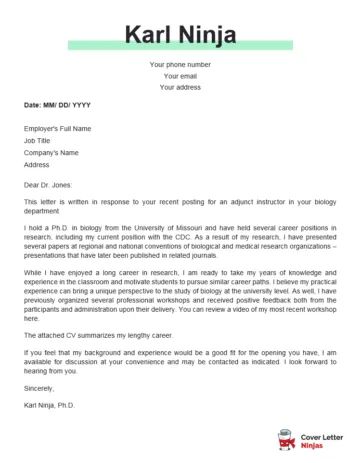
Example Lecturer Cover Letter
Include a sample cover letter. Adapt the template to highlight your qualifications, teaching experiences, and research contributions. Use the same keywords from the job description to make sure the letter matches the specific requirements.