
Cover Letter for Judicial Clerkship Overview
A well-crafted cover letter is your first chance to impress a judge and secure a coveted judicial clerkship. This document serves as an introduction, highlighting your qualifications, showcasing your interest, and demonstrating why you are the ideal candidate. Unlike generic job applications, a judicial clerkship cover letter requires meticulous attention to detail, a deep understanding of the judge’s preferences, and a clear articulation of your legal acumen. This guide provides essential tips to help you craft a compelling cover letter that stands out from the competition and increases your chances of landing this prestigious opportunity. Remember, the goal is not just to list your accomplishments, but to connect them with the specific needs and interests of the judge and the court.
Researching the Judge
Before you start writing, thorough research is crucial. Visit the court’s website, read the judge’s opinions, and explore their publications or any available biographical information. Understanding the judge’s background, areas of interest, and prior experience will help you tailor your cover letter to resonate with them personally. Pay attention to any specific requirements mentioned in the clerkship posting. Do they prefer a particular format, writing style, or emphasis on certain skills? Use this information to demonstrate that you have taken the initiative to understand their work. Addressing the judge by name and referring to their specific cases or interests shows that you have gone the extra mile and are genuinely interested in the opportunity.
Highlighting Relevant Skills

Judicial clerkships demand a unique set of skills. Your cover letter should highlight how your abilities align with the requirements of the role. This includes your legal writing, analytical abilities, and attention to detail. The cover letter is where you will effectively showcase these skills and how they are suited for the role. Be sure to demonstrate how you have used these skills to your advantage and how the judge will benefit by having you work for them.
Strong Legal Writing Skills
Exceptional legal writing is a core requirement for judicial clerkships. Judges rely on clerks to draft legal memoranda, opinions, and other essential documents. In your cover letter, emphasize any experiences that have honed your writing abilities. Showcase your experience with persuasive writing, summarizing complex legal issues concisely, and producing accurate and well-structured legal documents. Reference any writing awards, publications, or relevant coursework where you have demonstrated your ability to write clearly, precisely, and persuasively.
Analytical and Research Abilities
Judicial clerks must possess strong analytical and research skills to assist with case analysis and legal research. Describe your experience conducting in-depth legal research, analyzing case law, and synthesizing complex information. Give examples of how you have successfully applied these skills in your coursework, internships, or previous employment. Highlight any experience with legal databases such as LexisNexis or Westlaw, as well as any research projects that showcase your ability to analyze and interpret legal issues effectively.
Attention to Detail
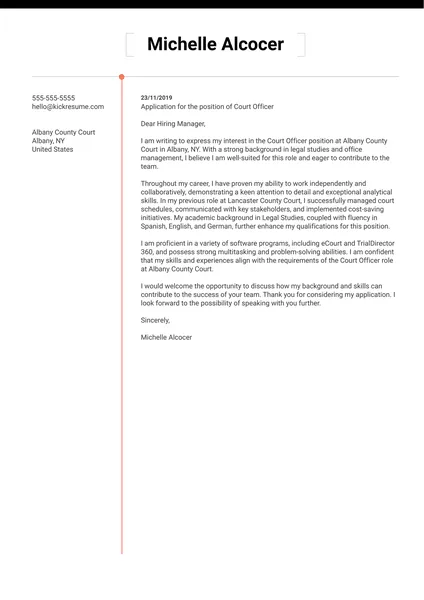
Attention to detail is paramount in the legal field. Judges depend on their clerks to ensure accuracy and precision in all legal documents. In your cover letter, emphasize your meticulous approach, ability to proofread thoroughly, and commitment to accuracy. Mention any experiences that required you to be detail-oriented, such as proofreading legal briefs, managing complex projects, or handling sensitive information. Proofread your cover letter carefully before submitting it to avoid any errors that could detract from your application.
Showcasing Legal Experience
Legal experience, whether in a clerkship, internship, or externship, is highly valuable. If you have previously worked in a similar role, be sure to highlight your responsibilities and accomplishments. Focus on what you learned from these experiences and how they have prepared you for the challenges of a judicial clerkship.
Clerkship Experience
If you have prior clerkship experience, it is important to emphasize the nature of your role and the key tasks you performed. Describe your responsibilities, such as legal research, drafting memoranda, assisting with hearings, and preparing court documents. Highlight any instances where your work was directly utilized in court proceedings. Use specific examples to showcase your understanding of the judicial process and your ability to work effectively in a fast-paced legal environment. Mention any positive feedback or recognition you received during your previous clerkship.
Externships and Internships

Relevant internships or externships provide valuable experience and can significantly strengthen your application. Explain your role and the nature of your responsibilities. Highlight your interactions with judges, attorneys, and court staff. Describe any notable achievements or contributions you made during your internship. Use specific examples to demonstrate your understanding of legal principles and your ability to apply them practically. Show the judges how your experience in the field will benefit their chambers.
Academic Achievements
Your academic record is an important factor. Include your GPA, class rank, and any academic awards or honors you have received. Mention relevant coursework and projects that demonstrate your understanding of legal principles and your ability to apply them. If you were involved in academic journals or law reviews, discuss your roles and contributions to the publication. These achievements highlight your dedication and commitment to academic excellence.
GPA and Class Rank
Include your GPA and class rank. If your GPA is competitive, consider including it prominently. If you were at the top of your class, make sure to highlight this achievement. If your GPA is not as strong, you can still mention it and focus on other aspects of your application to demonstrate your abilities and potential. Be honest and straightforward about your academic record and focus on what you have learned and how you have used your knowledge.
Law Review and Journals

If you participated in law review or other legal journals, be sure to highlight your role, such as editor, staff writer, or contributing author. Discuss any articles or publications you worked on, and explain how these experiences have enhanced your legal research and writing skills. Participation in these activities demonstrates your commitment to academic excellence and your ability to work collaboratively with other legal professionals. It provides a strong signal of your abilities and your commitment to the legal profession.
Tailoring Your Cover Letter
Customization is key when writing a cover letter for a judicial clerkship. Avoid sending a generic letter to every judge. Your letter should be tailored to each specific judge and the unique requirements of the position. This demonstrates that you have taken the time to understand the judge’s preferences and are genuinely interested in the specific opportunity.
Addressing Specific Judge Requirements
Carefully review the clerkship announcement or any information provided by the judge regarding their preferences. If the judge has mentioned any specific requirements, address them directly in your cover letter. For instance, if they mention a preference for candidates with experience in a specific area of law or with a particular writing style, be sure to highlight how your experience aligns with those requirements. This demonstrates that you pay attention to detail and understand the needs of the judge.
Demonstrating Genuine Interest

A successful cover letter should convey your genuine interest in working for the judge. Explain why you are drawn to their work, their areas of expertise, or their judicial philosophy. If you have read any of their opinions or articles, mention them and explain what you found compelling. A genuine expression of interest shows that you are not just seeking a job, but that you are excited about the opportunity to contribute to the judge’s chambers and learn from them.
Proofreading and Formatting
Proofreading and proper formatting are essential. Ensure your cover letter is free of errors and presents a professional appearance. A poorly formatted or error-filled cover letter can immediately damage your chances of being selected. Take the time to ensure everything is clear, concise, and error-free.
Ensuring Clarity and Conciseness
Keep your cover letter concise and to the point. Judges are busy people, and they appreciate clear, focused communication. Avoid jargon and overly complex sentences. Get straight to the point, highlighting the most important information in a clear and easy-to-read format. Use strong action verbs to describe your experience and accomplishments. A concise letter shows respect for the judge’s time and demonstrates your ability to communicate effectively.
Formatting Guidelines

Follow standard formatting guidelines for your cover letter. Use a professional font such as Times New Roman or Arial. Keep your font size consistent (11 or 12 points). Use one-inch margins and single-space your text. Use a clear, professional heading with your contact information. Include the date and the judge’s name and address. Ensure your cover letter is well-organized, with clear paragraphs and a professional tone.
Cover Letter Conclusion
In conclusion, a well-crafted cover letter is an essential component of your judicial clerkship application. By following these tips, you can significantly improve your chances of being selected for an interview. Remember to research the judge, highlight your relevant skills and experiences, tailor your letter to each specific opportunity, and proofread carefully. A strong cover letter not only showcases your qualifications but also demonstrates your genuine interest in the position. Good luck with your application!