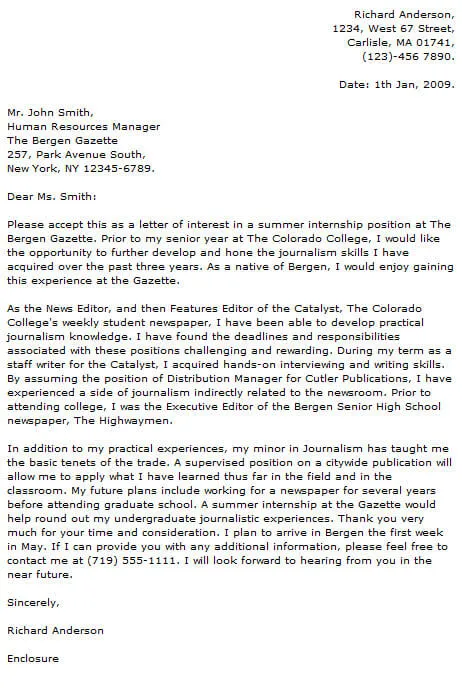
Why a Journalism Cover Letter Matters
A journalism cover letter is more than just a formality it’s your first opportunity to make a strong impression on a potential employer and a crucial step in securing your dream job in journalism. Unlike a resume, which provides a summary of your professional history, a cover letter allows you to showcase your personality, writing skills, and genuine interest in the specific position and publication. In a competitive field, a well-crafted cover letter can be the deciding factor in whether your application gets noticed or ends up in the rejection pile. It’s your chance to demonstrate that you possess not only the necessary skills and experience but also the passion and drive to succeed in the dynamic world of journalism. The cover letter is a valuable tool to explain gaps in your experience, address specific requirements, and articulate your career aspirations.
Highlight Your Skills and Experience
Your cover letter should spotlight the skills and experience that directly align with the job requirements. Focus on the most relevant aspects of your background, such as reporting, interviewing, writing, and editing. Provide specific examples of your work that demonstrate these skills in action. If the job posting emphasizes investigative reporting, share an example of a successful investigation you conducted. If it requires experience with social media, mention how you used these platforms to promote your stories and engage with audiences. Quantify your achievements whenever possible, such as the number of articles you’ve written, the increase in readership you generated, or the awards you’ve received. This will give potential employers a clear sense of your capabilities and accomplishments.
Tailor Your Letter to the Job

Generic cover letters are easily spotted and often discarded. Customizing your letter to each specific job application is essential. Carefully review the job description and identify the key qualifications and requirements. Then, tailor your letter to address these directly. Mention the publication or organization by name and show that you understand its mission, values, and target audience. Explain why you are particularly interested in this specific opportunity and what unique contributions you can bring to the team. Demonstrate that you’ve done your homework and are genuinely enthusiastic about the role.
Showcase Your Writing Style
Your cover letter is a writing sample; it’s a chance to demonstrate your ability to write clear, concise, and engaging prose. Make sure your writing style aligns with the publication’s tone and the job requirements. Use strong verbs and varied sentence structures to keep your writing interesting. Avoid jargon and overly formal language. Instead, write in a style that is both professional and authentic, reflecting your personality and passion for journalism. Proofread carefully for any grammatical errors or typos. A well-written cover letter shows that you can communicate effectively, a crucial skill for any journalist.
The Structure of a Journalism Cover Letter
Opening Paragraph

The opening paragraph is your opportunity to grab the reader’s attention and make a strong first impression. Start by stating the position you are applying for and how you learned about it. Briefly mention your most relevant qualifications and why you are a good fit for the job. Clearly state your purpose and express your enthusiasm for the opportunity. Avoid generic opening lines. Instead, write something that is engaging and specific to the publication or organization. A compelling opening will encourage the reader to continue reading and learn more about your qualifications.
Body Paragraphs
The body paragraphs are where you provide the details of your skills and experience. Use this section to showcase your accomplishments, explain how you meet the job requirements, and highlight your unique contributions. Provide specific examples to support your claims. Quantify your achievements whenever possible. Use a clear and organized structure, with each paragraph focusing on a specific skill or experience. Keep your paragraphs concise and to the point. Avoid rambling or including unnecessary information. Focus on the most relevant aspects of your background and demonstrate how they align with the job requirements. Use keywords from the job description to further demonstrate your fit.
Closing Paragraph
The closing paragraph should summarize your interest in the position and reiterate your key qualifications. Reiterate your enthusiasm for the opportunity and express your desire for an interview. Thank the reader for their time and consideration. Provide your contact information, including your phone number and email address. Make it easy for the employer to contact you. Avoid generic closing statements and personalize your message to the publication or organization. Show that you are eager to learn more about the position and how you can contribute to their team. End with a strong call to action, such as “I look forward to hearing from you soon” or “Thank you for your time and consideration.
Key Elements to Include

Mention Relevant Projects
Highlight specific journalism projects or stories that demonstrate your skills and experience. If you have written a series of articles on a particular topic, mention it and provide links to your work. If you have conducted an investigative report, explain the process and the outcome. Mention any awards or recognition you received for your work. These projects showcase your abilities and demonstrate your commitment to journalism. This section is crucial for the recruiter to view your work. Providing a link to your online portfolio is an effective way to share your work.
Quantify Your Achievements
Use numbers and data to demonstrate your accomplishments. Instead of saying “I increased readership,” state “I increased readership by 20% in six months.” Instead of saying “I managed social media,” state “I managed social media for a news website with over 100,000 followers.” Quantifying your achievements provides concrete evidence of your skills and abilities. It allows potential employers to easily see the impact of your work. Use percentages, numbers, and statistics to make your accomplishments more impactful.
Proofread and Edit

Proofreading is an essential step in the cover letter writing process. Review your letter for any spelling mistakes, grammatical errors, and typos. Ask a friend or colleague to proofread your letter as a fresh pair of eyes often catches errors that you might miss. A polished cover letter shows that you pay attention to detail and have strong writing skills, which are essential for journalism. Ensure consistency in formatting, font style, and font size. Ensure the tone is professional and appropriate for the publication or organization.
Formatting Your Cover Letter
Choosing the Right Font
Select a professional and easy-to-read font, such as Times New Roman, Arial, or Calibri. Avoid using unusual or overly decorative fonts, as they can be distracting. The font size should be between 10 and 12 points to ensure readability. Use a consistent font throughout your cover letter. This creates a clean and professional appearance. The font choice reflects your professionalism and attention to detail. Therefore, selecting an appropriate font ensures your cover letter is easily readable.
Keeping It Concise

Keep your cover letter concise and to the point. Aim for a maximum of one page. Employers are busy, and they don’t have time to read lengthy cover letters. Each paragraph should focus on one main idea. Avoid including unnecessary information. Use clear and concise language. Your cover letter should be easy to read and understand. Eliminate any filler words or phrases that don’t add value to your message. Get straight to the point and showcase your most relevant qualifications.
The Importance of a Strong Tone
Demonstrate Enthusiasm
Show your enthusiasm for the position and the publication. Use words and phrases that convey your excitement and interest. Express your passion for journalism. The tone of your cover letter should reflect your personality and genuine interest in the opportunity. Show you are eager to learn more about the position and contribute to the team. Show that you’ve researched the publication and are genuinely interested in their work. Enthusiasm can set your cover letter apart from others.
Maintain a Professional Tone

While expressing enthusiasm, maintain a professional tone throughout your cover letter. Avoid using slang, informal language, or overly casual expressions. Use proper grammar and punctuation. The tone should reflect your professionalism and attention to detail. Be respectful and courteous. The tone of the cover letter establishes your professionalism. A professional tone is essential to make a positive impression. Use formal language and phrases when communicating with potential employers.
5 Secrets to a Winning Journalism Cover Letter
Research the Publication or Organization
Thoroughly research the publication or organization before writing your cover letter. Understand their mission, values, and target audience. Read their recent articles and familiarize yourself with their style and tone. Tailor your cover letter to demonstrate your understanding and appreciation of their work. Mention specific articles or stories that you admire. Demonstrate that you are genuinely interested in their work. By conducting research, you can show the recruiter that you are an ideal fit for the role.
Emphasize Your Passion for Journalism
Journalism is a field that requires passion and dedication. In your cover letter, emphasize your passion for journalism and the reasons why you are drawn to this profession. Share your personal story and the experiences that ignited your interest in journalism. Explain your journalistic values and your commitment to accuracy, fairness, and ethical reporting. Communicate your love for storytelling and your desire to inform and engage audiences. Passion will show that you are committed to the role and the publication.
Show, Don’t Just Tell
Instead of simply stating your skills and qualities, show them through specific examples. Provide concrete evidence of your accomplishments and abilities. Quantify your achievements whenever possible. Show, don’t just tell. Provide details and examples to back up your claims. This strategy makes your cover letter more compelling and memorable. The inclusion of examples will help to showcase your experience and skills.
Address the Specific Needs
Carefully review the job description and identify the specific needs of the employer. Address these needs directly in your cover letter. Highlight the skills and experience that are most relevant to the position. Tailor your letter to the requirements outlined in the job description. If the employer is looking for someone with experience in a particular area, make sure to highlight your experience in that area. Demonstrate that you have what they are looking for. The focus should be on the specific requirements of the role.
Follow Up Effectively
After submitting your cover letter and resume, follow up with the employer to express your interest and reiterate your qualifications. Send a brief email a week or two after submitting your application. Refer to the position you applied for and mention something that caught your attention in the job description. Thank the employer for their time and consideration. This shows your continued interest. It can set you apart from other applicants. A follow-up shows initiative.