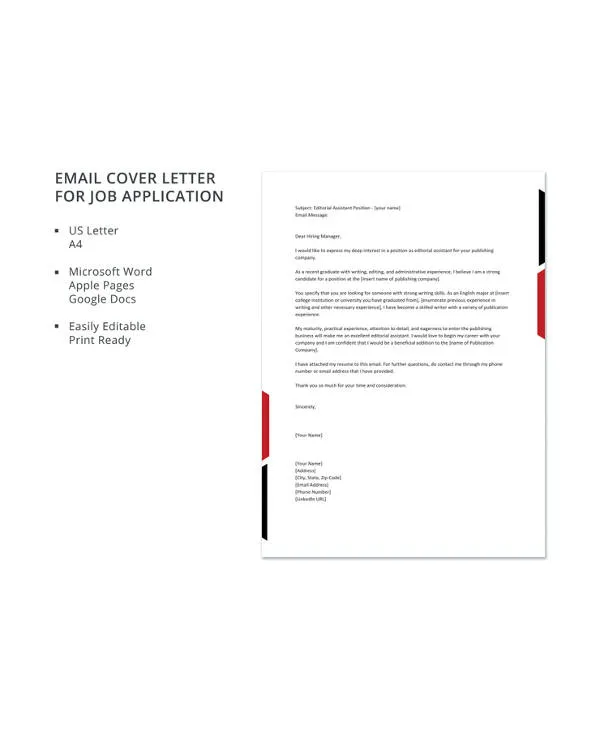
Crafting the Perfect Job Cover Letter Email
In today’s competitive job market, your job cover letter email is often the first impression you make on a potential employer. It’s more than just a formality; it’s your opportunity to grab their attention, showcase your personality, and compel them to read your resume. Crafting the perfect email requires careful planning, attention to detail, and a strategic approach. This guide will unveil the secrets to writing a job cover letter email that stands out from the crowd. We will delve into every aspect, from the subject line to the closing, ensuring you present yourself as the ideal candidate.
Understanding the Purpose of a Cover Letter Email
Before diving into the ‘how,’ let’s clarify the ‘why.’ The primary purpose of a cover letter email is to introduce yourself, express your interest in the specific job, and briefly highlight your qualifications. It’s a concise summary, not a repetition, of your resume. It should spark the hiring manager’s interest and entice them to learn more about you by reading your attached resume and cover letter. The email also sets the tone for your communication with the company, demonstrating your professionalism, communication skills, and attention to detail. Moreover, it is a way to demonstrate you have researched the company and understand their needs.
Highlighting Your Skills and Experience in Email

Your job cover letter email is a sneak peek into the value you bring. Focus on the skills and experiences most relevant to the job description. Don’t just list your accomplishments; demonstrate how your skills translate to success in the role. Use action verbs and quantify your achievements whenever possible. For instance, instead of saying, “Managed social media,” say, “Increased social media engagement by 40% in six months.” This approach provides concrete evidence of your capabilities and shows that you understand what the employer is looking for. Carefully review the job posting and tailor your email to match the specific requirements.
Key Components of a Cover Letter Email
Every effective cover letter email has several core components. Start with a professional greeting, addressing the hiring manager by name if possible (research is key here). Briefly state the position you’re applying for and how you found it. Then, provide a concise overview of your relevant skills and experiences. Finally, express your enthusiasm for the opportunity and a call to action – requesting an interview or further discussion. Keep it brief – ideally, the body of your email should be no more than four to five paragraphs. Each component plays a critical role in capturing the reader’s attention.
The Subject Line Secret
The subject line is the first thing a hiring manager sees, and it determines whether your email gets opened. Keep it clear, concise, and professional. The best subject lines typically include the job title and your name. For example, “[Your Name] - Application for Marketing Manager.” Avoid generic subject lines like “Job Application.” If the job posting specifies a particular subject line format, follow those instructions precisely. A well-crafted subject line ensures your email doesn’t get lost in a sea of applications.
Writing the Body of Your Cover Letter Email

The body of your email is where you make your case. The opening paragraph should state the position you are applying for and how you found the job. In the following paragraphs, summarize your key qualifications and experiences, emphasizing the skills and accomplishments that align with the job requirements. Tailor your content to match the job description. Close with a strong call to action, expressing your interest in the opportunity and inviting the hiring manager to review your attached documents and contact you for an interview. Maintain a professional and enthusiastic tone throughout the email.
Opening and Closing Your Email Professionally
The opening and closing of your job cover letter email are crucial for making a positive impression. Start with a formal greeting, such as “Dear Mr./Ms./Mx. [Last Name],” if you know the hiring manager’s name. If you don’t know the name, use a professional greeting like “Dear Hiring Manager.” In your closing, express your gratitude for their time and consideration. Reiterate your interest in the position and include a call to action, such as “I look forward to hearing from you soon.” End with a professional closing, such as “Sincerely,” or “Best regards,” followed by your name.
Formatting Your Email for Readability
Ensure your email is easy to read. Use a clean and professional font, such as Arial or Times New Roman, with a font size between 10 and 12 points. Break up your text into short paragraphs to avoid overwhelming the reader. Use bullet points to highlight key skills or achievements. Proofread carefully to eliminate any typos or grammatical errors, as these can detract from your professionalism. Proper formatting shows that you pay attention to detail and respect the reader’s time.
Attaching Your Resume and Cover Letter

Always attach your resume and a separate cover letter as PDF files. PDF format preserves the formatting of your documents, ensuring they look the same on any device. Name your files clearly and professionally, such as “[Your Name] - Resume” and “[Your Name] - Cover Letter.” In your email, briefly mention the attachments and encourage the recipient to review them. Double-check that you have attached the correct files before sending your email. Failure to do so can result in the potential employer not considering your application.
Proofreading and Editing Your Email
Before you send your email, proofread it carefully for any errors. Check for typos, grammatical mistakes, and inconsistencies. Read your email aloud to catch any awkward phrasing. Ask a friend, family member, or career advisor to review your email for a second opinion. A polished and error-free email demonstrates your attention to detail and professionalism. Even small mistakes can undermine your credibility, so take the time to ensure your email is perfect.
Best Practices for Sending Cover Letter Emails
Consider these best practices for a winning cover letter email. Customize each email for the specific job and company. Research the company and address the hiring manager by name, if possible. Keep your email concise and to the point, highlighting your most relevant skills and experiences. Use a professional email address. Send your email at a time when the hiring manager is likely to be checking their inbox (e.g., mid-week during business hours). Always include a clear call to action and a professional closing.
Tailoring Your Email for Each Job Application

Avoid the temptation to send the same email for every job application. Tailoring your email to each specific job is crucial for demonstrating your genuine interest and suitability for the role. Review the job description carefully and identify the key skills and qualifications the employer is seeking. Highlight your experiences and achievements that directly match those requirements. Customize your opening paragraph to show you understand the company’s needs and why you are a good fit. A tailored approach demonstrates that you are genuinely interested in the opportunity and have taken the time to understand the role and the company.
What to Avoid in Your Cover Letter Email
Several things can quickly disqualify your application. Avoid generic greetings such as “To Whom It May Concern.” Don’t use overly casual language or slang. Steer clear of negative comments about previous employers or colleagues. Do not simply reiterate your resume; instead, provide a brief summary with added value. Refrain from including unnecessary personal information. Avoid typos and grammatical errors. Finally, do not send the email without attaching your resume and cover letter.
Tracking Your Applications and Following Up
Keep track of the job applications you submit, including the date, the position, the company, and the contact information of the hiring manager. Follow up with the hiring manager a week or two after submitting your email, if you haven’t heard back. A brief, polite follow-up email reiterating your interest and enthusiasm for the opportunity can show your persistence and genuine interest. However, avoid being overly aggressive or sending multiple follow-up emails, which can be off-putting. Proper tracking and follow-up demonstrate your professionalism and commitment to the job search process.
Mastering the Job Cover Letter Email

Mastering the job cover letter email requires understanding its purpose, components, and best practices. By crafting a compelling subject line, highlighting your relevant skills and experiences, and tailoring your email to each specific job, you’ll significantly increase your chances of getting noticed and landing an interview. Remember to proofread carefully, attach your resume and cover letter in PDF format, and follow up professionally. By following these secrets, you’ll be well on your way to crafting job cover letter emails that get you hired. Now go forth and conquer the job search with your newfound knowledge!