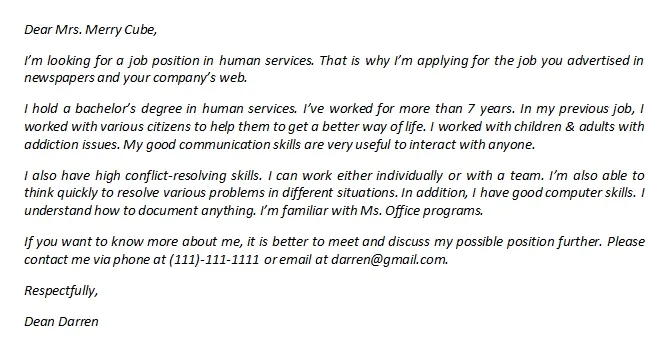
What Is a Human Services Cover Letter
A human services cover letter is a critical document when applying for positions within the field. It serves as your first introduction to a potential employer, accompanying your resume and offering an opportunity to highlight your relevant skills, professional experience, and genuine passion for the role. Unlike a resume, which primarily provides a factual overview of your qualifications, a well-crafted cover letter allows you to express your personality, explain why you’re a perfect match for the specific position, and demonstrate a thorough understanding of the organization’s mission, values, and the populations it serves. The cover letter is a chance to make a lasting first impression, encouraging the hiring manager to carefully review your resume and consider you for an interview. Crafting a tailored and compelling cover letter significantly boosts your chances of landing an interview and, ultimately, securing your desired human services position. Remember to personalize each cover letter to match the specific job requirements and the organization’s unique needs, showing that you have invested the necessary time to understand their mission and the specific demands of the role.
Why Is a Cover Letter Important
In the competitive landscape of human services, a cover letter is not just a formality; it is a powerful tool that differentiates you from other applicants. Firstly, it allows you to expand on the information presented in your resume. While your resume concisely lists your qualifications and experiences, your cover letter gives you the space to elaborate on specific experiences, explain how your skills directly align with the job requirements, and demonstrate your genuine enthusiasm for the role. Secondly, it serves as a showcase for your written communication skills, which are paramount in human services. A well-written cover letter demonstrates your proficiency in communicating complex ideas clearly and concisely, a crucial skill for professionals in this field. Thirdly, it allows for personalization, enabling you to tailor your application to the specific job and organization, demonstrating your genuine interest and that you’ve done your research. Finally, it provides a valuable opportunity to address any potential weaknesses or gaps in your resume, offering context and explanations for any circumstances that may require clarification. A well-written cover letter provides a comprehensive overview of your suitability for the role.
Key Components of a Human Services Cover Letter

A strong human services cover letter is comprised of several essential components, each playing a vital role in effectively presenting your qualifications and creating a positive impression on the hiring manager. These components work in harmony to craft a compelling narrative that persuades the reader to seriously consider your application for an interview. The cover letter must be organized logically, easy to read, and meticulously tailored to the specific job requirements and the unique characteristics of the organization. Precision in all details, including contact information and the correct spelling of the hiring manager’s name, is crucial, demonstrating your professionalism and attention to detail. By carefully constructing each component, you can create a cover letter that effectively highlights your skills, professional experience, and passion for the human services field, which significantly improves your chances of securing your desired position.
Contact Information
Begin your cover letter by including your comprehensive contact information, which should include your full legal name, complete mailing address, current phone number, and a professional-looking email address. This section is important for the hiring manager to effortlessly contact you. Ensure that the email address you provide is professional and appropriate for job applications; avoid using informal nicknames or unprofessional language. Double-check that all contact details are accurate and up-to-date to avoid any potential delays in communication. Position this section at the top left-hand corner of the document for easy accessibility. Additionally, remember to include the current date of the letter, which serves as a record of when your application was submitted and is considered a standard practice in professional correspondence.
Your Name and Contact Details
At the very beginning of your cover letter, clearly and prominently state your full name, followed by your current address, contact phone number, and a professional-looking email address. This vital information makes it simple for the hiring manager to contact you. Ensure that the email address you include is professional and appropriate for job applications. Always double-check that all the contact details are accurate and up-to-date to prevent any missed opportunities due to errors. Your name should be displayed prominently at the top, immediately followed by your contact information, ensuring the employer can quickly identify and contact you.
Date

Include the current date directly below your contact information. This provides a clear indication of when you submitted your application. The date helps the hiring manager keep track of the application’s submission date. It’s a standard professional practice that adds a layer of organization and precision to your application. Using the correct date also ensures your application is recognized as current and up-to-date.
Hiring Manager’s Information
Whenever possible, address your cover letter to the specific hiring manager by name. Research the organization to identify the individual responsible for hiring; this level of personalization showcases your initiative and demonstrates that you’ve invested time in learning about the organization. If you’re unable to find the hiring manager’s name, use a professional salutation like “Dear Hiring Manager.” While this is an acceptable alternative, always prioritize finding the specific name if possible. Including the correct job title and the organization’s complete address, if readily available, adds a polished, professional touch to your letter. This demonstrates your attention to detail and your respect for the formal application process.
The Salutation
The salutation is the initial greeting of your cover letter and sets the tone for the entire document. If you know the name of the hiring manager, use a formal salutation, such as “Dear Mr./Ms. [Last Name].” This personal touch immediately demonstrates respect and attention to detail. If you are uncertain of the hiring manager’s name, use “Dear Hiring Manager.” Avoid generic salutations like “To Whom It May Concern,” as these can come across as impersonal. Always double-check the spelling of the hiring manager’s name, as a misspelling can create a negative first impression. Select a professional and appropriate salutation that demonstrates your understanding of and respect for the formality of the job application process.
Writing the Body of Your Cover Letter

The body of your cover letter is where you showcase your skills, experiences, and passion for the specific role. Structure this section to be engaging and informative, ensuring each paragraph serves a specific purpose. The opening paragraph should immediately capture the reader’s attention and clearly state your purpose, which is to apply for the position. Subsequent paragraphs should delve into your specific qualifications and achievements. Highlighting your relevant skills, quantifying your accomplishments, and showcasing your genuine interest in the human services field will significantly strengthen your application. Be sure to provide specific examples to support your claims, demonstrating how your past experiences align with the job requirements and contribute to the organization’s goals. The body should comprehensively demonstrate your value proposition to the hiring manager. Remember to tailor your cover letter meticulously to each individual job, emphasizing how your skills and experiences directly address the specific needs of the organization.
First Paragraph Make an Impact
The opening paragraph is your crucial opportunity to make a strong first impression. Begin by clearly identifying the specific position you’re applying for and where you discovered the job posting (e.g., on a specific website or through a referral). Briefly, but effectively, articulate your interest in the role and the organization. Demonstrate genuine enthusiasm and highlight a particular aspect of the position or the organization’s mission that has captured your attention. Keep it concise and engaging, immediately conveying why you are a strong fit for the job. Use a confident and professional tone to capture the reader’s interest from the very beginning. This introductory paragraph should set the stage for the remainder of your cover letter, compelling the reader to learn more about your qualifications and experience.
Highlight Your Skills and Experience
In the body paragraphs, offer specific, detailed examples of your relevant skills and professional experiences. Focus on the skills and experiences that directly align with the requirements outlined in the job description. For example, if the position requires experience in counseling, case management, crisis intervention, or specific therapeutic modalities, emphasize those skills. Explain how you have effectively utilized these skills in previous roles, providing concrete examples where you successfully assisted clients, managed complex cases, or contributed to team success. Tailor the information to the organization’s mission and values, demonstrating a clear understanding of their needs and priorities. Use strong action verbs to describe your accomplishments and responsibilities, making the content more engaging and impactful.
Quantify Your Achievements

Whenever possible, support your claims with quantifiable achievements. For instance, instead of stating “managed a caseload,” provide specific figures like “managed a caseload of 75 clients.” If you improved a program’s efficiency, client outcomes, or any other key metrics, include the specific percentage or amount of improvement you achieved. For example, “Increased client satisfaction by 18% through the implementation of a new communication strategy.” Using concrete numbers makes your achievements more tangible and helps to demonstrate your effectiveness in previous roles. Quantifying your achievements significantly enhances your credibility and sets you apart from other candidates. Providing clear data and specific metrics provides strong support for your claims and clearly illustrates the value you would bring to the position.
Showcase Your Passion for Human Services
Express your genuine interest and enthusiasm for the human services field. Explain what drives your passion for this area and highlight any personal experiences or values that strongly align with the organization’s mission and the populations they serve. Demonstrate your understanding of the inherent challenges and profound rewards associated with working in human services. Mention any specific populations you are passionate about serving or any specific areas within human services that are of particular interest to you. Show that you’re not just seeking a job but are truly dedicated to making a positive and meaningful impact on the lives of others. Your passion is one of the most important characteristics to include.
The Closing
The closing of your cover letter is a vital opportunity to leave a lasting impression. Summarize your key qualifications and reiterate your genuine interest in the specific position and the organization as a whole. Express your enthusiastic desire for an interview and clearly state your willingness to discuss your qualifications and experiences in more detail. Thank the hiring manager for their time and careful consideration of your application. Conclude your letter professionally, with a tone of confidence and a clear demonstration of your eagerness to take the next steps in the hiring process. This final section should reinforce your suitability for the role, making it abundantly clear that you are ready to take the necessary steps in the application process. A strong closing strongly encourages the hiring manager to take immediate action.
Formal Closing and Signature
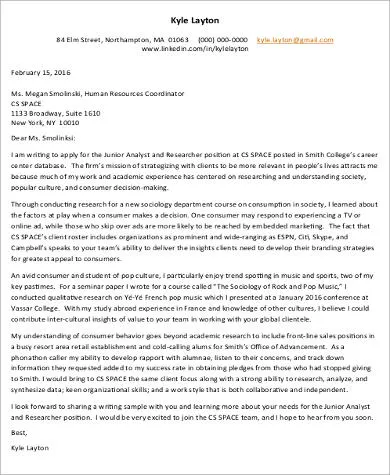
Close your cover letter with a professional and formal closing, such as “Sincerely,” “Best regards,” or a similar professional sign-off. Following the closing, type your full name. If you are submitting a hard copy of the letter, leave adequate space beneath the closing for your handwritten signature above your typed name. This is a standard practice that adds a personal touch while demonstrating meticulous attention to detail. Ensure that your handwritten signature is legible and reflects your overall professional demeanor. A professional closing reinforces the overall impression of professionalism and your commitment to the role, demonstrating respect for the formality and the expected decorum of the job application process.
Proofread Your Cover Letter
Proofreading your cover letter is an absolutely critical and indispensable step in the application process. Errors in grammar, spelling, and punctuation can severely undermine your credibility and give the impression of unprofessionalism. Carefully review your cover letter meticulously for any and all types of mistakes, from minor typos to grammatical errors. Read the entire letter aloud to catch any awkward phrasing and ensure the overall flow is smooth and easy to follow. Consider asking a trusted friend, family member, or a career advisor to proofread it for you. Fresh eyes often detect errors and inconsistencies that you might have missed. Guarantee your cover letter is completely free of any typos, grammatical errors, and any inconsistencies in style or formatting. Use a spell checker and grammar checker, but do not solely rely on these tools. Proofreading is essential in making a consistently positive impression on a potential employer.
Formatting Your Cover Letter
The formatting of your cover letter is an important element in creating a positive and professional impression. A well-formatted letter is easy to read and visually appealing. Pay close attention to your font choice, spacing, and overall layout. Proper formatting significantly improves the readability and overall professionalism of your cover letter. Clean formatting consistently demonstrates your attention to detail and your respect for professional standards. Proper formatting facilitates the hiring manager’s ability to read and quickly process the information you provide. The overall appearance of your cover letter is the first thing a hiring manager notices, so it is crucial to make sure the format is both clean and professional.
Choosing the Right Font and Size

Select a professional, easy-to-read font for your cover letter. Commonly recommended fonts include Times New Roman, Arial, Calibri, or Helvetica. Choose a font size that is between 10 and 12 points. This ensures the text is readable without appearing too large or too small. Avoid using unusual or overly decorative fonts, as they can be distracting and make your letter more difficult to read. A clear and simple font enhances the readability of your cover letter and reflects your respect for professional standards. The font must be consistent throughout the entire document, providing a cohesive and organized appearance.
Using White Space Effectively
Use white space strategically to improve the readability of your cover letter. Apply one-inch margins on all sides of the document. Double-space between paragraphs to make your letter appear less dense and easier on the eyes. Ensure there is adequate space between the different sections of your letter, such as between your contact information and the salutation. Proper utilization of white space makes your cover letter appear less cluttered and more organized. It provides visual breaks for the reader’s eyes and allows them to focus easily on the content. A well-spaced letter appears more professional and signals to the reader that you are thoughtful and attentive to even the smallest details.
Tailoring Your Cover Letter
Tailoring your cover letter specifically to the individual job and the organization is extremely important to effectively demonstrate that you are a great fit. Customization is a key indicator of your interest and initiative, which can help you stand out among other generic applicants. Each cover letter should be a unique document, meticulously crafted to address the specific requirements and expectations of the particular job. This involves carefully reading the job description and highlighting the skills, professional experience, and qualifications that directly match those requirements. Researching the organization and fully understanding its mission and core values allows you to directly align your application with their goals. By tailoring your cover letter, you explicitly show the hiring manager that you understand their specific needs. It also shows you’ve invested the necessary time and effort into the application, significantly increasing your chances of securing an interview.
Addressing Specific Job Requirements

Thoroughly review the job description and meticulously identify the key skills, experiences, and qualifications that are essential for the position. Highlight the skills and professional experiences that perfectly align with those requirements within your cover letter. Provide specific, detailed examples of how you have demonstrated these skills and experiences in previous roles, and clearly illustrate how your past actions have led to positive outcomes. Use relevant keywords from the job description throughout your cover letter to ensure your application resonates with the hiring manager. Tailor your cover letter precisely to match the language and priorities that are explicitly outlined in the job posting. By directly addressing the specific requirements, you substantially increase your chances of getting noticed and significantly boost the relevance of your application.
Researching the Organization
Before submitting your cover letter, thoroughly research the organization to convincingly demonstrate your genuine interest in working there. Visit their website to learn about their mission, values, the specific programs they offer, and the populations they serve. Gaining a solid understanding of the organization’s goals enables you to tailor your cover letter to their unique needs. Mention any specific projects or initiatives of the organization that particularly interest you within your cover letter. Use the language and terminology that is consistently used on their website to illustrate that you have taken the time to fully understand their work. Your thorough research demonstrates your initiative, professionalism, and genuine interest in their work. It will enable you to effectively illustrate how your skills and experiences will significantly contribute to their mission. Comprehensive research is key to demonstrating your unwavering commitment to the organization.
Examples of Human Services Cover Letters
Reviewing examples of well-written human services cover letters can offer valuable insights into effective writing techniques and formatting strategies. By observing how other successful applicants have structured their letters and highlighted their unique qualifications, you can craft your own compelling cover letter that truly showcases your strengths. These diverse examples can be tailored to various roles within the human services field, giving you a comprehensive understanding of how to emphasize the specific skills required for each position. Study the examples as a guide, not a rigid template, and always remember to customize your cover letter to authentically reflect your unique skills, diverse experiences, and genuine passion for human services.
Cover Letter Example for Social Worker
A cover letter for a social worker position should specifically emphasize your professional experience in areas like assessment, individual and group counseling, client advocacy, and effective case management. Highlight your past experiences working with particular populations, such as children, families, the elderly, or specific vulnerable groups. Include any relevant licenses or certifications you currently hold, such as an LCSW (Licensed Clinical Social Worker). Showcase your proven ability to work collaboratively as part of interdisciplinary teams, a critical skill in this field. Your letter should convincingly convey your unwavering commitment to the social work code of ethics and your ability to provide empathetic and culturally sensitive care to every client. Include specific examples that show how you have successfully helped clients achieve their personal goals, and include quantifiable results or metrics to demonstrate the impact of your work. Your goal is to demonstrate your thorough understanding of the core responsibilities of a social worker and your enduring dedication to helping others.
Cover Letter Example for Case Manager
A cover letter for a case manager position should highlight your strong skills in assessment, care planning, resource coordination, and client advocacy. Focus on your proven ability to develop and implement effective care plans, consistently monitor client progress, and ensure that clients receive all the necessary support services they need to achieve their goals. Mention your professional experience working with specific populations, as well as your proficiency in navigating complex social service systems. Emphasize your ability to communicate effectively with clients, their families, and a variety of healthcare providers. Include any experience you have with detailed documentation, data collection, and meeting all deadlines. Showcase your unwavering commitment to providing comprehensive and coordinated care and your dedication to promoting client well-being and independence. Illustrate your previous experience in effectively assisting clients in navigating intricate and often challenging social service systems.
Cover Letter Example for Counselor
A cover letter for a counselor position should emphasize your relevant experience providing therapy, conducting thorough assessments, and developing effective treatment plans. Highlight your proficiency in utilizing various therapeutic modalities, such as Cognitive Behavioral Therapy (CBT), Dialectical Behavior Therapy (DBT), or person-centered therapy. Focus on your ability to swiftly establish a strong therapeutic rapport with clients, provide empathetic support, and facilitate positive change within the therapeutic setting. Mention any past experience working with specific populations, such as individuals, couples, or various group settings. Your letter should reflect your strong commitment to ethical practice, maintaining client confidentiality, and consistently demonstrating cultural sensitivity. Showcase your ability to accurately document all client sessions and carefully maintain detailed client records. Demonstrate your enduring passion for helping others and your ability to effectively support clients in achieving their mental health goals.