What is an HR Cover Letter
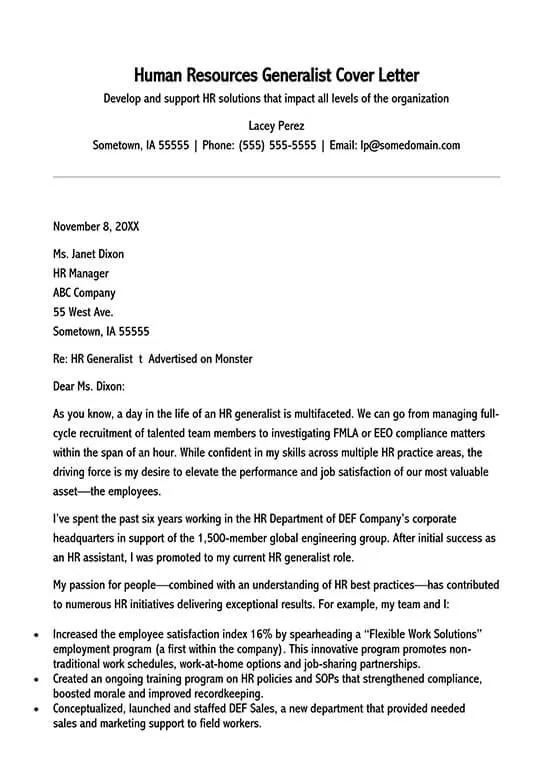
An HR cover letter is a crucial document that accompanies your resume when you apply for a human resources position. Unlike a resume, which provides a factual overview of your skills and experience, a cover letter allows you to express your personality, showcase your enthusiasm for the role, and demonstrate how your qualifications align with the specific requirements of the job. A well-crafted cover letter can significantly increase your chances of landing an interview by making a strong first impression on the hiring manager. It’s your opportunity to go beyond the bullet points and tell your story, highlighting why you’re the perfect fit for the HR role.
The Purpose of an HR Cover Letter
The primary purpose of an HR cover letter is to persuade the hiring manager that you are a strong candidate for the position. It serves as an introduction, a marketing tool, and a way to differentiate yourself from other applicants. Your cover letter should not only state your interest in the role but also explain why you’re passionate about human resources, what unique skills you bring to the table, and how you can contribute to the company’s success. It’s a chance to demonstrate your communication skills, attention to detail, and understanding of the HR field.
Key Components of a Strong HR Cover Letter

A compelling HR cover letter consists of several key components that work together to create a persuasive narrative. These elements include clear contact information, a professional greeting, engaging body paragraphs that highlight your skills and experience, and a strong closing. Each section plays a vital role in conveying your qualifications and enthusiasm for the role, and must be carefully crafted to leave a lasting positive impression on the hiring manager. Remember, consistency and clarity are key.
Contact Information and Date
Begin your cover letter with your contact information, including your full name, phone number, email address, and optionally, your LinkedIn profile URL. This section should be located at the top of the page, either left-aligned or centered. Following your information, include the date you are submitting the application. This ensures the hiring manager knows when you applied and can easily contact you should they need to.
Applicant’s Information
Your name, address, phone number, and email address should be clear and easy to read. Ensure your email address sounds professional. Double-check all details for accuracy before submitting your letter. This ensures the recruiter can reach you easily. The appearance must be clean, and well-organized, demonstrating your attention to detail.
Hiring Manager’s Information

If possible, address your cover letter to a specific person within the company, such as the hiring manager or the HR director. This demonstrates that you’ve done your research and taken the time to personalize your application. Include their name, title, and the company’s address. If you are unable to find a specific contact, use a generic greeting, such as “Dear Hiring Manager”.
Professional Greeting
Start your cover letter with a professional greeting, such as “Dear Mr./Ms./Mx. [Last Name]” or “Dear Hiring Manager.” Avoid using overly casual or informal greetings. If you’re unsure of the hiring manager’s name, a general greeting like “Dear Human Resources Team” is acceptable. The greeting sets the tone for the rest of the letter, so make sure it is respectful and professional.
Body Paragraphs
The body of your cover letter is where you showcase your skills, experience, and enthusiasm for the HR role. Aim for three to four concise and well-structured paragraphs. Each paragraph should focus on a specific aspect of your qualifications and contribute to a cohesive narrative that highlights your suitability for the position. Ensure the paragraphs are well-written, organized, and easy to read. This is where you truly sell yourself to the hiring manager.
First Paragraph

Begin your first paragraph by clearly stating the position you are applying for and where you found the job posting. Immediately express your interest in the role and the company. Briefly mention something that attracted you to the position or the organization, such as their values, culture, or recent achievements. This demonstrates that you’ve done your research and are genuinely interested in the opportunity.
Express Your Interest and Mention the Position
Clearly state the specific HR position you’re applying for at the beginning of the first paragraph. Mention the source where you found the job posting. Immediately after, express your genuine enthusiasm for the role and the company. For example, “I am writing to express my keen interest in the HR Manager position advertised on LinkedIn…” Tailor the introductory sentence to reflect your specific enthusiasm for this particular company and role.
Second Paragraph
In the second paragraph, highlight your relevant skills and experience. Focus on the qualifications that align with the job description. Use specific examples to demonstrate how you’ve successfully applied these skills in previous roles. Mention any relevant certifications, training, or educational achievements. Remember to keep the paragraph concise and to the point.
Highlight Relevant Skills and Experience

Focus on the skills and experience most relevant to the HR role. Review the job description carefully and identify the key requirements. Provide concrete examples from your previous roles to illustrate how you have successfully used those skills. Focus on accomplishments, such as how you improved employee satisfaction scores, reduced turnover rates, or streamlined HR processes. Quantify your achievements whenever possible to demonstrate your impact.
Third Paragraph
In the third paragraph, provide specific examples of your accomplishments, quantifying them whenever possible. Use numbers and metrics to demonstrate your impact in previous roles. This could include the number of employees you’ve trained, the percentage of reduction in employee grievances, or the cost savings achieved through your initiatives. This is a powerful way to show the value you can bring to the company.
Quantify Achievements with Numbers
Use numbers to demonstrate the impact of your work. Instead of saying “Improved employee training programs,” say “Redesigned employee training programs, resulting in a 20% increase in employee performance scores.” Quantifying achievements makes your contributions more tangible and persuasive. Use data to showcase your accomplishments. The more specific you are, the better.
Closing Paragraph

In your closing paragraph, express your gratitude for the hiring manager’s time and consideration. Reiterate your enthusiasm for the role and the company. Include a call to action, such as stating your availability for an interview and providing your contact information. End with a professional closing, such as “Sincerely” or “Best regards”.
Express Gratitude and Call to Action
Thank the hiring manager for their time and consideration. Restate your interest in the position and your enthusiasm for the company. Include a clear call to action, such as “I am eager to discuss my qualifications further in an interview” or “I am available for an interview at your earliest convenience.” Provide your contact information one last time, ensuring it is accurate.
Closing and Signature
Choose a professional closing such as “Sincerely”, “Best regards”, or “Thank you for your consideration.” Leave space for your signature if you’re printing the letter. If submitting electronically, type your full name beneath the closing. Ensure your closing reflects a professional tone. A well-chosen closing adds a polished touch to your cover letter.
Formatting and Design Tips for HR Cover Letters

The formatting and design of your HR cover letter play a crucial role in making a positive first impression. A well-formatted letter is easy to read and visually appealing. Choosing the right font, margins, and spacing can make a significant difference. Adhering to these standards shows you are detail-oriented and professional.
Font and Font Size
Choose a professional and easy-to-read font, such as Times New Roman, Arial, or Calibri. Use a font size between 10 and 12 points. Avoid using overly ornate or distracting fonts. Maintain consistency throughout the document. A clear font choice ensures that the cover letter is accessible and conveys professionalism.
Margins and Spacing
Use standard one-inch margins on all sides of your cover letter. Use single-spacing within paragraphs and double-spacing between paragraphs. Ensure your cover letter is well-organized and easy to read. Properly formatted margins and spacing enhance readability and provide a clean, professional look.
Length of the Cover Letter

Keep your cover letter concise and to the point. Aim for one page in length. Avoid including unnecessary information. Only include the most relevant skills and experience. A concise and well-written cover letter is more likely to hold the hiring manager’s attention.
Proofreading and Editing Your HR Cover Letter
Proofreading and editing your HR cover letter are critical steps to ensure it is free of errors and presents you in the best possible light. Errors, typos, and grammatical mistakes can undermine your credibility. Carefully review your cover letter multiple times, checking for any inconsistencies, and ensuring the language is clear and concise. Consider asking a friend or family member to proofread your cover letter as a fresh pair of eyes can catch errors you may have missed.
Common Mistakes to Avoid
Avoid common mistakes that can damage your application. These include typos and grammatical errors, using generic or canned language, failing to tailor the letter to the specific job, and exceeding one page in length. Proofread carefully, personalize your letter for each job application, and focus on the most relevant skills and experiences. Demonstrating attention to detail is crucial.
Using the Right Tone and Language
Use a professional and enthusiastic tone throughout your cover letter. Avoid sounding overly casual or informal. Use strong action verbs to describe your accomplishments, and tailor the language to match the company’s culture. Ensure your writing style is clear, concise, and easy to understand. A professional tone will help you build trust and establish credibility with the hiring manager.
HR Cover Letter Template
While it’s essential to customize your cover letter for each job application, using a template can provide a helpful framework. A template ensures you include all the necessary components. However, always customize the template with your specific information and tailor it to match the job description and company culture. A well-customized template will help you save time and improve your chances of landing an interview.