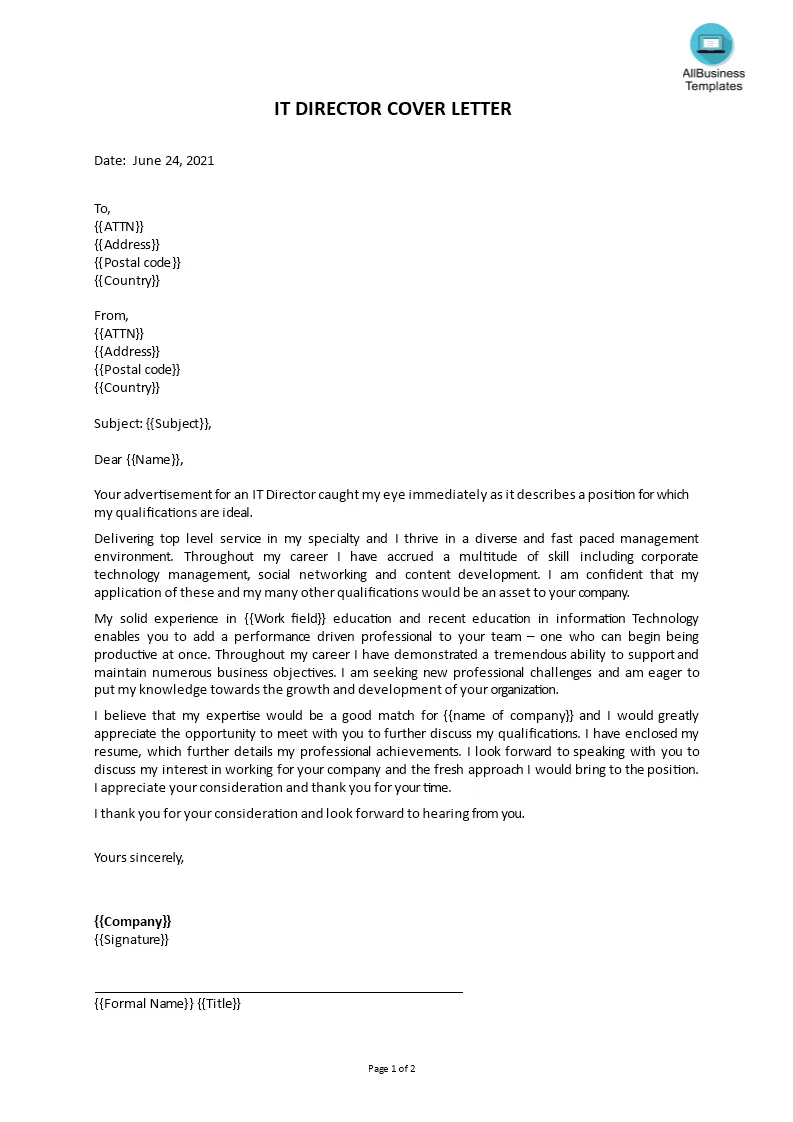
Cover Letter Email Guide
In the competitive landscape of job applications, a well-crafted cover letter email can be your key to unlocking the door to your dream job. It’s often the first point of contact with a potential employer, and it sets the tone for your application. This guide will walk you through the essential components of an effective cover letter email, providing templates and examples to help you make a lasting impression. By following these guidelines, you’ll be well-equipped to create emails that grab recruiters’ attention and increase your chances of landing an interview. Remember that every detail counts, from the subject line to the closing, so pay close attention to each section to make sure you are presenting yourself in the best possible light.
Understanding the Cover Letter Email
The cover letter email is more than just a digital formality; it’s a critical part of your job application. It serves as the introduction to your formal cover letter and resume, giving you an opportunity to showcase your personality and tailor your message to the specific job. Unlike the static nature of a standard cover letter, the email allows for personalization, reflecting your genuine interest in the position and the company. A well-structured email can grab the hiring manager’s attention immediately, increasing the likelihood that they’ll read your entire application. Keep in mind this also gives an opportunity for a good first impression.
Why Send a Cover Letter Email

Sending a cover letter email serves multiple crucial purposes. First, it personalizes your application. By directly addressing the hiring manager and briefly explaining your interest, you demonstrate initiative and a genuine interest in the role. Secondly, it allows you to highlight key skills and experiences relevant to the job requirements, capturing the reader’s attention early on. Additionally, it provides an opportunity to show your communication skills and professionalism through a clear, concise, and well-formatted message. It’s also the primary way to deliver your cover letter and resume to the potential employer, making it a crucial component of your job application process. This may seem obvious, but it’s one of the most important steps of the hiring process.
Key Components of a Cover Letter Email
A successful cover letter email comprises several essential elements, each playing a vital role in capturing the hiring manager’s attention and showcasing your qualifications. From a compelling subject line to a strong closing, every component contributes to your application’s overall impact. It’s important to make sure you are being as professional as possible with these elements to make the best impression you can.
Subject Line
The subject line is the first thing a hiring manager sees, so it needs to be clear and attention-grabbing. A well-crafted subject line ensures your email gets opened. Avoid generic phrases like “Job Application”. Instead, use something like “Application for [Job Title] – [Your Name]” or “[Job Title] Application – Referred by [Name]”, especially if you have been referred by an employee. Always include the job title and, if possible, the job reference number to help the recruiter quickly identify the position you are applying for. You need to make it easy on the recruiter so they can easily identify your application, and they may want to pass it along to the hiring manager.
Greeting

A professional greeting sets a positive tone. If you know the hiring manager’s name, use “Dear Mr./Ms./Mx. [Last Name]” or “Dear [Name]”, if you know the person’s first name. If you do not know the name, use “Dear Hiring Manager” or “Dear [Department] Team”. Avoid overly casual greetings like “Hi there” or “Hello” unless the company culture is very informal, and the job posting specifically asks for it. Always ensure you spell the name correctly, as it shows your attention to detail and respect for the recipient. If you are not sure, it is always better to use “Dear Hiring Manager”.
Body Paragraphs
The body paragraphs are the heart of your cover letter email. Start with a brief, engaging introduction stating the position you’re applying for and how you found it. In the following paragraphs, highlight your most relevant skills and experience, aligning them with the job description. Customize each email to the specific requirements of the role, demonstrating that you’ve carefully reviewed the job posting. Keep your paragraphs concise and focused, avoiding lengthy blocks of text. Use action verbs and quantifiable achievements to showcase your capabilities, and show how your skill set matches the job requirements. These are the details that are likely going to make the best impression.
Closing and Call to Action
End with a strong closing that reiterates your interest and includes a call to action. Thank the hiring manager for their time and consideration. Reiterate your enthusiasm for the opportunity and invite them to review your attached cover letter and resume. Include a call to action by stating you are looking forward to hearing from them or that you are available for an interview at their earliest convenience. Make sure to include a professional email signature with your name, phone number, and LinkedIn profile URL (if applicable). Make sure you are always presenting yourself as available for contact.
Cover Letter Email Templates

Templates can save you time and ensure your cover letter emails are well-structured and professional. Here are three templates for various scenarios, allowing you to tailor your message to different job applications. These are designed to be a starting point; always customize them to fit the specific job and your experience. These will give you an excellent foundation, but are not the final product.
Template 1 The Traditional Approach
This template is best for formal applications in industries that value tradition and professionalism. It offers a structured approach, making it easy for hiring managers to quickly grasp your qualifications. The template will include your contact information, the date, the hiring manager’s contact information, a formal greeting, followed by a brief introduction, highlighting key skills, expressing enthusiasm for the role, and offering a call to action, concluding with a professional closing, such as “Sincerely”. This will make sure you are adhering to a standard of professionalism and will likely meet the minimum requirements.
Template 2 The Concise Approach
A concise approach is best for roles where brevity is appreciated, such as tech startups or creative fields. It gets straight to the point, highlighting your core competencies and enthusiasm. This should include a succinct subject line, a personalized greeting, a brief statement of interest, an emphasis on relevant experience and skills, a call to action to review the resume, and a professional closing. This format helps capture the recruiter’s attention quickly, ensuring that your most important qualifications are readily visible. This type of template should work in most situations.
Template 3 The Customized Approach

This template involves tailoring the email to align with the company’s culture and values, showing that you’ve done your research. Begin with a tailored subject line, addressing the hiring manager by name if possible, opening with an expression of genuine interest in the company and position. Then you should highlight skills and experience that directly match the job requirements and company values, expressing enthusiasm and a call to action, such as inviting a conversation. This will show that you are genuinely interested in the company and position. This personalized approach makes you stand out and gives you the best chance of being noticed.
Formatting and Sending Your Cover Letter Email
Proper formatting and careful attention to detail are essential for a professional cover letter email. Correct formatting makes the email easy to read and ensures that the message is delivered effectively, reinforcing your professionalism. This can make the difference in your application getting noticed. All of the work on the content may be a wasted effort if it is not formatted and sent correctly.
Formatting the Email
Keep the formatting simple and easy to read. Use a standard font like Arial, Calibri, or Times New Roman, and ensure the font size is between 10 and 12 points. Use clear spacing, with a blank line between paragraphs, to improve readability. Avoid using excessive formatting, such as bolding or underlining, unless necessary. Ensure the alignment is left-justified, making the text easy to scan. Proper formatting contributes to a professional image, making it easy for the hiring manager to quickly grasp your message. Don’t go crazy with the formatting and make sure it isn’t distracting.
Attaching Your Cover Letter

When attaching your cover letter and resume, use professional file names. For example, “[Your Name] - Cover Letter” and “[Your Name] - Resume”. This makes it easy for the hiring manager to identify your documents. Always attach your cover letter and resume as PDF files to maintain the formatting and prevent any compatibility issues. This also helps ensure that your formatting is not altered when opened on different devices or operating systems. Double-check that all attachments are included before sending the email to avoid any oversights. This is another obvious step, but it is extremely important.
Proofreading and Sending
Thoroughly proofread your email before sending it. Check for any typos, grammatical errors, and ensure that the language is clear and concise. Run a spell-check to catch any obvious mistakes. Ask someone else to read your email, as a fresh pair of eyes can catch errors you might have missed. Once you are completely satisfied, send the email to the correct recipient and confirm that it was sent to the correct email address. Once sent, you cannot retrieve the email, so make sure you are absolutely sure. Also confirm all attachments are included to make sure your application is complete. Sending a polished email is crucial, as it reflects your attention to detail and professionalism.
Common Mistakes to Avoid
Avoiding common mistakes will improve your chances of a positive impression. Taking the time to carefully review your email before sending it can help you avoid these issues and showcase your professionalism.
Generic Subject Lines

Using generic subject lines such as “Job Application” fails to grab the hiring manager’s attention. Always use a specific subject line that includes the job title and your name. This helps the recruiter quickly identify the position you’re applying for, making it easier to prioritize your application. Make sure to use something specific, as this will help the recruiter know which role you are applying for, and also allows them to easily find your application.
Typos and Grammatical Errors
Typos and grammatical errors can undermine your professionalism and credibility. Always proofread your email meticulously before sending it. Use spell-check and grammar-check tools, and consider having someone else review your email as well. A polished, error-free email demonstrates your attention to detail and respect for the hiring manager. These can easily be avoided, and make a bad impression.
Failing to Tailor the Email
Sending a generic cover letter email without customizing it for the specific job shows a lack of interest. Always tailor your email to the job description and company. Highlight skills and experiences that directly match the requirements, and briefly explain why you are interested in the specific role. Demonstrate that you’ve researched the company and understand its mission. A customized email demonstrates that you are genuinely interested in the position and have the ability to perform the job.
Email Examples
To give you a better idea of what a cover letter email looks like, here are three examples for different scenarios. These are examples to get you started, and may need to be modified to fit your specific job application.
Example 1: Entry-Level Position
Subject: Application for Marketing Assistant Position - John Doe
Dear Hiring Manager,
I am writing to express my interest in the Marketing Assistant position at [Company Name], as advertised on [Platform]. I am a recent graduate with a degree in marketing and a strong foundation in digital marketing strategies and social media management.
During my internship at [Previous Company], I assisted with various marketing campaigns and contributed to a [Quantifiable Achievement]. My skills in content creation, data analysis, and customer engagement align perfectly with the requirements outlined in the job description.
Attached is my resume for your review, which further details my qualifications and experiences. Thank you for your time and consideration. I look forward to the possibility of discussing my application further.
Sincerely, John Doe [Phone Number] [Email Address] [LinkedIn Profile URL (Optional)]
Example 2: Experienced Professional
Subject: Application for Senior Project Manager - Jane Smith
Dear Mr. Johnson,
I am writing to express my interest in the Senior Project Manager position at [Company Name]. With over ten years of experience in project management, I have consistently delivered successful projects on time and within budget, including [Quantifiable Achievement].
In my previous role at [Previous Company], I led a team of [Number] professionals, managing a portfolio of [Number] projects simultaneously. My expertise in [Relevant Skills] has enabled me to drive efficiency and increase project success rates significantly.
I am particularly drawn to [Company Name] because of [Specific Reason], and I am confident that my skills and experience align perfectly with your needs.
Please find my cover letter and resume attached. Thank you for your time and consideration.
Sincerely, Jane Smith [Phone Number] [Email Address] [LinkedIn Profile URL (Optional)]
Example 3: Networking
Subject: Referral for Software Engineer Position - Alex Johnson
Dear Mr. Davis,
I am writing to you following a referral from [Referrer Name] regarding the Software Engineer position at [Company Name]. I was informed that your team is looking for talented engineers with expertise in [Specific Skills].
Throughout my career, I have developed software solutions using [List Technologies], and I’ve been involved in projects such as [Project Description]. I am enthusiastic about the opportunity to contribute to [Company Name] and leverage my experience to solve complex problems.
I have attached my resume for your review. Thank you for your time and consideration. I am eager to learn more about this opportunity and discuss how my skills can benefit your team.
Sincerely, Alex Johnson [Phone Number] [Email Address] [LinkedIn Profile URL (Optional)]
Conclusion Crafting the Perfect Cover Letter Email
Crafting a perfect cover letter email involves attention to detail, personalization, and adherence to best practices. Remember, it’s your first impression. By following these steps and tailoring each email to the specific job and company, you’ll increase your chances of making a lasting impression. Proofread everything, ensure proper formatting, and highlight the aspects of your experience most relevant to the role. You need to think about what is most important and make sure that you are presenting yourself in the best way. With practice and careful attention, you can create cover letter emails that effectively convey your qualifications and increase your chances of securing an interview and landing your dream job. Good luck.