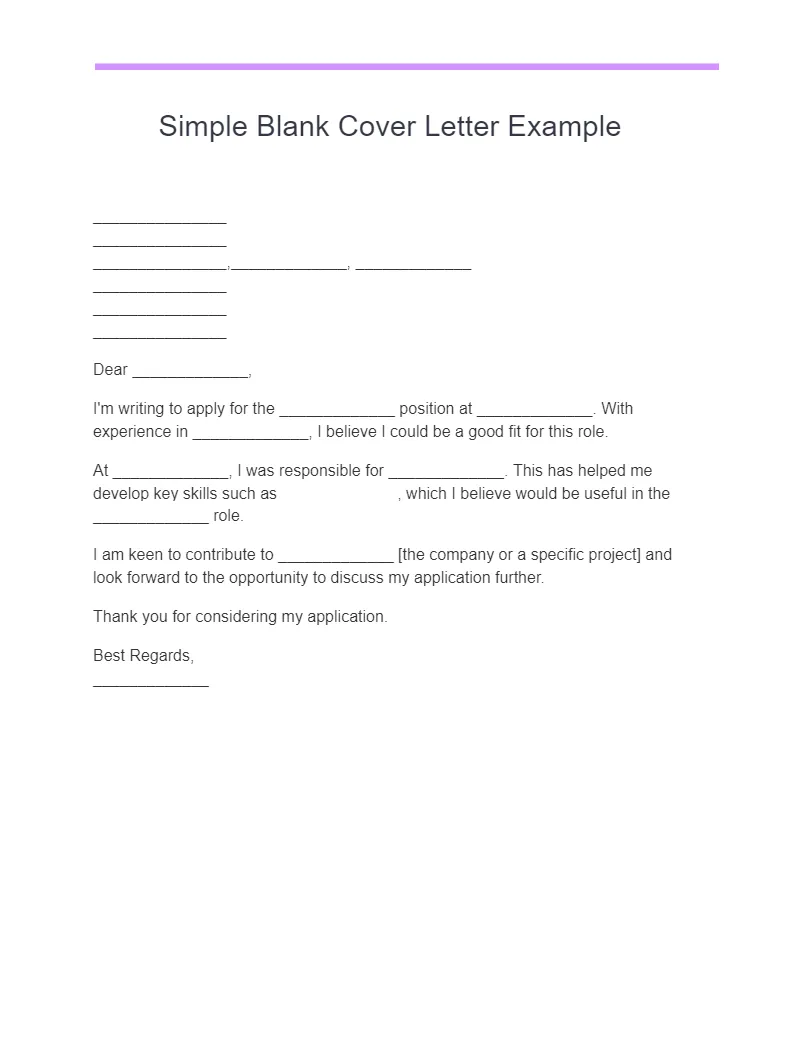
What is a Cover Letter (And Why You Need One)
A cover letter is a crucial document accompanying your resume when applying for a job. It serves as your personal introduction, allowing you to showcase your personality, skills, and enthusiasm for the position. Unlike a resume, which provides a factual overview of your experience, a cover letter gives you the opportunity to tell a story and explain why you are the perfect fit for the role. It’s your chance to make a strong first impression and persuade the hiring manager to read your resume closely. Without a well-crafted cover letter, your application might be overlooked, even if you have the perfect qualifications. It is a critical tool in your job search arsenal and should be treated with as much care and attention as your resume.
Cover Letter Structure The Perfect Format
The structure of a cover letter is essential for conveying information clearly and professionally. A well-structured cover letter includes several key components, each playing a vital role in presenting your qualifications and interest. Generally, the ideal cover letter format consists of a header, a greeting, an introduction, a few body paragraphs (typically three), a closing, and a formal sign-off. Each section contributes to a cohesive and compelling narrative, guiding the reader through your experience, skills, and why you are a good fit for the job. Adhering to a standard format also demonstrates your professionalism and attention to detail, qualities that employers value in potential candidates.
Header Contact Information

The header of your cover letter is the first thing a recruiter sees, so it’s essential to get it right. It should include your full name, address, phone number, and email address. Make sure the email address is professional, using your full name or a variation of it. It’s also common to include the date and the recipient’s information, such as the hiring manager’s name (if known), title, company name, and address. Keeping the header clean, clear, and organized ensures that the recruiter can easily contact you if they want to move forward with your application. A well-formatted header sets a positive tone for the rest of the letter.
Greeting How to Address the Recruiter
The greeting sets the tone for your cover letter. The best practice is to address the hiring manager by name. If you can find the hiring manager’s name through the job posting or company website, use “Dear Mr./Ms. [Last Name].” This shows you’ve taken the time to research and personalize your application. If you can’t find a specific name, opt for a professional alternative like “Dear Hiring Manager” or “Dear [Company Name] Team.” Avoid generic greetings such as “To Whom It May Concern,” as they come across as impersonal. The greeting is your first chance to connect with the reader and set a positive tone for the rest of the letter.
Body Paragraph 1 Hook Their Interest
The first paragraph of your cover letter should immediately capture the reader’s attention. Start with a strong hook that grabs their interest. This could be a concise statement about why you are excited about the role or the company. Then, briefly mention the specific position you’re applying for and where you found the job listing. This establishes the context for your application. It is also a good idea to include a brief summary of your most relevant experience or skill to make an immediate impression. The aim is to encourage the hiring manager to keep reading. Make sure it immediately signals your enthusiasm and qualifications for the job.
Highlighting Skills and Experience

In the body of your cover letter, highlight your skills and experience that align with the job requirements. Review the job description carefully and identify the key skills and qualifications the employer is seeking. Then, use specific examples from your work history to demonstrate how you have successfully used those skills. Quantify your achievements whenever possible. Instead of saying you improved sales, state by how much. This helps the hiring manager see your value and how you can contribute to their team. Your examples should be relevant to the role. This demonstrates you have the capabilities to excel in the role.
Quantifying Achievements
Quantifying your achievements makes your cover letter more compelling and provides concrete evidence of your accomplishments. Instead of simply stating you improved efficiency, provide specific data, such as the percentage of time or cost saved. Instead of claiming you increased sales, mention the actual increase in revenue or the percentage growth. Use numbers and metrics to showcase your successes and demonstrate the value you bring to the table. This type of quantifiable information is far more persuasive than vague statements and helps potential employers understand the impact you can make. By quantifying your accomplishments, you present a clear picture of your abilities and make a strong case for why you should be hired.
Body Paragraph 2 Show Your Value
The second paragraph should provide more details about your skills, experience, and how they align with the job requirements. Elaborate on a few key accomplishments or experiences that are most relevant to the position. Focus on the value you can bring to the company, rather than just listing your responsibilities. Explain what you accomplished and how you achieved those results. Show them how you can solve problems, improve processes, and contribute to the company’s goals. By highlighting your achievements and demonstrating your value, you’ll make a compelling case that you’re a strong candidate.
Why You Are a Good Fit for the Company

Tailor your cover letter to demonstrate why you are a good fit for the specific company. Mention the company’s mission, values, or recent projects that resonate with you. This shows you have done your research and are genuinely interested in the company. Explain how your skills and experience align with the company’s needs. Demonstrate your understanding of the company’s goals and how you can contribute to their success. Making a connection between your skills and the company’s mission is a powerful way to show the recruiter you are serious about the role. Doing so increases your chances of landing an interview.
Researching the Company
Before you begin writing your cover letter, take the time to research the company you are applying to. Visit their website, read news articles, and explore their social media profiles. Understanding the company’s mission, values, recent projects, and culture will enable you to tailor your cover letter to their specific needs and show your genuine interest. This research will help you identify the key skills and experiences that are most relevant to the role. Incorporate keywords and phrases from the job description into your letter to make your qualifications clear to the hiring manager. Demonstrating that you understand the company’s goals and challenges makes you a more attractive candidate.
Body Paragraph 3 Call to Action
The final body paragraph should include a clear call to action. Express your interest in an interview and state how you would like to proceed. You could suggest a specific time to connect or indicate your availability. This demonstrates your enthusiasm and proactive approach. Make it easy for the hiring manager to take the next step. Thank the reader for their time and consideration. This shows professionalism and respect. A clear call to action and expressing gratitude will leave a positive impression and encourage a prompt response.
Expressing Enthusiasm and Gratitude

Throughout your cover letter, express your enthusiasm for the position and your gratitude for the opportunity to apply. Convey your genuine interest in the role and the company. Show that you are excited about the possibility of contributing to their team. Thank the hiring manager for their time and consideration, as this demonstrates professionalism and respect. This ensures a positive impression, regardless of the outcome. Your enthusiasm and gratitude can significantly improve your chances of making a positive impression and moving forward in the hiring process.
Closing How to End Your Letter
Your closing should be professional and concise. It is the last thing the reader sees, so it’s important to leave a positive impression. The best way to end your letter is with a formal closing, such as “Sincerely,” “Best regards,” or “Thank you.” Choose a closing that aligns with the tone of your letter. Then, provide your name and contact information, so the recruiter knows how to reach you. Make sure to proofread your closing and the rest of the letter to ensure there are no errors. A polished closing helps show your attention to detail and leaves a lasting impression.
Formal Closing
Choose a formal closing to end your cover letter, such as “Sincerely,” “Best regards,” or “Thank you for your consideration.” Use a closing that aligns with the tone of your letter. These closings are professional and leave a positive impression. Avoid informal closings like “Cheers” or “See you soon.” The formal closing sets a tone of professionalism and demonstrates respect. Selecting the right closing statement is crucial to maintaining a polished and professional application. Make sure the closing matches the tone of the entire letter.
Sign-off

After your closing, include your full name and consider adding your signature if sending a physical copy. Sign-off should immediately follow the closing statement. This final detail is a testament to your professionalism and attention to detail. It’s your last opportunity to make a positive impression. Ensure that your name is clearly legible. Keep the format of your sign-off clean and professional. This is a simple yet effective way to enhance your cover letter and leave a lasting impression on the hiring manager.
Proofreading and Editing Importance
Proofreading and editing your cover letter is essential to ensure it is free of errors and presents you in the best possible light. Errors in grammar, spelling, or punctuation can undermine your credibility and make you appear careless. Before submitting your letter, carefully review every sentence and paragraph. Read it aloud to catch awkward phrasing. Consider having a friend or family member proofread it as well. It is easy to miss errors in your own work. A polished, error-free cover letter demonstrates your attention to detail and professionalism. This significantly increases your chances of making a positive impression and moving forward in the application process.
Mistakes to Avoid
Avoid common mistakes to ensure your cover letter makes a positive impression. One mistake is using generic templates that aren’t tailored to the specific job. Another is including irrelevant information that doesn’t relate to the position. Never include lies or exaggerations about your experience. Also, avoid excessive jargon and overly complex language. Make sure the tone of your cover letter is appropriate for the industry and the company culture. By avoiding these common mistakes, you can create a cover letter that effectively highlights your qualifications and increases your chances of getting an interview.
Common Errors

Be mindful of common errors that can damage your cover letter. Spelling and grammatical errors can undermine your credibility, so always proofread carefully. Avoid using clichés and generic phrases that make your letter sound unoriginal. Do not make the letter too long. Keep it concise and to the point. Make sure you are properly addressing the recipient. Ensure all details are accurate, including the company name, job title, and dates of employment. The absence of these details will make your application seem as if you are not taking the process seriously. By avoiding these common errors, you can create a professional, compelling cover letter.
Formatting Issues
Proper formatting enhances the readability and professionalism of your cover letter. Use a standard, easy-to-read font, such as Times New Roman, Arial, or Calibri, with a font size of 11 or 12 points. Maintain consistent margins of one inch on all sides. Ensure your paragraphs are well-spaced and easy to read. Avoid using excessive bolding, italics, or underlining. Choose a simple and clean layout that is easy on the eyes. Poor formatting can make your letter look unprofessional and difficult to read. Proper formatting is crucial to showcasing your attention to detail. This is another important step to make your cover letter more appealing to recruiters.