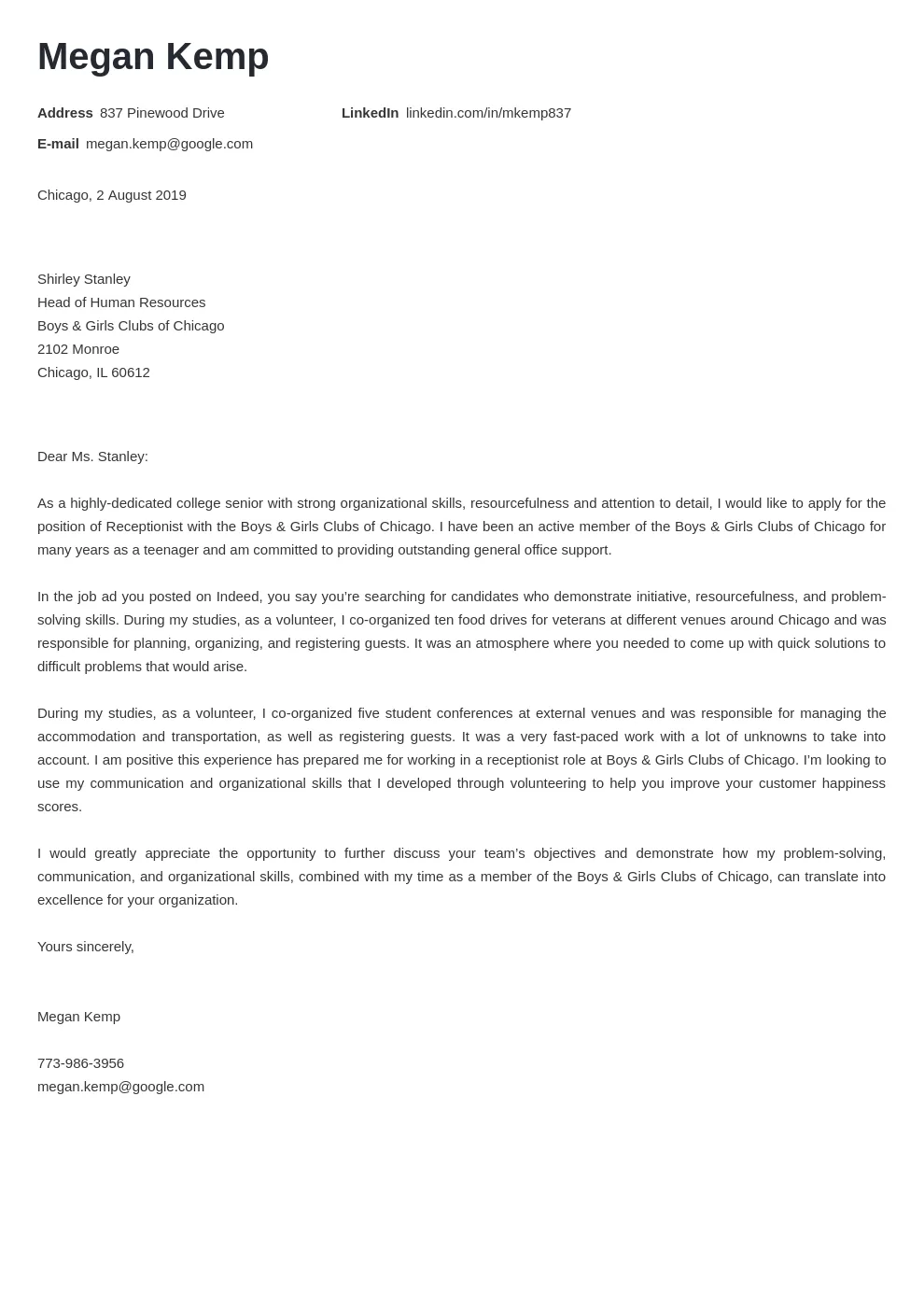
Why a Receptionist Cover Letter is Crucial
Even without direct experience, a well-crafted cover letter can be your ticket to landing a receptionist role. It’s your first chance to make a positive impression and showcase your suitability for the position. A cover letter allows you to explain your passion for the role, highlight relevant skills gained from other experiences, and demonstrate your understanding of what the job entails. By thoughtfully presenting yourself, you can convince potential employers that you possess the qualities and potential they seek, even if you haven’t worked as a receptionist before. Remember, it’s an opportunity to tell your story and make a memorable first impression. A strong cover letter demonstrates your attention to detail, your communication skills, and your eagerness to learn and grow within the company.
Understanding the Role of a Receptionist
Before you start writing, it’s important to understand what a receptionist actually does. The role typically involves greeting visitors, answering phones, managing mail, scheduling appointments, and providing general administrative support. Receptionists are often the first point of contact for a company, so they need to be friendly, professional, and organized. They need to handle multiple tasks at once, manage the flow of information, and assist both internal staff and external clients or customers. Understanding the specific responsibilities of a receptionist will allow you to tailor your cover letter to highlight the skills and experiences most relevant to the role, showcasing your understanding of the day-to-day tasks and expectations.
Highlighting Transferable Skills

Since you may lack direct receptionist experience, focus on your transferable skills. These are skills you’ve gained from other jobs, volunteer work, education, or personal experiences that are relevant to the receptionist role. Think about how your previous experiences have equipped you with communication, organizational, and problem-solving abilities. Show the potential employer that the skills you do have can be easily adapted to the role. For example, if you’ve worked in customer service, highlight how you handled difficult customers or resolved their issues. If you’ve been involved in volunteer activities, discuss your organizational skills when arranging events or managing schedules. This approach can help you bridge the gap between your current experience and the requirements of the job.
Communication and Interpersonal Skills
Receptionists need to be excellent communicators, both verbally and in writing. Highlight your ability to speak clearly, listen attentively, and convey information effectively. Provide examples of how you’ve used communication skills in previous roles or situations. This can include managing phone calls, writing emails, or interacting with customers. Being personable and friendly is vital, so demonstrate your ability to build rapport with people and maintain a positive attitude. Showing your potential employer your ability to communicate effectively and create a positive first impression is key to success.
Organizational and Time Management Skills
A receptionist must be organized and able to manage their time efficiently. Showcase your skills in organizing tasks, managing schedules, and prioritizing work. Give examples of how you have organized projects, managed multiple deadlines, or kept track of important information. Highlight any experience with scheduling appointments, managing calendars, or handling administrative tasks. Being able to demonstrate your organizational and time management abilities is crucial for assuring potential employers that you are able to keep the front desk of the company running smoothly.
Computer Proficiency and Technical Skills

Most receptionist positions require basic computer skills. List any software programs you are familiar with, such as Microsoft Office (Word, Excel, Outlook) or other office applications. Highlight your typing speed and accuracy. Any experience with phone systems, data entry, or customer relationship management (CRM) software is beneficial. If you are willing to learn new technologies, indicate this as well. Showing that you are comfortable with technology and eager to adapt to new systems will make you a more attractive candidate, even if you do not have prior experience.
Crafting Your Cover Letter Step by Step
Now let’s dive into the process of writing your cover letter. Breaking it down into manageable steps will make the process less intimidating. The key is to be clear, concise, and focused on showcasing your skills and enthusiasm for the role. Pay attention to formatting, grammar, and overall tone to create a professional and compelling document. It is important to remember that a cover letter is your chance to convince the employer of your value.
Header and Contact Information
Start with a professional header including your name, address, phone number, and email address. Make sure your email address is professional and appropriate for job applications. Include the date and the employer’s contact information (name, title, company, and address) if available. This ensures your letter is properly formatted and easy for the hiring manager to identify you and contact you.
The Greeting and Opening Paragraph

Address the hiring manager by name if possible. Research the company to find out who will be reading your application. If you cannot find a name, a general greeting like “Dear Hiring Manager” is acceptable. In your opening paragraph, state the position you are applying for and where you found the job posting. Briefly mention why you’re interested in the role and the company. Express your enthusiasm and make a strong first impression.
Body Paragraphs Highlighting Skills
The body of your cover letter is where you highlight your skills and experiences. Use 2-3 paragraphs to elaborate on your skills and how they relate to the job requirements. Provide specific examples of how you’ve demonstrated these skills in the past. Relate these to your ability to handle receptionist duties. For example, describe how you’ve handled difficult customers, organized events, or managed schedules. Use action verbs to describe your accomplishments and skills. Quantify your achievements whenever possible.
Tailoring Your Letter to the Job Description
Carefully read the job description and tailor your cover letter to match the requirements. Identify the key skills and qualifications the employer is looking for. Use the same keywords and phrases from the job description. This shows that you understand what the employer is looking for and that you are a good fit for the role. Showing an understanding of the company’s needs and expectations makes a big difference in the eyes of the employer.
The Closing Paragraph

In your closing paragraph, reiterate your interest in the position and thank the employer for their time and consideration. State that you look forward to hearing from them soon and are available for an interview. Include a call to action, such as “I am eager to discuss my qualifications further.” Proofread the entire letter before submitting it to ensure there are no grammatical errors or typos. Ending on a positive and professional note will leave a lasting impression.
Example Cover Letter Templates
Use these examples to help create a compelling cover letter. Remember to customize them based on your specific skills and experiences and the job you are applying for. Consider the structure and content presented in these examples to tailor your letter to the target job and employer.
Template 1 Focus on Soft Skills
This template focuses on emphasizing your soft skills, such as communication, interpersonal skills, and problem-solving abilities. It highlights your ability to interact with people positively and professionally. Include examples from customer service roles, volunteer work, or any other experience where you have dealt with the public. This template aims to show your potential employer you are someone who can build a relationship and be an asset to the company.
Template 2 Emphasizing Skills from other Roles

This template is designed to focus on skills gained from previous roles or experiences. If you have previous administrative, customer service, or organizational experience, use this to showcase your skills. Tailor this template to your skill set and experiences, making sure to quantify your accomplishments and provide concrete examples. Demonstrating how your previous experiences translate to the receptionist role is critical to getting the job.
Template 3 Highlighting Volunteer Experience
For those with volunteer experience, this template provides guidance on highlighting your skills in that context. Focus on any volunteer roles that demonstrate organizational, communication, or administrative abilities. Include specifics about your responsibilities and what you accomplished. Volunteer work is often viewed in a positive light, demonstrating a candidate’s work ethic. By showcasing these qualities and experience, even without formal job experience, you can stand out to employers.
Proofreading and Formatting
Always proofread your cover letter carefully. Check for grammar, spelling, and punctuation errors. Ensure your letter is well-formatted, with clear paragraphs, appropriate spacing, and a professional font. Ask someone else to review your letter as well, as a fresh pair of eyes can catch mistakes you might miss. Poor formatting and errors can create a negative impression, while a polished, well-formatted letter demonstrates attention to detail and professionalism.
Common Mistakes to Avoid
Avoid these common mistakes that can hurt your chances. Don’t use generic cover letters, personalize each one to the specific job and company. Refrain from using clichés or overly casual language. Don’t focus solely on what you lack in experience; instead, emphasize your skills and enthusiasm. Ensure you don’t include irrelevant information or use negative language about past employers. Always proofread the letter for errors. These steps can prevent your cover letter from landing in the reject pile.
Submitting Your Cover Letter
Follow the application instructions carefully. Submit your cover letter and resume in the required format, which is often a PDF to preserve formatting. If the job posting asks for a cover letter in the body of the email, do that. Always double-check that you have attached or included all necessary documents. Make sure your documents are labeled with your name and the job title. Proofread your email before sending it. This ensures your application arrives properly.
Follow-Up Strategies
If you haven’t heard back within a reasonable timeframe (usually a week or two), send a polite follow-up email. Reiterate your interest in the position and mention the specific skills you discussed in your cover letter. Keep the email brief and professional. A follow-up demonstrates your interest and initiative. Always be respectful of the company’s time, but a brief follow-up can increase your chances of being considered.