Understanding the Importance of a Teaching Cover Letter
A teaching cover letter is much more than just a formality; it’s your first impression on a potential employer. In a competitive job market, a well-crafted cover letter can be the deciding factor between landing an interview and getting your application discarded. It provides you with an opportunity to showcase your personality, passion for teaching, and suitability for the specific role. Unlike a resume that lists your qualifications, a cover letter allows you to tell a story, explaining why you are the perfect fit for the school and its students. It is your chance to connect with the hiring committee on a personal level, demonstrating not only your skills but also your genuine enthusiasm for education and the specific school environment.
Key Components of a Compelling Cover Letter
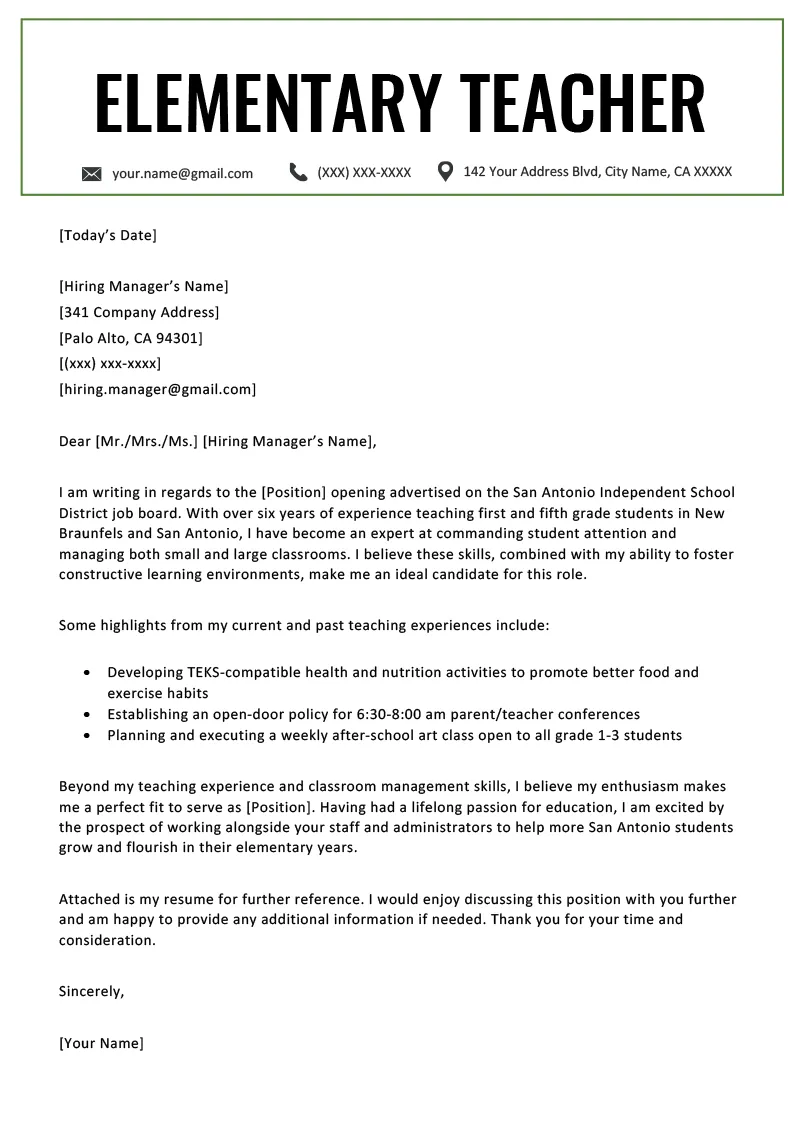
To create a powerful cover letter, focus on key components that effectively communicate your qualifications and suitability. These elements work together to create a cohesive narrative that grabs the reader’s attention and leaves a lasting positive impression. A well-structured cover letter is organized, easy to read, and tailored to the specific job and school. Proper formatting, professional language, and attention to detail are essential to present yourself as a polished and capable candidate. By carefully considering each component and ensuring its alignment with the job requirements, you significantly increase your chances of success.
Header and Contact Information

Start with a professional header that includes your full name, address, phone number, and email address. Ensure your contact information is up-to-date and easy to read. If you have a professional online presence, such as a LinkedIn profile or a personal website, you can include the link here as well. The header sets the tone for the entire letter, so make sure it is clean, well-formatted, and conveys a sense of professionalism. Using a consistent font and layout throughout the letter is also crucial for creating a polished and visually appealing document. The header also provides the recipient with the necessary details to contact you promptly.
Professional Greeting
Addressing the hiring manager or principal directly is always preferable. Research the school’s website or LinkedIn to find the name of the hiring authority. Using ‘Dear Mr./Ms. [Last Name]’ is a more personal touch than a generic greeting like ‘To Whom It May Concern’. If you are unable to find a specific name, a more general greeting such as ‘Dear Hiring Committee’ is acceptable. Avoid casual greetings. Tailoring your greeting to the specific recipient demonstrates that you have taken the time to learn about the school and its staff. A professional greeting shows respect and sets a positive tone from the start.
Opening Paragraph Capturing Attention
Your opening paragraph is your first opportunity to make a strong impression. Begin with a compelling hook that grabs the reader’s attention. State the position you are applying for and where you saw the job posting. Briefly mention your enthusiasm for the role and the school. You can also highlight a key skill or experience that aligns with the job requirements. Avoid generic phrases. The opening paragraph should be concise, focused, and enthusiastic, immediately conveying your interest and suitability for the position. Remember that the reader is likely reviewing numerous applications, so your opening must be impactful to stand out.
Highlighting Your Qualifications and Skills

The body of your cover letter is where you elaborate on your qualifications and skills, providing specific examples to support your claims. This section should showcase your ability to meet the needs of the school. Highlight how your experience, teaching philosophy, and achievements align with the school’s values and the job requirements. Use clear and concise language, and avoid jargon. Focus on what you can offer to the school and its students. Each paragraph should address a specific skill or experience, providing context and illustrating your abilities through concrete examples. This section should be the most substantive part of your cover letter, clearly demonstrating your qualifications and suitability for the role.
Showcasing Relevant Experience
Provide details about your relevant teaching experience, including the grade levels you have taught, the subjects you have specialized in, and the types of students you have worked with. Use the STAR method (Situation, Task, Action, Result) to describe specific accomplishments. For example, ‘In my previous role at [School Name], I implemented a new literacy program that increased student reading comprehension scores by 20%’. Quantifiable achievements are more impactful than vague descriptions. Focus on experiences that demonstrate your ability to effectively teach and manage a classroom. Mention any special programs or initiatives you have been involved in and how they benefited your students or the school. Tailor your examples to match the requirements outlined in the job description.
Demonstrating Your Teaching Philosophy
Your teaching philosophy reflects your beliefs about education and how you approach teaching. Briefly describe your teaching style, your approach to classroom management, and your commitment to student success. Explain your philosophy on fostering a positive learning environment. Demonstrate your commitment to student-centered learning. Your philosophy should align with the values of the school. Highlight your belief in creating a supportive, inclusive, and engaging classroom environment. Mention how you differentiate instruction to meet the diverse needs of students. Show your dedication to creating a safe and welcoming space where all students feel valued and respected. Provide concrete examples to back up your philosophy. Demonstrate your ability to create a positive and productive learning atmosphere.
Emphasizing Skills and Achievements

Highlight the key skills and achievements that make you a strong candidate. Focus on skills mentioned in the job description. Quantify your accomplishments whenever possible. For example, ‘Implemented a new assessment system that reduced grading time by 30%’. Showcase your ability to create engaging lesson plans. Emphasize your ability to differentiate instruction and support diverse learners. Mention any awards, certifications, or special recognitions you have received. Focus on how your skills and achievements align with the school’s goals and the needs of the students. Show the value you can bring to the school. Demonstrate that you are a highly effective teacher with a track record of success.
Tailoring Your Letter to the School
Customizing your cover letter for each school is essential. Generic cover letters are easily recognized and often overlooked. Research the school and its specific needs, values, and mission. Tailor your letter to address these aspects, showcasing how your skills and experience align with the school’s goals. Use the school’s website, social media, and any available materials to gather information. Make it clear that you understand the school’s unique culture and are excited to be a part of it. By demonstrating that you have invested time and effort in learning about the school, you significantly increase your chances of getting noticed.
Researching the School and its Values
Before writing your cover letter, conduct thorough research on the school. Visit the school’s website to learn about its mission, values, and programs. Read the school’s strategic plan. Look for any recent news or achievements. Pay attention to the school’s vision for its students. Understand their approach to education. Identify what makes the school unique and what they value most. Use this information to tailor your cover letter, demonstrating your understanding of the school’s priorities and showing how your qualifications align with their goals. This research demonstrates your genuine interest and shows that you are a good fit for the school’s culture.
Addressing Specific Needs or Requirements

Carefully review the job description and identify the specific requirements and qualifications. Directly address these requirements in your cover letter. If the job description emphasizes certain skills or experiences, make sure to highlight them. Provide examples that demonstrate how you meet those criteria. If the job posting mentions any special programs or initiatives, mention your experience. Demonstrate your understanding of the school’s needs and how you can contribute to its success. Showing that you understand what the school is looking for demonstrates your attention to detail and your ability to meet the expectations of the role.
Formatting and Proofreading Your Letter
A well-formatted and error-free cover letter reflects your professionalism and attention to detail. Ensure your letter is easy to read and visually appealing. Use a standard font, such as Times New Roman or Arial, with a font size of 11 or 12 points. Maintain consistent formatting throughout the letter, including spacing and alignment. Use proper grammar, spelling, and punctuation. Proofread your letter carefully for any errors. Consider having a friend or colleague review it as well. A polished cover letter will make a positive impression and increase your chances of getting an interview.
Ensuring Professional Presentation
Your cover letter should be visually appealing and easy to read. Use a professional font style and size. Maintain consistent formatting throughout the document, including spacing, alignment, and margins. Avoid using excessive colors, images, or graphics, as they can be distracting. Keep your paragraphs concise and well-structured. Use bullet points to highlight key skills or accomplishments. The overall presentation should be clean, organized, and professional. Proper presentation shows that you take pride in your work and pay attention to detail. Remember, the visual appearance of your cover letter contributes to the overall impression you make on the hiring committee.
Proofreading for Errors

Proofreading is crucial. Errors in grammar, spelling, or punctuation can create a negative impression and undermine your credibility. Carefully review your cover letter for any mistakes. Read it aloud to catch any awkward phrasing. Use a grammar checker to identify potential errors. Consider having a friend or colleague review your letter. A fresh pair of eyes can often spot mistakes that you might miss. Pay close attention to names, dates, and specific details. Double-check the school’s name and the hiring manager’s title. A polished and error-free cover letter conveys professionalism and demonstrates your attention to detail.
Call to Action and Closing
Your closing paragraph should reiterate your interest in the position and express your availability for an interview. Thank the hiring manager for their time and consideration. Include a call to action. Make it clear that you are eager to discuss your qualifications further. End with a professional sign-off. Reinforce your enthusiasm and make it easy for the employer to take the next step. The closing paragraph is your last chance to leave a positive and memorable impression, so make sure it’s well-written and professional.
Expressing Enthusiasm and Availability
Reiterate your strong interest in the teaching position and the school. Express your enthusiasm for the opportunity to contribute to the school’s mission. State your availability for an interview. Provide your contact information again and clearly indicate how they can reach you. Make it easy for the hiring manager to contact you. Express your willingness to provide any additional information or references. Your enthusiasm should be genuine and sincere. Make sure the hiring manager understands that you are eager to move forward in the application process.
Closing with a Professional Sign-off

Conclude your cover letter with a professional sign-off, such as ‘Sincerely’, ‘Respectfully’, or ‘Best regards’. Avoid casual sign-offs like ‘Thanks’ or ‘Cheers’. Include your typed name below the sign-off. If you are submitting a physical copy, leave space for your signature above your typed name. Ensure the tone of your sign-off matches the overall tone of your letter. A professional sign-off completes the letter and leaves a lasting impression of professionalism. It is a final touch that reinforces your commitment to the teaching profession.