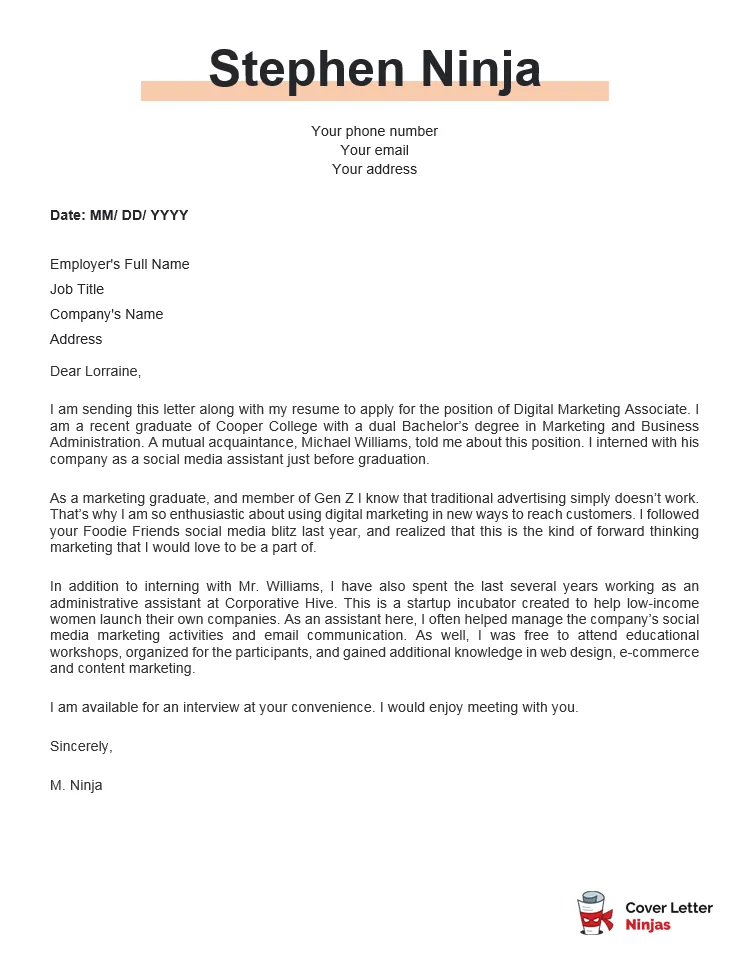
Cover Letter with No Experience Why It Matters
Writing a cover letter when you have no professional experience can feel like an uphill battle but it is absolutely crucial. A well-crafted cover letter provides you with the opportunity to showcase your potential, passion, and transferable skills. It bridges the gap left by the lack of traditional work experience and allows you to make a strong first impression on hiring managers. Think of it as your personal introduction, where you highlight why you’re a great fit for the role, even if your resume doesn’t scream ‘seasoned professional’. This document allows you to explain your career goals and demonstrate your understanding of the industry and the specific job, making your application stand out from the crowd. A compelling cover letter shows you’re not just sending a resume but actively pursuing the opportunity and ready to contribute.
Highlighting Transferable Skills
Transferable skills are the secret weapon when you lack direct experience. These are the abilities you’ve honed in different settings – school, volunteer work, hobbies, or part-time jobs – that are relevant to the job you’re applying for. They’re the soft and hard skills that make you an effective worker, regardless of your specific past role. Identifying and emphasizing these skills is the key to success. The most important thing is to clearly demonstrate how the skills you have translate to the role you are applying for. When you approach your cover letter this way, you can convince employers that even though you lack experience, you have the relevant skill set to become a valuable team member.
Identifying Your Skills

Start by making a comprehensive list of all the skills you possess. Think beyond your job title. What did you actually do in those roles? Consider skills like communication, problem-solving, teamwork, time management, leadership, and technical abilities. Think about times when you successfully navigated a challenge, led a project, or collaborated with others. Don’t underestimate the value of seemingly basic skills; often, these are the foundation of successful employees. Refer to the job description and make note of the skills and qualifications the employer is looking for. Then, match your skills to those requirements.
Tailoring Your Skills
Once you’ve identified your skills, tailor your cover letter to the specific job. Don’t just list your skills; illustrate them with examples. Instead of saying ‘I have strong communication skills,’ write ‘In my role as a volunteer coordinator, I successfully communicated with a team of 20+ volunteers, coordinating schedules and resolving conflicts effectively.’ Show, don’t tell. Provide concrete examples that demonstrate how you’ve used your skills in the past. The more specific you are, the more convincing you’ll be. Use the job description as your guide to highlight the most relevant skills. This demonstrates to the hiring manager that you understand the role’s requirements and are ready to perform them.
Showcasing Your Education
Your educational background is a valuable asset, especially when you lack professional experience. Use your cover letter to highlight your academic achievements, relevant coursework, and any projects you’ve completed. Even if your degree isn’t directly related to the job, you can still demonstrate how your education has prepared you for the role. This is a great opportunity to showcase both your technical and soft skills, showing employers you have what it takes to learn and excel.
Listing Relevant Coursework

Review the job description and identify any coursework or skills that align with the role’s requirements. Highlight any projects, presentations, or assignments that demonstrate your understanding of relevant concepts. Did you take a class on project management? Mention the skills you learned and the projects you completed. Focus on the courses that provided you with skills that can be directly applied to the job. By providing context, you show the employer the link between your education and what the job requires.
Mentioning Academic Achievements
Include any academic achievements that showcase your abilities. This could be Dean’s List recognition, scholarships, awards, or participation in honors programs. If you received any special recognition, don’t hesitate to highlight it. These achievements demonstrate your work ethic, intelligence, and commitment to excellence. These demonstrate to the employer that you have the ability to be a top performer in their company. Quantify your achievements whenever possible. Saying you were on the Dean’s List for multiple semesters, for instance, is more impactful than simply stating you were on the Dean’s List.
Emphasizing Volunteer Experience
Volunteer work is a powerful way to demonstrate your skills and commitment, especially when you have limited professional experience. It shows that you’re proactive, dedicated, and willing to contribute. Your volunteer experience can provide valuable insights into your capabilities and personality. It’s an opportunity to showcase the soft skills employers often seek. When discussing volunteer experience, be specific about your role and responsibilities, and make sure to quantify your accomplishments wherever possible.
Describing Your Roles and Responsibilities

Detail the specific roles and responsibilities you held in your volunteer positions. Use action verbs to describe what you did. For instance, instead of saying, ‘I volunteered at the local shelter,’ write, ‘I assisted with daily operations, including client intake, data entry, and coordinating donation drives.’ The more detail you provide, the better. This will give the employer a clear picture of your skills and what you are capable of.
Quantifying Your Accomplishments
Wherever possible, quantify your accomplishments. Use numbers and data to make your impact clear. For example, ‘Increased volunteer participation by 20% through targeted outreach programs’ or ‘Managed a team of 10 volunteers, ensuring efficient execution of event logistics.’ Quantifying your accomplishments shows the employer the tangible results of your efforts. This also provides the employer a clear indication of your ability to make an impact within their company. When you quantify your contributions, you make a strong case for your potential value to the company.
Showcasing Personal Projects and Hobbies
Personal projects and hobbies offer another avenue to showcase your skills and passion. Whether it’s a coding project, a blog, a photography portfolio, or a leadership role in a club, these activities demonstrate your initiative, dedication, and skills. Consider the skills you’ve developed through these pursuits and how they relate to the job requirements. This is a great way to show your personality and demonstrate your true interests, as well as show initiative.
Selecting Relevant Projects

Choose projects and hobbies that are most relevant to the job you’re applying for. Focus on the skills and experience you’ve gained that align with the job description. If you’re applying for a marketing role, highlight any projects related to content creation, social media management, or website design. Be selective. Choose only those that demonstrate the most relevant skills. Make sure you’re aligning your skills with the requirements of the role.
Describing Project Outcomes
For each project or hobby, describe your role, the specific tasks you completed, and the results you achieved. What did you learn? What challenges did you overcome? Did you increase website traffic, gain followers, or improve a process? Quantify your results whenever possible. If your project has a tangible outcome, be sure to include it. These examples not only show skills but also how those skills translate to real-world achievements.
Demonstrating Enthusiasm and a Positive Attitude
Your cover letter is also an opportunity to showcase your enthusiasm, personality, and positive attitude. Employers want to hire people who are passionate and excited about the opportunity. Displaying these qualities in your cover letter will help you stand out.
Expressing Your Interest in the Company

Research the company and the role, and express your genuine interest in both. What aspects of the company’s mission, values, or culture resonate with you? Why are you excited about this specific opportunity? Showing that you’ve taken the time to learn about the company demonstrates your commitment. You can show enthusiasm by mentioning any specific achievements of the company that resonate with you, or expressing the desire to contribute.
Showing Your Understanding of the Role
Demonstrate your understanding of the role by briefly explaining why you’re a good fit. Connect your skills, experiences, and aspirations to the job description. Explain how you can contribute to the company’s success. This also shows the hiring manager you are passionate about the role and are eager to succeed. Mentioning any aspects of the role that specifically excite you can also show that you are eager to be a part of the team.
Structuring Your Cover Letter
A well-structured cover letter is crucial for making a positive impression. The organization, formatting, and tone all contribute to the overall impact of your letter. A poorly structured cover letter can quickly lead to rejection. Following the standard guidelines for a cover letter shows professionalism and attention to detail.
Formatting Your Letter Properly

Use a professional font like Times New Roman, Arial, or Calibri. Make sure your font size is easy to read (11 or 12 points). Use single spacing within paragraphs and double spacing between paragraphs. Keep your letter to one page, with standard margins (1 inch). Use a clear and concise format that makes it easy for the reader to quickly scan your qualifications. These simple formatting steps ensure the employer can easily and comfortably review your resume and qualifications.
Writing a Strong Opening
Your opening paragraph is the first impression. Start with a compelling hook that grabs the reader’s attention. Briefly state the position you are applying for, where you found the job posting, and why you are interested. Instead of a generic greeting, personalize your letter to the hiring manager. If possible, use their name. Make sure you are stating your interest and excitement to work at the company. This makes the employer eager to read the rest of your letter.
Crafting Compelling Body Paragraphs
The body of your cover letter is where you showcase your skills and qualifications. Use 2–3 paragraphs to elaborate on your most relevant experiences. Highlight your achievements, explain how you’ve applied your skills, and quantify your results whenever possible. Show, don’t tell. Use specific examples to illustrate your skills and abilities. Connect your skills to the job requirements, and demonstrate how you can contribute to the company’s success. The goal is to convince the hiring manager that you are the perfect candidate for the job.
Creating a Powerful Closing
End your cover letter with a strong closing. Reiterate your interest in the position and the company. Summarize your key qualifications and express your confidence in your ability to succeed. Thank the hiring manager for their time and consideration. Include a call to action by stating your availability for an interview. Make sure to use a professional closing, such as ‘Sincerely’ or ‘Best regards’, followed by your full name.
Proofreading and Editing Your Cover Letter
Before submitting your cover letter, proofread and edit it carefully. Errors can undermine your credibility. Even a small typo can make you look careless. Ensure your cover letter is free of grammatical errors, spelling mistakes, and typos. This is absolutely critical; it shows the hiring manager that you pay attention to detail and care about the quality of your work. Proofreading is the final step that makes a great impression.
Checking for Grammatical Errors
Carefully review your cover letter for grammatical errors. Use a grammar checker tool and proofread your letter multiple times. Read it aloud to catch any awkward phrasing or sentences that don’t make sense. Ensure that your sentences are clear, concise, and easy to understand. Check for subject-verb agreement, correct tense, and proper punctuation. This can be the difference between getting the job or being rejected.
Ensuring a Professional Tone
Maintain a professional tone throughout your cover letter. Avoid slang, jargon, and overly casual language. Use formal language and address the hiring manager appropriately. Make sure the tone aligns with the company’s culture. Review the letter to ensure it reflects the professionalism you wish to display. A positive tone demonstrates professionalism, ensuring you make the best impression. Remember, your cover letter is a professional document, so it needs to be perfect!