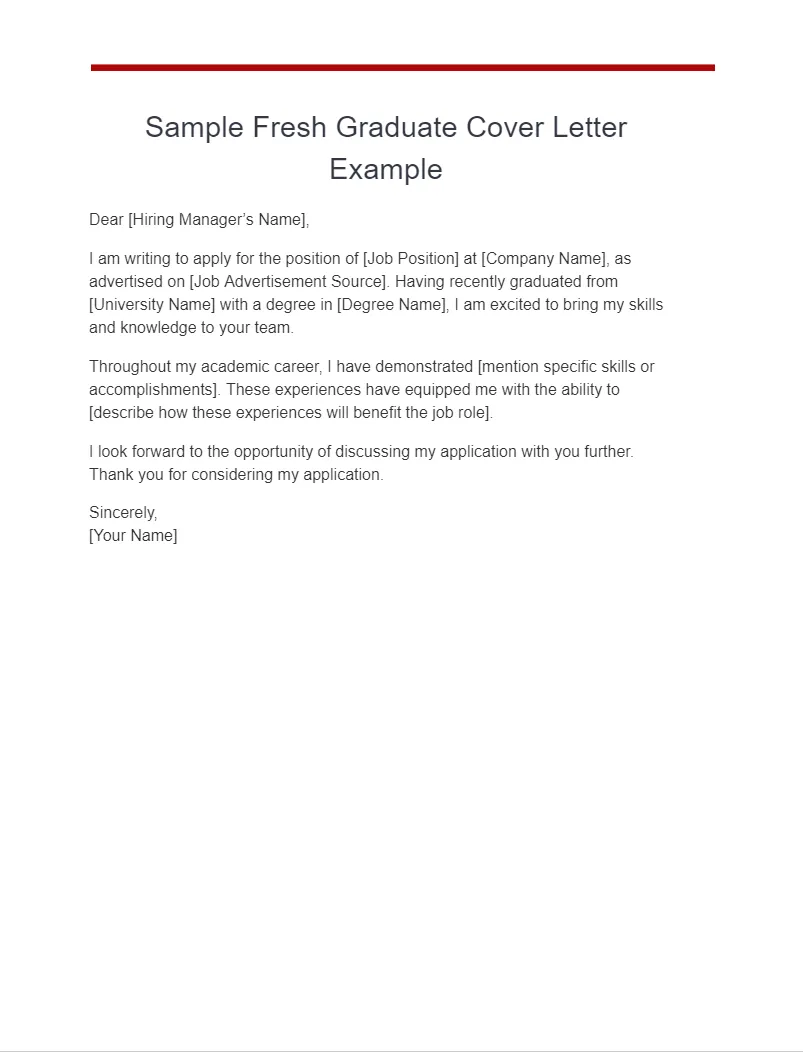
Understanding the Power of a Cover Letter
In the competitive landscape of job applications, a well-crafted cover letter can be your secret weapon. It’s more than just a formality; it’s your opportunity to make a strong first impression, highlight your unique qualifications, and demonstrate your genuine interest in the position and the company. A cover letter allows you to provide context to your resume, explaining why your skills and experiences align perfectly with the job requirements and the company’s values. For fresh graduates, a compelling cover letter is particularly crucial, as it can help bridge the gap between limited professional experience and the skills and potential you offer. Think of it as your personal introduction, setting the stage for a deeper exploration of your capabilities and aspirations.
Why Cover Letters Matter
Cover letters serve several vital purposes. Firstly, they allow you to personalize your application. Tailoring your letter to each specific job demonstrates that you’ve invested time and effort in understanding the role and the company’s needs. Secondly, they offer a platform to elaborate on your resume. You can use the cover letter to expand on specific achievements, explain gaps in your experience, or connect your academic projects to the job requirements. Thirdly, they provide an opportunity to showcase your communication skills. A well-written cover letter reflects your ability to articulate your thoughts clearly, concisely, and professionally. Finally, they help you stand out from the crowd. By expressing your enthusiasm and showcasing your personality, you can make a memorable impact on the hiring manager.
Common Mistakes to Avoid

Avoid generic cover letters. Using a template without personalizing it for the specific job is a major turn-off. Ensure the letter is free of grammatical errors, spelling mistakes, and typos. Proofread meticulously! Don’t simply restate your resume; provide new information and context. Avoid being overly formal or using jargon that the hiring manager might not understand. Also, avoid writing a cover letter that is too long; aim for one page. Finally, do not include irrelevant information or exaggerate your skills and experiences. Honesty and relevance are key.
Crafting a Stellar Cover Letter
Formatting Your Cover Letter
The format of your cover letter plays a crucial role in making a positive first impression. A well-formatted letter is easy to read and demonstrates professionalism. Consistency in formatting is key. Stick to a standard business letter format: your contact information, the date, the recipient’s contact information, salutation, body paragraphs, closing, and your signature. Maintain a clean and uncluttered layout, using adequate white space to improve readability. Your formatting should be professional and reflect the standards of the industry you’re targeting. Remember, it’s about presenting yourself in the best light possible.
Choosing the Right Font and Font Size

Select a professional and easy-to-read font such as Times New Roman, Arial, Calibri, or Helvetica. These fonts are widely accepted and project a sense of professionalism. Use a font size between 10 and 12 points. This size is generally considered the most readable and won’t strain the reader’s eyes. Ensure consistency in font size throughout the document. A consistent font and size contribute to a polished look. Avoid using overly stylized or decorative fonts, which can make your letter appear less professional.
Setting Up Your Header
Your header should include your full name, contact information (phone number and email address), and often your LinkedIn profile URL. Ensure your contact information is accurate and up-to-date, as this is how potential employers will reach you. The header should be consistently formatted and aligned with the rest of the document. If you are applying for a job internationally, ensure your phone number includes the country code. Keep it simple and clear, allowing the recruiter easy access to your contact details.
Writing a Compelling Opening
The opening paragraph is your chance to grab the reader’s attention. Start by addressing the hiring manager by name if possible. If you can’t find the name, use a general greeting like ‘Dear Hiring Manager’. State the position you are applying for and where you found the job posting. Briefly mention why you are interested in the position and the company. The opening should be concise, enthusiastic, and clearly state your objective. Avoid generic phrases such as ‘I am writing to express my interest…’ Instead, be direct and let them know why you are the right fit.
Highlighting Your Skills and Experience

The body of your cover letter should highlight your relevant skills and experiences. Use specific examples to demonstrate how your skills align with the job requirements. Focus on the skills and experiences that the employer is looking for. Tailor this section to match the job description by carefully reviewing the requirements listed. Use action verbs to describe your accomplishments and responsibilities. Whenever possible, quantify your achievements using numbers and data. This gives your claims credibility and shows the impact you can make.
Showcasing Relevant Coursework and Projects
Fresh graduates can highlight relevant coursework and projects to compensate for a lack of professional experience. Explain how these academic experiences have equipped you with the skills needed for the job. Focus on the projects that are most relevant to the role. Describe your role in the project, the challenges you faced, and the results you achieved. Use this opportunity to demonstrate your problem-solving abilities, teamwork skills, and technical expertise. Choose projects that showcase your ability to apply your knowledge in practical scenarios.
Quantifying Your Achievements
Quantifying your achievements is crucial for demonstrating your impact. Instead of saying ‘I improved customer satisfaction’, say ‘I increased customer satisfaction by 15% through implementing a new feedback system’. Use numbers and data to showcase your accomplishments in your coursework, projects, and any previous internships or volunteer work. This provides concrete evidence of your abilities and makes your claims more persuasive. For example, mention the size of the team you worked with, the percentage of improvement in a project, or the number of people you trained.
Demonstrating Your Enthusiasm

Show genuine enthusiasm for the position and the company. Research the company and mention specific aspects that attract you to them. Explain why you want to work there, showing that you’ve invested time in understanding the company’s mission, values, and culture. Express your excitement for the opportunity and your eagerness to contribute to their success. Enthusiasm can set you apart from other candidates. Make it clear that you’re not just looking for a job but are truly interested in the specific opportunity and the company.
Adding a Strong Call to Action
End your cover letter with a strong call to action. Thank the hiring manager for their time and consideration. State your interest in an interview and provide information on how they can contact you. Make it clear that you are available for an interview and eager to discuss your qualifications further. Consider adding a sentence that reiterates your enthusiasm and reinforces your key skills. This gives the reader a final reason to invite you for an interview. This is your final opportunity to leave a lasting impression.
Proofreading and Editing Your Cover Letter
Proofreading and editing are critical steps to ensure your cover letter is polished and professional. Thoroughly proofread your cover letter for grammatical errors, spelling mistakes, and typos. These errors can undermine your credibility and create a negative impression. Read your cover letter aloud to catch any awkward phrasing or inconsistencies. Ask a friend, family member, or career counselor to review your cover letter. They can often spot errors that you might miss. The last read should be performed just before submission.
Using Professional Language

Use professional and formal language throughout your cover letter. Avoid slang, contractions, and informal expressions. Maintain a respectful tone and use proper grammar and punctuation. Avoid using clichés or overused phrases. Use active voice to make your sentences more dynamic and impactful. Choose strong verbs and descriptive adjectives to showcase your skills and accomplishments. The goal is to project an image of professionalism and competence, making the reader confident in your abilities.
Checking for Grammar and Spelling Errors
Grammar and spelling errors are a major red flag. Use a spell checker and grammar checker, but don’t rely on them completely. Proofread your cover letter carefully, paying close attention to detail. Double-check the names of the hiring manager and the company. Ensure all punctuation is correct and consistent. Errors can undermine your credibility and suggest a lack of attention to detail, so thoroughness is essential. Consider reading the letter backward to focus on individual words and catch errors you may have missed when reading forward.
Final Review and Submission
Before submitting your cover letter, conduct a final review to ensure everything is perfect. Check that the formatting is consistent and professional. Verify all contact information. Ensure you have addressed the correct person. Make sure the cover letter aligns with the job description and your resume. Save your cover letter in a professional format, such as a PDF, to preserve the formatting and prevent any compatibility issues. Always follow the specific instructions provided in the job posting when submitting your application. Submit a polished and error-free cover letter, ready to make an outstanding first impression.