Cover Letter Essentials for New Grad Nurses
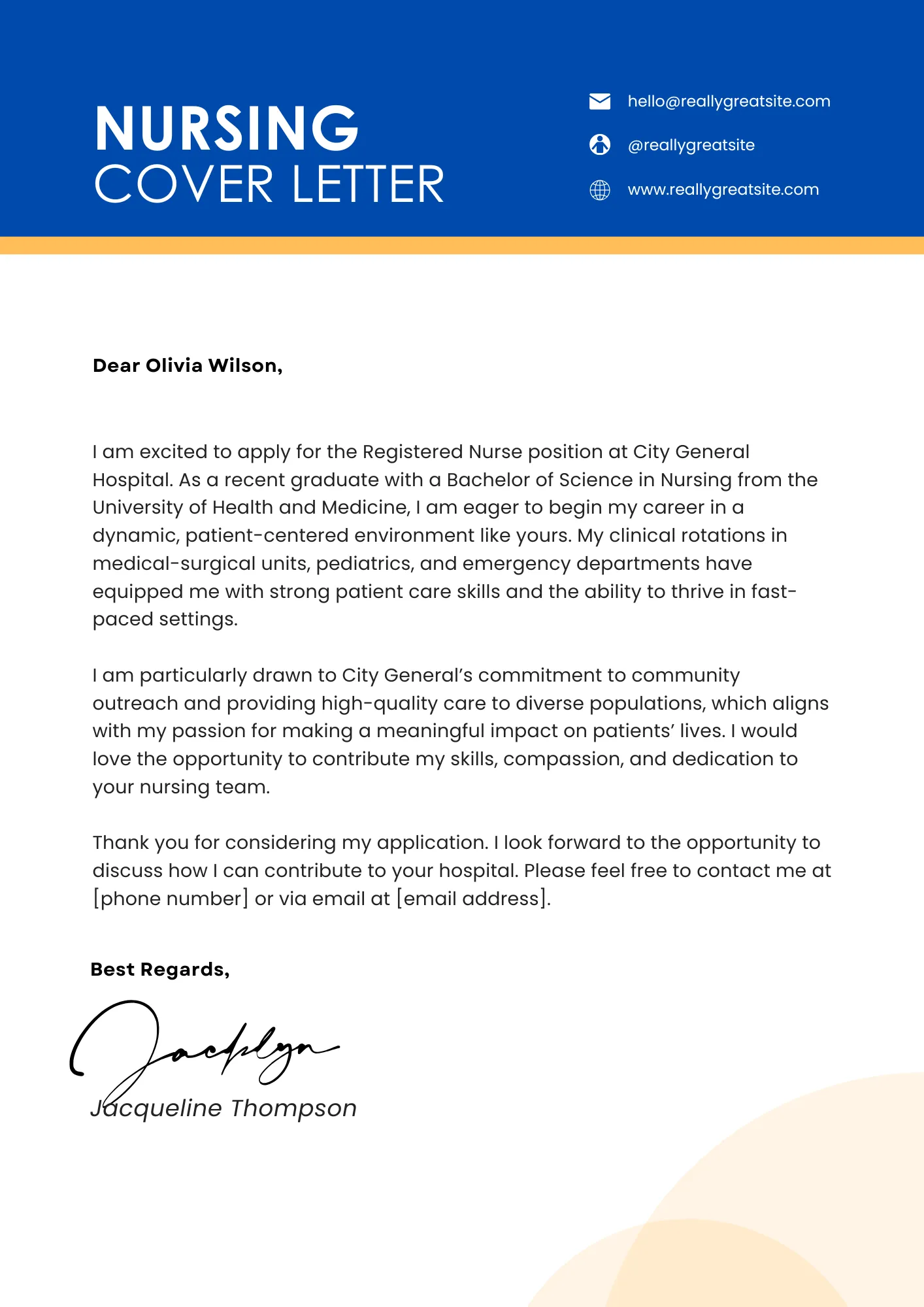
Crafting a compelling cover letter is a crucial step for new graduate nurses seeking to launch their careers. A well-written cover letter not only introduces you to a potential employer but also highlights your qualifications, passion for nursing, and suitability for the specific role. This guide will provide a comprehensive overview of how to write an effective cover letter that will help you stand out from the competition and increase your chances of landing your dream job in the nursing field. Remember, your cover letter is your first impression—make it count by showcasing your potential and enthusiasm.
Header and Contact Information
The header of your cover letter sets the professional tone and provides essential contact information. Ensure this section is accurate, easy to read, and consistent with the information on your resume. Accuracy and professionalism in this section are critical; it’s the first thing the hiring manager sees and reflects your attention to detail.
Your Name and Contact Details

Start with your full name, clearly displayed at the top of the letter. Include your phone number, professional email address, and, if applicable, a link to your LinkedIn profile. Double-check that your email address is professional (e.g., firstname.lastname@email.com) and that your voicemail greeting is also professional.
Date and Recipient Information
Below your contact information, include the date. Then, address the letter to the hiring manager or the specific person listed in the job posting. If a name isn’t provided, research the contact person through the hospital website or LinkedIn. Addressing the letter to a specific person demonstrates initiative and attention to detail, showing you’ve taken the time to learn more about the organization and the role. If you can’t find a specific name, use a general title like ‘Hiring Manager’.
Opening Paragraph The Hook
The opening paragraph is your opportunity to grab the reader’s attention and set the tone for your letter. It should be concise, enthusiastic, and clearly state the purpose of your letter—to apply for the nursing position advertised. This first impression is critical, so make sure your opening reflects your enthusiasm and genuine interest in the position. Use this section to highlight your key strengths and express your excitement about the opportunity.
Expressing Enthusiasm and Purpose

Start by expressing your enthusiasm for the nursing position and the organization. Mention how you learned about the job, whether through a job board, a referral, or the company website. State the specific role you are applying for. For example, “I am writing to express my keen interest in the Registered Nurse position at [Hospital Name], as advertised on [Platform].” This helps the hiring manager immediately understand why you are writing.
Mentioning the Specific Job
Clearly state the specific nursing position you are applying for. If you know the department (e.g., ICU, Emergency Room), include it. If the job posting has a reference number, include it to help the hiring manager easily identify the position. This shows you’ve paid attention to the details and understand the requirements of the role.
Highlighting Key Qualifications and Skills
The body of your cover letter is where you showcase your qualifications and skills. This section should provide details on your relevant experience, skills, and achievements. Focus on how your background aligns with the job requirements. Use this section to highlight key qualifications and skills that make you a strong candidate, using specific examples and quantifiable results whenever possible. This section demonstrates your ability to perform the job effectively.
Showcasing Relevant Experiences

Even as a new grad nurse, you have experiences to highlight. These can include clinical rotations, volunteer work, and any healthcare-related jobs you’ve held. Focus on experiences that align with the requirements of the job. Describe your responsibilities and the skills you developed in each role. Use the STAR method (Situation, Task, Action, Result) to provide context, explain the actions you took, and highlight the results. This approach provides concrete examples of your capabilities, showing what you can bring to the role.
Clinical Rotations and Skills
Detail your clinical rotations, specifying the units you worked in (e.g., Med-Surg, Pediatrics, Oncology). Describe the skills you gained during these rotations, such as patient assessment, medication administration, wound care, and electronic health record documentation. Highlight any specialized skills you have, like experience with specific equipment or procedures. For instance, you might write, ‘During my rotation in the ICU, I gained proficiency in monitoring patients on ventilators and administering critical care medications.’ Be specific about your experiences and demonstrate your practical skills.
Academic Achievements and Honors
Include any academic achievements, such as Dean’s List recognition, scholarships, or awards. Mention any projects or research you participated in, especially if they relate to the job or the employer’s mission. For example, ‘I was awarded the [Scholarship Name] for academic excellence and completed a research project on [Topic], which enhanced my understanding of [Relevant Skill].’ This shows that you are committed to excelling in your field and are eager to learn.
Soft Skills and Personal Attributes

In addition to clinical skills, highlight your soft skills and personal attributes. These are essential for success in nursing, demonstrating your ability to work well with others, manage stress, and provide compassionate care. Focus on skills that are relevant to the job description and the hospital’s values. Providing examples of how you have demonstrated these soft skills strengthens your application.
Communication and Teamwork
Nursing requires strong communication and teamwork skills. Provide examples of how you effectively communicated with patients, families, and other healthcare professionals. Describe situations where you collaborated with a team to achieve positive patient outcomes. For example, ‘I effectively communicated with a diverse patient population, explaining complex medical information in a clear and empathetic manner. During a code situation, I worked seamlessly with the team to provide immediate care.’ Highlighting these skills demonstrates your ability to build relationships and contribute positively to a team environment.
Adaptability and Problem-Solving
Nurses need to be adaptable and able to solve problems quickly. Provide examples of times when you demonstrated these skills. Describe how you handled unexpected situations, adjusted to changing priorities, or solved a problem related to patient care. For example, ‘When a patient’s condition suddenly deteriorated, I quickly assessed the situation, notified the physician, and initiated appropriate interventions. This resulted in stabilizing the patient and preventing further complications.’ This showcases your ability to think on your feet and provide effective care under pressure.
Tailoring Your Cover Letter

Tailoring your cover letter to each job application is essential. Generic cover letters do not impress employers. Demonstrate that you understand the employer’s needs and that you have the skills and experience to meet those needs. This personalized approach makes your application more compelling and increases your chances of success. Researching the employer and matching your skills to the job description show that you are genuinely interested in the role and the organization.
Researching the Employer
Before you start writing, research the employer. Visit their website, read about their mission, values, and recent achievements. Look for information about their nursing philosophy and patient care approach. Understanding the employer helps you tailor your letter to their specific needs. For instance, if the hospital is known for its focus on patient-centered care, highlight your experience with providing compassionate care and building patient relationships.
Matching Skills to Job Description
Carefully review the job description and identify the key skills and qualifications the employer is seeking. Use these keywords and phrases in your cover letter. Provide specific examples of how your skills and experiences align with these requirements. This shows that you are a good fit for the position. For example, if the job description emphasizes critical thinking, provide an example of a time you demonstrated this skill in a clinical setting.
Quantifying Your Achievements

Whenever possible, quantify your achievements. Use numbers to demonstrate the impact of your work. For example, instead of saying, ‘I improved patient satisfaction,’ say, ‘I improved patient satisfaction scores by 15% through implementing a new communication strategy.’ Providing concrete data makes your accomplishments more convincing and illustrates your effectiveness. Using metrics helps the hiring manager understand the value you bring to the organization.
Formatting and Tone
The formatting and tone of your cover letter are as important as the content. A well-formatted letter that projects a professional and confident tone can significantly enhance your application. The formatting should be easy to read and visually appealing, while the tone should be professional and reflect your enthusiasm for the opportunity. Following these guidelines will ensure your cover letter is polished and effective.
Professional Formatting
Use a standard, easy-to-read font such as Arial or Times New Roman in size 11 or 12 points. Ensure consistent formatting throughout the letter, including margins and spacing. Avoid excessive use of bolding, underlining, or italics. Proofread carefully for any grammatical errors or typos. Use a clean and professional layout to make your letter visually appealing and easy to read. A well-formatted letter demonstrates your attention to detail and professionalism.
Positive and Confident Tone

Maintain a positive and confident tone throughout your cover letter. Express your enthusiasm for the position and your confidence in your abilities. Avoid using negative language or apologizing for your lack of experience. Instead, focus on what you have to offer and your willingness to learn. Use assertive language and show that you are excited about the opportunity to contribute to the organization. This positive approach leaves a strong impression.
Closing Paragraph and Call to Action
The closing paragraph should reiterate your interest in the position and provide a clear call to action. Expressing your enthusiasm and summarizing your qualifications, while also making it easy for the hiring manager to contact you, ensures a smooth follow-up process. A strong closing paragraph can significantly increase your chances of receiving an interview.
Expressing Interest and Availability
Reiterate your interest in the position and summarize your key qualifications. Reiterate your enthusiasm and express your belief that you can contribute to the organization. State your availability for an interview. For example, ‘I am excited about the opportunity to join [Hospital Name] and contribute to your team. I am available for an interview at your earliest convenience.’ This demonstrates your eagerness and willingness to move forward.
Thanking the Reader
Thank the hiring manager for their time and consideration. Express your gratitude for their review of your application. This shows that you appreciate their time and gives a professional finishing touch to your letter. A simple ‘Thank you for considering my application’ is appropriate.
Contact Information and Next Steps
Reiterate your contact information, including your phone number and email address. Encourage the hiring manager to contact you if they have any questions. Close with a professional sign-off, such as ‘Sincerely’ or ‘Best regards’, followed by your typed name. For example, ‘Thank you for your time and consideration. I look forward to hearing from you soon. Sincerely, [Your Name].’ This makes it easy for the hiring manager to reach out to you and helps streamline the process.