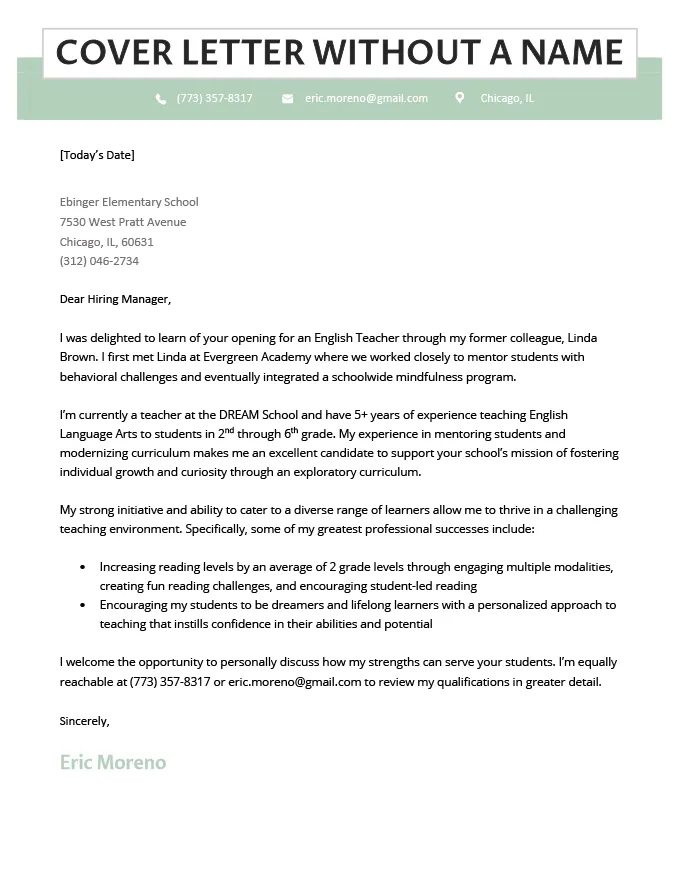
Cover Letter: When You Don’t Know the Name
Writing a cover letter is a critical step in the job application process, allowing you to showcase your personality, skills, and enthusiasm beyond your resume. However, what do you do when you’re faced with the challenge of addressing a cover letter when you don’t know the hiring manager’s name? This is a common situation, and knowing how to navigate it effectively can significantly impact your chances of making a positive first impression. This guide provides tips and tricks on how to start a cover letter when you lack the specific name, ensuring your application stands out for the right reasons. We’ll explore various strategies, from appropriate greetings to crafting a compelling opening that captures the reader’s attention and highlights your suitability for the role. Avoiding common pitfalls and making the right choices is crucial to demonstrating professionalism and genuine interest.
Addressing the Unknown Recipient
The absence of a specific name shouldn’t deter you. The way you address your cover letter sets the tone for the rest of your application. A generic opening, when handled correctly, can still convey your professionalism and respect. The key is to choose a greeting that is both respectful and indicates your understanding of the professional context. By selecting the appropriate words and phrases, you demonstrate your attention to detail and your commitment to presenting yourself in the best possible light. This is your first opportunity to show that you’re not just sending out a generic application but tailoring your message to the specific job and company. It is important to make sure that the introduction does not sound too impersonal, as this could potentially make your application get overlooked.
Using General Greetings

When the hiring manager’s name is unavailable, it’s perfectly acceptable to use general greetings. These greetings are designed to be inclusive and professional, suitable for any recipient. Options such as ‘Dear Hiring Manager’ are widely accepted, but it’s important to ensure that the tone aligns with the company culture. Remember, the goal is to establish a respectful and professional introduction. Even though these greetings are broad, they can still effectively convey your enthusiasm and interest in the position. Choosing the right one allows you to bypass the lack of a name without diminishing the impact of your introduction. Moreover, It’s essential to spell these greetings correctly to maintain your professional image.
Alternatives to ‘Dear Hiring Manager’
While ‘Dear Hiring Manager’ is common, diversifying your approach can set you apart. Consider greetings like ‘Dear [Company Name] Hiring Team’ or ‘To the [Department Name] Hiring Committee.’ These options show that you’ve researched the company and understand the structure of the organization. Other alternatives include, ‘Dear [Job Title] Team’, if you know a specific team is involved in the hiring process. Such variations display your initiative and understanding, demonstrating your ability to adapt and customize your application to the specific opportunity. The goal is to show respect and demonstrate that you’ve put thought into your cover letter. Making the effort to consider the alternatives conveys your attention to detail.
Highlighting Your Research
Regardless of the greeting you choose, demonstrating that you’ve researched the company and the role is crucial. Your cover letter presents an opportunity to showcase your initiative and attention to detail. Researching the company’s mission, values, and recent projects can help you tailor your letter to their specific needs. This also shows that you’re invested in their organization. Such actions go beyond the basics and shows that you’re not just sending a generic application. Researching lets you create a more tailored letter, expressing your interest and making a positive impression from the start.
Mentioning the Job Posting

Directly referencing where you found the job posting adds context to your application. Including information like the job title and the platform on which you saw the posting can help the hiring manager quickly understand why you’re writing. Phrases like, ‘I am writing to express my interest in the [Job Title] position, as advertised on [Platform Name],’ provide a clear and efficient introduction. This also enables the hiring manager to easily link your application to the appropriate role. This action also clarifies the purpose of your cover letter. Additionally, it confirms that your application is relevant to the available position. By being specific and clear, you demonstrate your organizational skills and your understanding of the application process.
Demonstrating Company Knowledge
Beyond mentioning the job posting, highlighting your knowledge of the company is crucial. Demonstrating your awareness of their values, recent achievements, and industry standing sets you apart. Mentioning specific projects or initiatives that resonate with you shows genuine interest. Consider using sentences such as, ‘I was particularly impressed by [Company’s Achievement/Project]…’ or ‘Your commitment to [Company Value] aligns perfectly with my own professional goals.’ This level of detail shows that you’ve invested time to understand their business. This shows your understanding of the company’s goals, demonstrating that you have the qualities to be successful in their organization. It creates a tailored experience that indicates a serious desire to join the company.
Crafting a Compelling Opening
Once you’ve addressed your cover letter appropriately, it’s time to capture the reader’s attention. Your opening should be compelling, setting the tone for your entire application. A strong start is crucial for making a positive impression. The opening should immediately convey why you’re applying and what makes you the ideal candidate. This initial section can set the tone for the rest of your application. The goal of the opening is to make the hiring manager interested in reading the rest of your cover letter and ultimately, to learn more about you. A thoughtful opening also sets the stage for a positive and professional dialogue.
Focusing on Your Skills

In the opening, clearly state the skills and experiences that align with the job requirements. Highlighting your key qualifications from the start grabs the reader’s attention and shows why you’re a good fit. Tailor your skills to match the specific needs of the role. Consider mentioning a few specific accomplishments that demonstrate these skills. Consider beginning your opening with a sentence that highlights the main skills and experiences that are most relevant to the job. This demonstrates your capability and showcases your value from the beginning. This is your opportunity to provide a quick overview of your strengths and why you are well-suited for the role.
Showcasing Your Enthusiasm
Expressing genuine enthusiasm can make your cover letter stand out. A clear display of your enthusiasm for the role and the company will show your passion and commitment. Showcasing your interest in the role will show the hiring manager that you are committed to joining their organization. Your enthusiasm can set you apart from other candidates and convey your genuine interest in the position. This creates a positive impression from the start. Your enthusiasm is also your first opportunity to express your excitement for the opportunity. This can be done through specific phrases or sentences.
Keeping it Concise and Professional
Throughout your cover letter, strive to keep it concise and professional. The modern hiring manager has a limited amount of time to review applications. Therefore, every word counts. Ensure that your writing is clear, direct, and free of grammatical errors. Proofread carefully to avoid any mistakes. By using a professional tone, you show that you understand workplace etiquette and the importance of effective communication. This indicates respect for the hiring manager’s time and professionalism. By maintaining these standards, you demonstrate your strong communication skills and the ability to present yourself in the best possible light. This helps make a positive impression.
In conclusion, starting a cover letter without a name requires careful consideration and a strategic approach. By using appropriate greetings, researching the company, and crafting a compelling opening, you can make a strong impression. Remember to focus on your skills and enthusiasm, and to always maintain a professional tone. Following these tips will greatly improve your chances of success and increase your chances of landing the job you desire. Applying these strategies will not only increase your chances of making a positive impression, but it will also help you stand out from the competition. Good luck!