Understanding the Challenge No Name Cover Letters
Writing a cover letter can be challenging, and it becomes even more so when you don’t know the name of the hiring manager or recruiter. Many job seekers face this situation, especially when applying online through company portals or general application emails. In these cases, you might find yourself unsure how to start the letter. This guide provides practical advice and strategies for crafting a compelling cover letter, even without knowing the recipient’s name, helping you to make a strong impression and increase your chances of landing an interview. Navigating this aspect of job applications requires careful consideration and strategic phrasing to make your application stand out.
Why You Might Not Know the Recruiter’s Name
There are several reasons why you might not know the name of the person who will read your cover letter. Sometimes, the job posting doesn’t provide the information, or the application process directs you to a general email address. In larger companies, the hiring manager might be unknown to the public, or the role of reviewing applications might rotate among team members. Additionally, if you’re applying through a recruitment agency, they may not disclose the hiring manager’s name initially. Understanding these scenarios will help you adapt your cover letter strategy to fit the context of your application.
Reasons to Start a Cover Letter without a Name

It’s important to note that not knowing the name isn’t a failure, but rather a common scenario. Job seekers might not have the name due to large application volumes or the nature of the job posting. Instead of viewing this as a disadvantage, see it as an opportunity to demonstrate your adaptability and attention to detail in your cover letter. Properly addressing this situation demonstrates your ability to think critically and compose professional communications that stand out. The key lies in using the right approach.
Best Practices for Cover Letter Greetings
When you’re unsure of the recipient’s name, your greeting sets the tone for the entire cover letter. The choice of greeting can significantly influence the reader’s perception of your application. While it’s often best to address the hiring manager directly, if you cannot, selecting the appropriate alternative is crucial. This section highlights suitable options that maintain professionalism and capture the reader’s attention, while avoiding mistakes that might undermine your chances of success. Remember to choose greetings that align with the company’s culture.
Using General Greetings
In the absence of a specific name, general greetings offer a safe and professional starting point. Phrases like ‘Dear Hiring Manager,’ ‘Dear [Company Name] Hiring Team,’ or ‘To Whom It May Concern’ are commonly used. ‘Dear Hiring Manager’ is a straightforward and effective choice, while ‘Dear [Company Name] Hiring Team’ suggests a collaborative approach. ‘To Whom It May Concern’ is an acceptable, though slightly formal, option, best reserved for situations where you truly have no other information. These greetings help maintain a professional tone and are generally well-received.
Alternatives to ‘Dear Hiring Manager’

While ‘Dear Hiring Manager’ is acceptable, there are other approaches you can consider. If the job posting mentions a specific department or role, you could use ‘Dear [Department Name] Team’ or ‘Dear [Job Title] Search Committee.’ If you’ve identified a specific person in your research, even if it’s a recruiter or someone on the team, that’s a strong option. In cases where you have a contact within the company, a personal touch like ‘Dear [Contact’s Name]’ might be beneficial, provided your contact is comfortable with this. These alternative options add a personal touch and make your cover letter more appealing.
Highlighting Your Interest
Regardless of the greeting you use, the opening of your cover letter should immediately capture the reader’s attention and communicate your genuine interest in the position and the company. The opening paragraph is your chance to make a strong first impression and set the tone for the rest of your letter. This section provides actionable strategies to grab the hiring manager’s attention and convey your enthusiasm effectively. Highlighting your interest early is crucial to encouraging them to continue reading.
Showcasing Your Enthusiasm in the Opening
Your opening paragraph should clearly communicate your enthusiasm for the job. Instead of a generic statement, aim for a concise and impactful opening that demonstrates your understanding of the role and the company’s needs. Briefly mention why you’re excited about the opportunity and how your skills align with the job description. For instance, you could start with a statement that highlights your excitement to contribute to a specific project or to address a challenge the company faces. A well-crafted opening paragraph will draw the reader in and encourage them to learn more about you.
Focusing on the Company and Role

In addition to expressing your enthusiasm, tailor your cover letter to the specific company and role. This involves highlighting how your skills and experience match the job requirements and the company’s values. When the opening shows you have done your homework, your application is far more likely to stand out. Research the company’s mission, values, and recent achievements. Then, connect your qualifications to their needs by providing specific examples of your accomplishments and how they align with the company’s goals. This targeted approach makes your cover letter more relevant and shows you are serious about the opportunity.
Tailoring Your Letter to the Opportunity
Tailoring your cover letter is about demonstrating that you’ve carefully read the job description and understand what the company is seeking. Analyze the job posting and identify the key skills and qualifications the employer is looking for. Use these keywords and phrases throughout your cover letter, emphasizing how your experience aligns with those requirements. Provide specific examples of how you’ve used these skills to achieve results in past roles. This targeted approach tells the hiring manager you are a good fit, increasing the likelihood of being considered for an interview. The more specific you are, the better.
Structuring Your Cover Letter Effectively
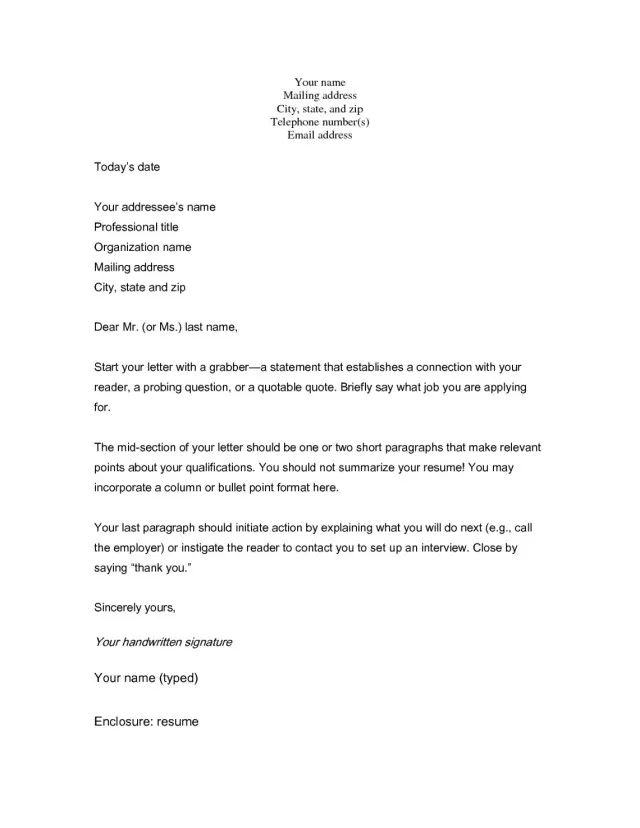
A well-structured cover letter is essential for conveying your message clearly and concisely. The way you organize your letter can significantly impact its readability and effectiveness. This section provides guidance on structuring your cover letter to make it engaging, professional, and easy for the reader to follow. Good structure highlights the key information and makes your application more memorable. A cover letter with a clear structure helps ensure that your qualifications and enthusiasm are effectively communicated.
Opening Paragraph: Making a Strong First Impression

The opening paragraph is your chance to make a strong first impression. It should be concise, engaging, and clearly state the purpose of your letter. Start by addressing the recipient, using an appropriate greeting as discussed above. Immediately follow this with a brief statement of your interest in the position, mentioning where you found the job posting. Quickly highlight a key skill or accomplishment that aligns with the job requirements to capture the reader’s attention. End your first paragraph by indicating your enthusiasm for the role and the company. The opening paragraph is your hook—use it wisely.
Body Paragraphs: Showcasing Your Skills
The body paragraphs are where you provide detailed examples of your skills, experience, and achievements. Focus on how your qualifications align with the job description, and provide concrete evidence of your abilities. Use the STAR method (Situation, Task, Action, Result) to structure your examples, making them specific and impactful. Quantify your achievements whenever possible to demonstrate the value you bring to the table. Each body paragraph should address a specific requirement and showcase how you can contribute to the company’s success. It is best to keep each body paragraph focused on a single point.
Closing Paragraph: Reiterate Your Interest
The closing paragraph should be brief and professional. Reiterate your interest in the position and express your enthusiasm for the opportunity. Thank the reader for considering your application, and clearly state your availability for an interview. It is appropriate to include a call to action, such as encouraging the hiring manager to contact you to discuss your qualifications further. Always proofread your closing carefully to ensure it aligns with the tone and content of the rest of your letter, leaving a positive final impression.
Proofreading and Formatting Your Cover Letter

Once you’ve written your cover letter, proofreading and formatting are critical steps to ensure it reflects professionalism. The final presentation of your letter can greatly affect the reader’s perception. This section provides insights into best practices and common pitfalls to avoid. A well-presented cover letter is a direct reflection of your attention to detail and professionalism, leaving a lasting impression on the hiring manager. It’s about showing that you care enough to deliver a polished, error-free document.
Ensuring a Professional Appearance
A professional appearance enhances the credibility of your cover letter. Use a clean and readable font like Times New Roman, Arial, or Calibri, and set the font size between 10 and 12 points. Use standard one-inch margins and ensure consistent spacing throughout your document. Proofread for grammar, spelling, and punctuation errors. Make sure your cover letter complements your resume. Save the cover letter as a PDF to ensure that the formatting remains consistent when opened by others. A clean and well-formatted cover letter demonstrates your professionalism and attention to detail, key qualities that employers look for.
Tips for Formatting
Proper formatting is essential for readability. Use clear headings and subheadings to break up the text, making it easier to scan and digest. Use bullet points to highlight key accomplishments or skills. Keep paragraphs concise, ideally no more than five to seven sentences long, to maintain reader engagement. Ensure that your contact information, including your name, phone number, and email address, is clearly visible at the top of your cover letter. Proofread everything. A well-formatted cover letter showcases your organizational skills and attention to detail, both highly valued by employers.
Common Mistakes to Avoid

When writing a cover letter, it is easy to make mistakes that can undermine your application. Being aware of the common pitfalls and learning how to avoid them can significantly increase your chances of success. This section highlights frequent errors, helping you to refine your cover letter and make a strong, positive impression on the hiring manager. Avoid these common mistakes to increase the impact of your cover letter and make it more compelling. Avoiding these mistakes can drastically improve your application.
Overusing Generic Phrases
Generic phrases and clichés can make your cover letter sound impersonal and unoriginal. Avoid using overused expressions like ‘I am writing to express my interest…’ or ‘I am a highly motivated individual…’ Instead, try to inject your personality into your writing. Use specific examples and tailor your language to fit the company and the role you are applying for. Show, don’t tell, by providing evidence of your skills and accomplishments. A unique and well-written cover letter reflects thoughtfulness and a strong desire to work for the specific company.
Ignoring Company Research
Failing to research the company is a common mistake that can undermine your application. Before writing your cover letter, invest time in understanding the company’s mission, values, and recent achievements. Tailor your cover letter to reflect this understanding. In your letter, mention the company’s recent projects or initiatives and explain how your skills and experience align with their goals. This targeted approach demonstrates that you have a genuine interest in the company and are not just submitting a generic application. Showing that you care about the company sets you apart from the competition.
Seeking Feedback on Your Cover Letter

Getting feedback on your cover letter is an important step in improving its effectiveness. Ask trusted friends, colleagues, or career advisors to review your cover letter. They can offer a fresh perspective on your writing style, the clarity of your message, and the overall impression your letter makes. Be open to constructive criticism, and use it to refine your letter. Proofread multiple times, and consider using grammar and spell-checking tools to catch any errors. By seeking and incorporating feedback, you can create a cover letter that is well-written, error-free, and designed to capture the reader’s attention and make a lasting impression. Seeking feedback helps ensure your cover letter is polished and effective.
In conclusion, starting a cover letter when you don’t know the name of the hiring manager requires thoughtful consideration. By using general greetings, focusing on the company and role, and presenting a well-structured, proofread document, you can create a compelling cover letter that showcases your skills and enthusiasm. Avoid common mistakes such as generic phrases and lack of company research. Remember to seek feedback and tailor your cover letter to each opportunity. With these strategies, you can confidently create cover letters that will get you noticed and help you land your dream job.