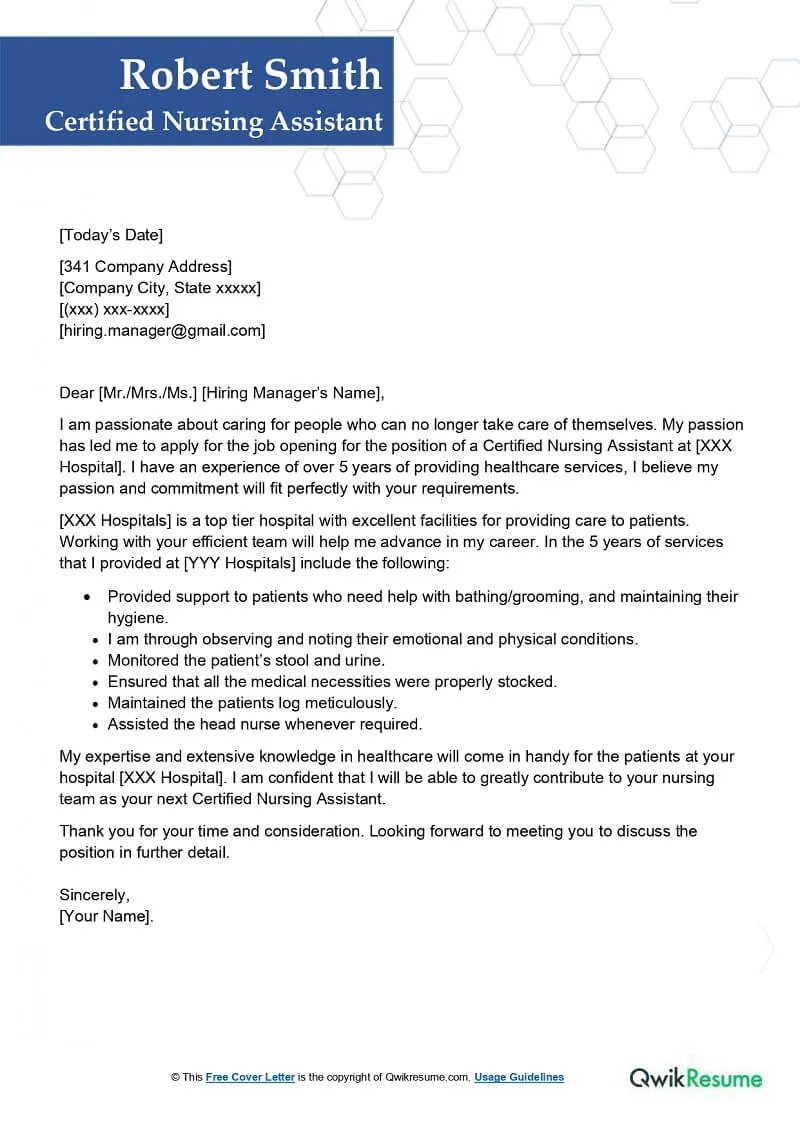
Why a Nursing Assistant Cover Letter Matters
In the competitive field of healthcare, a well-crafted cover letter for a nursing assistant position can be your key to unlocking new career opportunities. While a resume provides a snapshot of your qualifications, a cover letter offers the chance to tell your story, to demonstrate your passion for patient care, and to highlight the unique value you bring to a potential employer. It’s your opportunity to make a strong first impression, showcasing not just your skills and experience but also your personality and enthusiasm. A stellar cover letter can elevate your application, setting you apart from other candidates and significantly increasing your chances of securing an interview. Moreover, it’s a demonstration of your written communication skills, a crucial aspect of a Nursing Assistant’s daily responsibilities.
Highlighting Your Nursing Assistant Skills
Your cover letter is the ideal platform to showcase the skills that make you a successful nursing assistant. It’s about more than just listing your qualifications; it’s about demonstrating how you’ve applied these skills in real-world scenarios and the positive impact you’ve made on patient care. This is where you can use specific examples from your past experiences to illustrate your abilities and achievements. By focusing on your relevant skills and providing concrete examples, you can create a compelling narrative that captures the hiring manager’s attention and highlights your suitability for the position. Tailoring your skill set to match the requirements of the specific job description is also essential, ensuring that your application directly addresses the needs of the employer.
Key Skills to Showcase in Your Cover Letter

A successful nursing assistant needs a blend of technical skills and soft skills to provide excellent patient care. Highlighting the right skills in your cover letter is crucial for demonstrating your competency and suitability for the role. Consider the specific requirements of the job you’re applying for and tailor your examples accordingly, ensuring you emphasize the skills most relevant to the position. Use the job description as a guide to identify the skills the employer values most, allowing you to create a targeted and effective cover letter.
Communication Skills
Effective communication is at the heart of every interaction a nursing assistant has with patients, their families, and other healthcare professionals. In your cover letter, provide examples of how you’ve successfully communicated with patients and their families, ensuring they feel comfortable, informed, and cared for. Highlight any experience you have in explaining medical information clearly and concisely, as well as any instances where you successfully navigated difficult conversations. Illustrate how you’ve used active listening skills to understand patient needs and concerns, and how you’ve collaborated effectively with other members of the healthcare team to provide comprehensive care.
Empathy and Compassion
Nursing assistants often work with patients who are vulnerable and in need of emotional support. Demonstrate your ability to empathize with patients, showing that you understand their feelings and concerns. Share instances where you provided comfort, reassurance, and emotional support to patients and their families during difficult times. Highlight experiences where you went above and beyond to make patients feel safe, respected, and cared for. The ability to show compassion and empathy is a crucial aspect of patient care and should be emphasized in your cover letter.
Physical Stamina and Dexterity

Nursing assistants often perform physically demanding tasks, such as lifting, moving, and assisting patients with mobility. In your cover letter, showcase your physical capabilities and your ability to handle the physical demands of the role. Describe experiences where you assisted patients with mobility, transferred patients safely, or managed physical tasks without incident. If you’ve received any training related to safe patient handling, be sure to mention it. These skills are essential for ensuring patient safety and providing quality care.
Teamwork and Collaboration
Healthcare is a team effort, and nursing assistants are vital members of that team. Your cover letter should emphasize your ability to work effectively with other healthcare professionals, including nurses, doctors, and therapists. Give examples of how you’ve collaborated with colleagues to provide seamless patient care, sharing information and assisting as needed. Describe instances where you’ve participated in team meetings, contributed to care plans, or communicated effectively with other team members. Highlighting your teamwork skills demonstrates your commitment to providing comprehensive, coordinated care.
Formatting Your Nursing Assistant Cover Letter
The format of your cover letter is just as important as its content. A well-formatted letter is easy to read and demonstrates professionalism. Pay attention to the layout, font, and overall appearance of your letter to create a positive first impression. Use a clear and professional font, such as Times New Roman, Arial, or Calibri, and maintain consistent formatting throughout the document. Keep the letter concise, aiming for a maximum of one page, and use clear, concise language.
Header and Contact Information
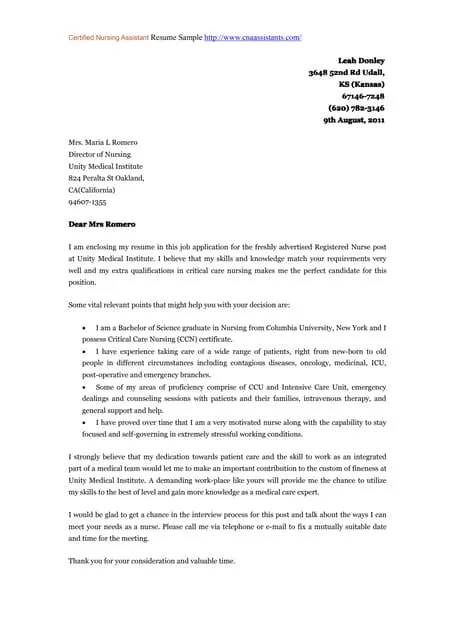
Begin your cover letter with a header that includes your name, address, phone number, and email address. This information should be clearly displayed at the top of the page. Also, include the date and the hiring manager’s name and address, if available. If you’re applying for a specific position, be sure to address the letter to the hiring manager by name, as this shows that you’ve taken the time to research the company and the role.
Greeting and Salutation
Start your cover letter with a professional greeting, such as “Dear Mr./Ms. [Last Name].” If you’re unsure of the hiring manager’s name, use a general greeting like “Dear Hiring Manager.” In the closing, use a professional salutation such as “Sincerely,” “Best regards,” or “Yours sincerely,” followed by your typed name. Maintain a professional tone throughout the entire letter.
Body Paragraph 1 Showcasing your enthusiasm
The first paragraph of your cover letter should grab the reader’s attention and clearly state the purpose of your letter. Express your enthusiasm for the position and mention where you saw the job posting. Briefly highlight your key skills and experience, and explain why you’re a good fit for the role. Demonstrate your understanding of the organization’s mission or values and express your interest in contributing to their goals. This opening paragraph sets the stage for the rest of your letter.
Body Paragraph 2 Demonstrating relevant experience

In the second paragraph, delve deeper into your relevant experience. Provide specific examples of how you’ve applied your skills and knowledge in previous roles. Quantify your achievements whenever possible. Use the STAR method (Situation, Task, Action, Result) to structure your examples, providing a clear narrative of your experiences. Tailor the examples to match the requirements of the job description, emphasizing the skills and experiences that are most relevant to the position you’re applying for. This paragraph is where you can demonstrate your value to the employer.
Body Paragraph 3 Highlighting skills and accomplishments
This is where you can elaborate on your skills and accomplishments. Highlight your key skills, such as communication, empathy, and teamwork, and provide specific examples of how you’ve used these skills in past roles. Quantify your accomplishments whenever possible, such as the number of patients you assisted or the improvements you made to patient care. Emphasize your ability to provide excellent patient care, your compassion, and your ability to work effectively in a team environment. Show how your skills align with the job requirements and how you can contribute to the success of the organization.
Closing and Call to Action
Conclude your cover letter by reiterating your interest in the position and expressing your enthusiasm for the opportunity. Include a call to action, such as requesting an interview or expressing your willingness to provide additional information. Thank the hiring manager for their time and consideration. Reiterate your contact information, making it easy for the hiring manager to reach out to you. Keep your closing concise, and leave the reader with a positive impression.
Review and Proofread Your Cover Letter

Before submitting your cover letter, review it carefully for any errors in grammar, spelling, or punctuation. Proofread your letter multiple times, and consider asking a friend or family member to review it as well. Ensure that your letter is well-organized, easy to read, and free of any mistakes. Double-check all contact information to make sure it’s accurate. A polished and error-free cover letter demonstrates your attention to detail and professionalism, leaving a positive impression on the hiring manager. This final step is crucial to making sure your cover letter is the best it can be.