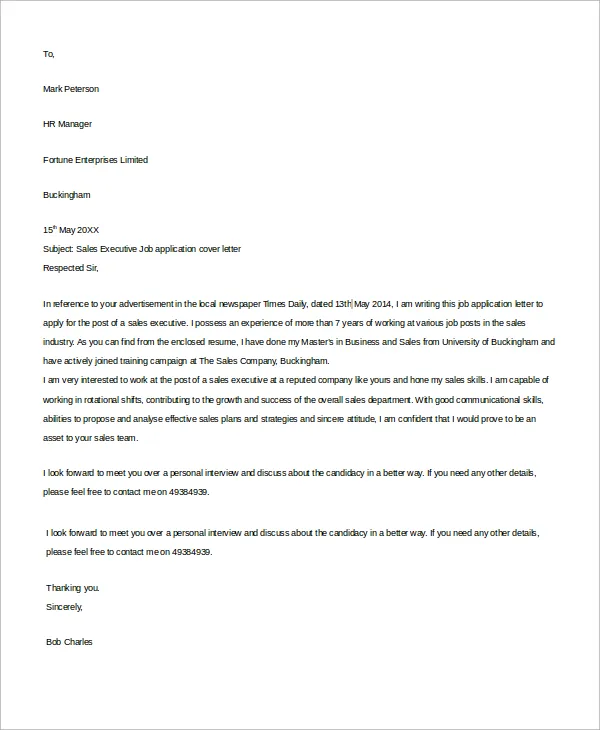
Why a Cover Letter Matters
In the competitive job market, a well-crafted cover letter is your first impression. It’s a chance to introduce yourself beyond the confines of your resume and highlight your personality, passion, and suitability for the role. Many hiring managers consider a cover letter a crucial part of the application process, as it allows them to assess your communication skills, writing abilities, and genuine interest in the position. A compelling cover letter can significantly increase your chances of getting an interview. Without a cover letter, you miss the opportunity to tell a story and demonstrate how your skills and experiences align with the company’s needs. It offers a space to elaborate on specific accomplishments and explain why you’re the perfect fit, setting you apart from other applicants who may only rely on their resume. A cover letter is a valuable tool that humanizes your application and makes you memorable.
Cover Letter Structure Essential Elements
A well-structured cover letter follows a clear and logical format to ensure readability and impact. The essential elements include your contact information, the date, the hiring manager’s details, a compelling opening paragraph, body paragraphs that showcase your skills and experiences, and a strong closing paragraph. Each section plays a vital role in conveying your qualifications and enthusiasm. Using a professional and easy-to-read font is essential, such as Arial or Times New Roman, with a font size between 10 and 12 points. Maintain consistent formatting throughout the document and use clear headings and bullet points where appropriate to break up large blocks of text and improve readability. Ensure your letter is concise, typically within one page, and proofread meticulously for any errors in grammar or spelling. Proper structure allows you to present your information clearly and effectively.
Contact Information & Date

Start your cover letter with your full name, address, phone number, and email address at the top left. This ensures the hiring manager knows how to contact you easily. Follow this with the date, which indicates when you submitted your application. The date is usually placed on the same line as your contact details or slightly below, depending on the style you choose. Formatting should be consistent and professional; avoid using overly elaborate or informal fonts. The contact information is a necessary formality and helps streamline the application process, making it easy for the employer to reach out. The date is equally important for tracking purposes and allows the hiring manager to understand when your application was submitted. Make sure all your details are up-to-date and accurate to avoid any communication issues.
The Hiring Manager’s Name and Title
Addressing your cover letter to a specific person demonstrates that you’ve done your research and are genuinely interested in the position. Whenever possible, find the name of the hiring manager or the person responsible for reviewing applications. You can usually find this information on the company’s website, LinkedIn, or the job posting itself. If you can’t find a specific name, it’s acceptable to use a professional greeting like ‘Dear Hiring Manager’ or ‘Dear [Department Name] Team.’ Avoid generic greetings like ‘To Whom It May Concern,’ as they can come across as impersonal. Ensure you spell the name correctly and include the correct title (e.g., Mr., Ms., Dr.) to show respect. Personalizing your letter in this way immediately grabs the reader’s attention and shows that you’ve taken the time to learn about the organization and role.
Opening Paragraph Capture Attention
The opening paragraph is your first chance to grab the reader’s attention. Start with a strong statement that immediately captures their interest. Briefly mention the position you’re applying for and how you discovered the opportunity. Express your enthusiasm and explain why you’re excited about the role. Consider using a compelling hook, such as a brief anecdote or a specific accomplishment that aligns with the job requirements. Avoid generic phrases like ‘I am writing to express my interest…’. Instead, be direct, stating your intentions clearly and concisely. The aim is to create a positive first impression and make the hiring manager want to read more. A well-crafted opening paragraph sets the tone for the entire letter and encourages the reader to continue exploring your qualifications.
Body Paragraphs Showcase Skills

The body paragraphs are where you showcase your skills, experience, and qualifications. Tailor these paragraphs to the specific requirements outlined in the job description. Highlight relevant experiences, accomplishments, and skills, providing concrete examples to support your claims. Use the STAR method (Situation, Task, Action, Result) to structure your responses, which helps illustrate your contributions and the impact you made in previous roles. Explain how your skills align with the company’s needs and the specific requirements of the position. Focus on what you can bring to the table and how you can help the company achieve its goals. Use action verbs and concise language to make your points clearly and effectively. Keep the focus on the employer and what you can do for them, rather than simply listing your responsibilities. Show, don’t just tell—demonstrate your capabilities through concrete examples.
Highlight Relevant Experience
When highlighting your relevant experience, focus on the achievements and responsibilities that directly align with the job description. Select experiences that showcase your key skills, knowledge, and accomplishments that are most relevant to the role. Don’t just list your previous roles; instead, provide specific examples of how you excelled in those positions. Use quantifiable results to demonstrate your impact (e.g., ‘Increased sales by 15%’). Focus on the transferable skills that are valuable to the new role, such as leadership, problem-solving, communication, and teamwork. Briefly describe your responsibilities but emphasize the impact you made and the results you achieved. Tailoring this section to the specific job requirements ensures the hiring manager can quickly see the value you bring. By highlighting the most pertinent experiences, you immediately position yourself as a strong candidate.
Quantify Your Achievements
Quantifying your achievements is one of the most effective ways to demonstrate your value to a potential employer. Whenever possible, support your claims with numbers, statistics, and data. Instead of saying, ‘Improved customer satisfaction,’ state, ‘Increased customer satisfaction scores by 20% through the implementation of a new feedback system.’ Quantifiable results provide concrete evidence of your skills and the impact you can make. Use metrics that are relevant to the job description and the company’s goals. Examples include sales figures, project completion rates, cost savings, or customer satisfaction scores. Quantifying your achievements also helps you stand out from other candidates, as it allows the hiring manager to see the tangible benefits of hiring you. When you use numbers, you make your achievements more compelling and memorable.
Tailor Your Cover Letter

One of the most crucial aspects of a successful cover letter is tailoring it to each job you apply for. Avoid using a generic template; instead, personalize your letter to match the specific requirements and culture of each company. Thoroughly review the job description and identify the key skills and qualifications they’re looking for. Then, highlight how your experience and skills directly align with those requirements. Customize your letter by mentioning the company’s name, the hiring manager’s name (if known), and the specific role you are applying for. Research the company’s mission, values, and recent achievements to show your genuine interest. Tailoring your cover letter demonstrates that you’ve taken the time to understand the role and the company, making you a more attractive candidate. By personalizing your letter, you increase your chances of making a strong impression.
Closing Paragraph Express Enthusiasm
The closing paragraph is your final opportunity to leave a lasting impression. Reiterate your interest in the position and the company. Thank the hiring manager for their time and consideration. Express your enthusiasm for the opportunity and briefly mention your availability for an interview. Make it clear that you are eager to discuss how you can contribute to the company’s success. End with a professional closing, such as ‘Sincerely’ or ‘Best regards,’ followed by your full name. Avoid any clichés or generic phrases. Your closing should be concise, enthusiastic, and leave the reader with a positive final impression. The closing paragraph reinforces your interest and leaves a lasting impression.
Proofread and Edit Thoroughly
Before submitting your cover letter, proofread and edit it meticulously. Errors in grammar, spelling, or punctuation can create a negative impression and undermine your credibility. Take the time to review your letter multiple times, preferably reading it aloud to catch any awkward phrasing or mistakes. Use a grammar checker and spell-checker tool, but don’t rely on them entirely; they can sometimes miss subtle errors. Ask a friend, colleague, or career counselor to review your cover letter and provide feedback. Fresh eyes can often spot errors you might have missed. Ensure that your formatting is consistent and professional throughout the entire document. Proofreading is an essential step in the cover letter writing process. It will help you present yourself as a detail-oriented and professional candidate.