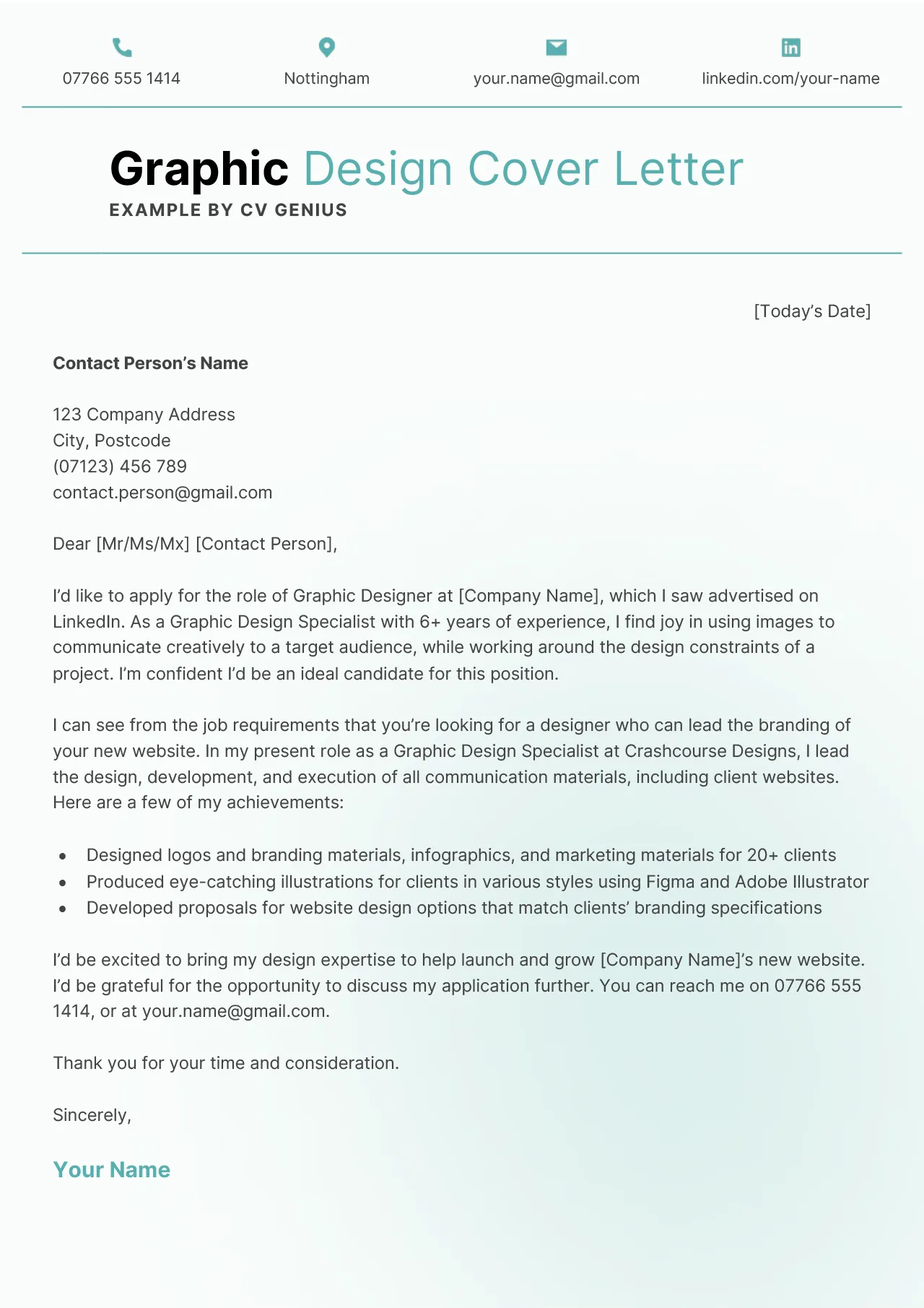
Why You Need a Stellar Graphic Designer Cover Letter
In the competitive world of graphic design, a strong cover letter is not just a formality; it’s your first impression and a crucial tool for landing your dream job. It’s your opportunity to introduce yourself, showcase your personality, and highlight your unique skills and experiences. Unlike your resume, which provides a factual overview of your qualifications, a cover letter allows you to tell a story, connect with the hiring manager, and demonstrate why you are the perfect fit for the specific role and company. A well-crafted cover letter can significantly increase your chances of being noticed and selected for an interview, setting you apart from other applicants.
Understanding the Purpose of a Graphic Designer Cover Letter
The primary purpose of a graphic designer cover letter is to convince the hiring manager that you possess the necessary skills, experience, and passion for the position. It allows you to expand on your resume, providing context and illustrating how your past achievements align with the requirements of the job. The cover letter enables you to demonstrate your understanding of the company’s brand, values, and needs, showing that you’ve done your research and are genuinely interested in the opportunity. Furthermore, it provides a platform to showcase your communication skills, creativity, and attention to detail – all essential qualities for a graphic designer. A great cover letter transforms you from a list of qualifications into a compelling candidate.
Key Components of a Graphic Designer Cover Letter

Your Contact Information & Date
Begin your cover letter with your full name, address, phone number, and professional email address. This information should be clearly displayed at the top of the document. Include the date of the letter, which is the date you are submitting your application. Ensure that all contact details are accurate and up-to-date, so the hiring manager can easily reach you. Maintaining a professional format is crucial; consider using a clean and legible font for all information.
The Hiring Manager’s Information
Research the name and title of the hiring manager or the person responsible for reviewing applications. Addressing the letter directly to the hiring manager, rather than using a generic greeting like “To Whom It May Concern,” shows that you have taken the time to personalize your application and demonstrates your attention to detail. If you are unable to find a specific name, you can use a title such as “Hiring Manager” or “Recruiting Team.” This personalized approach makes a positive impact.
Crafting a Compelling Opening

Your opening paragraph is your chance to grab the hiring manager’s attention. Clearly state the position you are applying for and how you learned about the opportunity. Briefly mention something that sparked your interest in the company or the specific role. You might refer to a project you admire, a value that resonates with you, or the company’s reputation in the industry. Avoid generic openings; instead, aim to be creative and show enthusiasm for the position and company. Your opening paragraph should set the tone for the rest of the letter.
Highlighting Your Skills & Experience
In this section, delve into your relevant skills and experience. Select the skills and experience that align most closely with the job description. Use specific examples to illustrate your abilities and achievements. Quantify your accomplishments whenever possible. For example, instead of saying “Improved website design,” state “Increased website conversion rates by 15% through improved design.” Tailor this section to the specific requirements of each job you apply for, and show the hiring manager that you understand their needs and can deliver results.
Showcasing Your Graphic Design Portfolio
Your portfolio is your most significant asset as a graphic designer, so make sure to reference it prominently. Mention the link to your online portfolio or attach a PDF if requested. In your cover letter, highlight a few key projects that are most relevant to the job you are applying for. Describe the challenges you faced, the solutions you implemented, and the results you achieved. If you’re applying for a print design position, highlight your experience with layouts, typography, and color theory; if it’s for web design, focus on UI/UX principles and responsive design. Ensure that the projects you showcase align with the company’s style and values, so your portfolio demonstrates your relevance to the role.
Expressing Your Enthusiasm & Interest

Show your genuine interest in the company and the specific role. Mention something specific that appeals to you about the company, such as its culture, values, or the work it produces. Explain why you are excited about the opportunity and how it aligns with your career goals. Demonstrating enthusiasm can set you apart from other candidates who may have similar qualifications. Doing your research and tailoring your letter to each company will make your enthusiasm more credible and memorable.
Writing a Strong Closing
Conclude your cover letter by restating your interest in the position and expressing your gratitude for the hiring manager’s time and consideration. Include a call to action, such as requesting an interview. Make it clear that you are eager to learn more about the opportunity and discuss how your skills and experience can benefit the company. End with a professional closing, such as “Sincerely” or “Best regards,” followed by your full name. Ensure the closing aligns with the professional tone of your letter.
Formatting Your Graphic Designer Cover Letter
Choosing the Right Font & Style

Select a professional and easily readable font, such as Arial, Calibri, or Times New Roman. The font size should be between 10 and 12 points. Use a consistent font and style throughout the entire cover letter. Make sure the text is left-aligned and use single-spacing within paragraphs and double-spacing between paragraphs. Maintain a clean and uncluttered layout, leaving sufficient white space around the text and margins. A well-formatted cover letter is easier to read and conveys a sense of professionalism.
Maintaining a Professional Tone
Your cover letter should be formal, yet personable. Avoid slang, jargon, and overly casual language. Use active voice and concise sentences. Proofread your cover letter carefully for grammatical errors and typos. Be respectful and polite in your tone. Highlight your accomplishments and skills in a confident manner without being arrogant. Ensure that the tone aligns with the company culture. This indicates you are capable of communicating in a professional environment and are ready to be a part of the team.
Proofreading & Editing Your Cover Letter
Proofreading is crucial. Errors can undermine your credibility and signal a lack of attention to detail. Carefully review your cover letter for any grammatical errors, spelling mistakes, and typos. Check for clarity, consistency, and flow. Read your letter aloud to catch any awkward phrasing or sentences. Ask a friend, colleague, or mentor to review your cover letter as a fresh set of eyes often catches errors you may have missed. Correcting mistakes is essential for a professional cover letter.
Graphic Designer Cover Letter Templates & Examples

Where to Find Cover Letter Templates
Many websites offer graphic designer cover letter templates to help you get started. Explore online resources such as resume and cover letter builders, career websites, and design blogs for templates that fit your needs. When using a template, customize it to reflect your unique skills, experience, and the specific requirements of the job. Ensure that the template aligns with your personal brand and the company’s culture. Tailoring the template makes your application more relevant and impactful.
Analyzing Effective Cover Letter Examples
Review effective graphic designer cover letter examples to gain insight into successful strategies. Pay attention to how these examples are structured, the language used, and the skills and experiences highlighted. Identify how the writers showcase their personality, enthusiasm, and knowledge of the company. Analyze the opening paragraphs, how the writers highlight their relevant experience, and the tone of their closings. Use these examples as inspiration, but tailor your cover letter to reflect your unique qualifications.
Avoiding Common Cover Letter Mistakes

Generic Cover Letters
One of the biggest mistakes is sending a generic cover letter that could be sent to any company. Always tailor your cover letter to the specific job and company. Research the company, read the job description carefully, and highlight the skills and experiences that align with the role’s requirements. Personalized cover letters demonstrate that you have taken the time to understand the company’s needs, which can significantly increase your chances of getting hired. Tailoring your cover letter to each job is very crucial.
Focusing on the Wrong Skills
Focusing on skills that aren’t relevant to the job description can distract the hiring manager. Make sure you emphasize the skills that the employer seeks. Review the job description to identify the essential skills and experiences the company is looking for. Highlight those skills in your cover letter, providing specific examples and quantifiable results. Avoiding irrelevant information will make your cover letter concise and demonstrate you are a great fit for the role.
Typos & Grammatical Errors
Typos and grammatical errors can be detrimental to your application. Always proofread your cover letter carefully before submitting it. Use spell-check and grammar-check tools, but also read your cover letter aloud to catch any awkward phrasing. Ask someone else to review your cover letter for any errors you may have missed. A polished cover letter showcases your attention to detail and professionalism, leaving a positive impression on the hiring manager.
Submitting Your Cover Letter
Follow the instructions provided in the job posting for submitting your cover letter and resume. Make sure your file names are clear and professional, such as “YourName_CoverLetter.pdf” or “YourName_Resume.pdf.” If you are submitting your application via email, create a professional email body. Include a brief introduction and reiterate your interest in the position. Attach your cover letter and resume as PDF files to maintain formatting consistency. Sending your application in a professional manner can improve your chances of landing an interview.