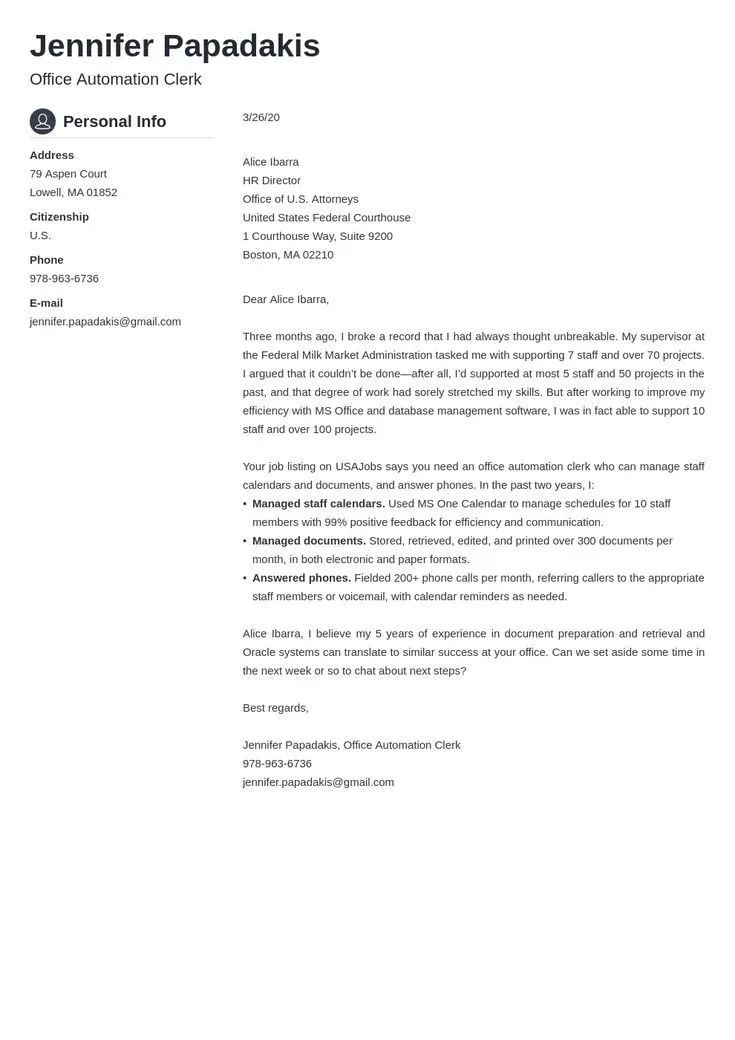
Landing a federal job is a competitive process, and your cover letter is your first chance to make a strong impression. Unlike cover letters for the private sector, federal cover letters have specific requirements and expectations. Understanding these nuances is crucial to getting noticed by hiring managers and securing an interview. This guide will walk you through how to craft a federal job cover letter that stands out, highlighting your qualifications and demonstrating your understanding of the federal hiring process. By following these tips, you’ll increase your chances of success and take a significant step toward your career goals within the federal government.
Understand Federal Job Cover Letter Basics
The foundation of a compelling federal job cover letter rests on understanding its core purpose and the specific requirements it must meet. This section delves into the fundamental aspects that distinguish federal cover letters from their private sector counterparts. These key differences are essential to acknowledge because the federal government employs a structured approach to hiring, and your cover letter must align with this system. A well-crafted cover letter will not only showcase your qualifications but will also demonstrate your comprehension of the federal hiring process. This includes adhering to specific formatting guidelines and incorporating key content elements designed to capture the attention of hiring managers.
Key Differences
Federal cover letters often require more detail than those in the private sector. You’ll need to provide specific examples of how your skills and experience align with the job’s requirements. Focus on the Key Skills and Abilities (KSAs) or the more modern approach of using a resume that is very detailed. Federal cover letters often serve as a bridge, connecting your qualifications to the job announcement’s specific requirements. You are not just introducing yourself but are also demonstrating how your background directly addresses the stated needs of the position. This requires careful analysis of the job posting and a strategic presentation of your qualifications.
Formatting Guidelines

Adhering to specific formatting guidelines is crucial. While there is no single mandated format, clarity and professionalism are paramount. Use a standard font like Times New Roman or Arial, with a font size of 11 or 12 points. Ensure your cover letter is easy to read and well-organized. Maintain a professional tone throughout the document. Include your contact information, the date, the hiring manager’s name (if known), and the job title. Keep the letter concise – aim for one to two pages maximum. Proper formatting ensures that your letter is not only visually appealing but also compliant with expectations.
Content Essentials
The content of your federal cover letter is what truly sets you apart. It must be tailored to the specific job and agency. Your cover letter should demonstrate your understanding of the job’s requirements and how your skills and experience align with them. This requires careful analysis of the job announcement and a strategic presentation of your qualifications. Avoid generic statements and instead, focus on providing concrete examples of your accomplishments and the impact you’ve made in previous roles. It is not enough to simply list your skills; you must show how you’ve used them to achieve results.
Highlighting Skills and Experience
Carefully review the job announcement and identify the key skills and experience required. Then, in your cover letter, provide detailed examples of how you have demonstrated those skills in previous roles. This is where you make the connection between your qualifications and the needs of the position. Use the STAR method (Situation, Task, Action, Result) to structure your examples. This method helps you provide specific, measurable, and impactful evidence of your abilities. The STAR method helps you create a narrative that highlights your achievements. You are essentially telling a story that proves you are a strong candidate.
Quantifying Accomplishments

Whenever possible, quantify your accomplishments. Use numbers and data to demonstrate the impact you’ve made in previous roles. For example, instead of saying “Improved customer service,” say “Increased customer satisfaction scores by 15% within six months.” Quantifying your achievements makes your cover letter more persuasive and provides tangible evidence of your abilities. This approach adds credibility to your claims. Hiring managers are often more impressed by specific, measurable achievements than by general statements about your skills. This level of detail is vital to stand out among other applicants.
Addressing the KSA
Many federal job announcements will list KSAs or specific competencies. If the announcement requires you to address KSAs directly, do so explicitly. Provide detailed examples of how you have demonstrated each KSA in your previous roles. Ensure your examples are clear, concise, and directly relevant to the KSA. Some modern announcements use a resume builder, which allows you to go into detail in your resume. Failing to address the KSAs adequately can be a major reason for disqualification. Even if the job announcement doesn’t explicitly require it, it’s still important to demonstrate that you possess the necessary skills.
Tailoring to the Specific Job
A generic cover letter is unlikely to impress a federal hiring manager. Each cover letter should be tailored to the specific job and agency you are applying for. This requires thorough research and careful attention to detail. Take the time to understand the agency’s mission, values, and priorities, as well as the specific requirements of the job. By demonstrating that you have taken the time to understand the role and the agency, you significantly increase your chances of being selected for an interview. This level of personalization shows that you are genuinely interested in the position and the organization.
Researching the Agency and Position

Before you start writing your cover letter, research the agency and the specific position. Visit the agency’s website to learn about its mission, goals, and values. Review the job announcement carefully, paying close attention to the required qualifications and preferred skills. Understanding the agency’s priorities will help you tailor your cover letter to demonstrate how your skills and experience align with its needs. This information will allow you to showcase how your qualifications meet the specific needs of the agency. The more you know, the better you can customize your cover letter to make a strong connection.
Matching Skills to Requirements
Carefully compare your skills and experience with the requirements listed in the job announcement. Identify the key skills and experiences that the agency is seeking, and then highlight how you have demonstrated those skills in your previous roles. Use the same keywords and phrases from the job announcement to ensure that your cover letter aligns with the requirements. Provide specific examples of your accomplishments. Show, don’t just tell. By precisely matching your qualifications to the job requirements, you increase the likelihood of your cover letter capturing the hiring manager’s attention.
Proofreading and Editing
A cover letter filled with errors can quickly lead to rejection. Proofreading and editing are essential steps in the writing process. Take the time to meticulously review your cover letter for any grammatical errors, spelling mistakes, or typos. Errors make you look unprofessional and careless. A polished cover letter demonstrates your attention to detail and your commitment to excellence. It’s often the small things that set candidates apart. Ensure your cover letter is free of errors before submitting it. A well-written cover letter showcases your professionalism and increases your chances of success.
Common Mistakes to Avoid

Several common mistakes can undermine your federal cover letter. Avoid generic statements, such as “I am a team player” or “I am a hard worker.” Instead, provide specific examples that demonstrate these qualities. Also, avoid using jargon or overly complex language. Keep your language clear and concise. Do not exceed the page limits – one to two pages is usually sufficient. Finally, be sure to tailor your cover letter to each specific job. A one-size-fits-all approach will not work. Avoid these common pitfalls to ensure that your cover letter is as effective as possible.
Ensuring Accuracy
Accuracy is critical. Double-check all the information in your cover letter, including the job title, agency name, and contact information. Any errors in this information can lead to your application being rejected. Always proofread your cover letter multiple times and consider having a friend or colleague review it as well. A fresh pair of eyes can often catch mistakes that you might miss. Ensuring the accuracy of your cover letter is essential to show you are detail oriented and pay attention to what is needed.
In conclusion, crafting a compelling federal job cover letter requires understanding its nuances and adhering to specific guidelines. By focusing on key differences, content essentials, tailoring your letter, and proofreading carefully, you can significantly increase your chances of getting noticed. Remember to highlight your skills and experience, quantify your accomplishments, and address the KSA. Research the agency and position, and match your skills to the requirements. Avoiding common mistakes and ensuring accuracy are also critical steps. Following these tips will help you write a standout federal cover letter and take you one step closer to landing your dream job in the federal government.