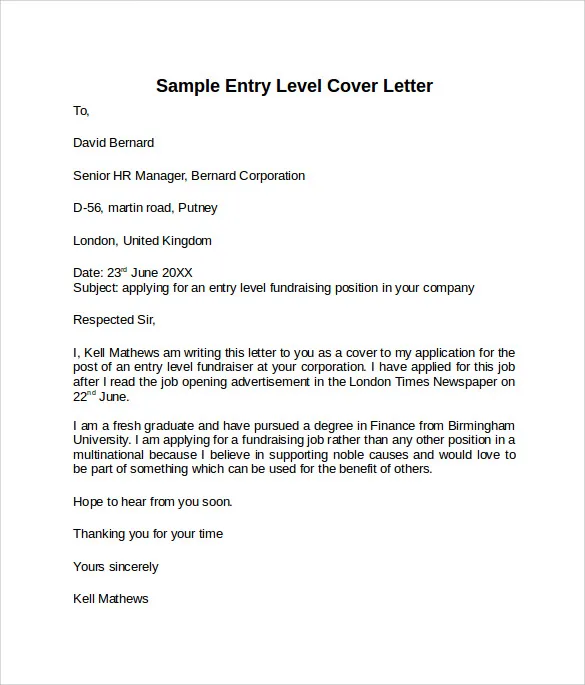
Why a Cover Letter is Crucial for Entry-Level Positions
In the competitive landscape of entry-level job hunting, a well-crafted cover letter can be your secret weapon. While a resume provides a snapshot of your qualifications, a cover letter allows you to tell a story—a narrative that connects your skills and experiences to the specific job and the company’s needs. For entry-level candidates, who may lack extensive professional experience, the cover letter becomes even more critical. It’s your opportunity to demonstrate your enthusiasm, personality, and potential. It shows the hiring manager you’ve gone the extra mile, proving your genuine interest in the role and the organization. This level of engagement is often what sets you apart from other applicants who may have similar academic backgrounds but haven’t taken the time to personalize their application. A compelling cover letter showcases not just what you’ve done, but why you’re the right fit, making it a vital tool for landing an interview.
Highlighting Your Skills in Your Cover Letter
Your cover letter is a prime opportunity to showcase your skills, even if your professional experience is limited. The key is to identify relevant skills and illustrate how you’ve used them. This section breaks down how to effectively highlight these in your letter, making them resonate with the hiring manager.
Transferable Skills

Transferable skills are those you’ve developed in one setting but can apply to another. Think communication, problem-solving, time management, and teamwork. In your cover letter, give specific examples of how you’ve utilized these skills. For example, if you led a team project in college, explain how you delegated tasks, managed deadlines, and resolved conflicts. If you volunteered, detail how you communicated effectively with diverse groups or organized events, demonstrating your organizational abilities. These examples provide tangible evidence of your capabilities, making your application more compelling.
Soft Skills
Soft skills are personality traits and interpersonal abilities that are critical for success in any role. Examples include adaptability, critical thinking, and leadership. The cover letter is an excellent place to highlight these. When mentioning soft skills, use anecdotes to show them in action. Instead of simply stating you are a good leader, describe a situation where you took initiative, motivated a team, and achieved a positive outcome. If you’re adaptable, give a brief example of how you successfully navigated a change or a challenging situation. By providing these concrete examples, you make your soft skills far more credible and memorable.
Technical Skills
Technical skills are job-specific abilities you possess. List any relevant software programs, tools, or industry-specific knowledge you have. Tailor your list to match the job requirements, but don’t feel pressured to list every skill you have. Instead, focus on skills that are most relevant and the level of skill you possess. Highlight those you are proficient in. If you have a basic understanding of a specific software, but are not an expert, that’s alright; mention that you have the ability to learn new skills and are looking forward to the opportunity to build your knowledge with the company.
Showcasing Your Experience (Even if You Have Little)

Entry-level candidates often worry about a lack of experience. However, your cover letter can effectively bridge this gap. The key is to focus on what you have done and how it relates to the job. Highlight the transferable skills and accomplishments you’ve gained through various experiences. Below are strategies to help you showcase what you do have.
Internships & Volunteer Work
Internships and volunteer experiences are valuable assets for entry-level applicants. Even if the internship wasn’t in your desired field, it still demonstrates work ethic and commitment. Focus on what you learned and the skills you developed. Describe the tasks you performed, the projects you contributed to, and any achievements you had. For volunteer work, emphasize the impact you made or the skills you used. For example, if you managed social media for a non-profit, discuss how you grew their online presence or what you learned about content creation and social media marketing. Quantify your accomplishments whenever possible; for example, mention the percentage increase in followers or engagement.
Projects & Coursework
Academic projects and coursework can be excellent talking points. Select projects that align with the job requirements. Explain the project’s goals, your role, and what you achieved. Did you develop a new software, conduct research, or write a comprehensive report? Highlight the skills you used, such as research, analysis, or teamwork. If you excelled in a particular course relevant to the job, mention the key takeaways or the grade you received. Briefly describe how these experiences have prepared you for the role. This helps the hiring manager see your potential and how you apply your knowledge to practical scenarios.
Formatting Your Entry-Level Cover Letter

The format of your cover letter is as important as the content. An organized, well-formatted letter shows you’re detail-oriented and professional. Here are the essential elements for a polished cover letter.
Contact Information & Date
Start with your contact information, including your name, phone number, email address, and LinkedIn profile URL (if applicable). Then, add the date. Align your contact information to the left, and the date to either the left or the right, depending on your preference. Ensure that all your information is current and accurate.
Opening Paragraph: Grab Their Attention
The opening paragraph is your chance to hook the reader. Start with a strong statement that grabs their attention and immediately states your interest in the position. Mention the specific job title and where you found the posting. Then, give a brief overview of why you are a great candidate. It’s important to be enthusiastic and show your understanding of the company’s values or goals.
Body Paragraphs: Sell Yourself

The body paragraphs are where you elaborate on your skills and experiences. Use 2-3 paragraphs to highlight your qualifications. Showcasing relevant skills, use specific examples from your experiences to demonstrate how you’ve used these skills effectively. Focus on how your skills and experiences align with the job description and the company’s needs. Don’t just list your accomplishments; describe the impact and provide evidence.
Closing Paragraph: Call to Action
Your closing paragraph should reiterate your interest in the position and thank the reader for their time. Include a clear call to action. State your availability for an interview and express your excitement about the opportunity. Keep it professional and concise, and make sure you have thoroughly proofread your cover letter.
Common Mistakes to Avoid in Your Entry-Level Cover Letter
Avoiding common mistakes can significantly boost the effectiveness of your cover letter. Here’s what to steer clear of:
Typos & Grammatical Errors

Typos and grammatical errors are a big turnoff. These errors suggest a lack of attention to detail and professionalism. Proofread your letter multiple times, and use a grammar checker. Ask a friend or family member to review it as well. Ensure your writing is clear, concise, and error-free.
Generic Cover Letters
Generic cover letters are often ignored because they don’t show any personalization or interest. Always tailor your cover letter to the specific job and company. Research the company, understand its values, and address the hiring manager directly. Mention specific details from the job description and explain how your skills and experiences align with those requirements. Demonstrate that you have taken the time to understand the role and the company.
Focusing Too Much on What You Want
While it’s important to show your interest, focus on how you can contribute to the company rather than only on what you hope to gain from the job. Shift your focus towards how you can solve their problems or meet their needs. Show that you understand the role and express how you plan to make a positive impact.
Entry-Level Cover Letter Samples & Templates

To get a better grasp of how to write an effective cover letter, review samples and templates tailored for entry-level positions. These resources provide a structure for your writing and help you to organize your thoughts.
- Look for examples specific to your industry or the type of role you’re applying for.
- Adapt the templates to reflect your unique skills and experiences.
- Use these samples as inspiration but remember to personalize your cover letter.
By following these guidelines and using the provided samples and templates, you can craft a compelling cover letter that will capture the hiring manager’s attention and boost your chances of getting hired. Good luck with your job search!