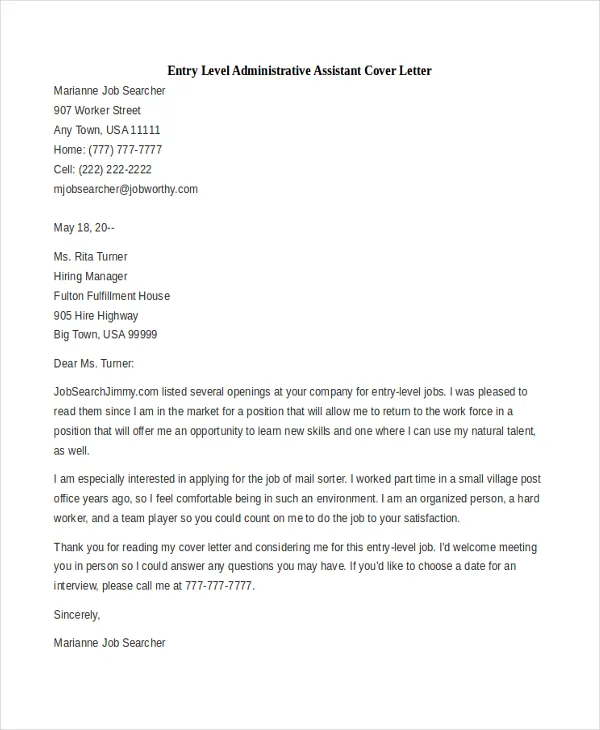
Why a Cover Letter is Crucial for Entry-Level Admin Assistants
When you are seeking an entry-level administrative assistant role, a well-crafted cover letter is essential. It’s often the first impression you make on a potential employer, showcasing not only your interest in the position but also your ability to communicate effectively. For those with limited professional experience, the cover letter becomes even more vital. It gives you a platform to emphasize transferable skills gained from education, volunteer work, or part-time jobs, illustrating how these experiences align with the requirements of the administrative assistant role. Furthermore, a cover letter allows you to demonstrate your enthusiasm, personality, and understanding of the company’s values. Unlike a resume, which primarily lists qualifications, a cover letter provides space for storytelling—a crucial element that can set you apart from other candidates, especially when vying for an entry-level position. Remember, a compelling cover letter can transform a job application into a personal invitation to join a team.
Key Elements of a Successful Entry-Level Cover Letter
To craft a winning cover letter, start by using a professional salutation, such as addressing the hiring manager by name if available. The introductory paragraph should state your interest in the specific administrative assistant position and briefly explain why you’re a great fit. In the body, highlight your relevant skills, even if gained from seemingly unrelated experiences. Tailor your cover letter to each job description, demonstrating how your skills align with the company’s specific needs. Use action verbs to describe your accomplishments, and provide specific examples whenever possible. Quantify your achievements if possible; for example, mention how you improved efficiency in a previous role. The conclusion should include a strong call to action, expressing your eagerness for an interview and thanking the employer. Always proofread meticulously for grammar, spelling, and punctuation errors. A well-structured cover letter is your key to catching the hiring manager’s eye. By focusing on clear communication and matching your skills to the job’s requirements, you’ll significantly boost your chances.
Contact Information and Formatting

Proper formatting is a critical element in crafting a professional cover letter. Begin by including your contact information at the top, this should contain your full name, phone number, email address, and optionally your LinkedIn profile URL. Choose a professional and readable font, such as Times New Roman, Arial, or Calibri, with a font size between 10 and 12 points. Maintain consistent formatting throughout the document, including margins, spacing, and paragraph alignment. Avoid excessive colors, fonts, or graphics that might distract the reader. Keep your cover letter concise, ideally within one page. Use clear headings and bullet points to break up large blocks of text, making the information easy to read and digest. Make sure your cover letter is well-organized and easy to navigate. Proper formatting demonstrates your attention to detail, a critical skill for any administrative assistant. By adhering to these guidelines, you present yourself as organized and professional.
Highlighting Relevant Skills and Experience
Even if your experience is limited, you can showcase skills relevant to an administrative assistant position. Consider the core competencies needed, which include excellent communication (written and verbal), strong organizational skills, proficiency in Microsoft Office Suite (Word, Excel, PowerPoint, and Outlook), and exceptional attention to detail. If you have experience with scheduling, managing calendars, handling phone calls, or customer service, be sure to include it. Always tailor your examples to align with the job description’s specific requirements. For instance, if the job requires data entry skills, highlight any experience you have in this area, even if it came from a volunteer role or academic project. If you lack direct experience, emphasize transferable skills. For example, volunteer experience in a leadership role demonstrates abilities to manage tasks, delegate responsibilities, and meet deadlines. Use action verbs and provide specific examples to clearly illustrate your skills and capabilities. This will help the hiring manager to see your potential and how you can contribute to their organization.
Showcasing Your Education and Training
Your education and training are valuable, especially for entry-level applicants. If you have a degree, diploma, or certificate, prominently mention it. Include the name of the institution, the degree earned, and the date of graduation or expected graduation date. Highlight relevant coursework, such as business administration, office management, or computer skills. Mention any relevant online courses or certifications, as these demonstrate your commitment to continuous learning. For example, a Microsoft Office Specialist certification can be very beneficial. If you participated in extracurricular activities or held leadership positions during your studies, these can also showcase your ability to work in a team and take initiative. Tailor your education and training information to align with the job description. Always demonstrate how your skills and knowledge acquired through these channels match what the employer is looking for in an administrative assistant. This will help you showcase your preparedness and suitability for the role.
Tailoring Your Cover Letter to the Job

One of the most effective strategies for a successful job application is to personalize your cover letter for each specific job. Carefully read the job description and pinpoint the key requirements, skills, and qualifications the employer is seeking. Conduct some research on the company to understand their mission, values, and culture. In your cover letter, directly address the employer’s needs and explain how your skills and experiences align with their expectations. Use keywords from the job description to demonstrate your understanding of the role. Refer to the company’s mission or recent projects to show your genuine interest in working for them. Customizing your cover letter shows that you’ve invested time in understanding the specific role and the organization. This greatly increases your chances of making a positive impression. A personalized cover letter conveys that you’re truly interested in this job and not just sending out generic applications.
Emphasizing Soft Skills for Admin Roles
Administrative assistant roles require a diverse skill set that includes both hard and soft skills. While technical skills such as proficiency in Microsoft Office are crucial, soft skills can be even more essential. Highlight soft skills like communication, organization, time management, problem-solving, and teamwork. Provide specific examples of how you’ve demonstrated these skills in the past. For instance, if you’re organized, describe how you’ve managed multiple projects simultaneously or created efficient filing systems. If you’re a strong communicator, give examples of how you’ve handled customer inquiries, resolved conflicts, or presented information to others. If you are a team player, show how you have collaborated with others to achieve a common goal. Employers highly value candidates who work well with others, manage their time efficiently, and adapt to changing circumstances. By emphasizing your soft skills and providing evidence of their practical application, you can significantly improve your cover letter and impress the hiring manager.
Demonstrating Enthusiasm and Professionalism
Your cover letter should express your enthusiasm for the position and the company. Show genuine interest in the role and a sincere desire to contribute to the team. Research the company’s mission and values and demonstrate how your personal values align. Use a professional tone throughout the cover letter, avoiding slang, colloquialisms, or overly casual language. Maintain a positive and optimistic attitude. Focus on your accomplishments and the value you can bring to the company. Proofread carefully to ensure your cover letter is free of errors and typos, which demonstrates attention to detail and professionalism. Also, express your eagerness to learn and grow within the company. Be sure to include a call to action, such as “I am eager to learn more about this opportunity” or “I look forward to the possibility of discussing my qualifications with you in an interview.” This can signal your strong interest in the position and your proactivity in securing an interview.
Common Mistakes to Avoid in Your Cover Letter

There are several common pitfalls that can diminish the impact of your cover letter. Avoid generic greetings like “To Whom It May Concern.” Instead, always address the hiring manager by name, when possible. Don’t just restate your resume; use the cover letter to provide context, expand on your accomplishments, and demonstrate your personality. Be vigilant about avoiding typos, grammatical errors, and spelling mistakes. Don’t write overly long paragraphs or use complex sentence structures; aim for clarity and conciseness. Avoid using negative language or focusing on what you can’t do. Instead, highlight your strengths and what you can offer. Refrain from being overly familiar or informal and steer clear of clichés. Don’t include irrelevant information that is not directly related to the job. Avoid lying or exaggerating your qualifications, as this can lead to problems during the interview. Make sure to tailor your cover letter to each job and company, and don’t send the same letter for every application.
Proofreading and Editing Your Cover Letter
Proofreading and editing are absolutely crucial steps in the process of creating a professional cover letter. After you’ve written your letter, set it aside for a while, and return to it with fresh eyes. This will help you catch any errors you may have overlooked during the initial writing phase. Read your cover letter aloud to identify any awkward phrasing, grammatical errors, or typos. Use spell-check and grammar-check tools, but don’t rely on them exclusively; these tools can sometimes miss errors. Ask a friend, family member, or career counselor to review your cover letter. A fresh perspective can often identify issues you may not have noticed. Pay close attention to detail, such as the correct spelling of the hiring manager’s name, the company name, and the job title. Also, ensure your formatting is consistent throughout the document. Meticulous proofreading shows your attention to detail and commitment to presenting yourself professionally, which is especially important for an administrative assistant. A perfect cover letter greatly increases your chances of landing an interview and securing the entry-level administrative role.
Call to Action and Closing
A strong call to action and a professional closing are vital for the conclusion of your cover letter. In your closing paragraph, restate your interest in the position and express your enthusiasm for the opportunity. Include a specific call to action, such as requesting an interview. For example, say, “I am eager to discuss my qualifications in an interview and demonstrate how I can contribute to your team.” Thank the hiring manager for their time and consideration. Use a professional closing, such as “Sincerely,” “Best regards,” or “Yours sincerely,” followed by your full name. Make sure your contact information is easily accessible, so the hiring manager knows how to reach you. A well-crafted call to action and a professional closing leave a lasting positive impression. They will increase your chances of being contacted for an interview, which is essential to getting your application reviewed favorably. This is your final opportunity to create a memorable and positive impression.