Why a Strong Engineering Internship Cover Letter Matters
Your engineering internship cover letter is your first introduction to a potential employer. It’s your chance to make a strong impression and stand out from the competition. A well-crafted cover letter complements your resume, providing context and showcasing your personality, skills, and enthusiasm for the role. It’s not just a formality it’s a vital marketing tool that can significantly increase your chances of landing an interview. In a competitive field like engineering, a compelling cover letter can be the deciding factor in securing an internship offer. It allows you to explain why you are the ideal candidate and demonstrate your genuine interest in the company and the specific internship opportunity.
Highlighting Your Engineering Skills and Experience
The cover letter is where you showcase your relevant skills and experiences. Don’t just list them; demonstrate them. Provide specific examples of how you’ve utilized your skills in projects, coursework, or previous experiences. For example, instead of saying ‘Proficient in CAD software,’ describe a project where you used CAD to design a complex component or system. This allows the hiring manager to visualize your capabilities and assess your practical knowledge. Highlight skills that align with the internship requirements, emphasizing your strengths and how they make you a valuable asset to the team. Remember to be specific and provide concrete examples to back up your claims.
Detailing Your Relevant Engineering Projects

Engineering projects are the cornerstone of your practical experience. In your cover letter, briefly describe the projects you’ve worked on, focusing on your contributions and the outcomes. Mention the specific engineering principles you applied, the tools and technologies you used, and the challenges you overcame. Quantify your achievements whenever possible; for instance, mention how your design improved efficiency by a certain percentage or reduced costs. This shows that you can apply theoretical knowledge to real-world problems and achieve tangible results. Prioritize projects that are most relevant to the internship’s focus, showcasing your ability to contribute effectively from day one. Providing details of relevant projects help you to show that you have the basic skill set needed to succeed.
Showcasing Your Technical Proficiency
Technical proficiency is essential in engineering. Your cover letter is the perfect place to highlight your expertise in specific software, programming languages, and other technical skills. Mention the tools and technologies you are familiar with, such as CAD software (e.g., AutoCAD, SolidWorks), simulation software (e.g., ANSYS, MATLAB), programming languages (e.g., C++, Python), and any relevant lab equipment. Provide examples of how you have used these tools in projects or coursework. Even better, if your experience includes hands-on lab work or design, mention them explicitly, demonstrating your commitment to practical application. Be sure to align your technical skills with the internship requirements, demonstrating that you possess the necessary expertise to excel in the role.
Quantifying Your Achievements in Engineering
Quantifying your achievements makes your cover letter more impactful. Whenever possible, use numbers and metrics to illustrate your accomplishments. Instead of saying ‘Improved efficiency,’ state ‘Improved efficiency by 15%.’ Instead of ‘Reduced errors,’ state ‘Reduced errors by 10% through the implementation of…’ Quantifiable results demonstrate the impact of your work and make your achievements more credible. Use data to highlight your problem-solving abilities, project outcomes, and contributions to team successes. This provides a clearer picture of your capabilities and how you can contribute to the company’s goals. Always provide metrics for projects to help highlight success
Tailoring Your Engineering Cover Letter to the Job Description

Customization is key. Don’t send a generic cover letter; tailor it to each internship application. Carefully review the job description and identify the key skills, qualifications, and requirements. Then, align your skills and experiences with the specific needs of the role. Highlight the experiences and skills that directly relate to the internship, using the same keywords and terminology as the job description. Research the company and demonstrate your understanding of their work and values. Show that you understand the role and why you’re a good fit for their team. This shows that you’ve taken the time to understand the opportunity and are genuinely interested in the company.
Researching the Company for Your Engineering Application
Demonstrate your genuine interest in the company by researching its mission, values, projects, and recent developments. Visit their website, read industry news, and explore their social media presence. Mention specific projects, technologies, or initiatives that resonate with your interests. Show that you understand the company’s goals and how your skills align with their needs. This demonstrates your initiative and commitment, showing that you are seriously considering working for them. This research allows you to customize your cover letter and show why you want to work at this specific company.
Emphasizing Your Enthusiasm for Engineering
Let your passion for engineering shine through! Express your enthusiasm for the field and your interest in the specific internship opportunity. Describe what excites you about engineering, and why you are pursuing an internship. Show how you are passionate about solving real-world problems. Talk about what type of engineer you are and what you hope to gain from the internship. Enthusiasm is contagious and can make a lasting impression on the hiring manager. Highlight your eagerness to learn, contribute, and grow within the company. Your genuine passion can set you apart from other applicants.
Structuring Your Engineering Internship Cover Letter for Success

A well-structured cover letter is easy to read and makes a positive impression. Use a professional and clear format. Divide your cover letter into distinct sections introduction, body paragraphs, and conclusion. Ensure a clear and concise layout with appropriate spacing and formatting. Proofread the entire document for any grammatical errors or typos. This shows that you pay attention to detail and are committed to presenting yourself professionally. A well-organized cover letter is more likely to be read carefully and leave a favorable impression.
Writing a Compelling Engineering Cover Letter Opening
The opening paragraph is crucial. It’s your first opportunity to grab the reader’s attention. State the position you’re applying for and where you found the job posting. Briefly introduce yourself and highlight your strongest qualifications. Mention why you are interested in the specific company and the internship. Start with a strong statement that shows your interest in the company and the role. Keep the opening concise and engaging, setting the tone for the rest of your letter. Make sure that the opening makes them want to read more.
Crafting a Strong Body for Your Engineering Cover Letter
The body of your cover letter is where you provide details and showcase your skills and experiences. Structure your paragraphs logically, focusing on the key requirements of the internship. Use separate paragraphs to highlight your technical skills, project experiences, and any relevant achievements. Provide specific examples to support your claims, such as using action verbs to describe your accomplishments. Ensure each paragraph serves a purpose and contributes to demonstrating your qualifications. Make the connection between your skills and experience to the internship requirements.
Concluding Your Engineering Cover Letter Effectively

Your conclusion should reiterate your interest in the internship and the company. Summarize your key qualifications and restate why you are the ideal candidate. Express your enthusiasm for the opportunity and mention your availability for an interview. Thank the reader for their time and consideration. End with a professional closing, such as ‘Sincerely’ or ‘Best regards,’ followed by your name and contact information. A strong conclusion reinforces your message and leaves a positive, lasting impression.
Proofreading and Formatting Your Engineering Cover Letter
Proofreading is an essential step in the application process. Carefully review your cover letter for any grammatical errors, typos, or formatting inconsistencies. Ensure that the language is clear, concise, and professional. Use a spell checker and grammar checker, but also read through the letter manually. Have a friend or career advisor review your cover letter as well, as a fresh pair of eyes can often catch errors that you might miss. Pay close attention to details such as font style, spacing, and alignment. A polished and error-free cover letter demonstrates your professionalism and attention to detail.
Common Mistakes to Avoid in Your Engineering Cover Letter
Avoid common mistakes that can undermine your application. Steer clear of generic cover letters that don’t address the specific job requirements. Don’t simply repeat your resume; instead, provide additional context and highlight your achievements. Avoid typos and grammatical errors at all costs. Don’t use overly casual language or slang. Refrain from making any negative comments about previous employers or experiences. Ensure that your cover letter isn’t too long; aim for a concise, one-page document. Always proofread to avoid mistakes.
Using Action Verbs in Your Engineering Cover Letter

Action verbs make your cover letter more dynamic and engaging. Start your sentences with strong action verbs to describe your accomplishments and responsibilities. Examples include: Designed, developed, implemented, analyzed, managed, created, led, and improved. These verbs demonstrate your ability to take initiative and achieve results. Use a variety of action verbs to keep your writing interesting and show a wide range of skills. Action verbs help you to show you can lead or work in a group to achieve a goal.
Sample Engineering Internship Cover Letter Examples
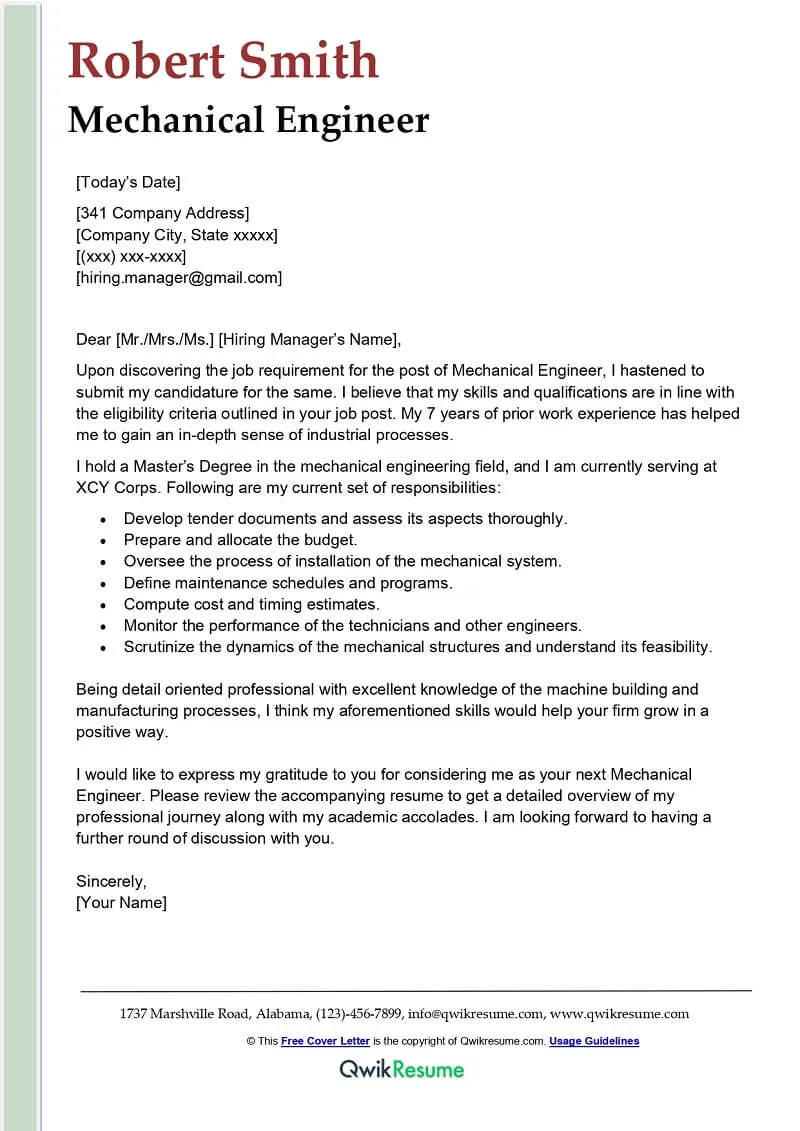
Reviewing sample cover letters can provide valuable guidance. Search online for examples of successful engineering internship cover letters. Pay attention to how the candidates highlight their skills, experiences, and enthusiasm. Note the structure, language, and tone used in the examples. Tailor the best parts of the example letters to your own unique experiences and qualifications. Use these samples as a starting point, not a template, and customize them to fit your needs. Be sure to check the dates to make sure they are the most current examples.
Where to Find Engineering Internship Opportunities
There are several ways to find engineering internship opportunities. Explore company websites, job boards, and university career services. Use online job search platforms like LinkedIn, Indeed, and Glassdoor. Attend career fairs and networking events. Network with engineers and professionals in the field. Reach out to your university’s career center for help with job searching and application. Always be proactive, and don’t hesitate to contact companies directly to inquire about internship possibilities.
Preparing for the Engineering Internship Application Process

Prepare thoroughly for the internship application process. Start by updating your resume and cover letter. Research the companies you are interested in. Practice your interview skills, including common interview questions. Gather references and prepare a professional portfolio of your work. Prepare for online application systems. Be prepared to answer questions about your skills, experiences, and interests. Remember that each application is an investment. Take the time to give each application the attention it deserves.