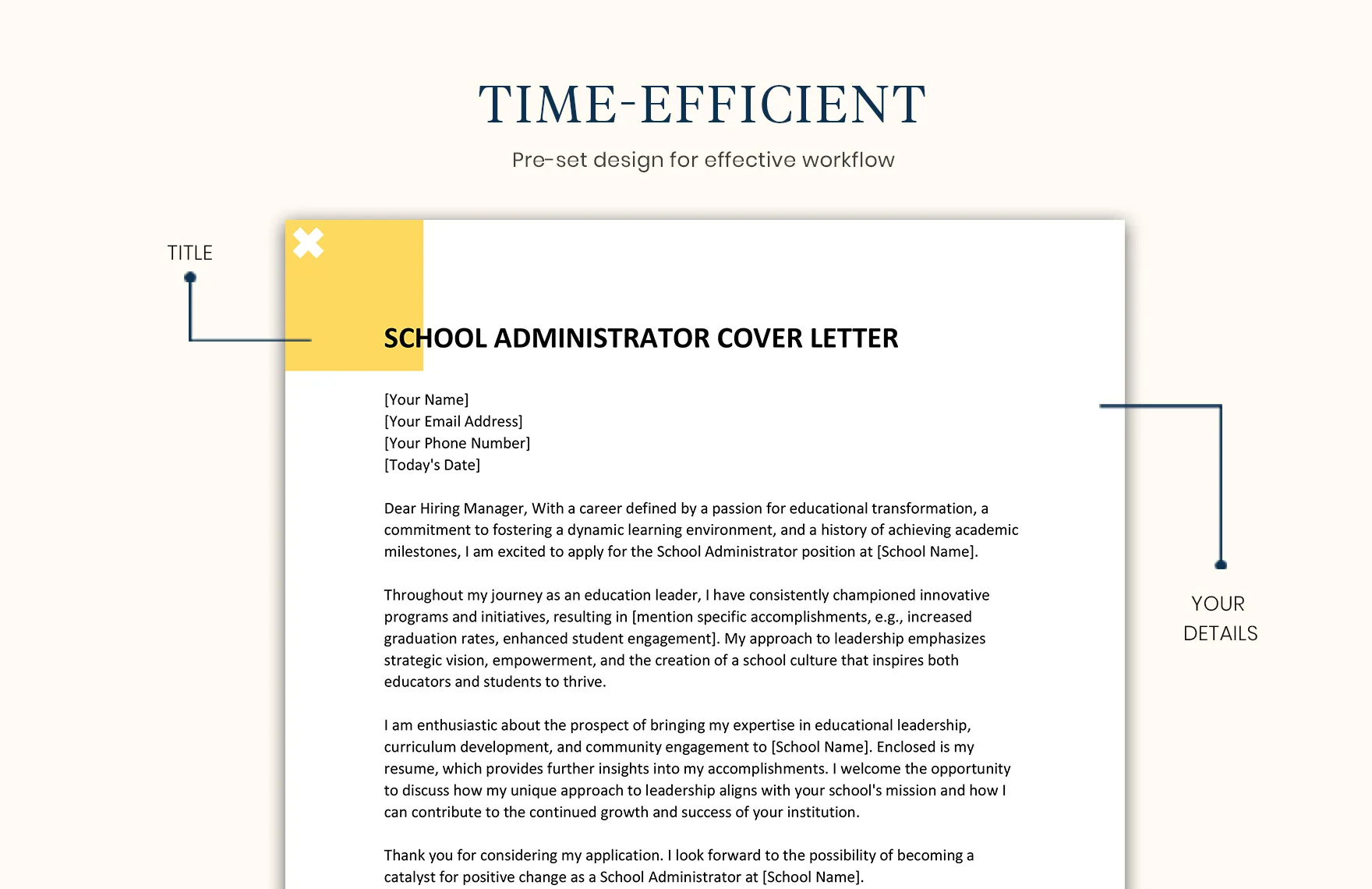
Education Administration Cover Letter Guide
The cover letter is an essential component of any job application, especially in the competitive field of education administration. It serves as your first introduction to a potential employer, offering you a crucial opportunity to showcase your qualifications, skills, and passion for the role. A well-crafted cover letter not only highlights your relevant experience but also demonstrates your understanding of the school or district’s needs and your ability to contribute to their success. This guide provides comprehensive advice on how to write an effective education administration cover letter that grabs the attention of hiring managers and increases your chances of landing an interview.
Understanding the Purpose of a Cover Letter
The primary objective of an education administration cover letter is to introduce yourself and persuade the reader that you’re the right fit for the position. Unlike a resume, which provides a factual overview of your experience, the cover letter enables you to articulate your motivations, connect your skills to the specific requirements of the job, and demonstrate your enthusiasm for the opportunity. Think of it as a marketing tool that sells your abilities and personality. A strong cover letter should tell a story, explaining why you’re interested in the role and how your background aligns with the school or district’s mission and values. It also serves as a writing sample, showcasing your communication skills and attention to detail, both critical attributes for an education administrator.
Highlighting Relevant Skills

Your cover letter should highlight the skills most relevant to the education administration position. These may include leadership, communication, problem-solving, budget management, curriculum development, and a deep understanding of educational policies and practices. Review the job description carefully to identify the key skills the employer is seeking, and then provide specific examples of how you’ve demonstrated these skills in past roles. For example, if the job description emphasizes leadership, you might describe a time when you successfully led a team to achieve a specific goal, improved student outcomes, or navigated a challenging situation. Use quantifiable results whenever possible to illustrate your impact, such as increasing test scores, reducing disciplinary incidents, or improving parent engagement.
Researching the School or District
Before you begin writing, it’s crucial to research the school or district where you’re applying. Visit the school’s or district’s website to learn about its mission, values, strategic goals, and recent achievements. Understand the specific challenges and opportunities the school or district faces. This research will help you tailor your cover letter to demonstrate that you understand their needs and can contribute to their success. Consider mentioning any specific programs or initiatives you find particularly compelling and explain how your skills and experience align with their goals. By showing that you’ve taken the time to learn about the organization, you demonstrate your genuine interest in the position and increase the likelihood that your application will stand out. If possible, try to find out the name of the hiring manager to personalize your letter.
Tailoring Your Cover Letter
Analyzing the Job Description

The job description is your roadmap to a successful cover letter. Carefully analyze the requirements listed in the description and identify the key skills, experience, and qualifications the employer is seeking. Make a list of these requirements and ensure that your cover letter directly addresses each one. Use the same keywords and phrases from the job description to demonstrate that you understand the role and have the necessary qualifications. Avoid generic language; instead, provide specific examples of how your skills and experience align with the job’s requirements. Tailoring your cover letter in this way shows the hiring manager that you’ve taken the time to understand their needs and are genuinely interested in the specific position.
Showcasing Achievements
While listing your responsibilities is important, your cover letter should primarily focus on your accomplishments. Use the STAR method (Situation, Task, Action, Result) to structure your examples and demonstrate your impact. Describe the situation you faced, the task you were assigned, the actions you took, and the positive results you achieved. Quantify your achievements whenever possible. Instead of saying “Improved student attendance,” say “Improved student attendance by 15% through the implementation of a new attendance policy.” Highlighting your accomplishments shows the hiring manager what you’re capable of and provides concrete evidence of your value. Focus on achievements that are relevant to the job requirements and demonstrate your ability to contribute to the school or district’s goals.
Formatting and Structure
Contact Information and Salutation

Begin your cover letter with your contact information, including your name, address, phone number, and email address. If you know the hiring manager’s name, address your letter to them directly (e.g., “Dear Mr. Smith”). If you’re unsure of the hiring manager’s name, use a general salutation like “Dear Hiring Committee” or “Dear [School Name] Hiring Team.” Avoid generic salutations such as “To Whom It May Concern.” Ensure that your salutation matches the tone of the job description and the school’s or district’s culture. Professionalism and attention to detail are crucial from the very beginning of your cover letter.
Body Paragraphs
The body of your cover letter should consist of several well-crafted paragraphs that explain why you’re the best candidate for the job. The first paragraph should state the position you’re applying for and briefly explain where you saw the job posting. The following paragraphs should highlight your key qualifications and accomplishments, providing specific examples to support your claims. Connect your skills and experience to the job’s requirements and demonstrate your understanding of the school or district’s needs. Show, don’t just tell; use strong action verbs and quantify your achievements whenever possible. The body paragraphs are your opportunity to tell a story and convince the hiring manager that you’re the right person for the job.
Closing and Call to Action
In your closing paragraph, reiterate your interest in the position and summarize why you’re a strong candidate. Include a clear call to action, such as requesting an interview. Thank the hiring manager for their time and consideration, and express your enthusiasm for the opportunity. Make sure to use a professional closing, such as “Sincerely” or “Best regards,” followed by your typed name. Proofread the entire cover letter carefully before submitting it. Your closing should leave a lasting positive impression and encourage the hiring manager to take the next step.
Proofreading and Editing

Common Mistakes to Avoid
Avoid common mistakes that can detract from your cover letter’s effectiveness. These include grammatical errors, typos, and spelling mistakes. Be sure to avoid generic, vague statements that don’t provide specific examples or quantify your achievements. Avoid using clichés or jargon that might sound insincere. Don’t simply repeat information from your resume; instead, use your cover letter to elaborate on your qualifications and demonstrate your personality. Make sure your cover letter is well-formatted and easy to read. Finally, avoid the use of negative language or criticizing previous employers. A positive and professional tone is essential.
Using Action Verbs
Action verbs make your cover letter more dynamic and engaging. They help you demonstrate what you’ve accomplished and showcase your skills. Use strong action verbs to start your sentences and describe your accomplishments. For example, instead of saying “Responsible for managing budgets,” use “Managed budgets, resulting in a 10% cost savings.” Other effective action verbs include led, developed, implemented, improved, increased, analyzed, collaborated, and streamlined. Using a variety of action verbs helps keep your cover letter interesting and conveys a clear picture of your qualifications and accomplishments.
Cover Letter Template

A well-structured template can help you create a compelling cover letter. Here’s a general template to use as a starting point:
[Your Name] [Your Address] [Your Phone Number] [Your Email]
[Date]
[Hiring Manager Name] (if known) [Hiring Manager Title] [School/District Name] [School/District Address]
Dear [Mr./Ms./Mx. Last Name] or Dear Hiring Committee,
[Paragraph 1 Introduction State the position you are applying for and where you saw the job posting]
[Paragraph 2-3: Body Highlight your key qualifications and accomplishments. Provide specific examples and quantify your achievements. Connect your skills and experience to the job requirements.]
[Closing paragraph Reiterate your interest, summarize your key strengths, and include a call to action, such as requesting an interview. Thank the hiring manager for their time and consideration.]
Sincerely, [Your Typed Name]
Remember to tailor the template to each job application and research the school or district to personalize your letter. Customize the template to reflect your unique skills and experiences and always proofread carefully before submitting.