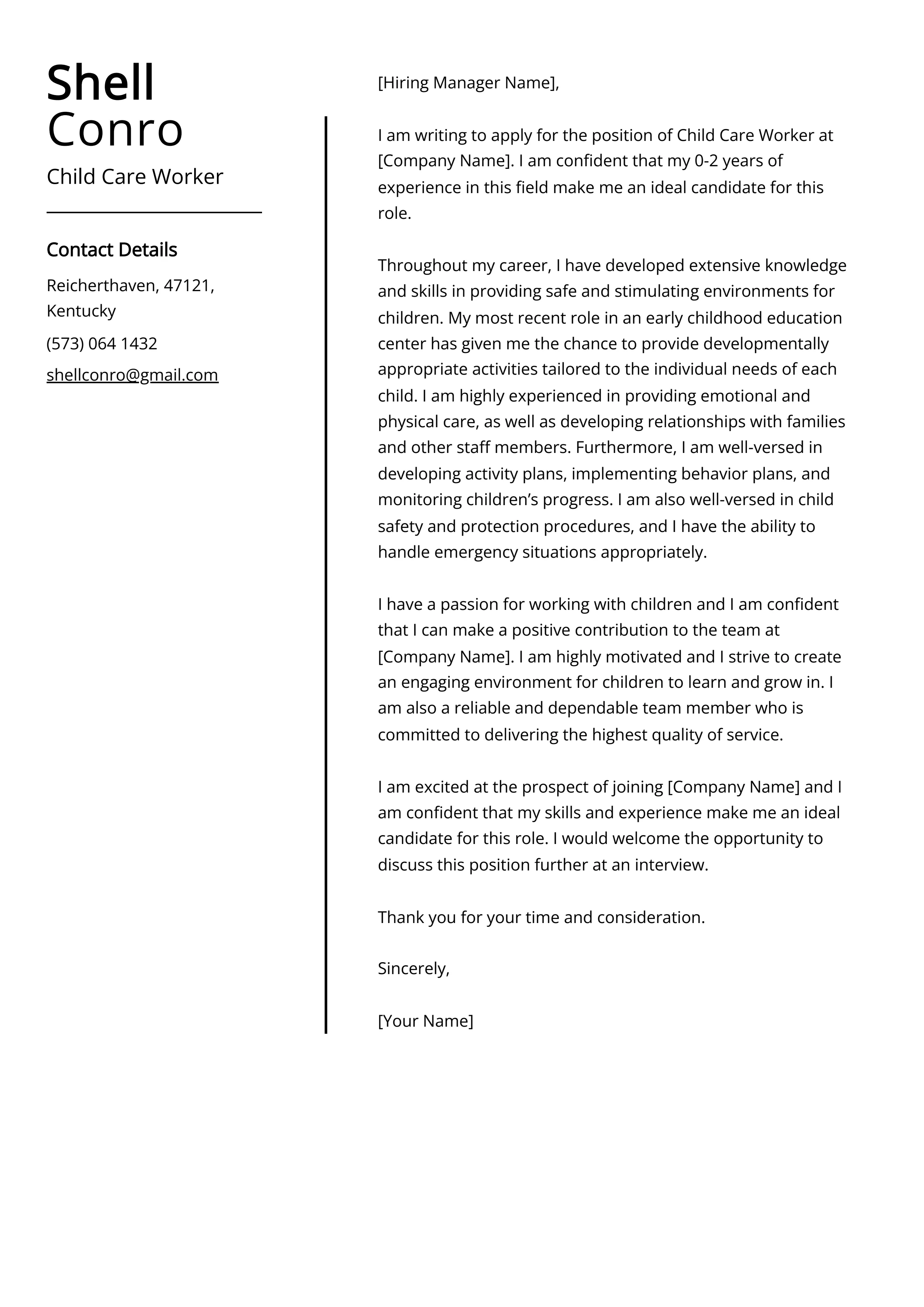
Understanding the Daycare Worker Role
A daycare worker plays a pivotal role in the lives of young children, providing care, nurturing their development, and ensuring their safety. This role extends beyond mere supervision; it involves creating a stimulating and supportive environment where children can learn, grow, and develop essential social and emotional skills. The responsibilities of a daycare worker are multifaceted, encompassing everything from planning age-appropriate activities to administering basic first aid and communicating effectively with parents. Therefore, a well-crafted cover letter is vital for anyone seeking a daycare worker position, as it allows them to showcase their suitability for this crucial role. Your cover letter is the first impression, so making it count is essential.
Key Skills for Daycare Workers
Daycare workers require a diverse skill set to effectively meet the needs of young children. These skills go beyond the basics and include a blend of interpersonal, organizational, and practical abilities. Effective communication is crucial, enabling workers to interact with children, parents, and colleagues clearly and empathetically. Patience and empathy are paramount, as children may require extra support and understanding. Furthermore, daycare workers must possess strong observation skills to monitor children’s behavior and well-being, identifying any potential concerns promptly. Creativity is essential for planning engaging activities, while organizational skills are necessary to manage the daily routines and tasks efficiently. Your cover letter must demonstrate that you possess these skills.
Importance of Passion and Patience

The role of a daycare worker demands a genuine passion for working with children. This passion fuels the dedication and enthusiasm needed to create a positive and enriching environment. Patience is equally vital, as children may require varying levels of support and understanding. Daycare environments can be dynamic and sometimes challenging, making patience essential for maintaining composure and effectively managing any situation. Showing empathy allows you to connect with children on a deeper level, fostering trust and a sense of security. Highlighting these traits in your cover letter is a must, as they are a huge part of the role. Without them, success is difficult to attain.
Crafting a Compelling Cover Letter
Your cover letter for a daycare worker position serves as your initial introduction to the employer, therefore making it crucial to present yourself effectively. It should showcase your relevant experience, skills, and personality in a way that distinguishes you from other applicants. The cover letter provides an opportunity to elaborate on your resume, offering specific examples of your accomplishments and demonstrating how your qualifications align with the daycare’s requirements. A compelling cover letter goes beyond simply restating information from your resume; it emphasizes your passion for childcare, your understanding of the daycare’s philosophy, and your eagerness to contribute to the well-being of the children in their care. By carefully crafting your cover letter, you can significantly increase your chances of securing an interview.
Tip 1 Highlight Relevant Experience
Your cover letter is the ideal place to highlight the experience you have that relates to working at a daycare. Begin by mentioning any previous roles you have held in childcare settings, such as working at other daycare facilities, preschools, or after-school programs. Clearly articulate your responsibilities and accomplishments in each of these positions. Quantify your achievements whenever possible, such as the number of children you cared for, any programs you implemented, or any improvements you made to the children’s development. If you lack direct experience, emphasize any transferable skills you possess, such as volunteer work with children, babysitting experience, or any coursework related to early childhood education. Focus on how your past experiences have prepared you for the responsibilities of a daycare worker.
Tip 2 Showcase Your Skills

Carefully review the job description and identify the specific skills that the daycare is seeking in an applicant. Use your cover letter to demonstrate how your skills align with their requirements. Provide concrete examples of how you have utilized these skills in the past. For example, if the job description emphasizes the importance of communication, describe a situation where you effectively communicated with a child or a parent to resolve a conflict. If the job requires creativity, provide examples of activities you have planned and implemented to engage children. Showcase your skills related to child development, first aid, classroom management, and any other relevant areas. The goal is to convince the hiring manager that you have the necessary skills to excel as a daycare worker.
Tip 3 Emphasize Your Personality
Daycare facilities often look for workers with positive and engaging personalities. Your cover letter is an opportunity to showcase these characteristics. Describe your passion for working with children, your ability to create a nurturing and supportive environment, and your enthusiasm for fostering their growth and development. Highlight your patience, empathy, and creativity. Show your understanding of child development, the importance of play, and the ability to create a fun and educational environment. If you have any unique qualities or interests that would benefit the daycare, such as a musical talent or a specific hobby, don’t hesitate to mention them. Let your personality shine through in your cover letter, as this can make a lasting impression on the hiring manager.
Tip 4 Tailor to the Daycare
To make your cover letter stand out, customize it to the specific daycare you are applying to. Research the daycare, learn about its mission, values, and any special programs or initiatives it offers. Demonstrate that you have taken the time to understand their philosophy. In your cover letter, mention why you are interested in working at that particular daycare, specifically highlighting aspects that resonate with you. If the daycare emphasizes a particular teaching method or has a specific focus, such as outdoor play or art, tailor your cover letter to showcase your relevant experience and skills. Referencing their website, social media, or other resources can show your genuine interest in the position and increase your chances of landing an interview.
Tip 5 Proofread and Perfect

Before submitting your cover letter, meticulously proofread it for any errors in grammar, spelling, and punctuation. Errors can create a negative impression and diminish the impact of your application. Read your cover letter aloud to catch any awkward phrasing or sentence structure. It is also helpful to have a friend or family member review your cover letter. Ensure your letter is well-organized, easy to read, and free of any typos or grammatical errors. Pay close attention to the formatting and ensure your contact information is accurate. A polished and professional cover letter demonstrates your attention to detail and professionalism, significantly increasing your chances of success.
Formatting Your Daycare Cover Letter
The format of your cover letter is just as important as its content, as it can help you make a professional impression. Ensure the cover letter is well-structured and easy to read. Use a clear and professional font, such as Times New Roman, Arial, or Calibri, and maintain a consistent font size throughout the document. Use standard margins (1 inch on all sides) and single-space the text. Use paragraph breaks to separate ideas and sections, making the cover letter visually appealing. Keep your cover letter concise, ideally within one page, as hiring managers often have limited time to review applications. A well-formatted cover letter is easier to read and makes a positive impact on the hiring manager.
Contact Information and Salutation
Start your cover letter by including your contact information, including your name, phone number, email address, and possibly your mailing address, at the top. If you know the name of the hiring manager, address the letter directly to them. Use a professional salutation, such as “Dear Mr./Ms. [Last Name].” If you do not know the hiring manager’s name, you can use a general salutation, such as “Dear Hiring Manager” or “To Whom It May Concern.” Be sure to spell the person’s name correctly and avoid casual salutations, as they can make a negative impression.
Body Paragraph Structure

The body of your cover letter should be structured logically, clearly conveying your qualifications, skills, and personality. Start with an introduction that states the position you are applying for and how you learned about the opportunity. In the following paragraphs, highlight your relevant experience, skills, and personality traits. Use specific examples to demonstrate your qualifications and quantify your achievements whenever possible. Tailor the content to the daycare’s requirements, referencing their mission, values, or specific programs. Keep the body paragraphs concise and focused, ensuring you convey the most important information effectively. End with a strong closing paragraph summarizing your interest in the position.
Closing and Call to Action
Conclude your cover letter with a strong closing paragraph that reiterates your interest in the position and expresses your enthusiasm for the opportunity. Thank the hiring manager for their time and consideration. Include a call to action, such as a statement expressing your availability for an interview and providing your contact information once again. End with a professional closing, such as “Sincerely” or “Best regards,” followed by your full name. A well-crafted closing reinforces your interest and encourages the hiring manager to take the next step by contacting you. This final touch can make the difference when they are deciding who to interview.