Why a Customer Service Cover Letter Matters
In the competitive world of job applications, a well-crafted cover letter can be the key to unlocking your dream customer service role. It serves as your initial introduction to a potential employer, providing you with a unique opportunity to showcase your skills, experience, and personality beyond what a resume can convey. A cover letter is not merely a formality; it’s your chance to make a lasting impression and distinguish yourself from other applicants. It’s where you get to demonstrate your genuine interest in the company and the specific position you’re applying for, setting the stage for a successful application and potentially, a job offer. A cover letter acts as your personal marketing tool, offering a glimpse into your communication skills and your understanding of the customer service industry. It’s your chance to explain your motivations, articulate your value proposition, and illustrate how your expertise aligns with the company’s needs, leading to a compelling case for why you should be the one chosen to join their team.
Key Elements of a Customer Service Cover Letter
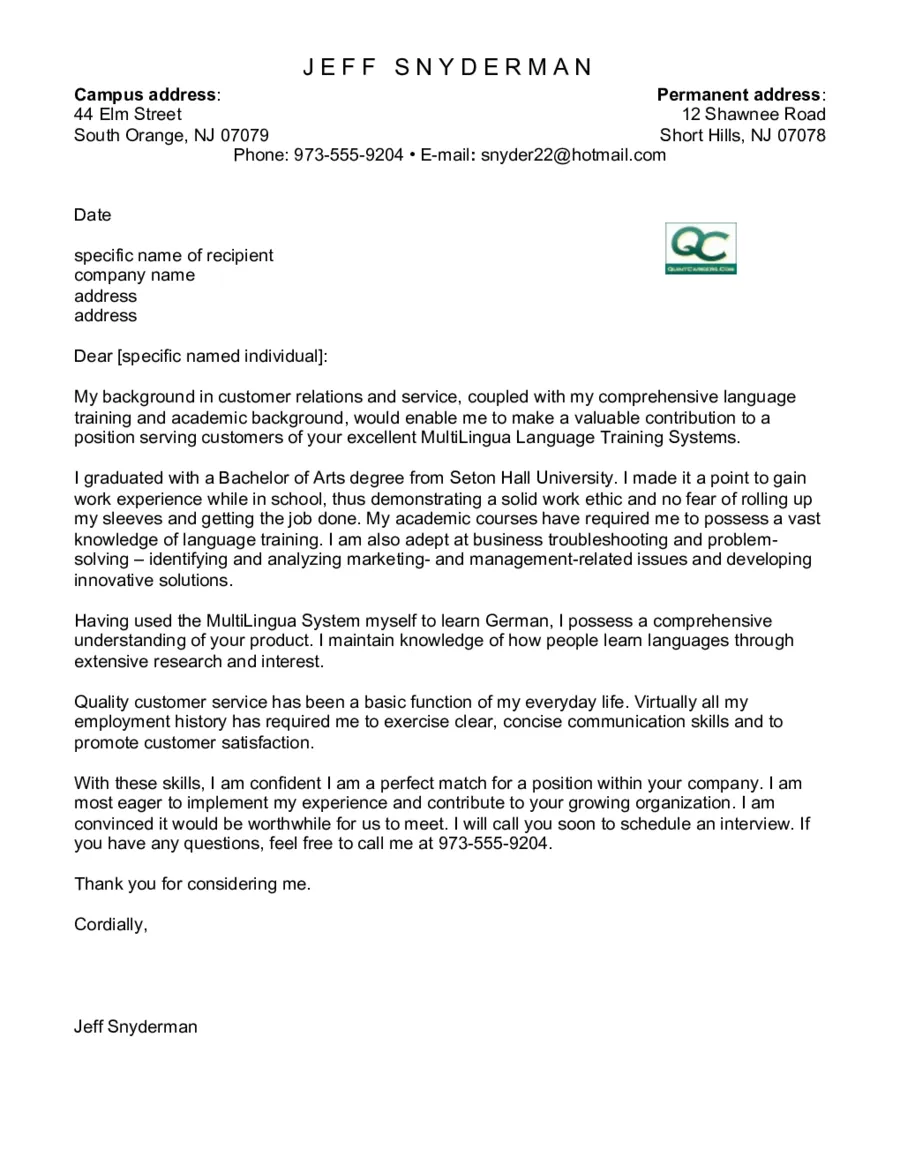
A successful customer service cover letter consists of several essential components. These include your contact information, a professional salutation, a compelling opening paragraph, a section highlighting your relevant skills and experience, a section that demonstrates your achievements, a closing paragraph, and a formal closing with your signature. Each element plays a specific role in convincing the employer of your suitability for the position. A well-structured cover letter provides a coherent narrative that effectively communicates your qualifications and your enthusiasm for the opportunity. By mastering these components, you will be able to create a cover letter that not only captures the recruiter’s attention but also effectively communicates your value proposition, which will help you stand out from the crowd of applicants. This enables you to clearly portray your ability to excel in a customer service role.
Contact Information and Salutation

Begin your cover letter by providing your full name, address, phone number, and email address. This ensures that the hiring manager can easily reach you. Following your contact information, address the hiring manager or the specific person mentioned in the job posting. If the name is available, use it; otherwise, use a general salutation like “Dear Hiring Manager.” This personal touch demonstrates your attention to detail and your commitment to the role. Proper formatting and professionalism are critical from the outset, setting the right tone for your entire application. Ensuring all your details are correct and up-to-date is an essential first step in demonstrating your professionalism. This will help in making a positive impression from the start, which is crucial in a customer-facing role.
Opening Paragraph Grab Attention
Your opening paragraph is your golden opportunity to captivate the hiring manager’s attention. Start with a strong hook, such as a statement about your passion for customer service, a brief mention of a significant achievement, or an enthusiastic reference to the company’s values or mission. State the position you’re applying for and briefly mention where you found the job posting. Your opening paragraph should be concise, engaging, and clearly communicate your objective. The goal is to immediately demonstrate your understanding of the role and to encourage the hiring manager to keep reading. A well-crafted opening paragraph increases your chances of having your application read in full, which is critical for moving forward in the hiring process. Your ability to communicate and engage here is indicative of how you would perform as a customer service representative.
Highlight Your Relevant Skills and Experience
The core of your cover letter should showcase your skills and experience that align with the customer service role. Identify the key requirements of the job description and provide specific examples of how you’ve demonstrated those skills in the past. Highlight your abilities to communicate effectively, resolve customer issues, remain calm under pressure, and work collaboratively. Use the STAR method (Situation, Task, Action, Result) to provide concrete examples of how you handled challenging situations and the positive outcomes you achieved. Focus on showcasing the traits that the employer values most. Tailoring your letter to each specific job ensures that you clearly communicate how your qualifications meet the employer’s needs. Be specific and provide data-driven evidence where possible to demonstrate your value. The hiring manager will quickly understand your capabilities if you make these connections clear.
Showcase Your Achievements

Going beyond listing your responsibilities, take the time to present your accomplishments. Quantify your successes whenever possible. Instead of saying, “Improved customer satisfaction,” state, “Increased customer satisfaction scores by 15% through proactive issue resolution.” Provide tangible evidence of your impact, such as improved response times, reduced complaints, or increased sales through customer service interactions. Showcasing your achievements demonstrates your value and potential contributions to the company. This part of your cover letter helps illustrate your understanding of the importance of customer satisfaction and your commitment to exceeding expectations. By highlighting your achievements, you give the hiring manager concrete proof of your ability to perform well in a customer service role.
Quantify Your Accomplishments
Quantifying your accomplishments makes them more impactful and believable. Use numbers, percentages, and specific data to illustrate your successes. For example, instead of stating that you “handled customer inquiries efficiently,” you could say, “Processed an average of 50 customer inquiries per day with a 98% satisfaction rate.” Providing data-driven evidence makes your claims more credible and demonstrates your understanding of performance metrics. Numbers highlight the specific value you brought to previous roles and help the hiring manager understand the potential impact you can have on their organization. Quantitative data clarifies how you can improve outcomes, which will make you an attractive candidate. Be prepared to back up your achievements with verifiable information if requested.
Address the Employer’s Needs
Demonstrate your understanding of the employer’s needs and how your skills align with those needs. Research the company and its values to tailor your cover letter specifically to their requirements. Discuss how your skills and experiences can help the company achieve its goals. For example, if the job description emphasizes resolving complaints, highlight your experience in de-escalation and conflict resolution. Tailoring your cover letter to the employer’s needs shows that you’re genuinely interested in the role and the company. It is also crucial that you articulate how your skills can bring immediate value to the organization. This targeted approach increases the likelihood that your cover letter will resonate with the hiring manager and position you as a strong fit for the company’s culture and goals.
Express Your Enthusiasm

Express genuine enthusiasm for the opportunity and the company. Let your passion for customer service shine through. Mention why you’re excited about the role and what attracts you to the company. Show that you’ve researched the company and understand its mission or values. Enthusiasm is infectious and can make a positive impression. Expressing your excitement about the company and the specific role is a way to show that you’re a committed and engaged candidate. This is an important trait for a customer service role, as it translates to a positive customer experience. If you show genuine interest, the hiring manager will be more inclined to want you on the team.
Closing the Cover Letter
Your closing paragraph should summarize your key qualifications, reiterate your interest in the role, and express your eagerness for an interview. Thank the hiring manager for their time and consideration. Make a clear call to action by stating your availability for an interview and providing your contact information again. A strong closing paragraph reinforces your qualifications and leaves the reader with a positive impression. This is your last opportunity to leave a lasting impression, so make it count. A professional closing that summarizes your key value propositions can significantly impact the hiring manager’s decision. It also reinforces your eagerness for the opportunity.
Formal Closing and Signature
End your cover letter with a formal closing, such as “Sincerely,” “Best regards,” or “Thank you.” Leave space for your handwritten signature, if submitting a printed copy. If submitting your cover letter electronically, you can simply type your name. A formal closing demonstrates professionalism and respect for the reader. Using a professional closing, along with proper formatting, helps create a polished final impression, ensuring that your application stands out. This final touch emphasizes your attention to detail and respect for the hiring process.
Proofreading and Editing for Perfection

Before submitting your cover letter, proofread it carefully for any grammatical errors, typos, or formatting issues. Ask a friend or family member to review it as well. A polished, error-free cover letter demonstrates your attention to detail and professionalism. Errors can undermine your credibility, so thorough proofreading is an essential step in the application process. Reviewing your cover letter with fresh eyes or getting help from a second reader can identify errors you might have missed. A perfectly proofread cover letter presents you in the best possible light. Taking the time to perfect your cover letter is an important investment in your career.