Why Cover Letters Matter
In the competitive landscape of entry-level job applications, a well-crafted cover letter can be your golden ticket to securing an interview. Often underestimated, a cover letter provides an opportunity to go beyond the confines of your resume, allowing you to showcase your personality, passion, and the unique value you bring to the table. It’s your chance to make a strong first impression and persuade a potential employer that you’re not just qualified but also a great fit for their company and culture. A compelling cover letter can significantly increase your chances of being noticed, especially when competing against other entry-level candidates, many of whom may have similar academic backgrounds or limited work experience. This document is crucial.
Entry-Level Cover Letter Purpose
The primary purpose of an entry-level cover letter is to introduce yourself and express your interest in a specific position. It is your opportunity to articulate why you are interested in the role and the company. It is to demonstrate your understanding of the company’s needs and how your skills and aspirations align with their goals. Unlike a resume, which is a straightforward summary of your qualifications, a cover letter allows you to tell a story, explaining why you’re excited about this particular opportunity and how you see yourself contributing to the team. This personal touch is important in helping you connect with the hiring manager. Remember to emphasize your willingness to learn and grow.
Key Components of an Entry-Level Cover Letter

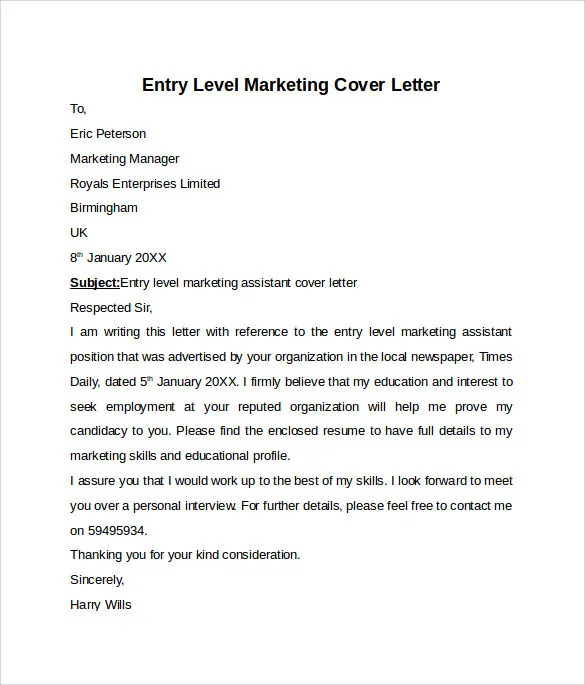
A strong cover letter should include a professional header with your contact information, the date, and the hiring manager’s name and title, if known. Begin with a compelling introduction that immediately grabs the reader’s attention, stating the position you’re applying for and where you found the opportunity. The body of the letter should highlight your relevant skills, experiences, and achievements. Clearly explain how your qualifications align with the job requirements and the company’s values. End with a call to action, expressing your eagerness for an interview and your contact availability. The tone should be enthusiastic and professional, reflecting your personality and commitment to the role.
Top Secret 1 Highlight Your Skills
One of the most effective ways to stand out in an entry-level job application is to clearly highlight your skills. Since you may have limited professional experience, emphasize the skills you have developed through academics, extracurricular activities, volunteer work, or personal projects. Focus on both hard skills, like technical proficiency and software knowledge, and soft skills, like communication, teamwork, and problem-solving abilities. Tailor your skills to the specific job requirements by carefully reviewing the job description and identifying the key skills the employer is seeking. Then, illustrate how you have demonstrated those skills in previous experiences, even if they are not directly related to the job.
Showcase Relevant Skills
When showcasing your skills, go beyond simply listing them. Provide specific examples of how you have used these skills to achieve results. For instance, instead of saying you have strong communication skills, describe a project where you effectively communicated with a team to achieve a common goal. This could include leading a project, presenting a project, or resolving a conflict. This specificity is what sets you apart from other candidates and helps the hiring manager understand the practical value of your skills. Show how your skills align with the job requirements by using keywords from the job description. This targeted approach ensures your cover letter is relevant.
Quantify Achievements

Quantifying your achievements adds significant credibility to your claims. Whenever possible, use numbers and data to demonstrate your accomplishments. For example, instead of saying you improved customer service, state that you improved customer satisfaction scores by 15% during your internship. Providing measurable results makes your achievements more tangible and impressive. This approach is particularly useful in highlighting your impact. By using numbers, you provide concrete evidence of your abilities and demonstrate your capacity to contribute positively to the organization. Even in entry-level positions, quantifiable results can showcase your potential and drive.
Top Secret 2 Tailor to the Job
A generic cover letter is easily spotted and often discarded. To make a lasting impression, tailor your cover letter to each specific job application. This means thoroughly researching the company and the position you are applying for. Understanding the company’s mission, values, and recent projects will help you demonstrate genuine interest and explain why you want to work there. By aligning your skills, experiences, and career goals with the specific requirements and expectations of the role, you show the hiring manager that you’ve taken the time to understand the opportunity and envision yourself in the position. Show that you understand the job and the company.
Research the Company
Before you begin writing, dive deep into the company’s website, social media profiles, and recent news articles. Identify the company’s culture, values, and recent achievements. This research will not only help you tailor your cover letter but also prepare you for a potential interview. Understanding their mission and values will allow you to connect with them on a deeper level. Incorporate specific details about the company, and you will show that you are genuinely interested in the position and have put in the effort to learn more. This attention to detail is crucial in the highly competitive entry-level job market.
Match Skills to Requirements

Carefully review the job description and identify the key skills and qualifications the employer is seeking. Use these keywords and phrases throughout your cover letter to demonstrate that you possess the required abilities. Explain how your skills align with the job’s requirements. Give specific examples of how you have demonstrated these skills in previous experiences, even if they are not directly related to the job. If a job requires strong communication skills, highlight instances where you have effectively communicated. If they want problem-solving skills, explain how you have successfully resolved challenges. By directly linking your skills to the job description, you make it easy for the hiring manager to see that you are a suitable candidate.
Top Secret 3 Show Your Passion
A cover letter is your chance to show your passion for the role and the company. Enthusiasm can set you apart from other applicants, demonstrating that you are not just looking for any job but genuinely interested in this particular opportunity. Express your excitement about the company’s mission, values, or recent projects. This shows that you are not just applying for a job but are interested in being a part of something larger. Your cover letter should communicate your enthusiasm for the role and the company. Passion can make a strong impression, especially in entry-level positions.
Express Enthusiasm for the Role
Your cover letter should convey your enthusiasm for the specific position. Explain what aspects of the role excite you the most and how they align with your career goals. Discuss how the role will allow you to use and develop your skills. If you’re genuinely excited about the opportunity, the hiring manager will likely be more inclined to consider you. Show that you have a clear understanding of the job responsibilities and are eager to take on the challenges. Enthusiasm is contagious and can significantly boost your chances of landing an interview.
Connect with the Company’s Mission

Demonstrate that you share the company’s values and mission. Research the company’s goals and values. Then, explain how your skills, experiences, and career aspirations align with these principles. This shows that you are not just interested in the job but also in being a part of the company’s culture. If the company is focused on innovation, highlight your experience with creative projects. If it values teamwork, mention your involvement in collaborative projects. Showing that you fit with the company culture increases your chances of getting hired. Connecting with the company’s mission helps the recruiter see you as more than just a candidate.
Top Secret 4 Highlight Experience
Even if you lack direct work experience, you can still highlight your relevant experiences and skills. Think beyond traditional work experiences. Consider volunteer work, internships, academic projects, and extracurricular activities. Your goal is to demonstrate that you possess the skills and qualities that are necessary for the job. For entry-level positions, emphasize transferable skills, such as communication, teamwork, and problem-solving abilities. Tailor your letter to show how these skills align with the job requirements. Focus on any experience you have. This can include work, personal projects, or volunteer roles.
Address Lack of Experience
If you lack direct work experience, address this in your cover letter proactively. Rather than ignoring it, acknowledge it briefly and shift the focus to your transferable skills and experiences. Focus on what you have done. Explain how your academic projects, internships, volunteer work, or extracurricular activities have prepared you for the job. Highlight any leadership roles, collaborative projects, or achievements that demonstrate your skills. By being upfront about your lack of experience and emphasizing your other qualifications, you show confidence and resourcefulness.
Focus on Transferable Skills

Transferable skills are valuable in any job. These are skills that can be applied across different roles and industries. Identify and highlight transferable skills that are relevant to the job you are applying for. Some examples include communication, problem-solving, teamwork, time management, and leadership. These skills are often developed through various experiences. Provide examples of how you have demonstrated these skills in your past experiences. By highlighting transferable skills, you show that you are capable of learning quickly and adapting to new challenges. This is particularly important for entry-level positions.
Top Secret 5 Proofread and Perfect
Before submitting your cover letter, proofread it carefully. Errors can undermine your credibility and make a poor first impression. A well-written cover letter shows attention to detail and a commitment to excellence. Check for any grammatical errors, spelling mistakes, and formatting inconsistencies. It is best to proofread multiple times, even if you are on a tight schedule. Consider asking a friend or mentor to review your cover letter for any errors you might have missed. A final check is essential to ensure that your cover letter is polished and error-free.
Check for Errors
Carefully review your cover letter for grammatical errors, spelling mistakes, and punctuation issues. Even a small error can make you look unprofessional. Use grammar checkers and spell checkers, but do not rely on them completely. Read your cover letter aloud to catch any awkward phrasing or sentences. Check that all names, titles, and company details are correct. If possible, have a second pair of eyes review your letter to catch any mistakes. Make sure you use the right tone. Errors undermine your credibility and make a poor first impression.
Formatting and Presentation

The formatting and presentation of your cover letter is just as important as its content. Use a clear, readable font, such as Times New Roman or Arial, and maintain a consistent font size. Ensure that your cover letter is well-organized, with clear headings, subheadings, and paragraphs. Use white space effectively to avoid overwhelming the reader. If you are submitting your cover letter online, make sure it is in a compatible format, such as a PDF, to ensure that the formatting remains intact. A clean, professional layout shows that you pay attention to detail and take pride in your work. Poor formatting distracts from the content.