Unveiling Cover Letter Secrets
In the competitive job market, a standout cover letter is your secret weapon. It’s your first opportunity to make a lasting impression on a potential employer and convince them to delve deeper into your resume. It’s not merely a formality or a rehash of your resume; it’s your chance to showcase your personality, passion, and specific qualifications for the role. Mastering the art of the cover letter means understanding how to present yourself as the ideal candidate while differentiating yourself from the crowd. This involves strategic writing, careful formatting, and a keen understanding of what employers seek. It’s about telling a story—your story—and doing it in a way that grabs their attention from the first sentence and doesn’t let go until the very end. The aim is to provide the hiring manager with a clear picture of why you are the best fit for their specific needs.
Researching the Target Company
Before putting pen to paper, or fingers to keyboard, a deep dive into the company you’re applying to is essential. Your cover letter should never feel generic, so customization is key. Visit the company’s website, explore their ‘About Us’ section, review their mission and values, and understand their current projects and achievements. Explore their social media presence, such as LinkedIn, Twitter, and Facebook, to gather insights into their company culture and any recent news. This research helps you identify specific keywords, phrases, and initiatives that resonate with the company, which you can then weave into your cover letter. Mentioning specific company projects or values demonstrates genuine interest, which will set you apart from candidates sending generic applications. It’s about showing them that you’re not just looking for any job but that you’re genuinely excited about their company and the role you are applying for.
Tailoring Your Cover Letter

Once you’ve researched the company, it’s time to tailor your cover letter. This means adapting it to each specific job application, instead of using a generic template. Review the job description meticulously and extract the key requirements, skills, and qualifications. Identify the keywords used in the description and incorporate them naturally into your cover letter. This shows that you possess the necessary skills and experiences to thrive in the role. Address the specific needs of the employer. How can you solve their problems or contribute to their goals? Explain how your skills and experiences align with their needs. Think of your cover letter as a personalized sales pitch. Focus on what the employer is looking for and why you are the perfect candidate. Remember, tailoring your cover letter is about demonstrating a clear understanding of the role and making a compelling case for why the company should hire you.
Highlighting Key Skills
Your cover letter should highlight the skills that are most relevant to the job you are applying for. This isn’t just about listing your skills; it’s about demonstrating them through specific examples. Instead of simply stating you have ‘strong communication skills,’ provide examples of when you effectively communicated in a work setting, such as leading a team meeting or presenting a project proposal. Similarly, if the job requires problem-solving skills, describe a specific instance where you successfully resolved a complex issue. Use the keywords from the job description to ensure your skills align with their requirements. Back up your claims with evidence, such as projects, awards, or accomplishments. Demonstrate how your skills align with the company’s needs and the role’s responsibilities. Show the employer that you not only possess the required skills but also know how to apply them to achieve results.
Showcasing Relevant Experience
Detail your relevant experience in a clear and concise manner. Focus on the experiences that best align with the job requirements. For each experience, describe your responsibilities, the tasks you undertook, and the results you achieved. Quantify your accomplishments whenever possible. Using numbers to demonstrate your impact can be particularly persuasive. Did you increase sales by a certain percentage? Did you manage a project that came in under budget? Providing specific examples and figures brings your experience to life and offers concrete evidence of your capabilities. Furthermore, when describing your experience, use action verbs to create a dynamic and engaging narrative that holds the reader’s attention. This approach helps the hiring manager understand your value quickly and efficiently, illustrating why you are a strong contender for the position.
Quantifying Achievements

One of the most impactful ways to make your cover letter stand out is by quantifying your achievements. Numbers and data provide concrete evidence of your skills and impact, making your claims far more compelling. Instead of saying you ‘improved customer satisfaction,’ state that you ‘increased customer satisfaction scores by 15%’. Similarly, if you ‘managed projects efficiently,’ mention that you ‘delivered projects on time and under budget, saving the company 10% in costs.’ Whenever possible, include metrics and data to back up your claims. Use percentages, dollar amounts, or specific figures to illustrate the value you brought to previous roles. The goal is to show the employer not just what you did, but the results you achieved. Quantifying your achievements helps demonstrate your value in a tangible way, making it easier for the hiring manager to see the potential return on investment of hiring you.
Crafting a Compelling Opening
The opening of your cover letter is your most crucial opportunity to capture the reader’s attention. A strong opening sets the tone for the entire letter and compels the reader to continue. Avoid generic phrases such as ‘I am writing to apply for…’ Instead, start with a compelling hook that grabs the reader’s interest. One effective strategy is to mention a mutual connection or a specific achievement related to the company. You can also highlight something unique about yourself or your skills that aligns with the job description. Briefly state the position you are applying for and why you are excited about the opportunity. Show genuine enthusiasm, but also be concise and get straight to the point. Remember, your goal is to instantly make a positive impression and convince the hiring manager to keep reading, which is why your opening must be both captivating and relevant.
Structuring the Body
The body of your cover letter is where you elaborate on your skills, experiences, and achievements. Structure this section logically, using clear paragraphs and subheadings. Begin with a brief overview of your most relevant qualifications. For each skill or experience, provide specific examples to illustrate your abilities. Use the STAR method (Situation, Task, Action, Result) to provide detailed accounts of your experiences. In the ‘Situation,’ describe the context of the challenge. In the ‘Task,’ outline your responsibilities. In the ‘Action,’ explain the steps you took. Finally, in the ‘Result,’ share the outcomes and any measurable achievements. This structure helps you tell a compelling story while demonstrating your value. Keep the language concise and avoid jargon. The goal is to present a clear and persuasive case, showcasing why you are the ideal candidate for the role.
Writing a Strong Closing

Your closing paragraph should leave a lasting positive impression, reiterating your interest and enthusiasm for the position. Thank the hiring manager for their time and consideration. Reiterate your key qualifications, emphasizing how you can contribute to the company’s goals. Use a confident and proactive tone. Express your eagerness for an interview. Provide your contact information, including your phone number and email address, making it easy for the hiring manager to reach you. Before sending, proofread the entire letter to ensure it is free of errors. This final step reinforces your attention to detail and professionalism. Your closing statement is an opportunity to summarize your strengths and leave the reader with a clear understanding of why you are the perfect candidate for the role.
Formatting and Design Tips
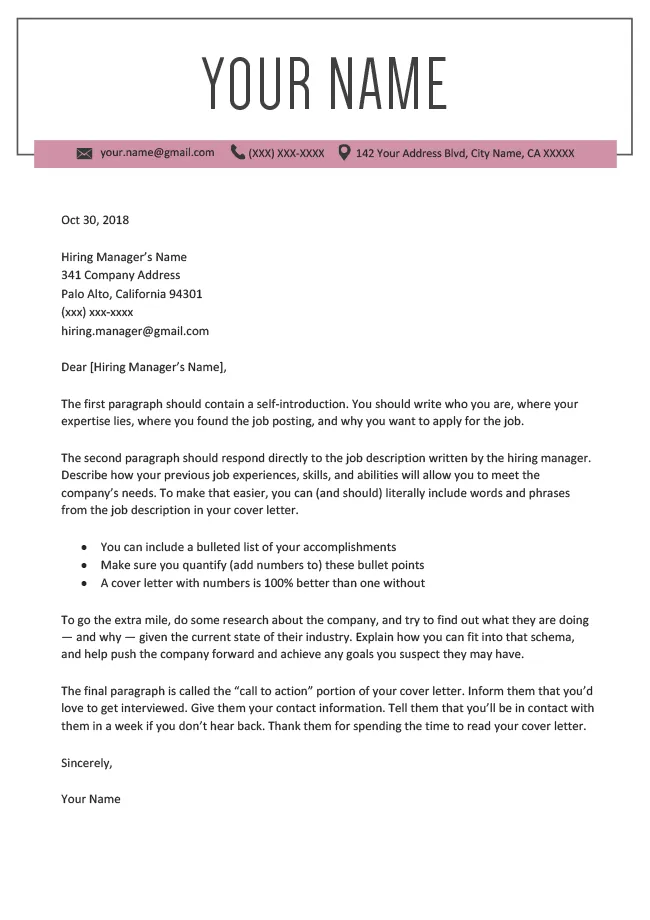
The format and design of your cover letter are essential for creating a positive first impression. Choose a clean, easy-to-read font such as Arial, Calibri, or Times New Roman, keeping the font size between 10 and 12 points. Use clear headings and subheadings to organize the content and improve readability. Maintain consistent margins and spacing throughout the document. Use bullet points to highlight key skills and accomplishments, making it easier for the reader to quickly grasp essential information. Keep the letter to one page if possible; brevity is key. Ensure there is enough white space to avoid a cluttered appearance. Save your cover letter as a PDF to preserve its formatting. A well-formatted cover letter showcases your professionalism and demonstrates attention to detail.
Proofreading and Editing
Proofreading and editing are critical steps in ensuring that your cover letter is polished and error-free. Carefully review the entire letter for any spelling, grammar, and punctuation mistakes. Read it aloud to catch any awkward phrasing or sentence structure issues. Have a friend, family member, or career advisor review it as well; a fresh pair of eyes can often spot errors you may have missed. Pay close attention to the use of pronouns, ensuring they agree with the nouns they refer to. Check for any inconsistencies in formatting, such as different font sizes or spacing. The goal is to eliminate all potential distractions. A well-proofread cover letter demonstrates your attention to detail, professionalism, and commitment to excellence. Taking this extra step shows potential employers that you are dedicated to producing high-quality work.
Avoiding Common Mistakes

There are several common mistakes to avoid when writing a cover letter. One of the biggest is using a generic, one-size-fits-all approach. Always tailor your letter to each specific job and company. Avoid typos and grammatical errors, as they can make you appear careless. Don’t simply reiterate your resume; instead, use the cover letter to elaborate on your experiences and achievements. Refrain from being overly formal or using jargon that may confuse the reader. Avoid negative language. Focus on what you can do and what you have achieved. Do not include irrelevant information or personal details that are not related to the job. Lastly, be sure to avoid exaggerating or providing false information. Being truthful and providing relevant, accurate information is essential.
Emphasizing Achievements over Duties
When writing your cover letter, it’s important to emphasize your achievements over simply listing your job duties. While describing your responsibilities provides context, focusing on your accomplishments shows the value you brought to your previous roles. Instead of stating you ‘managed social media accounts,’ describe how you ‘increased follower engagement by 20%’. Instead of saying you ‘handled customer inquiries,’ explain how you ‘resolved customer issues efficiently, leading to a 10% increase in customer satisfaction’. By quantifying your achievements and showcasing the results you produced, you demonstrate your ability to make a tangible impact. This approach enables potential employers to see your potential value and how you can contribute to their organization’s success. Highlighting your achievements is a powerful way to set yourself apart and make a compelling case for your candidacy.
Using Action Verbs
Using strong action verbs is essential for making your cover letter dynamic and engaging. Action verbs bring your experiences to life and show the employer what you did and how you did it. Begin sentences with action verbs that describe your accomplishments, such as ‘managed,’ ‘developed,’ ‘implemented,’ ‘increased,’ ‘streamlined,’ and ‘achieved.’ Instead of saying you were ‘responsible for sales,’ you might say, ‘Spearheaded a new sales strategy that increased revenue by 15%’. Rather than stating you ‘assisted with project management,’ you could write, ‘Coordinated project teams, resulting in on-time delivery of all projects.’ Action verbs inject energy into your writing and help the reader visualize your contributions. Employing strong action verbs helps you create a compelling narrative that clearly illustrates your abilities and achievements.
Demonstrating Enthusiasm

Demonstrating enthusiasm for the role and the company is a crucial part of writing a standout cover letter. The hiring manager wants to know if you’re genuinely interested in the position and if you will be a good fit for the company culture. Show your excitement by mentioning specific aspects of the job or the company that appeal to you. Use positive language and a confident tone throughout your letter. Express your passion for the industry and your eagerness to contribute to the company’s success. Research the company’s values, goals, or recent achievements and integrate them into your letter to demonstrate your genuine interest. Your enthusiasm will make you appear more approachable, likable, and driven. Ultimately, a cover letter filled with genuine enthusiasm can go a long way in making a memorable impression.