What is a Cover Letter (High School) and Why Does it Matter
A cover letter is a crucial document that accompanies your resume when applying for jobs, internships, or even volunteer positions. Especially for high school students, it serves as your first formal introduction to a potential employer. Unlike a resume, which provides a snapshot of your qualifications, a cover letter allows you to showcase your personality, enthusiasm, and specific reasons for why you’re a great fit for the opportunity. It’s your chance to make a strong first impression and differentiate yourself from other applicants. In essence, it’s a sales pitch that highlights your value and convinces the reader to take the next step which is to give you an interview. A well-crafted cover letter can significantly increase your chances of getting noticed and landing an interview, ultimately helping you get hired fast!
Key Components of a High School Cover Letter
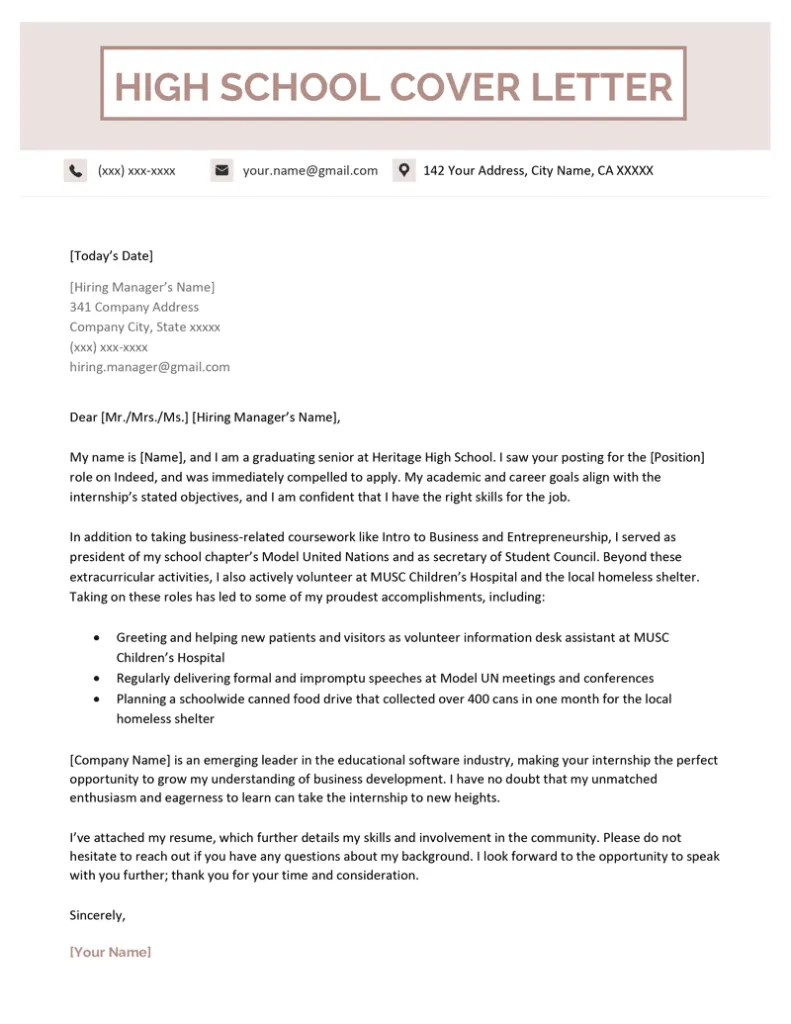
A compelling cover letter is composed of several key elements that work together to present a clear and persuasive case for your candidacy. These elements include a professional header, a personalized greeting, a compelling opening statement, well-structured body paragraphs that highlight your skills and experience, a clear call to action, and a professional closing. Each section plays a vital role in conveying your interest, demonstrating your qualifications, and encouraging the employer to contact you. Understanding and mastering these components is essential for crafting an effective cover letter that grabs the reader’s attention and makes you stand out from the competition. Careful attention to detail, strong writing skills, and a focus on the employer’s needs are all critical.
Header and Contact Information

The header of your cover letter should be the first thing an employer sees, so make sure it’s professional and easy to read. It should include your full name, address, phone number, and email address. This information should be clearly displayed at the top of the letter, either left-aligned or centered. Directly below your contact information, include the date and the recipient’s contact information (name, title, company, and address), if known. Using the correct contact information demonstrates that you’ve taken the time to research the company and personalize your application, which can make a positive impression. Always double-check the accuracy of all the contact details to ensure the employer can easily reach you.
Personalized Greeting and Opening Statement
Begin your cover letter with a personalized greeting. Instead of using a generic greeting such as “To Whom It May Concern,” address the hiring manager by name if possible. Research the company website or LinkedIn to find the name of the person who will be reviewing your application. A personalized greeting shows that you’ve done your homework and are genuinely interested in the position. Follow the greeting with a strong opening statement that immediately grabs the reader’s attention. State the specific position you are applying for and briefly mention why you are interested in the role and the company. This opening paragraph sets the tone for the entire letter, so make it compelling and clearly state your intention.
Body Paragraphs Highlighting Skills and Experience
The body paragraphs of your cover letter are where you showcase your skills, experience, and qualifications. For high school students, this section is your opportunity to highlight any relevant experience, even if it’s not directly related to the job. Focus on transferable skills, such as communication, teamwork, problem-solving, and time management, which are valuable in any work environment. Provide specific examples of how you’ve demonstrated these skills in school, extracurricular activities, volunteer work, or part-time jobs. Quantify your achievements whenever possible using numbers or data. For instance, instead of saying you improved sales, state that you increased sales by 15%. This section should be well-organized and tailored to the job description.
Showcasing Academic Achievements and Extracurricular Activities

Academic achievements and extracurricular activities are valuable assets in your cover letter, especially if you lack extensive work experience. Highlight your GPA, relevant coursework, and any academic awards or honors. If you’ve participated in any school clubs, sports teams, or other extracurricular activities, describe your involvement and the skills you’ve gained. For example, if you were the captain of a sports team, mention the leadership skills you developed. If you participated in a debate club, emphasize your communication and critical thinking skills. Always relate your accomplishments to the job requirements and show how your skills align with the employer’s needs. These activities demonstrate your dedication, teamwork abilities, and your commitment to personal growth.
Demonstrating Relevant Skills for the Job
Carefully review the job description and identify the skills and qualifications the employer is seeking. Then, in your cover letter, provide evidence of how you possess these skills. Use the STAR method (Situation, Task, Action, Result) to describe your experiences and demonstrate your abilities. Start by briefly describing the situation, then explain the task you were assigned or the challenge you faced. Detail the actions you took to address the situation and finish by highlighting the results you achieved. Tailor your examples to the specific job requirements, emphasizing the skills that are most relevant. This approach shows the employer not only that you possess the necessary skills but also how you’ve applied them effectively in the past.
Addressing Gaps in Experience (if any)
If you have gaps in your experience, such as a lack of work history or a long period without employment, address them proactively in your cover letter. Be honest and straightforward in your explanation. If you’ve been focused on your studies, explain that you’ve been dedicated to your academic pursuits. If you’ve taken time off for personal reasons, briefly mention it without going into excessive detail. Focus on what you’ve learned from your experiences and how you’ve used your time constructively. Highlight any relevant skills or experiences you’ve gained through other activities, such as volunteer work, hobbies, or personal projects. Frame any gaps positively, emphasizing your eagerness to contribute and your commitment to the job.
Call to Action and Closing the Letter

Conclude your cover letter with a clear call to action. Express your interest in the position and state that you’re eager to learn more about the opportunity. Specifically request an interview and mention your availability for a meeting. Thank the employer for their time and consideration. End with a professional closing, such as “Sincerely” or “Best regards,” followed by your full name. Make sure your closing reflects a positive, enthusiastic, and professional tone. It’s essential to create a lasting positive impression.
Expressing Gratitude and Reiteration of Interest
Always express your gratitude to the employer for considering your application. Thank them for their time and attention to your cover letter and resume. Reiterate your strong interest in the position and the company. Reiterate key skills and experiences that make you a good fit. This reiteration reinforces your qualifications and reminds the employer of your value. End on a confident note, emphasizing your excitement about the opportunity and your readiness to contribute to the company’s success. This positive closing leaves a strong and memorable impression on the hiring manager.
Proofreading and Formatting Best Practices
Avoiding Common Mistakes

Avoid common mistakes that can undermine your cover letter’s effectiveness. Ensure the cover letter is free of grammatical errors and typos. Always proofread carefully before submitting your application. Never use generic templates without personalizing them to the specific job and company. Do not write a cover letter that is too long; aim for one page. Don’t include irrelevant information that does not support your qualifications. Avoid exaggerating or lying about your skills or experience. Never submit a cover letter that is poorly formatted or difficult to read. These mistakes can make a negative first impression and decrease your chances of getting the job.
Formatting and Presentation
The format of your cover letter should be clean, consistent, and easy to read. Use a standard font, such as Times New Roman or Arial, with a size between 11 and 12 points. Ensure there is consistent spacing throughout the letter. Use single-spaced paragraphs with a space between each paragraph. Align your text to the left and use a professional layout. Avoid using excessive colors, graphics, or decorative elements. Keep the overall tone of the letter professional and formal. A well-formatted cover letter demonstrates that you pay attention to detail and that you respect the employer’s time.
Proofreading
Proofreading is essential for a polished and professional cover letter. Always proofread your cover letter multiple times to catch any errors in grammar, spelling, and punctuation. Read the letter aloud to identify awkward phrasing or sentences that don’t flow smoothly. Ask a friend, family member, or career counselor to review your cover letter for feedback. Ensure your cover letter is error-free before submitting. A well-proofread cover letter shows that you are detail-oriented and committed to presenting a professional image.
Example Cover Letters (High School)

Entry-Level Job Cover Letter
An entry-level job cover letter should highlight any previous work experience, even if it’s part-time or volunteer-based. Focus on transferable skills such as customer service, communication, and teamwork. Demonstrate your enthusiasm for the position and the company. Provide specific examples of your achievements. Be sure to mention your relevant academic achievements and extracurricular activities. Tailor the letter to match the job requirements and show how your skills align with the employer’s needs. This approach will help to showcase your strengths and your readiness for the role. Make the letter compelling by emphasizing the qualities that make you an ideal candidate. Finally, remember to use a professional tone and proofread carefully.
Internship Cover Letter
A cover letter for an internship should showcase your interest in the field and your eagerness to learn. Highlight any relevant coursework, projects, or skills you’ve acquired. Mention your career goals and how the internship aligns with your aspirations. Include specific examples of your accomplishments or any skills you possess. Provide a clear explanation of what you hope to gain from the internship. Tailor your cover letter to the internship description and show the employer that you have the right qualities. Emphasize the value that you can bring to the company. Proofread the cover letter meticulously to avoid any errors. Ensure your cover letter conveys your enthusiasm and readiness to contribute to the company’s objectives.
Part-Time Job Cover Letter

For a part-time job, focus on demonstrating your reliability, work ethic, and time management skills. Mention any previous part-time work experience, volunteer work, or extracurricular activities. Highlight your ability to balance work and school. Provide a clear explanation of your availability. Emphasize your enthusiasm for the job and your commitment to providing excellent service. Tailor the letter to the job description and align your skills with the employer’s needs. Include information about your soft skills that align with the job requirements. Express your excitement about the opportunity and your dedication to being a valuable team member. Proofread the letter carefully before submitting to be sure it has no mistakes.