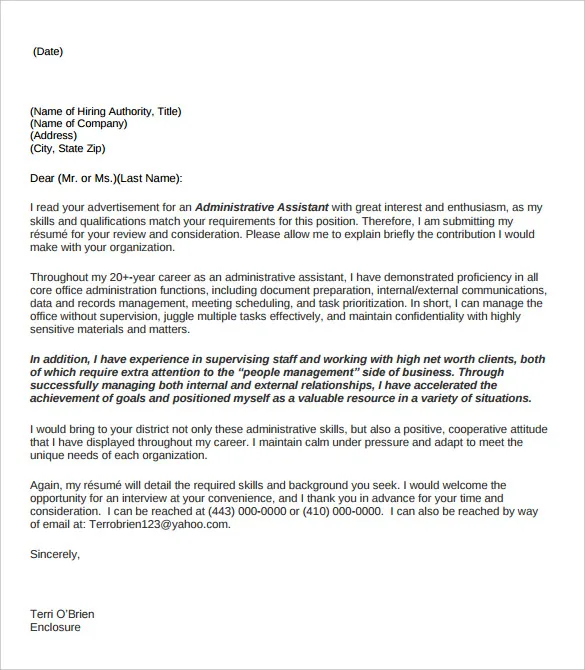
Why a Cover Letter Matters For Experienced Professionals
In the competitive landscape of today’s job market, especially for experienced professionals, a well-crafted cover letter is not just an optional extra, but a crucial tool. It serves as your personal introduction, going beyond the basic information contained in your resume. A compelling cover letter provides an opportunity to demonstrate your personality, enthusiasm, and understanding of the specific role and company. It allows you to connect the dots for the hiring manager, showcasing how your unique skills and experiences align perfectly with their needs. For seasoned professionals, the cover letter provides a space to tell a narrative that showcases their career journey and career growth. It highlights not only your technical skills but also your leadership abilities, industry knowledge, and any significant achievements that set you apart from other candidates. This is your chance to make a lasting first impression, proving your value from the very beginning.
Highlighting Your Achievements
Rather than simply listing your responsibilities, your cover letter should focus on your achievements. Hiring managers want to know what you’ve accomplished in previous roles and the tangible results you’ve delivered. Think about the projects you’ve led, the problems you’ve solved, and the improvements you’ve made. Use this section to highlight the impact you’ve had on your previous employers. This could include increased revenue, cost savings, process improvements, or successful project completion. Provide specific examples and data points to support your claims. For instance, instead of saying “Managed a team,” say “Led a team of 10 engineers to successfully deliver a new product, resulting in a 15% increase in sales within the first quarter.” By focusing on your achievements, you make a more compelling case for your candidacy and demonstrate your ability to contribute value to the company. The key is to illustrate how your past successes directly translate into future contributions within the new role.
Quantify Your Accomplishments

The most effective way to highlight your achievements is to quantify them. Instead of making general statements about your performance, back them up with numbers, percentages, and specific data. For example, instead of saying “Improved customer satisfaction,” state “Increased customer satisfaction scores by 20% through the implementation of a new customer service strategy.” Quantifiable achievements provide concrete evidence of your capabilities and give recruiters a clearer picture of your value. Consider using metrics like revenue growth, cost reduction, project completion rates, customer acquisition numbers, and employee satisfaction scores. Using hard data makes your accomplishments more credible and memorable, helping you stand out from other applicants. If possible, compare your achievements to industry benchmarks or previous performance to further demonstrate your impact. Always ensure the numbers you provide are accurate and relevant to the specific job requirements.
Tailoring Your Cover Letter
One of the biggest mistakes professionals make is sending out generic cover letters. Each cover letter should be specifically tailored to the job and the company. This shows the hiring manager that you’ve taken the time to understand their needs and that you’re genuinely interested in the opportunity. Begin by carefully reviewing the job description and identifying the key requirements and qualifications. Then, adjust your cover letter to highlight the skills and experiences that directly align with these requirements. This may include the specific projects you’ve worked on, the software you’ve mastered, or the industries you’ve served. Customizing your cover letter demonstrates your attention to detail and your commitment to the role. It shows that you’re not just sending out a mass email but are truly interested in their specific opportunity. It’s also important to use the company’s name correctly, mention specific projects or initiatives you are interested in, and address the letter to the hiring manager by name, if possible.
Researching the Company
Before you start writing, thoroughly research the company. This research will provide the details you need to tailor your cover letter and showcase your understanding of their business. Explore their website, social media profiles, and recent news articles. Identify their mission, values, products, services, and any recent achievements or challenges they are facing. Understanding the company’s culture and goals will help you align your cover letter with their needs. Highlight how your skills and experience can help them achieve their objectives. For example, if the company is focused on innovation, emphasize your experience with new technologies or your ability to develop creative solutions. If they are expanding into a new market, highlight your relevant experience or language skills. This level of detail will demonstrate your genuine interest and knowledge, making you a more compelling candidate.
Matching Skills to the Job Description

Your cover letter should explicitly connect your skills and experience to the requirements listed in the job description. Carefully analyze the job posting and identify the key skills, qualifications, and experiences that the employer is seeking. Then, use your cover letter to directly address these requirements, providing examples of how you’ve demonstrated these skills in your previous roles. It’s helpful to use the same keywords and phrases that are used in the job description. This shows that you understand what the employer is looking for and that you have the necessary qualifications. Don’t simply list your skills; provide specific examples of how you’ve used them to achieve results. For instance, if the job description requires project management skills, describe a successful project you led, the challenges you overcame, and the outcomes you achieved. This will strengthen your case and show the hiring manager that you’re a strong fit for the role.
Showcasing Your Value
The primary goal of your cover letter is to demonstrate the value you can bring to the company. Go beyond simply stating your qualifications and describe how your skills, experience, and achievements will benefit the employer. Think about the specific challenges the company may be facing and how you can help solve them. Highlight your ability to contribute to their goals, improve their processes, or increase their revenue. Showcase how you can make a difference. Consider the unique value proposition that sets you apart from other candidates. This might include your industry expertise, your leadership skills, or your ability to innovate. By clearly articulating the value you bring, you increase your chances of getting an interview. Always focus on how you can solve the employer’s problems and contribute to their success. Make the hiring manager see you as an investment, not just an expense.
Demonstrating Your Understanding of the Role
A successful cover letter demonstrates that you understand the role and the responsibilities it entails. This shows that you’ve carefully considered the opportunity and that you’re genuinely interested in the position. Show this by highlighting how your skills and experience align with the job requirements and what your daily tasks could look like. Show that you understand the company’s mission, values, and goals. You can demonstrate your understanding by mentioning specific projects or initiatives you’re interested in or by discussing how your skills can contribute to their success. Tailor your letter to the specific industry and company, showing that you’ve done your homework and are prepared for the role. Avoid vague statements and instead provide concrete examples of how you will contribute to the company’s objectives. Your understanding of the role will assure the hiring manager you are a good fit for the company.
Using Keywords Effectively

Modern recruitment processes often involve Applicant Tracking Systems (ATS) that scan resumes and cover letters for specific keywords. To ensure your application gets noticed, it’s important to use relevant keywords from the job description throughout your cover letter. Carefully review the job posting and identify the key skills, qualifications, and technologies that the employer is seeking. Incorporate these keywords naturally into your cover letter, both in the body and the skills section. Don’t simply stuff your cover letter with keywords. Use them in a way that makes sense within the context of your sentences and paragraphs. The key is to create a seamless and readable document that highlights your relevant skills and experiences. By using keywords effectively, you increase your chances of passing the ATS screening and getting your application seen by a human recruiter.
Formatting and Tone for Professionals
For experienced professionals, the formatting and tone of your cover letter are critical for making a positive impression. Your cover letter should convey professionalism, competence, and attention to detail. The formatting and tone demonstrate how you will represent the company. Make sure to use a professional and readable font, such as Times New Roman, Arial, or Calibri, with a font size between 10 and 12 points. Use clear headings and subheadings to organize your content and make it easier for the reader to follow. Keep your paragraphs concise and focused, and use bullet points to highlight key achievements or skills. Review your cover letter for any grammatical errors, typos, or inconsistencies. A well-formatted and polished cover letter demonstrates your attention to detail and your commitment to quality. Using appropriate tone is crucial for a professional look.
Professional Formatting Guidelines
Adhering to professional formatting guidelines is essential for creating a polished and professional cover letter. Choose a clean, readable font like Times New Roman, Arial, or Calibri. Use a standard font size (10-12 points) to ensure readability. Set consistent margins (1 inch on all sides) to provide a balanced look. Use single-spacing within paragraphs and double-spacing between paragraphs. Organize your content with clear headings and subheadings to guide the reader. Ensure your cover letter is well-structured and easy to navigate. Save your cover letter as a PDF to maintain formatting across different devices and operating systems. The goal is to create a visually appealing document that is easy to read and understand. A well-formatted cover letter showcases your attention to detail and your commitment to professionalism. Remember that the content is important, but the format can also influence a hiring manager.
Choosing the Right Tone

The tone of your cover letter should be professional, confident, and enthusiastic. Avoid sounding overly casual or informal, and use formal language and vocabulary. Show your enthusiasm for the role and the company, and highlight your relevant skills and experience. Tailor your tone to the specific company and industry, and show your knowledge of the sector. Express your passion for the work, and clearly state your desire to contribute to the company’s success. The tone should reflect a balance of professionalism and personality. Ensure your cover letter is free from slang, jargon, and overly casual language. Always proofread your cover letter carefully to ensure that your tone aligns with the image you want to portray. Your tone should be confident but not arrogant, showing that you know your worth without coming across as boastful. Be polite, respectful, and show your genuine interest in the opportunity.
Avoiding Common Cover Letter Mistakes
Avoid common cover letter mistakes to make a strong first impression. These errors can diminish your chances of being selected for an interview. One common issue is sending generic cover letters that are not tailored to the specific job or company. Always customize your letter to highlight relevant skills and experiences. Another mistake is focusing too much on yourself rather than on the needs of the employer. Instead, demonstrate the value you can bring to the company. Another common error is failing to proofread your cover letter for typos, grammatical errors, and formatting inconsistencies. Sloppy letters can convey a lack of attention to detail. Always proofread carefully. In summary, avoiding these common pitfalls will significantly increase your chances of creating a compelling cover letter that sets you apart from other candidates.
Generic Letters
Submitting a generic cover letter is a significant mistake that can immediately disqualify your application. A generic cover letter is one that is not tailored to the specific job or company. It uses broad statements that could apply to any position and fails to highlight the unique skills, experiences, or qualifications that make you a strong candidate for the role. It shows that you have not taken the time to research the company or understand their needs. Recruiters can easily spot a generic cover letter. Customizing your cover letter for each job you apply for requires effort. However, it demonstrates your genuine interest in the role and shows that you have taken the time to understand the company’s needs. This personalization makes a huge difference. Always adjust your letter to reflect the specific requirements of the job description.
Focusing on Yourself

Another common error is focusing too much on yourself and your needs rather than highlighting how you can contribute to the company’s success. While it’s important to mention your skills and experience, your cover letter should primarily demonstrate the value you can bring to the employer. Talk about what you can do for them, not just what you want from the job. Highlight your ability to solve their problems, contribute to their goals, and improve their processes. Rather than focusing on your career aspirations, emphasize how your skills and experience align with the job description and how they can benefit the employer. Frame your accomplishments in terms of how they have helped previous employers achieve their goals. By shifting your focus from yourself to the company, you make a much stronger case for your candidacy.
Typos and Grammatical Errors
Typos and grammatical errors can undermine the credibility of your cover letter and create a negative impression. These errors show a lack of attention to detail and may lead the hiring manager to question your professionalism and commitment to quality. Always proofread your cover letter carefully to catch any spelling or grammatical errors. Use a grammar checker and a spell checker, but don’t rely on them entirely. Read your cover letter aloud to catch any awkward phrasing or sentence structure issues. Consider having a friend or family member review your cover letter for additional feedback. A clean and polished cover letter demonstrates your professionalism and attention to detail. It shows that you care about the quality of your work and are willing to go the extra mile to ensure it is correct. Taking the time to proofread is a crucial step in the job search process.
The Power of a Strong Call to Action
Conclude your cover letter with a strong call to action. This encourages the hiring manager to take the next step and contact you. State your availability for an interview and reiterate your enthusiasm for the opportunity. Express your appreciation for their time and consideration. You can also include a specific request, such as “I look forward to discussing my qualifications in more detail.” Ensure your call to action is clear, concise, and action-oriented. Make it easy for the hiring manager to know what you want them to do next. A strong call to action leaves a positive impression and increases your chances of receiving a response. By ending with a clear and direct request, you signal your continued interest and professionalism. A well-crafted cover letter, combined with a strong call to action, is a powerful tool in the job search process, helping you make a lasting impression and secure an interview.