What is a Cover Letter?
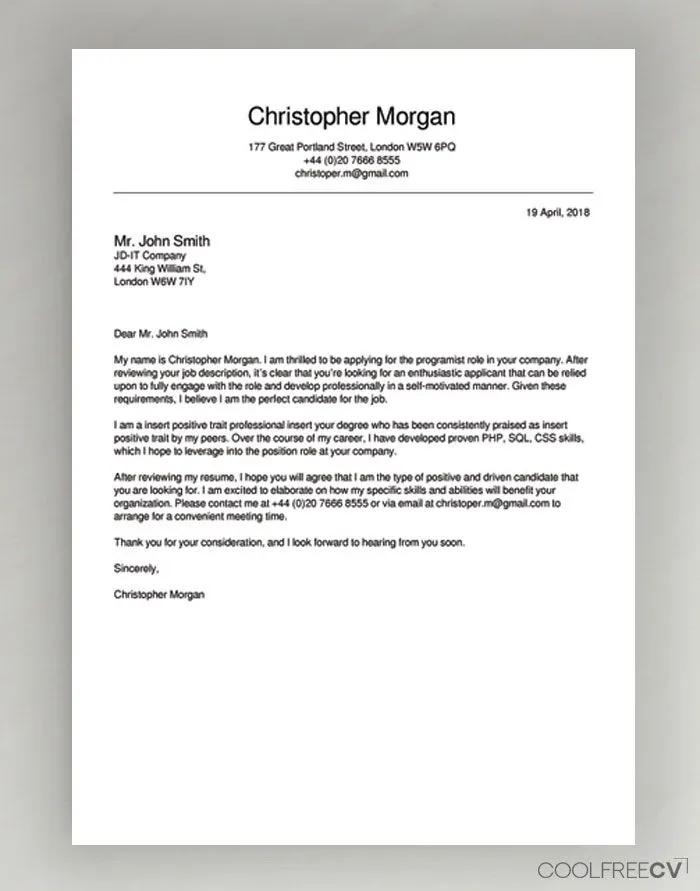
A cover letter is a crucial document that accompanies your resume when applying for a job. It serves as your first introduction to a potential employer, offering a personalized snapshot of your qualifications, skills, and personality. Unlike a resume, which provides a factual summary of your work history and education, a cover letter allows you to elaborate on why you’re the perfect fit for the specific role and company. It’s an opportunity to showcase your communication skills, demonstrate your understanding of the job requirements, and express your enthusiasm for the opportunity. A well-crafted cover letter can significantly increase your chances of landing an interview.
Why are Cover Letters Important?
Cover letters are important for several compelling reasons. Firstly, they provide context to your resume, helping recruiters understand the relevance of your experience to the specific job opening. They also give you a platform to explain any gaps in your employment history or career transitions. Secondly, a cover letter allows you to highlight your soft skills, such as communication, teamwork, and problem-solving, which are often difficult to convey through a resume. Thirdly, a well-written cover letter demonstrates your attention to detail and your genuine interest in the company and the role. It shows that you’ve taken the time to research the company and tailor your application to their specific needs. In a competitive job market, a strong cover letter can set you apart from other candidates.
Formatting Your Cover Letter

Proper formatting is essential for a professional-looking cover letter. A well-formatted cover letter is easy to read and makes a positive first impression. Use a standard font like Times New Roman, Arial, or Calibri in a 10- or 12-point size. Maintain consistent margins (typically 1 inch on all sides) and use single spacing within paragraphs and double spacing between paragraphs. Keep your letter concise, aiming for one page. Divide your letter into distinct sections with clear headings to guide the reader. This structure helps you organize your thoughts and present your information in a logical and easy-to-follow manner.
Contact Information
At the top of your cover letter, include your contact information, such as your full name, address, phone number, and email address. This information allows the hiring manager to easily reach you if they want to schedule an interview. Make sure your email address is professional-sounding and that your voicemail greeting is also professional. Double-check the accuracy of your contact details to avoid any missed opportunities.
Date
Below your contact information, include the date you are writing the cover letter. This helps the employer know when you submitted your application.
Recipient Information

Address your cover letter to the hiring manager or the appropriate person within the company. If possible, find out the name of the hiring manager. Addressing your cover letter to a specific person demonstrates that you have done your research and that you are genuinely interested in the position. If you cannot find a name, use a professional salutation like ‘Dear Hiring Manager’.
Salutation
The salutation is your opening greeting. Use ‘Dear Mr./Ms./Mx. [Last Name]’ if you know the hiring manager’s name. If you don’t know the name, use ‘Dear Hiring Manager’ or ‘Dear [Company Name] Hiring Team’. Avoid generic salutations like ‘To Whom It May Concern’, as they can make your letter seem impersonal.
Writing the Body of Your Cover Letter
The body of your cover letter is where you make your case for why you are the best candidate for the job. Focus on highlighting your skills, experience, and personality in a way that aligns with the job requirements and the company’s values. Use strong action verbs to describe your accomplishments and quantify your achievements whenever possible. Keep your tone professional yet enthusiastic, and avoid sounding overly formal or generic. Tailor each cover letter to the specific job and company to show that you have taken the time to understand their needs and expectations.
Opening Paragraph
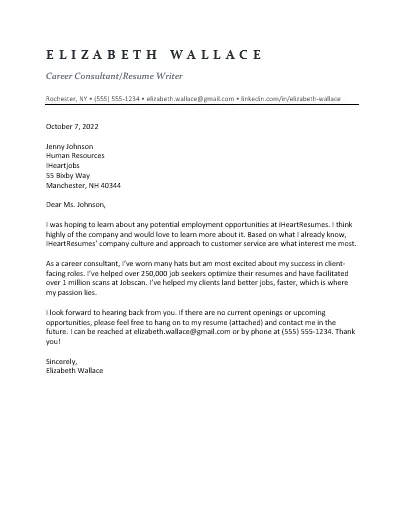
In your opening paragraph, state the position you are applying for and how you learned about the opportunity. Briefly mention your most relevant qualifications and express your enthusiasm for the role and the company. Make a strong first impression by capturing the reader’s attention and clearly stating your purpose for writing. This opening paragraph sets the stage for the rest of your letter, so make sure it is concise, engaging, and tailored to the specific job.
Highlight Your Skills and Experience
In the body paragraphs, elaborate on your skills and experience, providing specific examples to demonstrate your capabilities. Refer to the job description and identify the key skills and requirements the employer is seeking. Then, provide evidence of how your experience aligns with those requirements. Use the STAR method (Situation, Task, Action, Result) to describe your accomplishments. Quantify your achievements whenever possible, using numbers and data to illustrate your impact. For example, instead of saying ‘Improved customer satisfaction’, say ‘Increased customer satisfaction by 15% through implementing a new feedback system’.
Showcase Your Personality
While highlighting your professional qualifications, remember to let your personality shine through. Show your enthusiasm for the job and the company. Use a conversational tone to build a connection with the hiring manager. This can be achieved by describing how your values align with the company’s mission and culture. Share a brief anecdote that illustrates your soft skills or demonstrates your passion for the field. Keep it professional, but add a touch of your personality to make your letter more memorable.
Express Enthusiasm

Throughout your cover letter, express your enthusiasm for the position and the company. Explain why you are interested in this specific opportunity and what excites you about the role. Show that you have done your research and understand the company’s goals and values. Demonstrating genuine interest will make your application more compelling and increase your chances of getting an interview.
Call to Action
Conclude your letter with a clear call to action. Express your interest in an interview and mention your availability. Thank the hiring manager for their time and consideration. Provide your contact information again to make it easy for them to reach you. Make sure the call to action is direct and professional, leaving no doubt that you are eager to move forward in the hiring process.
Closing Paragraph
In your closing paragraph, reiterate your interest in the position and thank the hiring manager for their time and consideration. Use a professional closing such as ‘Sincerely’, ‘Best regards’, or ‘Thank you’. Sign your name, and if you are submitting a hard copy, sign above your typed name. Ensure that your closing is polite and reflects your enthusiasm for the opportunity. This is the last impression you will make, so make it a positive one.
Cover Letter PDF Tips

Saving your cover letter as a PDF is highly recommended, as it ensures that your formatting remains consistent across different devices and operating systems. This means that the hiring manager will see your letter exactly as you intended, regardless of the software or platform they are using. Additionally, PDF files are less susceptible to being altered or corrupted, providing greater security for your document. Following the proper formatting ensures your document is readable on any device and maintains its professional appearance.
Saving Your Cover Letter as a PDF
Most word processing programs, such as Microsoft Word and Google Docs, allow you to easily save your document as a PDF. Simply go to the ‘File’ menu and select ‘Save As’ or ‘Export’. In the file type options, choose ‘PDF’. Name your file using a clear and professional naming convention, such as ‘Your Name_Cover Letter_Job Title’. Double-check the document before saving as PDF to make sure everything is correct, then save your cover letter in PDF format before submitting it.
Why Use PDF for Your Cover Letter
PDFs maintain your formatting, which is essential for a professional look. They also prevent any accidental changes to your document. PDFs are universally compatible. Saving your cover letter as a PDF ensures that your formatting, including fonts, margins, and layout, remains consistent regardless of the recipient’s device or operating system. Also, PDFs are more secure than editable document formats, reducing the risk of accidental changes or formatting issues. Overall, using a PDF provides a polished and reliable way to present your cover letter.
Proofreading and Editing Your Cover Letter

Proofreading and editing are critical steps in the cover letter writing process. Carefully proofread your cover letter for any grammatical errors, spelling mistakes, and typos. Review the formatting and ensure that it is consistent throughout. Read the cover letter aloud to catch any awkward phrasing or unclear sentences. It can also be helpful to ask a friend, family member, or career advisor to review your cover letter. A fresh pair of eyes can often spot errors that you might have missed. Proofreading and editing will ensure that your cover letter is polished, professional, and error-free.
Common Cover Letter Mistakes to Avoid
Several common mistakes can undermine your cover letter. Avoid generic cover letters that are not tailored to the specific job or company. Don’t simply restate your resume; instead, use the cover letter to provide context and highlight your unique qualifications. Steer clear of typos, grammatical errors, and formatting inconsistencies. Avoid being too informal or using slang. Ensure the tone is professional. Don’t include irrelevant information or go on for too long; keep it concise and focused. Finally, don’t forget to proofread! These common mistakes can significantly diminish your chances of getting an interview.
Using Keywords in Your Cover Letter
Using keywords in your cover letter is an important SEO strategy. Review the job description and identify the key skills and qualifications the employer is seeking. Then, incorporate these keywords naturally throughout your cover letter. This can help your application get noticed by applicant tracking systems (ATS), which many companies use to screen resumes and cover letters. However, avoid keyword stuffing, which is the practice of excessively repeating keywords. Instead, integrate the keywords naturally within your sentences and paragraphs. Make sure that the keywords fit naturally within the content and don’t make it sound forced.
Cover Letter Examples

Reviewing cover letter examples can be a great way to learn different formats and writing styles. Look for examples that are relevant to the type of job you are applying for and your industry. Pay attention to how the writers highlight their skills and experience and express their enthusiasm for the role. However, do not simply copy and paste; tailor the examples to your specific situation. Use them as inspiration and a guide to help you create a cover letter that is unique to you and showcases your skills. You can find cover letter examples on various career websites and online resources, but make sure you adapt them to fit your profile.