What Makes a Great Entry-Level HR Cover Letter?
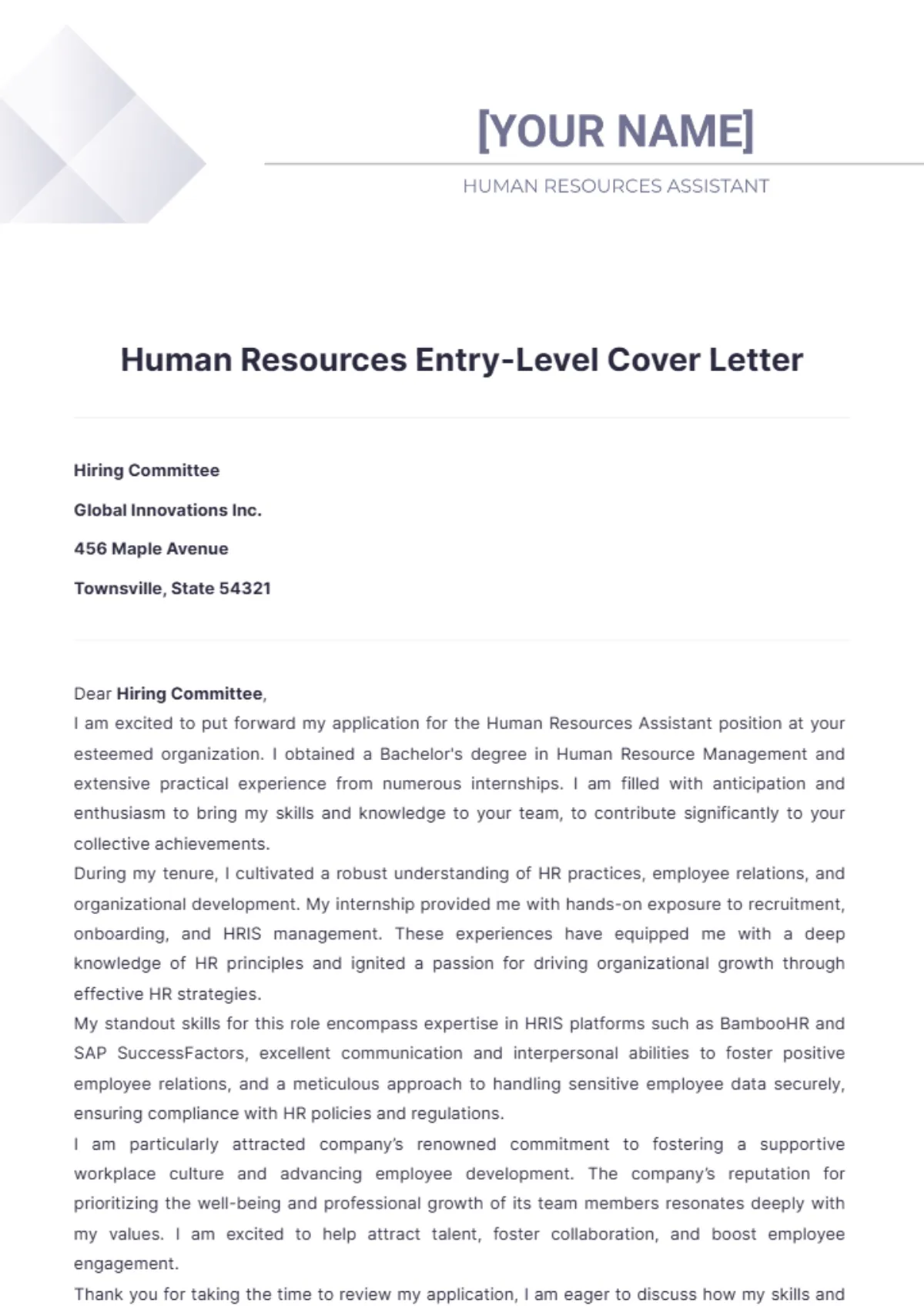
A strong cover letter is your first impression on a potential employer in the field of Human Resources. For entry-level positions, where experience may be limited, the cover letter becomes even more crucial. It’s your opportunity to showcase your personality, enthusiasm, and potential. A great cover letter goes beyond simply restating your resume; it tells a story, highlighting your relevant skills, experiences, and your genuine interest in the role and the company. The best entry-level HR cover letters are concise, well-structured, and tailored to the specific job description. They demonstrate a clear understanding of HR principles and the company’s values, making you stand out from other applicants. This isn’t just about listing qualifications; it’s about demonstrating that you understand the role and are eager to contribute to the company’s success. Furthermore, it should be free of errors, reflecting your attention to detail, a highly sought-after trait in any HR professional. Remember, your cover letter is a marketing tool—selling your potential to the hiring manager.
Highlighting Relevant Skills and Experiences
Even without direct HR experience, you likely possess transferable skills that are highly valued in the field. Identify and highlight these skills in your cover letter. These might include communication, problem-solving, organization, and interpersonal abilities. Provide specific examples of how you’ve demonstrated these skills in previous roles, academic projects, or volunteer activities. For instance, if a job description emphasizes communication, share a brief anecdote where you successfully mediated a conflict, presented to a large group, or effectively communicated complex information. Consider any projects or coursework that required organizational skills, attention to detail, or the ability to manage confidential information. Every experience, from customer service to event planning, can offer relevant examples. The key is to connect your skills to the requirements of the HR role and demonstrate how you can make a valuable contribution. It’s about showing how your unique background can translate into success in HR.
Transferable Skills from Other Fields

The most in-demand entry-level HR candidates are adept at utilizing transferable skills. Regardless of your previous field, certain skills are incredibly relevant. Consider the customer service industry, where conflict resolution and effective communication are paramount. In a sales role, you’ve likely honed your persuasive abilities and your ability to build rapport. Event planning experience showcases your organizational skills, time management, and attention to detail. Volunteer work often requires teamwork, empathy, and problem-solving abilities. Even academic projects can highlight your research skills, analytical thinking, and the ability to meet deadlines. The best cover letters draw parallels between your experiences and the requirements of the HR position, illustrating how your existing skill set can be successfully applied in your new role. Think about what you’ve done and how it prepared you for the challenges of Human Resources. Remember to provide concrete examples demonstrating these skills in action.
Showcasing Your Passion for HR
A genuine interest in human resources is essential for any successful candidate. Your cover letter should clearly articulate why you’re drawn to this field and what motivates you. Share your reasons for wanting to work in HR; perhaps you’re passionate about helping others, fostering positive work environments, or contributing to employee development. If you’ve taken courses, attended workshops, or read books related to HR, mention these activities to demonstrate your commitment to learning. If you have personal or volunteer experiences that have shaped your interest in HR, feel free to share them. The goal is to convey your enthusiasm and demonstrate that you’re not just looking for a job but are genuinely invested in building a career in the field. A passionate and engaged candidate is more likely to excel and make a positive contribution to the company’s culture. Show your enthusiasm and commitment to the field.
Tailoring Your Cover Letter to the Job
Generic cover letters are quickly discarded. Tailoring your cover letter to each specific job application is paramount to capturing the hiring manager’s attention. Carefully read the job description and identify the key skills, qualifications, and experiences the employer is seeking. Then, in your cover letter, explicitly address these requirements and explain how your background aligns with them. Use the same keywords and phrases from the job description to demonstrate that you understand what the employer is looking for. Customize your cover letter to reflect the company’s culture and values. Research the company’s website, social media profiles, and recent news articles to gain insights into its mission, values, and current initiatives. By demonstrating your knowledge of the company and tailoring your cover letter to its specific needs, you’ll significantly increase your chances of making a positive impression.
Researching the Company and Its Culture

Thoroughly researching the company is an important step in crafting a compelling cover letter. Learn about the company’s mission, values, and culture by exploring its website, social media channels, and industry publications. Identify the company’s recent achievements, challenges, and goals. Understanding the company’s values will help you tailor your letter and demonstrate that you align with its culture. You should also use this research to personalize your letter. Addressing the hiring manager by name and mentioning specific company initiatives or values shows that you’ve taken the time to learn about the organization. Show your genuine interest in working at the company and how you can contribute to its success. Research not only helps you to tailor your letter, but also demonstrates your professionalism and your genuine desire to join the team. This also prepares you for the interview, as you will be prepared to talk about the company.
Addressing the Hiring Manager by Name
Whenever possible, address your cover letter to the hiring manager by name. This small gesture demonstrates that you’ve taken the time to do your research and that you’re genuinely interested in the role. Finding the hiring manager’s name can be as simple as checking the job posting, searching on LinkedIn, or contacting the company’s HR department. If you can’t find a specific name, using a general greeting like ‘Dear Hiring Team’ or ‘Dear [Company Name] Hiring Manager’ is also acceptable. Always avoid generic greetings like ‘To Whom It May Concern’ or ‘Dear Sir/Madam,’ as they can make your letter feel impersonal. Addressing the hiring manager by name shows respect and attention to detail and makes your cover letter more engaging.
Emphasizing Your Achievements
Don’t just list your responsibilities; showcase your accomplishments. Instead of stating what you did, describe what you achieved. Use action verbs to demonstrate your impact and quantify your results whenever possible. For instance, instead of writing ‘Assisted with onboarding new employees,’ you could write ‘Streamlined the onboarding process, resulting in a 15% reduction in new hire training time.’ Highlight accomplishments that align with the requirements of the HR role, even if they were achieved in a different setting. Think about projects you led, problems you solved, or improvements you implemented. Focusing on your achievements will make your cover letter much more compelling and demonstrate your potential to contribute to the company’s success.
Quantifying Your Accomplishments

Whenever possible, quantify your accomplishments to demonstrate your impact with hard numbers and data. Numbers add credibility to your claims and make it easier for the hiring manager to assess your contributions. Instead of saying ‘Improved customer satisfaction,’ state ‘Increased customer satisfaction scores by 20% within six months through the implementation of a new feedback system.’ If you handled a project, mention the number of people involved, the budget managed, or the deadlines met. If you have experience with data analysis, share any key findings or insights you generated. Quantifying your achievements shows that you’re results-oriented and helps the hiring manager better understand the value you can bring to the organization. Using metrics is key to show results and helps demonstrate your value.
The Importance of a Strong Opening
The opening paragraph of your cover letter is your first chance to grab the reader’s attention and make a positive impression. It should be concise, engaging, and clearly state your purpose for writing. Avoid generic opening sentences like ‘I am writing to express my interest…’ Instead, start with a strong statement that immediately highlights your enthusiasm for the role and the company. If you were referred by someone, mention their name. You can also share a brief anecdote or a compelling fact to capture the reader’s interest. State the specific position you’re applying for and, if possible, briefly mention why you’re a good fit. The first paragraph sets the tone for the rest of your letter, so make it count. Ensure your opening is impactful and makes the reader want to continue reading.
Grabbing the Reader’s Attention
To truly grab the reader’s attention, go beyond the basics. Instead of a generic opening, try starting with a statement that showcases your unique perspective or a specific skill that aligns with the job requirements. Consider a captivating statistic related to HR or the company’s industry. Share a brief story that demonstrates your passion for HR or your relevant skills. You could also reference a specific achievement from your past that’s relevant to the role. Whatever you choose, make sure it’s relevant to the job, concise, and reflects your personality. The goal is to make the hiring manager want to learn more about you. You want them to be hooked, and the opening paragraph is the best place to start.
Crafting a Compelling Middle Section

The middle section of your cover letter is where you expand on your skills, experiences, and qualifications. This is your opportunity to provide concrete examples of your accomplishments and demonstrate how you meet the requirements of the job. Use the STAR method (Situation, Task, Action, Result) to describe your experiences effectively. For each example, clearly state the situation, your task, the actions you took, and the results you achieved. Tailor this section to the specific job description, emphasizing the skills and experiences that are most relevant. Include relevant keywords to align with the job posting. This section should flow naturally, building a compelling narrative that highlights your value as a candidate. Present your strengths in a structured and organized manner.
Structuring Your Cover Letter Effectively
A well-structured cover letter is easy to read and visually appealing. It should include a clear and concise introduction, a compelling middle section, and a strong conclusion. Use clear headings and subheadings to organize your thoughts and make it easy for the reader to find key information. Break up large blocks of text into smaller, more manageable paragraphs. Ensure that the letter flows logically and tells a cohesive story. Choose a professional font and maintain consistent formatting throughout the document. The overall structure of your cover letter communicates professionalism and your ability to organize and present information clearly, which are essential qualities in the HR field.
Formatting for Readability
Formatting impacts your cover letter’s readability. Choose a professional font like Arial, Calibri, or Times New Roman, and use a font size between 10 and 12 points. Use consistent spacing and margins. Use bullet points to highlight key skills and accomplishments. Ensure your paragraphs are concise, with clear topic sentences. Break up long blocks of text. Use bolding, italics, and underlining sparingly, and only for emphasis. The goal is to create a visually appealing document that is easy to read and navigate. Proofread your cover letter to identify any formatting inconsistencies. A well-formatted cover letter demonstrates professionalism and attention to detail, showing that you respect the reader’s time.
Using Action Verbs to Describe Your Experience

Action verbs bring your cover letter to life and make your accomplishments more impactful. Start your sentences with strong action verbs to describe your responsibilities, skills, and achievements. For example, instead of writing ‘Responsible for managing employee records,’ write ‘Managed employee records, ensuring accuracy and confidentiality.’ Here are a few examples of powerful action verbs: managed, coordinated, developed, implemented, improved, trained, facilitated, analyzed, researched, and communicated. This active language makes your cover letter more engaging and demonstrates your proactiveness. Remember to choose verbs that accurately reflect your actions and responsibilities, creating a dynamic and compelling narrative. This shows the hiring manager the impact you had.
The Power of Keywords in Your Cover Letter
Keywords are essential for both Applicant Tracking Systems (ATS) and human readers. ATS software scans cover letters and resumes for specific keywords that match the job description. Even if a human is reading the letter, keywords help them quickly identify your qualifications. Carefully review the job description and identify the key skills, qualifications, and experiences the employer is seeking. Incorporate these keywords naturally throughout your cover letter. Use keywords in your opening paragraph, your middle section, and your closing paragraph. Don’t overstuff your cover letter with keywords; ensure that they flow naturally within the text. Keyword optimization helps you get past the ATS and helps to highlight your relevant skills.
Including Keywords from the Job Description
A targeted cover letter directly addresses the employer’s needs. Carefully analyze the job description, noting the key skills, qualifications, and software knowledge mentioned. Incorporate these keywords into your cover letter. For example, if the job description mentions ’employee relations,’ ‘performance management,’ and ‘recruiting,’ use these terms naturally within your text. Show that you have the skills requested. Make sure your experience aligns and matches what the company wants. Incorporate these keywords, but ensure that your writing still flows naturally and remains engaging. This targeted approach ensures that your cover letter resonates with the hiring manager, highlighting your understanding of the role and your ability to meet their needs.
Showcasing Your Knowledge of HR Practices

Demonstrating your knowledge of HR practices sets you apart, especially in an entry-level role. Even without direct HR experience, you can showcase your understanding of HR principles. Mention any relevant courses, workshops, or certifications you’ve completed. If you’re familiar with employment laws, workplace policies, or HR best practices, highlight that knowledge. Even if you have no direct experience, you can show that you’ve researched the topic. You can do this by mentioning your understanding of recruitment, onboarding, employee relations, or compensation and benefits. Show your eagerness to learn more, and highlight any relevant knowledge. Demonstrate that you are serious about pursuing a career in the HR field. You can show this by researching and keeping up with current HR trends.
Mentioning Relevant HR Software or Tools
If you have experience with any HR software or tools, be sure to mention them in your cover letter. Common software includes applicant tracking systems (ATS), payroll systems, and HRIS platforms. If you’ve used software for recruiting, onboarding, performance management, or data analysis, mention the names of these software programs. For example, you might write, ‘Experience with [Name of ATS] for managing applicant data’ or ‘Proficient in using [Payroll software] for processing payroll and benefits.’ The more relevant experience you have, the better, and this will help you stand out from other applicants. Make sure you can comfortably use the software, and use this as an advantage. List only the tools that you are familiar with and that are relevant to the job.
Proofreading and Editing Your Cover Letter
Proofreading and editing your cover letter is the final, crucial step. Errors and typos can undermine your credibility and make a negative impression on the hiring manager. Carefully review your cover letter for any grammatical errors, spelling mistakes, punctuation errors, and formatting inconsistencies. Read your cover letter aloud to catch any awkward phrasing or unclear sentences. Consider having a friend, family member, or career advisor review your cover letter for feedback. Fresh eyes can often catch errors that you might have missed. Proofreading demonstrates your attention to detail and professionalism, skills that are highly valued in the HR field. Make sure you have a flawless cover letter before submitting your application.
Checking for Grammatical Errors and Typos
Thoroughly check your cover letter for grammatical errors and typos. Even a single mistake can create a negative impression. Pay close attention to sentence structure, subject-verb agreement, and the correct use of punctuation. Use a grammar checker, but don’t rely on it completely. Always proofread your letter carefully. Read it aloud to yourself to catch any errors. If possible, have a friend or family member review your letter. A second set of eyes can often catch mistakes that you might have overlooked. The goal is to ensure that your cover letter is error-free and reflects your professionalism. Take the time to ensure the language is proper and clear. A polished cover letter demonstrates your commitment to detail.
Seeking Feedback from Others
Asking for feedback on your cover letter is a smart step. Share your cover letter with a friend, family member, career advisor, or mentor. Ask them for their honest feedback on the content, structure, and overall presentation. Specifically, ask them if your cover letter is clear, concise, and engaging. Ask if it highlights your relevant skills and experiences. Ask if it demonstrates your passion for HR. Ask them if the tone and language are appropriate for the role. Consider their suggestions and incorporate the feedback into your cover letter. A fresh perspective can help you refine your cover letter and ensure it makes the best possible impression. A well-crafted cover letter reflects your preparedness and helps you to stand out from the crowd. Using feedback can help show your commitment to the role.