What Makes a Cover Letter Effective
In the competitive landscape of job applications, a well-crafted cover letter can be your secret weapon. It’s your first opportunity to make a strong impression on a potential employer, showcasing not just your qualifications but also your personality and enthusiasm. A truly effective cover letter goes beyond simply reiterating your resume it tells a compelling story, highlighting your value proposition and demonstrating why you’re the perfect fit for the role. This guide delves into the key elements that transform a generic cover letter into a powerful tool for landing your dream job. By implementing these strategies, you can significantly increase your chances of getting noticed and securing an interview. Remember, a cover letter is not merely a formality, it’s an active opportunity to impress.
Highlight Your Value Proposition
Your value proposition is what you bring to the table – the unique combination of skills, experiences, and qualities that make you stand out from other candidates. A good cover letter should immediately communicate your value proposition. Instead of simply listing your skills, explain how they align with the job requirements and how they can benefit the company. Provide specific examples of your accomplishments, showcasing how you’ve solved problems, achieved goals, or added value in previous roles. Consider what makes you unique and what you can offer that others cannot. By clearly articulating your value, you immediately capture the hiring manager’s attention and make them want to learn more about you. Remember to tailor this to the specific job; what value is most needed for this particular role?
Tailor Your Letter to the Specific Job

One of the biggest mistakes job seekers make is sending out generic cover letters. A truly effective cover letter is tailored to the specific job and company. This means carefully reviewing the job description and identifying the key requirements and desired qualifications. Then, you should align your skills and experience with those requirements, providing relevant examples that demonstrate your ability to succeed in the role. Avoid using a one-size-fits-all approach; each cover letter should be customized to reflect your understanding of the company’s needs and the specific responsibilities of the position. This shows initiative and a genuine interest in the opportunity. Taking the time to personalize your letter will greatly increase your chances of making a positive impact.
Research the Company & Role
Before writing your cover letter, conduct thorough research on the company and the role you’re applying for. Visit the company’s website, read their mission statement, and learn about their products or services. Understanding the company culture and values will help you tailor your letter to resonate with the hiring manager. In addition, research the specific responsibilities and requirements of the job to understand what the employer is looking for in a candidate. This research will enable you to personalize your letter, demonstrating your genuine interest and your understanding of the company and the role. It helps you make informed decisions about which skills to highlight and which experiences to emphasize, making your application much more compelling.
Address the Hiring Manager by Name
Whenever possible, address your cover letter to the hiring manager by name. This small detail immediately personalizes your letter and shows that you’ve taken the time to learn about the company and the opportunity. If you can’t find the hiring manager’s name through research, try contacting the company’s HR department or searching on LinkedIn. If you are unable to find a name, it’s acceptable to use a generic salutation, such as “Dear Hiring Manager.” However, a personalized greeting makes a much stronger impression. It also indicates your attention to detail and your genuine interest in the specific role. This seemingly small step can help you stand out from other applicants who may be using a generic approach.
Show, Don’t Just Tell

Instead of simply stating that you possess certain skills, use your cover letter to demonstrate those skills through specific examples and accomplishments. Provide concrete evidence of your abilities by sharing stories or anecdotes that illustrate your successes in previous roles. For instance, if you claim to be a strong communicator, provide an example of a presentation you delivered or a project you led that required effective communication. This is an important step in showing how you have applied your skills and what results you achieved. This approach is far more persuasive and memorable than simply listing your skills. Quantify your achievements whenever possible to make your accomplishments even more impactful.
Quantify Your Achievements
Whenever possible, quantify your achievements to demonstrate the impact you’ve made in previous roles. Use numbers and metrics to illustrate your successes, such as increasing sales by a certain percentage, reducing costs by a specific amount, or improving customer satisfaction scores. Quantifying your accomplishments provides concrete evidence of your abilities and makes your cover letter more compelling. These numbers show that you can produce tangible results and are aware of key performance indicators. For example, instead of saying “Improved customer service,” say “Increased customer satisfaction scores by 15% within six months.” This level of detail significantly strengthens your value proposition.
Use Action Verbs
Use strong action verbs to bring your cover letter to life and make it more engaging. Avoid passive language and instead, use verbs that convey energy and initiative. Start each bullet point with a compelling action verb. Instead of “Responsible for managing social media,” try “Managed social media campaigns, resulting in a 20% increase in followers.” Using active voice makes your achievements sound more dynamic and impactful. This helps you communicate your skills and experiences more effectively. The choice of verbs can greatly influence the hiring manager’s perception of your abilities and your overall suitability for the role. Some examples include: ’led,’ ‘managed,’ ‘developed,’ ‘implemented,’ ‘achieved,’ ‘created,’ and ‘improved’.
Format and Proofread Your Cover Letter

A well-formatted and error-free cover letter is crucial for making a positive impression. The formatting and proofreading process should be done carefully. Your cover letter is a direct reflection of your professionalism and attention to detail, so errors can be detrimental to your chances of being considered for a role. You should choose a professional font and layout and proofread the letter for grammar and spelling mistakes. Attention to these details shows that you care about the impression you make and that you are a candidate who pays attention to details.
Choose a Professional Font and Layout
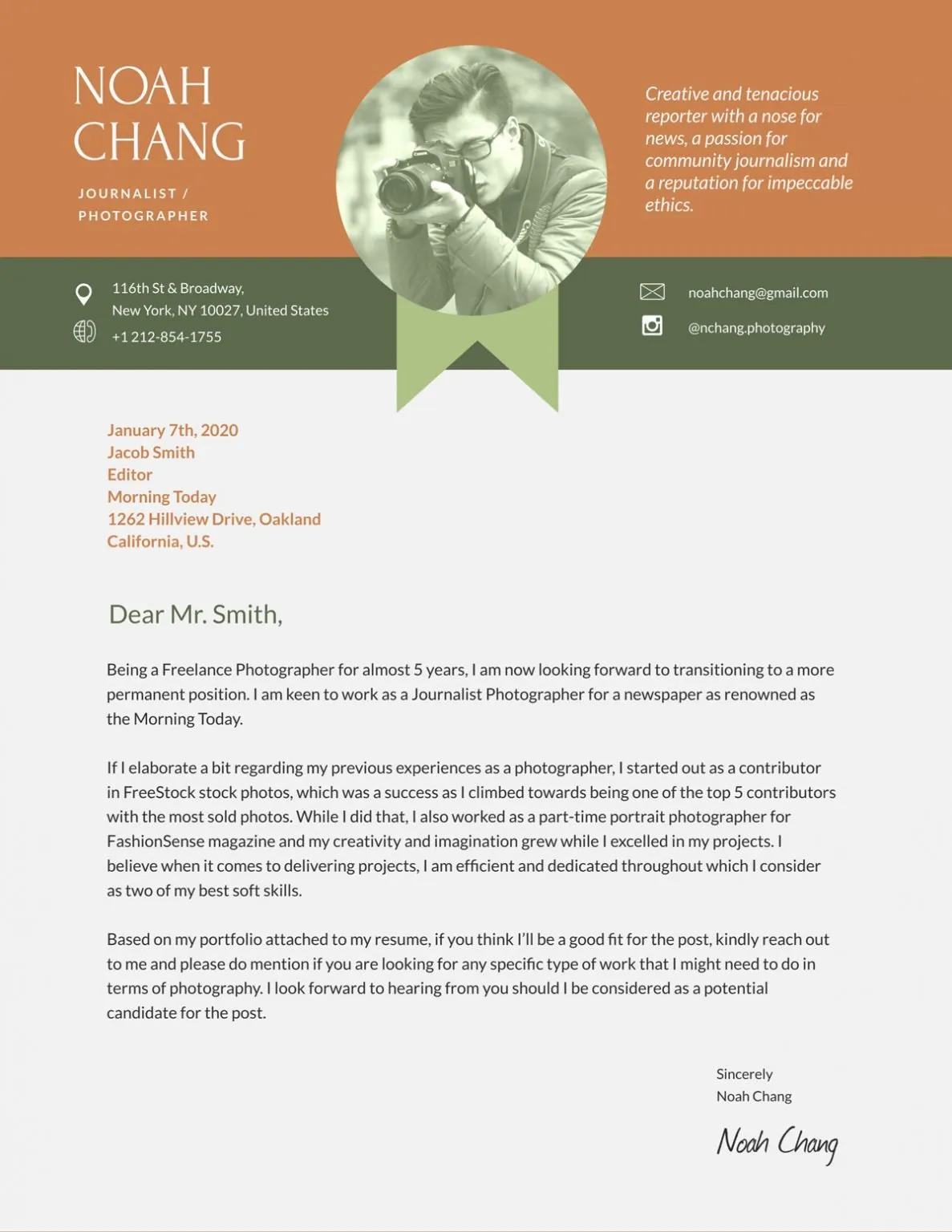
Select a clean, easy-to-read font like Times New Roman, Arial, or Calibri. The layout should be visually appealing, with clear headings, ample white space, and consistent formatting. Avoid using excessive formatting or distracting design elements. A well-formatted cover letter is easy to read and presents your information in a clear and organized manner. Ensure that the layout is consistent with your resume. A professional and well-formatted cover letter makes a positive first impression and shows the hiring manager that you’re serious about the opportunity and that you care about how your work looks. A clear layout is a visual indicator of your organizational skills.
Proofread for Grammar and Spelling Errors
Proofread your cover letter carefully for any grammar, spelling, or punctuation errors. These errors can undermine your credibility and make you appear unprofessional. Read your cover letter multiple times, and consider asking a friend or family member to review it as well. Sometimes, a fresh pair of eyes can catch errors that you might have missed. Use grammar and spell-checking tools, but don’t rely on them entirely. A human review is essential to ensure that your cover letter is polished and error-free. This step is crucial; it’s a detail that can make or break your chances.
End With a Strong Call to Action

End your cover letter with a clear call to action that encourages the hiring manager to take the next step. This could be a request for an interview, a suggestion to discuss your qualifications further, or a statement of your enthusiasm for the opportunity. Your call to action should be specific, direct, and confident. You want to make it clear that you are interested and prepared to move forward. Provide your contact information and make it easy for the hiring manager to get in touch with you. This final step reinforces your interest and leaves a lasting impression.
Express Enthusiasm and Confidence
Throughout your cover letter, express your enthusiasm for the job and your confidence in your ability to succeed. Let your excitement for the opportunity shine through by using positive language and a confident tone. Avoid sounding hesitant or unsure of yourself. Demonstrate your belief in your qualifications and your potential to contribute to the company. This helps you make a positive impression and shows the hiring manager that you’re genuinely interested in the role and that you believe you can make a valuable contribution. This confidence is contagious and can greatly enhance your appeal as a candidate.
Thank the Hiring Manager
Conclude your cover letter by thanking the hiring manager for their time and consideration. Express your gratitude for their attention to your application. This simple act of courtesy demonstrates your professionalism and respect for their time. It’s a polite and respectful way to end your letter, leaving a positive impression. It also reinforces the message that you value the opportunity and look forward to hearing from them. Showing this consideration is an important part of the overall package.