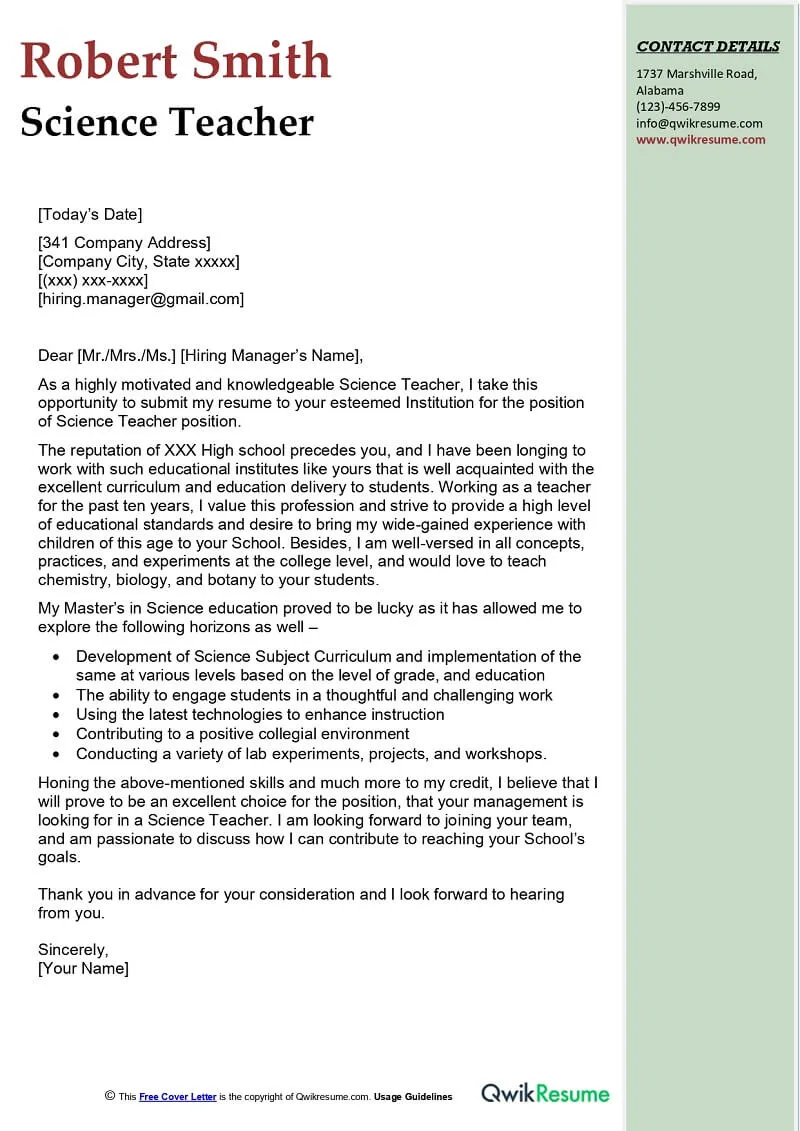
Highlighting Your Science Skills
Your science job cover letter is your first opportunity to make a strong impression on a potential employer. It’s not just a formality; it’s a crucial tool to showcase your abilities and persuade the hiring manager that you are the right fit for the role. To get noticed, you need to highlight your science skills effectively. Begin by identifying the core skills required for the specific job you are applying for. These skills can be technical, such as proficiency in a particular laboratory technique or software, or they can be soft skills, such as problem-solving, critical thinking, and teamwork. Once you have a clear understanding of the required skills, make a list of your own skills that align with those requirements. Use the cover letter to provide concrete examples of how you have used these skills successfully in previous roles or academic projects. Remember to use action verbs to describe your accomplishments and quantify your achievements whenever possible to demonstrate the impact of your skills.
Showcasing Relevant Experience
Your experience is a critical component of your cover letter. It’s where you demonstrate that you have the practical knowledge and abilities the employer is seeking. Start by creating a comprehensive list of all your relevant experiences, including internships, research projects, volunteer work, and previous jobs. For each experience, highlight the specific tasks you performed, the skills you developed, and the results you achieved. When describing your experience, be sure to tailor it to the specific job requirements. Focus on the experiences that are most relevant to the position you are applying for and avoid including irrelevant information. Provide concise and impactful descriptions that demonstrate your ability to contribute to the company. Use keywords from the job description to align your experience with the employer’s needs and expectations. The goal is to demonstrate that you have the background and expertise necessary to succeed in the role.
Quantifying Achievements
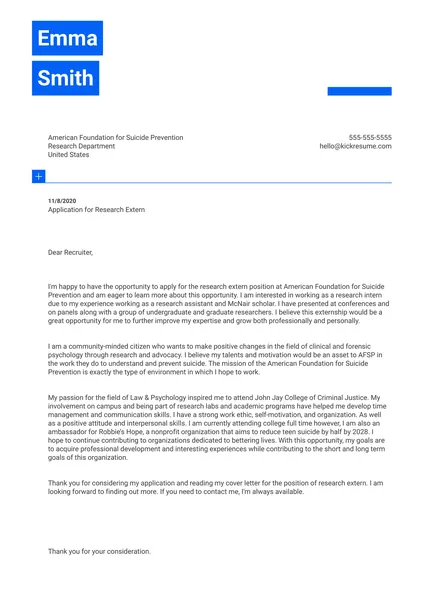
Quantifying your achievements is a powerful way to make your cover letter stand out. Instead of simply stating what you did, provide concrete evidence of your accomplishments. Use numbers, statistics, and metrics to demonstrate the impact of your work. For example, instead of saying ‘Improved lab efficiency,’ you could say ‘Improved lab efficiency by 15% through the implementation of a new inventory system.’ Such detail makes your achievements more compelling and provides tangible proof of your abilities. When describing your achievements, be specific about the methods you used, the results you achieved, and the impact your work had. Think about what results you delivered in previous roles, such as saving costs, increasing productivity, or improving outcomes. This approach helps the hiring manager quickly understand the value you can bring to their organization. Quantifying your achievements makes your cover letter more persuasive and memorable, increasing your chances of getting noticed.
Tailoring to the Specific Job
A generic cover letter is likely to be overlooked. To get noticed, you need to tailor your cover letter to each specific job you apply for. This involves understanding the company, the role, and the specific requirements listed in the job description. Research the company’s mission, values, and culture to understand its goals and priorities. Then, carefully review the job description and identify the key skills, experience, and qualifications that the employer is seeking. Use this information to customize your cover letter, highlighting how your skills and experience align with the specific requirements of the job. This shows that you have carefully considered the position and are genuinely interested in the opportunity. Customizing your cover letter also demonstrates your attention to detail and your willingness to go the extra mile. By taking the time to tailor your letter, you increase the likelihood that it will resonate with the hiring manager and get you an interview.
Researching the Company
Before writing your cover letter, conduct thorough research on the company you are applying to. This research will inform your letter and demonstrate your genuine interest in the opportunity. Visit the company’s website and review its mission statement, values, and recent news. Look for information about the company’s products, services, and customers. Research the company’s culture, values, and workplace environment by reading employee reviews on websites like Glassdoor or LinkedIn. Understanding the company’s background will help you tailor your cover letter to highlight how your skills and experience align with its goals and priorities. For example, if the company emphasizes innovation, you can mention your experience with cutting-edge technologies or your ability to develop creative solutions. This level of preparation signals to the hiring manager that you’ve taken the time to understand the company and its needs.
Addressing the Job Requirements
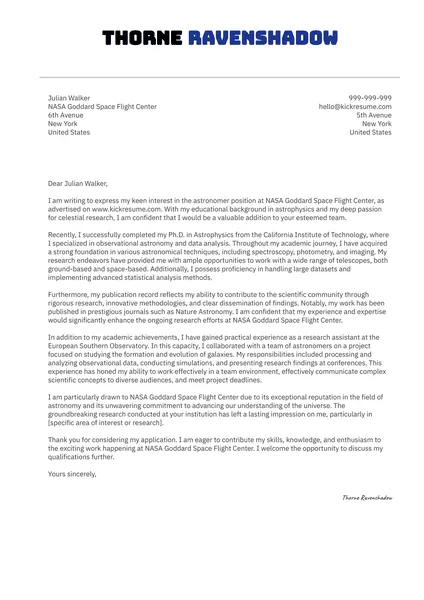
Carefully review the job description and address each of the stated requirements in your cover letter. Highlight how your skills and experience meet the employer’s needs. Use keywords from the job description to demonstrate your understanding of the role and your ability to contribute to the company. If the job description lists specific skills or qualifications, be sure to provide concrete examples of how you possess them. For instance, if the job requires experience with a particular software program, describe your proficiency and the projects you completed using that program. If the job emphasizes teamwork, provide examples of your collaborative experiences and your ability to work effectively with others. Your goal is to show that you have the essential skills, experience, and qualifications to excel in the role. By directly addressing the job requirements, you demonstrate that you are a strong candidate and have taken the time to understand the position.
Formatting and Structure for Impact
The formatting and structure of your cover letter play a crucial role in making a positive impression. Use a professional and clean format that is easy to read. Select a standard font like Times New Roman, Arial, or Calibri, and use a font size of 11 or 12 points. Maintain consistent spacing and margins throughout the letter. Use headings, bullet points, and white space to break up large blocks of text and make your letter more visually appealing. The structure of your cover letter should follow a standard format, including an introduction, body paragraphs, and a conclusion. Begin with a clear and concise opening that states the position you are applying for and where you saw the job posting. The body paragraphs should highlight your relevant skills, experience, and achievements. The conclusion should reiterate your interest in the position and express your eagerness to learn more. Properly formatted and structured cover letter will be easier to read and understand, increasing your chances of getting noticed.
Creating a Strong Opening
The opening of your cover letter is your first and perhaps only chance to grab the reader’s attention. It should be clear, concise, and engaging. Start by stating the position you are applying for and where you saw the job posting. You can also mention something specific that caught your eye about the company or the role. Avoid generic phrases and clichés. Instead, aim to make a strong statement that highlights your enthusiasm and qualifications. Consider starting with a compelling anecdote that showcases your skills or experience. For example, if you’re applying for a research position, you could start by describing a project where you successfully solved a challenging problem. The goal is to capture the reader’s interest from the outset and make them want to learn more about you. A strong opening sets the tone for the rest of your cover letter and significantly increases your chances of making a positive first impression.
Developing Engaging Body Paragraphs

The body paragraphs of your cover letter are where you showcase your skills, experience, and achievements. Each paragraph should focus on a specific aspect of your qualifications and provide compelling examples to support your claims. Use the STAR method (Situation, Task, Action, Result) to structure your examples. Describe the situation, the task you were assigned, the actions you took, and the results you achieved. This method helps you create detailed and impactful descriptions that highlight your abilities. Focus on the most relevant experiences and tailor your descriptions to the specific job requirements. Use action verbs to describe your accomplishments and quantify your achievements whenever possible. Avoid simply listing your responsibilities; instead, explain how you made a difference in each role. Engage the reader by using clear, concise language and providing concrete examples of your successes. Remember to keep the paragraphs focused and avoid including irrelevant information. Well-developed body paragraphs are essential for making your cover letter stand out.
Writing a Powerful Closing
The closing paragraph of your cover letter is your final opportunity to leave a lasting impression. Reiterate your interest in the position and express your eagerness to learn more. Thank the hiring manager for their time and consideration. Clearly state how you can be reached for an interview. Avoid generic phrases and clichés. Instead, aim to make a strong statement that reinforces your qualifications and enthusiasm. You can also add a brief statement that summarizes your key strengths and reiterates why you are the ideal candidate for the role. Proofread your closing carefully to ensure there are no errors and that the tone is professional and enthusiastic. A powerful closing leaves the reader with a positive impression and increases your chances of getting an interview. Your closing is your chance to reinforce your key points and leave a lasting positive impact.
Proofreading and Polishing
Proofreading and polishing your cover letter is essential to ensuring that it represents you in the best possible light. Errors in grammar, spelling, or punctuation can damage your credibility and detract from your qualifications. Before submitting your cover letter, carefully review it for any mistakes. Read the letter aloud to catch any awkward phrasing or unclear sentences. Ask a friend, family member, or career counselor to review your letter and provide feedback. They can help identify any errors you may have missed. Ensure that your cover letter is well-organized and easy to read. Pay attention to the formatting, including font, spacing, and margins. A polished cover letter demonstrates your attention to detail and commitment to excellence. It shows that you are professional and take your job search seriously. Proofreading and polishing are crucial steps in creating a cover letter that effectively showcases your qualifications and gets you noticed.
Checking for Grammar and Spelling Errors

Carefully checking for grammar and spelling errors is a non-negotiable part of the proofreading process. These errors can instantly undermine your credibility and make you look unprofessional. Use a spell checker and grammar checker to identify potential mistakes. However, don’t rely on these tools alone. Read your cover letter carefully, paying close attention to each word and sentence. Look for typos, incorrect word usage, and grammatical errors. If you’re unsure about a word or phrase, look it up in a dictionary or consult a grammar guide. Read the letter aloud to catch any awkward phrasing or unclear sentences. Have a friend or family member review your letter to provide a fresh perspective and identify any errors you may have missed. Make sure that all punctuation marks are correctly placed. Proofreading for grammar and spelling errors is a crucial step in ensuring that your cover letter is polished and professional.
Ensuring Clarity and Conciseness
Clarity and conciseness are key elements of an effective cover letter. Your letter should be easy to read and understand, with each sentence conveying its message clearly. Avoid using jargon, overly complex language, and unnecessary words. Make every word count. Use concise sentences and paragraphs to express your ideas effectively. Review your letter to ensure that each sentence has a clear purpose and that your writing style is direct and to the point. Remove any unnecessary words or phrases that detract from your message. Organize your ideas logically and use transitions to create a smooth flow between paragraphs. Ensure your language is appropriate for the specific job and company you are applying to. A clear and concise cover letter will leave a lasting impression and make it easier for the hiring manager to understand your qualifications and why you are a good fit for the role.