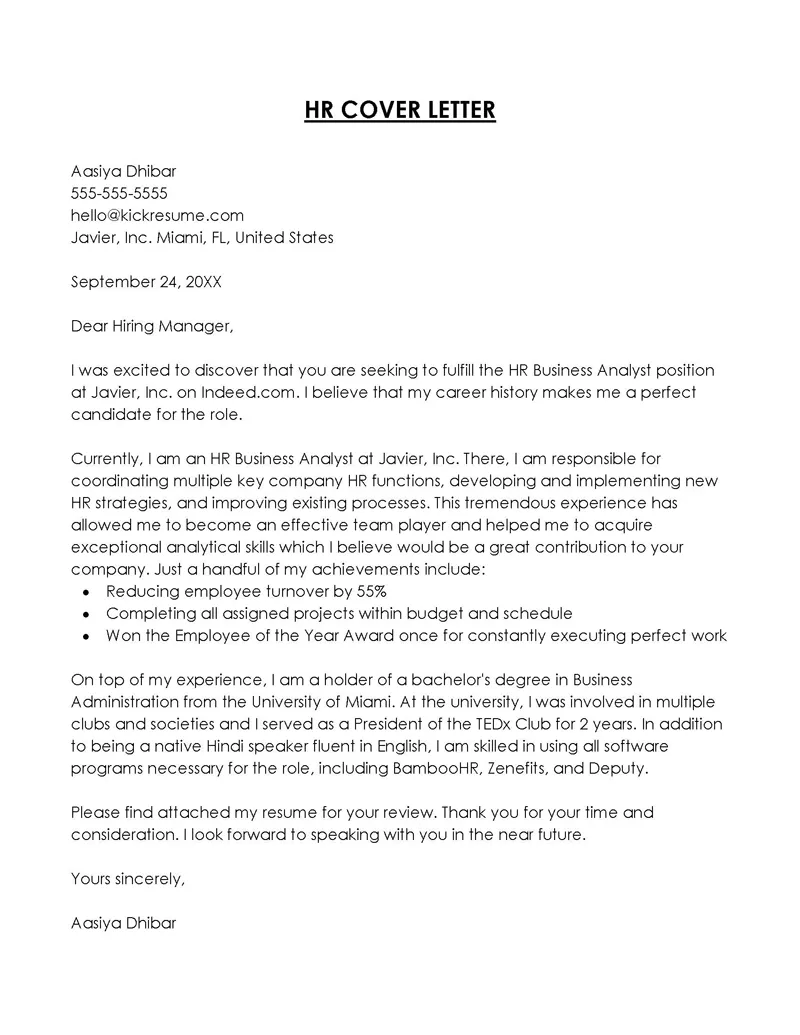
Crafting a Winning HR Cover Letter
In the competitive landscape of human resources, a well-crafted cover letter is your first opportunity to make a lasting impression. It’s more than just a formality; it’s your chance to showcase your personality, enthusiasm, and relevant skills. A strong cover letter, tailored to each specific job application, can significantly increase your chances of landing an interview. This guide will provide you with the tools and insights you need to create HR cover letter samples that truly stand out. Remember that the primary goal of your cover letter is to persuade the hiring manager to read your resume and consider you for the position. Therefore, attention to detail, clear communication, and a strategic approach are crucial for success.
Understanding the Importance of a Cover Letter
Many job seekers underestimate the significance of a cover letter. However, in HR, where communication and interpersonal skills are highly valued, a cover letter offers a unique platform to demonstrate these qualities. It allows you to elaborate on your resume, providing context and highlighting specific achievements that align with the job requirements. Your cover letter is your chance to introduce yourself in a compelling way, demonstrating why you are the perfect fit for the role and the company. It’s a way to show your genuine interest and your understanding of the organization’s values. In the HR field, attention to detail is paramount; a well-written, error-free cover letter immediately signals professionalism and competence.
Highlighting Relevant Skills and Experience

Your cover letter is the perfect place to showcase your skills and experience in a way that directly addresses the requirements of the job. Instead of simply listing your qualifications, use your cover letter to tell a story. Explain how your past experiences have prepared you for the HR role you’re applying for. Focus on quantifiable achievements whenever possible. For example, instead of saying “Managed employee relations,” you could write “Successfully resolved over 50 employee relations issues, resulting in a 20% reduction in grievances.” This approach provides concrete evidence of your capabilities and demonstrates your ability to make a tangible impact in the workplace. Tailor each cover letter to reflect the specific requirements outlined in the job description, ensuring your most relevant skills and experiences are highlighted.
Cover Letter Samples HR
Below are sample cover letters tailored for different HR roles. These samples provide a foundation and guidance for you to customize your cover letters to match your unique experience and the specific requirements of the job. Remember to adapt the language and content to reflect your personal brand and the specifics of each position you apply for. Review these samples carefully and use them as inspiration, not as a rigid template. The most effective cover letters are those that are authentic, tailored, and reflect your individual skills and experiences. Always ensure that the samples are adapted with your personal information and relevant details, before submitting your application.
Sample Cover Letter for HR Generalist
This sample should highlight your broad understanding of HR functions, including recruitment, onboarding, employee relations, and compliance. Focus on your ability to handle a wide range of HR tasks and your experience in supporting employees and management. Showcase your experience with HRIS systems and your understanding of employment laws. Emphasize your problem-solving skills and your ability to create a positive and productive work environment. Also, focus on your ability to implement HR policies and procedures effectively. Demonstrate a commitment to professional development and staying current with HR best practices.
Sample Cover Letter for HR Specialist

This sample should emphasize your specialized skills, such as recruitment, compensation and benefits, or training and development. Focus on your expertise in the specific area and your accomplishments related to that specialization. Quantify your achievements whenever possible, such as “Reduced time-to-hire by 15%” or “Improved employee engagement scores by 10%.” Highlight your familiarity with relevant HR software and tools. Demonstrate your analytical skills and your ability to use data to inform HR decisions. This should also showcase your ability to collaborate with other departments and your communication skills.
Sample Cover Letter for HR Manager
This sample should focus on your leadership skills and your experience in managing HR teams and projects. Showcase your ability to develop and implement HR strategies that align with the company’s goals. Highlight your experience in areas such as performance management, talent acquisition, and employee development. Mention your experience with budget management and your ability to ensure compliance with relevant laws and regulations. Emphasize your strategic thinking, your ability to lead and motivate a team, and your communication skills. Provide evidence of your ability to build strong relationships with stakeholders at all levels of the organization and your commitment to driving positive change.
Key Elements to Include in Your Cover Letter
A successful HR cover letter incorporates several key elements, each designed to capture the reader’s attention and demonstrate your suitability for the role. These elements work together to present a comprehensive and compelling picture of your qualifications, skills, and enthusiasm. By carefully crafting each section, you can ensure that your cover letter effectively communicates your value proposition to the hiring manager. Consider each component as a step in building a strong case for why you are the right fit for the job and what unique contributions you can bring to the company. A well-structured cover letter leaves a lasting impression, which will increase your chances of moving forward in the hiring process.
Opening Paragraph that Grabs Attention

The opening paragraph is your first, and often only, opportunity to make a strong first impression. Start with a concise and impactful statement that immediately captures the reader’s attention. Avoid generic phrases like “I am writing to express my interest…” Instead, state your enthusiasm for the position and company, and briefly highlight a key achievement or skill that aligns with the job requirements. Personalize your opening by mentioning something specific that attracted you to the role or the organization. For example, if the company emphasizes employee well-being, you might begin by expressing your admiration for their commitment to employee wellness initiatives. This approach shows that you have done your research and are genuinely interested in the opportunity.
Showcasing Your Accomplishments
Instead of merely listing your job duties, use your cover letter to showcase your accomplishments. Focus on quantifiable achievements that demonstrate your impact in previous roles. Use the STAR method (Situation, Task, Action, Result) to structure your examples. Describe the situation, the task you were assigned, the actions you took, and the positive results you achieved. For example, instead of saying “Managed employee onboarding,” you could write “Developed and implemented a new onboarding program that reduced new hire training time by 20% and increased employee satisfaction by 15%.” Highlighting your accomplishments provides concrete evidence of your abilities and allows the hiring manager to understand the value you can bring to their organization. This approach can help you stand out from other candidates.
Demonstrating Your Passion for HR
Expressing your genuine passion for human resources is crucial. Let your enthusiasm shine through by describing what motivates you in the field and what you enjoy most about your work. Share your understanding of the HR profession’s role in supporting the company’s goals and how you can contribute to those goals. Mention any professional development activities or certifications you have pursued to stay current with industry trends. Show that you are dedicated to your career and are committed to continuous learning. You can highlight your interest in building a positive work environment and supporting employee success. Your passion can be conveyed through your language and tone.
Formatting Your Cover Letter

The formatting of your cover letter can significantly affect its readability and impact. Use a professional and easy-to-read font, such as Arial or Times New Roman, in a size between 11 and 12 points. Maintain a clear and consistent format throughout the document. Use single spacing within paragraphs and double spacing between paragraphs. Break up large blocks of text with bullet points or short paragraphs to make it easier for the reader to scan. Ensure your letter is well-organized and easy to follow, with a clear structure and logical flow. Include appropriate headings and subheadings to guide the reader through the content. Choose a layout that is clean and uncluttered, creating a positive impression.
Proofreading and Editing for Perfection
Thorough proofreading and editing are essential to ensure your cover letter is free of errors. Errors in grammar, spelling, or punctuation can undermine your credibility and make you appear careless. Before submitting your cover letter, carefully review it for any mistakes. Read it aloud to catch any awkward phrasing or unclear sentences. Ask a friend or colleague to proofread your cover letter. Use a grammar and spell-checking tool, but don’t rely on it entirely; always review the results. Pay close attention to detail and ensure that your cover letter reflects your professionalism and attention to detail. A polished and error-free cover letter demonstrates that you are capable of producing high-quality work.
Common Mistakes to Avoid in HR Cover Letters
Avoiding common mistakes is crucial to creating an effective HR cover letter. These mistakes can easily undermine your application and reduce your chances of getting hired. By being aware of these pitfalls and taking steps to avoid them, you can significantly improve the quality of your cover letter and demonstrate your professionalism. This includes being mindful of your tone and avoiding any language that might be perceived as unprofessional. Pay attention to the details and take the time to ensure your cover letter is well-crafted and polished. By addressing these common errors, you can increase the impact of your letter.
Generic and Vague Language

Using generic and vague language can make your cover letter sound uninspired and fail to make a strong impression. Avoid using clichés, buzzwords, and general statements that could apply to any candidate. Instead, use specific and compelling language that demonstrates your understanding of the role and your relevant experience. Provide concrete examples of your accomplishments and use action verbs to describe your responsibilities. Tailor your language to match the specific requirements of the job description and the company’s values. Replace general phrases like “team player” with specific examples of how you have collaborated effectively with others. Tailoring your letter shows you’re making an effort and that you understand the company’s needs.
Focusing Too Much on Yourself
While it’s important to highlight your skills and experience, focusing solely on yourself without addressing the employer’s needs can be a major mistake. Your cover letter should demonstrate how you can contribute to the company’s success, not just what you want from the job. Frame your skills and accomplishments in terms of how they benefit the employer. Show that you understand the company’s challenges and goals and that you can help them achieve their objectives. Emphasize how your qualifications align with the job requirements and the company’s mission. By focusing on how you can solve problems and add value, you show that you are thinking about what the company needs, and increase your chances of getting hired.
Ignoring the Job Description
Ignoring the job description is one of the most common and detrimental mistakes you can make. The job description provides a detailed overview of the required skills, experience, and qualifications. Always carefully review the job description and tailor your cover letter to address the specific requirements. Highlight the relevant skills and experiences that match the listed qualifications. Use the keywords and phrases from the job description to demonstrate your understanding of the role and the company’s needs. If a specific skill or experience is required, make sure to address it directly in your cover letter. By demonstrating a clear understanding of the job requirements, you show that you have the required qualifications and are a good fit for the role.
The Power of a Strong Closing

The closing paragraph is your final opportunity to leave a lasting impression. End your cover letter with a strong statement that reinforces your interest in the position and your enthusiasm for the company. Express your appreciation for the hiring manager’s time and consideration. Include a call to action, such as stating that you are eager to discuss your qualifications further in an interview. Reiterate your contact information and make it easy for the hiring manager to reach you. Keep your closing paragraph concise and professional, leaving the reader with a positive and memorable impression. A well-crafted closing demonstrates your professionalism and enthusiasm, which will increase your chances of getting hired.